Supply Chain Integration Modeling, Optimization and Application - Böcker
Visar alla böcker i serien Supply Chain Integration Modeling, Optimization and Application. Handla med fri frakt och snabb leverans.
7 produkter
7 produkter
1 339 kr
Tillfälligt slut
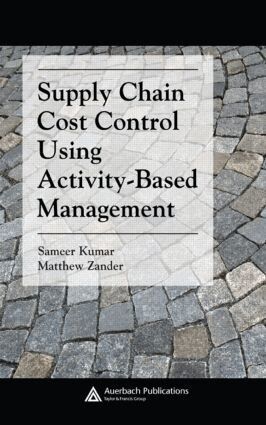
Having an accurate assessment of company expenditures is a key to staying in business. Activity-based management (ABM) is the only system that offers the tools to correctly assess the outflow involved in a tightly knit supply chain and enables understanding not only of the total cost of ownership (TCO), but also how these costs should be allocated. Supply Chain Cost Control Using Activity-Based Management discusses the competitive advantage that cost analysis and management can bring to companies within a supply chain.Addressing a number of strategies to evaluate the total cost inherent in a customer-supplier relationship, this book uses TCO, activity-based costing (ABC), and ABM to analyze and control supply chain costs. It employs industry survey data to examine whether these techniques are being used in real life, which factors affect their usage in the supply chain, and whether they are producing results. Combining survey results with game theory, the authors suggest cost reduction strategies for competitive environments and predict the outcomes of these strategies. This cost-effective system helps businesses remain competitive and profitable.Supply Chain Cost Control Using Activity-Based Management shows the importance of partnerships in applying ABM principles to suppliers and demonstrates the positive results that ABM can have on elements of the TCO.
2 150 kr
Skickas inom 7-10 vardagar
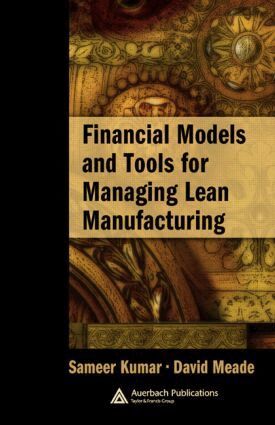
The effect Lean Manufacturing programs have on profit and loss statements during the early months of their implementation often causes them to be viewed as failures. The length of time it will take traditional financial reports to reflect lean manufacturing improvements depends upon how poorly the operation was doing in terms of inventory management prior to the initiation of the lean effort. As yet, no one has put forth a set of methods for dealing with the finances and financial reporting issues dynamically during the implementation of lean practices, until now.Financial Models and Tools for Managing Lean Manufacturing provides an understanding of the impact that traditional accounting practices have on operational improvement programs. The book shows managers of supply chains how to prepare for and present the impact of Lean Manufacturing to top management and stakeholders. To illustrate the impact of lean manufacturing on the income statement, the authors present a multi-month, Excel™ and Pro-Model™ based manufacturing operation environment that incorporates actual sales, sales forecasts, and production results. Their text gives supply chain managers the financial skills they need to successfully manage Lean Manufacturing and its impacts. In short, the book explains how existing accounting practices have a tendency to report the results of operational improvement programs in a negative light. Other books have identified this issue but have not attempted to quantify the impact to a firm’s profit and loss nor have they shown the impact over a series of reporting periods. As a consequence, although Lean Manufacturing practices are being adopted at an ever-increasing rate, they have not been eagerly embraced by manufacturers and supply chain managers. Identifying the effects of past poor manufacturing practices that are being cleaned up by the operational improvements brought by the lean program, the book arms you with the knowledge you need to defend the lean program through the months when income statements indicate a decline in profitability.
1 271 kr
Tillfälligt slut
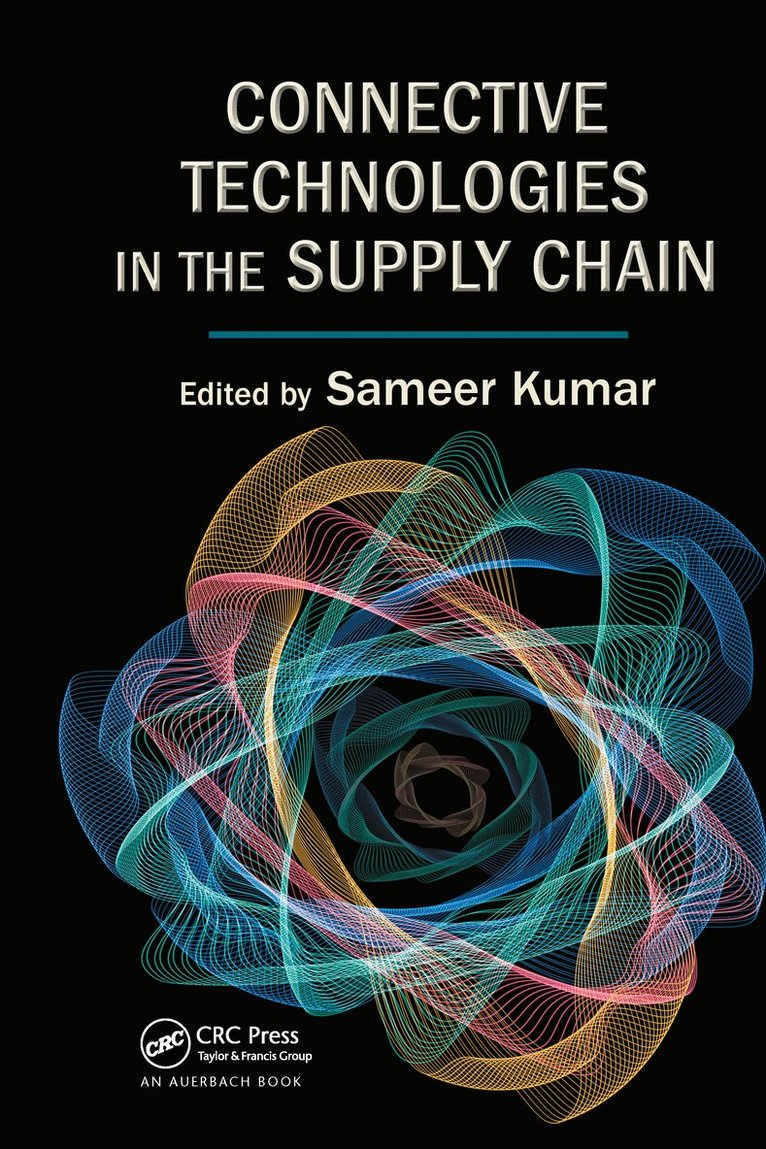
Rapid time-to-market expectations and the demand for custom-tailored products present real challenges for the rigid and fixed linear supply chains that compete in today's economy. Connective technologies meet these challenges head on by integrating the necessary people, information, and products beyond their current limitations.Connective Technologies in the Supply Chain illustrates the impact that connective technologies have across supply chains. It provides strategic frameworks, conceptual and analytical models, and case studies that focus on the design, development, and implementation of these technologies as they pertain to the management of engineering and manufacturing operations.Placing particular emphasis on RFID, the book addresses issues that include those involving GPS, inventory management, quality control, mobile technology, and security challenges. The book presents an overview of RFID applications, its underlying concepts and principles, and a macro perspective on its implementation in the manufacturing and service sectors. It also provides a feasible design of the technology's enabled knowledge-based supply chain management system.Connective Technologies in the Supply Chain is an essential resource for those who would like to expand their knowledge of-and increase their success with-these applications.
Human-Computer Etiquette
Cultural Expectations and the Design Implications They Place on Computers and Technology
Inbunden, Engelska, 2010
2 150 kr
Skickas inom 10-15 vardagar
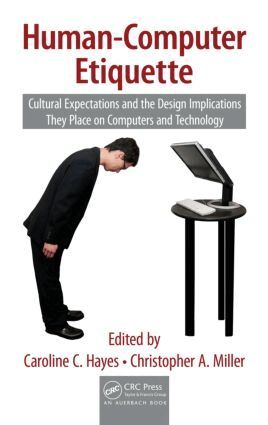
Written by experts from various fields, this edited collection explores a wide range of issues pertaining to how computers evoke human social expectations. The book illustrates how socially acceptable conventions can strongly impact the effectiveness of human-computer interactions and how to consider such norms in the design of human-computer interfaces. Providing a complete introduction to the design of social responses to computers, the text emphasizes the value of social norms in the development of usable and enjoyable technology. It also describes the role of socially correct behavior in technology adoption and how to design human-computer interfaces for a competitive global market.
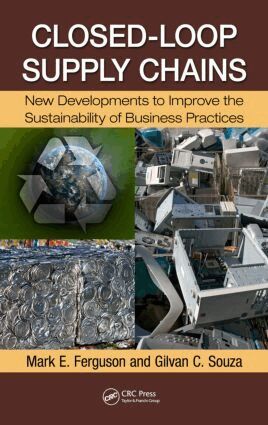
Closed-Loop Supply Chains
New Developments to Improve the Sustainability of Business Practices
Inbunden, Engelska, 2010
1 403 kr
Skickas inom 10-15 vardagar
Closed-loop supply chain activities such as remanufacturing, recycling, dismantling for spare parts, and reverse logistics have helped many companies tap into new revenue streams by finding secondary markets for their products, all while reducing their overall carbon footprint. A comprehensive yet concise presentation of closed-loop supply chain processes, Closed-Loop Supply Chains: New Developments to Improve the Sustainability of Business Practices investigates the state of the art in this rapidly growing and environmentally significant field. Written by academic experts, in language that is accessible to practitioners, this reader-friendly reference examines recent research and case studies of companies running profitable reuse/remanufacture/recycling operations in various industries. It illustrates profitable practices in returned and recovered products, and clearly explains how to: design a reverse logistics network, conduct production planning, implement effective marketing strategies for recovered products, and apply closed-loop supply chain strategies in other industries besides manufacturing. From product development to materials to assembly and profitability, this authoritative resource illustrates the impact of these processes across all aspects of the supply chain. It provides a business perspective of how to properly implement these processes in your company to achieve profitable and sustainable operations in a more environmentally friendly manner. It also: Investigates strategic decisions companies face in regard to the secondary market for their products, including opportunity costsExamines tactical issues firms will face once the decision to remanufacture has been made, including how to market remanufactured productsSummarizes the key characteristics and practices in a variety of industries where remanufacturing has been successful Explains how to conceptualize and manage changes due to switching to a closed-loop supply chain Demonstrates how to handle changing legislation Designed for ease of reference, each chapter covers a specific topic—in a completely self-contained manner—allowing readers to quickly and easily reference the chapters of particular relevance to their industry and situation.
1 263 kr
Skickas inom 10-15 vardagar
The increasing popularity of online shopping makes Internet retailing a megatrend that cannot be ignored. The collaboration of two co-authors bringing academic rigor and broad consulting experience into the mix, Internet Retail Operations: Integrating Theory and Practice for Managers offers enduring insights on operational issues and principles for the management of internet supply chains.Covering a range of emerging issues supported by a variety of case studies, the book details the evolution of information technology’s role in retail supply chain networks, its impact on supply chain networks, and how this has changed service operations. It addresses information technology in relation to service and retail industries, then explores how supply chain dynamics impact traditional service and retail delivery, the costs involved, and customer satisfaction and loyalty. It includes tables, vignettes, and graphs that make the content practical and relevant.As you will learn, many attempts at internet retail do not succeed, some because they fail to appreciate the fundamentals, others may have simply been ahead of their time. Many years of experimentation and growth lie ahead. Drawing equally on theory, research results, and real-world experience, the book provides strategies for overcoming the challenges of building operations capability in the evolving world of Internet retailing.
1 179 kr
Skickas inom 10-15 vardagar
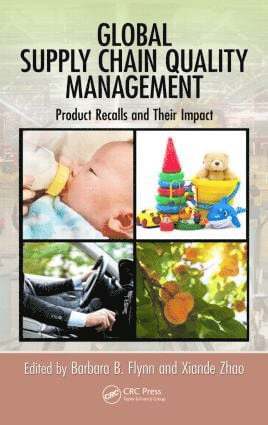
While there is substantial research surrounding manufacturing and design-related product hazards, little has been written about supply chain product hazards and how they impact supply chain quality management. Filling this need, Global Supply Chain Quality Management: Product Recalls and Their Impact draws together key insights and research findings from a global research project on product safety and recalls.The book presents detailed case studies of six extended global supply chains within three industries: toys, food, and pharmaceuticals. These case studies cover U.S. companies with supply chains that extend into China and provide the perspectives of both U.S. and Chinese executives. It includes coverage of several highly publicized product recalls, including Ford Pinto, Extra Strength Tylenol, melamine-tainted milk, Mattel, and Toyota.Presenting detailed examples of both poor and best practices, the text supplies firsthand accounts from key players in well-known product recalls. It outlines an event study methodology that can help readers determine the true financial impact of a product recall announcement. It also describes how to conduct controlled experiments to determine the effect of various recall strategies on consumers.The book describes how alternative product recall strategies can influence consumers' perception of your organization's corporate social legitimacy as well as their future purchasing behaviors. Although the text focuses on product quality within the supply chain, it also sheds light on other sources of product hazards—sharing a wide-ranging perspectives and current methodologies.