Oxford Avian Biology Series - Böcker
Visar alla böcker i serien Oxford Avian Biology Series. Handla med fri frakt och snabb leverans.
6 produkter
6 produkter
1 247 kr
Skickas inom 3-6 vardagar
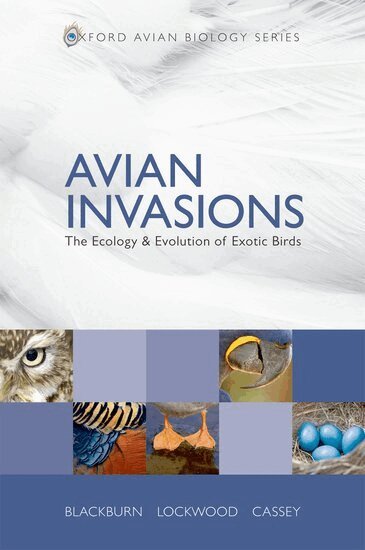
Biological invaders represent one of the primary threats to the maintenance of global biodiversity, human health, and the success of human economic enterprises. The continuing globalization of our society ensures that the need to understand the process of biological invasion will only increase in the future. There is also a growing recognition that the study of biological invaders provides a unique insight into basic questions in ecology and evolution. The study of exotic birds has had a particularly long history and has come to represent a fascinating intersection between the study of biological invasions, avian conservation biology, and basic principles of ecology and evolution. Avian Invasions summarizes and synthesizes this unique historical record and unravels the insights that the study of exotic birds brings to all three of these research strands. It includes chapters on the well-known contributions of exotic bird study to ecological science, and on the post-establishment evolution of introduced bird populations. The result is the most comprehensive picture yet of the invasion process.Avian Invasions is aimed at professional avian biologists and ornithologists as well as graduate students of avian ecology, evolution and conservation. It will also appeal to a more general audience of invasion ecologists.
883 kr
Skickas inom 7-10 vardagar
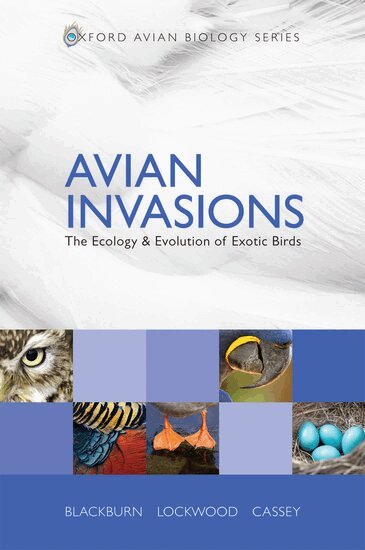
Biological invaders represent one of the primary threats to the maintenance of global biodiversity, human health, and the success of human economic enterprises. The continuing globalization of our society ensures that the need to understand the process of biological invasion will only increase in the future. There is also a growing recognition that the study of biological invaders provides a unique insight into basic questions in ecology and evolution. The study of exotic birds has had a particularly long history and has come to represent a fascinating intersection between the study of biological invasions, avian conservation biology, and basic principles of ecology and evolution. Avian Invasions summarizes and synthesizes this unique historical record and unravels the insights that the study of exotic birds brings to all three of these research strands. It includes chapters on the well-known contributions of exotic bird study to ecological science, and on the post-establishment evolution of introduced bird populations. The result is the most comprehensive picture yet of the invasion process.Avian Invasions is aimed at professional avian biologists and ornithologists as well as graduate students of avian ecology, evolution and conservation. It will also appeal to a more general audience of invasion ecologists.
2 137 kr
Skickas inom 7-10 vardagar
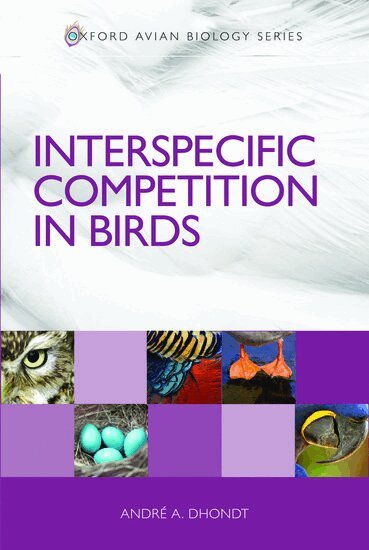
In nature there exist three main types of biotic interactions between individuals of different species: competition, predation, and mutualism. All three exert powerful selection pressures, and all three shape communities. However, the question of how important interspecific competition in nature really is remains controversial and unresolved. This book provides a critical and exhaustive review of the topic. Although the examples are limited mostly to birds (interspecific competition and community structure have been exhaustively studied in this animal group, and a lot of experimental data are available), the conclusions reached have a far broader relevance to population ecologists in general. The book reasons that the coexistence of species is the result of both past and presently on-going interspecific competition. Furthermore, understanding the importance of interspecific competition in natural systems will be increasingly important when modelling the effects of climate change on populations.
922 kr
Skickas inom 7-10 vardagar
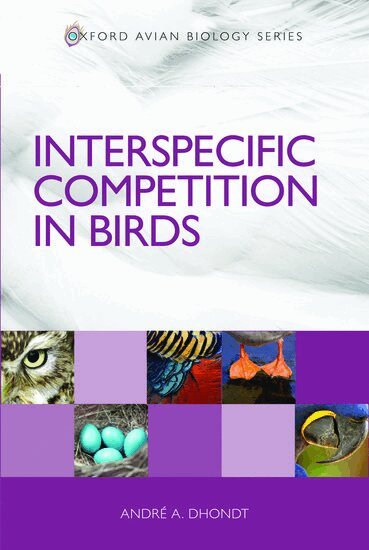
In nature there exist three main types of biotic interactions between individuals of different species: competition, predation, and mutualism. All three exert powerful selection pressures, and all three shape communities. However, the question of how important interspecific competition in nature really is remains controversial and unresolved. This book provides a critical and exhaustive review of the topic. Although the examples are limited mostly to birds (interspecific competition and community structure have been exhaustively studied in this animal group, and a lot of experimental data are available), the conclusions reached have a far broader relevance to population ecologists in general. The book reasons that the coexistence of species is the result of both past and presently on-going interspecific competition. Furthermore, understanding the importance of interspecific competition in natural systems will be increasingly important when modelling the effects of climate change on populations.
1 444 kr
Skickas inom 5-8 vardagar
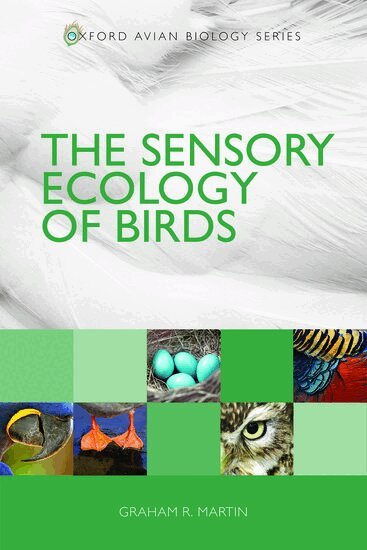
Birds are renowned for their exceptional vision and the way that this enables them to survive and navigate the world in such a unique way. However, it is now recognised that avian behaviour is guided by information drawn from many different senses which are then used in integrated and complementary ways to answer the many different sensory challenges posed by specific environments and particular tasks. Understanding how sensory information is used by birds has important applications in conservation, such as providing vital insights into why birds are prone to collisions with structures like power lines and wind turbines, and why so many diving birds become entrapped in nets. A sensory ecology approach suggests how these problems can be mitigated. The Sensory Ecology of Birds ranges widely across species, environments, and behaviours to present a synthesis that challenges previous assumptions about the information that controls the behaviour of birds. A bird may use a wide range and combination of sensory information that comes from sight, hearing, smell, mechanoreception, taste, and magnetoreception. It may also include specific refinements of senses, such as echolocation and remote touch from the bill. The book recognises that there are many complex and subtle trade-offs and complementarities of information between different types of sensory information. This accessible text will be of interest to a wide ornithological readership, from undergraduates to researchers as well as a broader audience of behavioural ecologists and evolutionary biologists.
765 kr
Skickas inom 7-10 vardagar
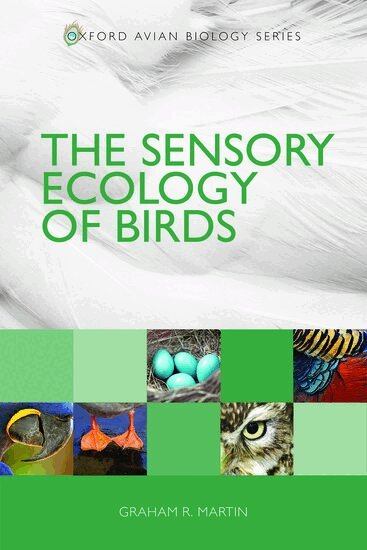
Birds are renowned for their exceptional vision and the way that this enables them to survive and navigate the world in such a unique way. However, it is now recognised that avian behaviour is guided by information drawn from many different senses which are then used in integrated and complementary ways to answer the many different sensory challenges posed by specific environments and particular tasks. Understanding how sensory information is used by birds has important applications in conservation, such as providing vital insights into why birds are prone to collisions with structures like power lines and wind turbines, and why so many diving birds become entrapped in nets. A sensory ecology approach suggests how these problems can be mitigated. The Sensory Ecology of Birds ranges widely across species, environments, and behaviours to present a synthesis that challenges previous assumptions about the information that controls the behaviour of birds. A bird may use a wide range and combination of sensory information that comes from sight, hearing, smell, mechanoreception, taste, and magnetoreception. It may also include specific refinements of senses, such as echolocation and remote touch from the bill. The book recognises that there are many complex and subtle trade-offs and complementarities of information between different types of sensory information. This accessible text will be of interest to a wide ornithological readership, from undergraduates to researchers as well as a broader audience of behavioural ecologists and evolutionary biologists.