Oxford Studies in World Christianity – serie
Visar alla böcker i serien Oxford Studies in World Christianity. Handla med fri frakt och snabb leverans.
6 produkter
6 produkter
799 kr
Skickas inom 5-8 vardagar
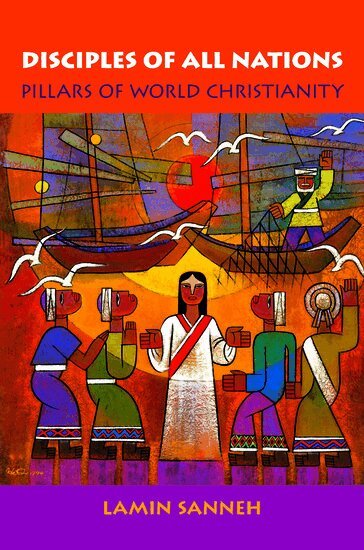
Long the dominant religion of the West, Christianity is now rapidly becoming the principal faith in much of the postcolonial world--a development that marks a momentous shift in the religion's very center of gravity. In this eye-opening book, Lamin Sanneh examines the roots of this "post-Western awakening" and the unparalleled richness and diversity, as well as the tension and conflict, it has brought to World Christianity.Tracing Christianity's rise from its birth on the edge of the Roman empire--when it proclaimed itself to be a religion for the entire world, not just for one people, one time, and one place--to its key role in Europe's maritime and colonial expansion, Sanneh sheds new light on the ways in which post-Western societies in Africa, Asia, and Latin America were drawn into the Christian orbit. Ultimately, he shows, these societies outgrew Christianity's colonial forms and restructured it through their own languages and idioms--a process that often occurred outside, and sometimes against, the lines of denominational control. The effect of such changes, Sanneh contends, has been profound, transforming not only worship, prayer, and the interpretation of Scripture, but also art, aesthetics, and music associated with the church. In exploring this story of Christianity's global expansion and its current resurgence in the non-Western world, Sanneh pays close attention to such issues as the faith's encounters with Islam and indigenous religions, as well as with secular ideologies such as Marxism and nationalism. He also considers the challenges that conservative, non-Western forms of Christianity pose to Western liberal values and Enlightenment ideas. Here then is a groundbreaking study of Christianity's role in cultural innovation and historical change--and must reading for all who are concerned with the present and future of the faith.
325 kr
Skickas inom 5-8 vardagar
Long the dominant religion of the West, Christianity is now rapidly becoming the principal faith in much of the postcolonial world--a development that marks a momentous shift in the religion's very center of gravity. In this eye-opening book, Lamin Sanneh examines the roots of this "post-Western awakening" and the unparalleled richness and diversity, as well as the tension and conflict, it has brought to World Christianity.Tracing Christianity's rise from its birth on the edge of the Roman empire--when it proclaimed itself to be a religion for the entire world, not just for one people, one time, and one place--to its key role in Europe's maritime and colonial expansion, Sanneh sheds new light on the ways in which post-Western societies in Africa, Asia, and Latin America were drawn into the Christian orbit. Ultimately, he shows, these societies outgrew Christianity's colonial forms and restructured it through their own languages and idioms--a process that often occurred outside, and sometimes against, the lines of denominational control. The effect of such changes, Sanneh contends, has been profound, transforming not only worship, prayer, and the interpretation of Scripture, but also art, aesthetics, and music associated with the church. In exploring this story of Christianity's global expansion and its current resurgence in the non-Western world, Sanneh pays close attention to such issues as the faith's encounters with Islam and indigenous religions, as well as with secular ideologies such as Marxism and nationalism. He also considers the challenges that conservative, non-Western forms of Christianity pose to Western liberal values and Enlightenment ideas. Here then is a groundbreaking study of Christianity's role in cultural innovation and historical change--and must reading for all who are concerned with the present and future of the faith.
To the Ends of the Earth
Pentecostalism and the Transformation of World Christianity
Häftad, Engelska, 2013
510 kr
Skickas inom 7-10 vardagar
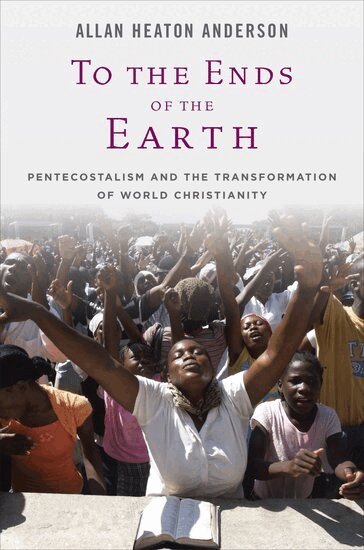
The growth of Christianity in the global South is one of the most important religious stories of the last decade. In no branch of Christianity has that growth been more rapid than Pentecostalism. There are over 100 million Pentecostals in Africa, and Pentecostal practices infuse Catholic, Anglican, and Independent churches. In the traditional Catholic stronghold of Latin America, Pentecostalism now vies with Catholicism for the soul of the continent. And the largest Pentecostsal church in the world, with over 800,000 members, is in Seoul. In To the Ends of the Earth, Allan Anderson offers a historical and theological examination of the growth of global Pentecostalism. Examining such issues as revivalism, healing, gender, worship, and globalization, Anderson seeks to show how the growth of global Pentecostalism is changing the face of Christianity as a whole.
To the Ends of the Earth
Pentecostalism and the Transformation of World Christianity
Inbunden, Engelska, 2013
1 287 kr
Skickas inom 5-8 vardagar
The growth of Christianity in the global South is one of the most important religious stories of the last decade. In no branch of Christianity has that growth been more rapid than Pentecostalism. There are over 100 million Pentecostals in Africa, and Pentecostal practices infuse Catholic, Anglican, and Independent churches. In the traditional Catholic stronghold of Latin America, Pentecostalism now vies with Catholicism for the soul of the continent. And the largest Pentecostsal church in the world, with over 800,000 members, is in Seoul. In To the Ends of the Earth, Allan Anderson offers a historical and theological examination of the growth of global Pentecostalism. Examining such issues as revivalism, healing, gender, worship, and globalization, Anderson seeks to show how the growth of global Pentecostalism is changing the face of Christianity as a whole.
386 kr
Skickas inom 5-8 vardagar
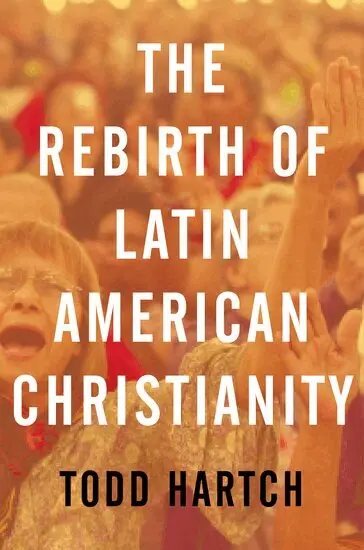
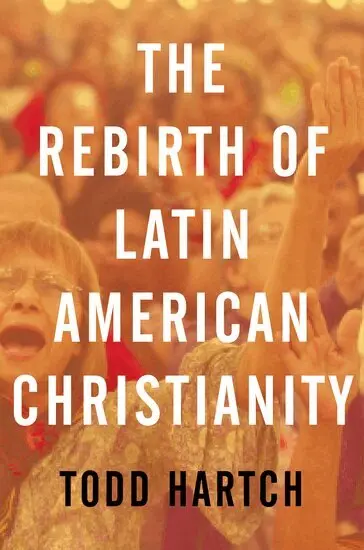
Predominantly Catholic for centuries, Latin America is still largely Catholic today, but the religious continuity in the region masks great changes that have taken place in the past five decades. In fact, it would be fair to say that Latin American Christianity has been transformed definitively in the years since the Second Vatican Council. Religious change has not been obvious because its transformation has not been the sudden and massive growth of a new religion, as in Africa and Asia. It has been rather a simultaneous revitalization and fragmentation that threatened, awakened, and ultimately brought to a greater maturity a dormant and parochial Christianity. New challenges from modernity, especially in the form of Protestantism and Marxism, ultimately brought forth new life. In The Rebirth of Latin American Christianity, Todd Hartch examines the changes that have swept across Latin America in the last fifty years, and situates them in the context of the growth of Christianity in the global South.
2 006 kr
Skickas inom 7-10 vardagar
Predominantly Catholic for centuries, Latin America is still largely Catholic today, but the religious continuity in the region masks great changes that have taken place in the past five decades. In fact, it would be fair to say that Latin American Christianity has been transformed definitively in the years since the Second Vatican Council. Religious change has not been obvious because its transformation has not been the sudden and massive growth of a new religion, as in Africa and Asia. It has been rather a simultaneous revitalization and fragmentation that threatened, awakened, and ultimately brought to a greater maturity a dormant and parochial Christianity. New challenges from modernity, especially in the form of Protestantism and Marxism, ultimately brought forth new life. In The Rebirth of Latin American Christianity, Todd Hartch examines the changes that have swept across Latin America in the last fifty years, and situates them in the context of the growth of Christianity in the global South.