Oxford Wessex Archaeology Monograph – serie
Visar alla böcker i serien Oxford Wessex Archaeology Monograph. Handla med fri frakt och snabb leverans.
5 produkter
5 produkter
Del 1 - Oxford Wessex Archaeology Monograph
Slice of Rural Essex
Archaeological Discoveries from the A120 between Stansted Airport and Braintree
Inbunden, Engelska, 2006
236 kr
Skickas
The upgrading of the A120 between Stansted Airport and Braintree allowed the unique opportunity to examine a slice of landscape crossing the clay plateau of Essex; a geology which has received little attention in the past.
Inbunden, Engelska, 2011
542 kr
Skickas
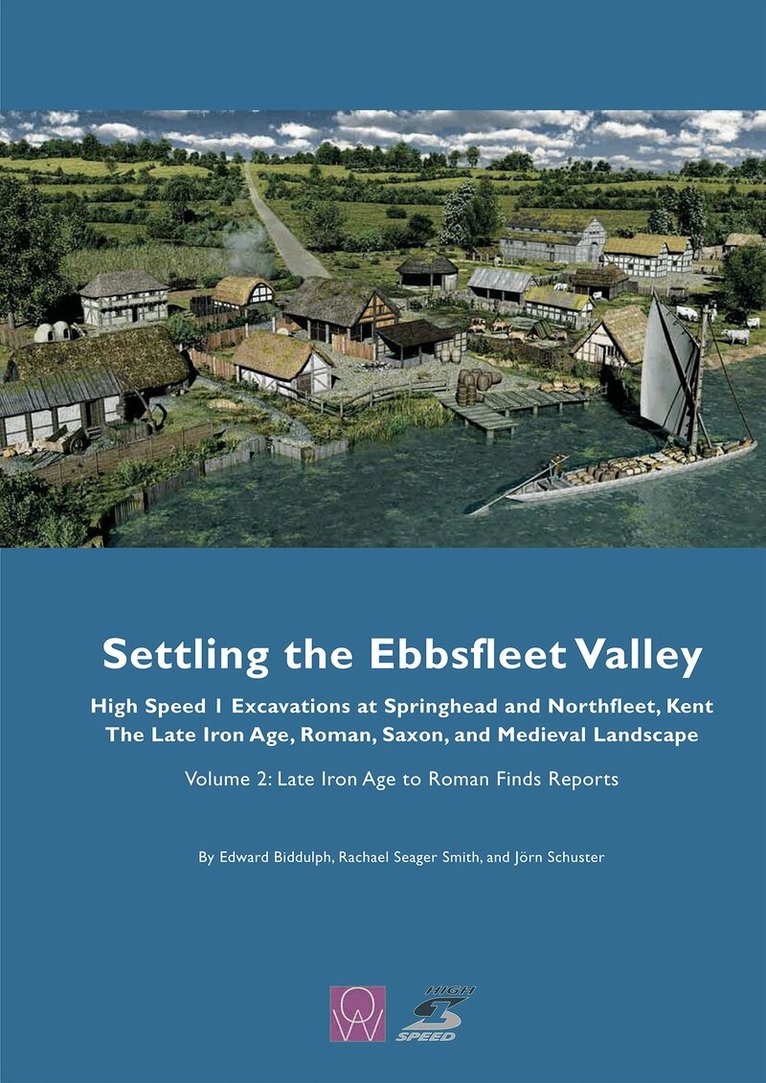
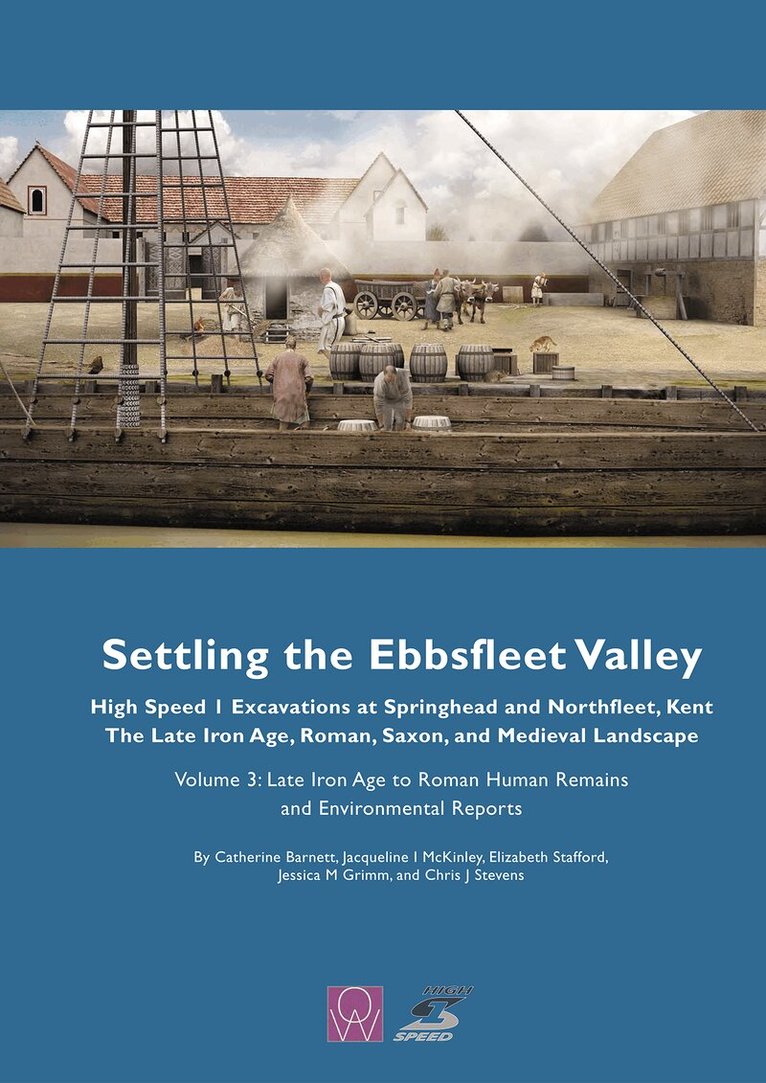
This volume presents specialist reports and illustrations, on the Late Iron Age and Roman artefacts recovered during archaeological investigations in the Ebbsfleet valley, near Gravesend, Kent. It is part of a four volume publication on investigations at Springhead and Northfleet, undertaken in connection with engineering works for Section 2 of the Channel Tunnel Rail Link (CTRL), now High Speed 1 (HS1). The archaeological discoveries made during HS1 Section 2, which range in date from the Late Iron Age to the medieval period, are reported in Volume 1. Specialist reports on the Iron Age and Roman human bone, faunal and environmental remains are reported in Volume 3, while those on the Saxon and medieval artefacts, human bone, and faunal and environmental remains are reported in Volume 4; additional data is available via the website (http://owarch.co.uk/hs1/springhead-northfleet/). These reports have been prepared by the Oxford Wessex Archaeology Joint Venture in conjunction with Rail Link Engineering for Union Railways (North) Limited (URN). High Speed 1 is the new high-speed railway linking London mainline stations to the Channel Tunnel. Section 1 of HS1, running from the tunnel portal at Folkestone, passes through Kent to Pepper Hill near Gravesend, whilst Section 2 continues the line under the Thames at Swanscombe, and then runs through Essex and East London to London St Pancras. The massive engineering and construction project necessitated one of the largest programmes of archaeological works ever undertaken in Britain. Desk-based assessment was followed by extensive evaluation, comprising field-walking, trial trenching, test-pitting, and borehole investigation. This allowed HS1’s impact on the finite archaeological resources along the route to be assessed and mitigated. Where archaeological sites could not be bypassed, or preserved in situ, excavations were undertaken in advance of construction. The principal archaeological work for Section 1 took place in 1998–2001, while that for Section 2, commissioned by URN, took place between September 2000 and March 2003. Construction work relating to Section 2 in the Ebbsfleet valley included HS1 itself, Ebbsfleet International Station and associated access roads, and a connecting line to the existing North Kent Line. Oxford Archaeology undertook detailed excavation and a watching brief on land south of Northfleet, centred on NGR 516413 174196, towards the north end of the valley, while Wessex Archaeology undertook detailed excavation, strip, map and sample excavation, evaluation and a watching brief on various sites around the south end of the valley, at Springhead, centred on NGR 618000 727500. Following completion of the HS1 programme of work in 2003, there have been further, sometimes extensive, investigations within and adjacent to the Ebbsfleet valley, in advance of infrastructure works and housing and commercial developments. Although these have revealed Palaeolithic and other early prehistoric remains, as well as further discoveries of Late Iron Age, Roman, and Saxon date, it is not anticipated that any major revisions will be required to what is presented in this publication. The four volumes of this publication comprise one of two separate archaeological studies reporting on the HS1 Section 2 excavations in the Ebbsfleet valley. The other publication, Prehistoric Ebbsfleet, focuses on Palaeolithic, Mesolithic, Neolithic, Bronze Age, and earlier Iron Age activity. The present publication, Springhead and Northfleet, concentrates on Roman and later activity, but also takes into account the late prehistoric origins of the Roman occupation of the area. The overlap with the Prehistoric Ebbsfleet study, however, is slight as the most important later prehistoric remains – the Late Iron Age ritual or ceremonial activity near the Ebbsfleet spring at Springhead – are outside the period covered by the Prehistoric Ebbsfleet study. The Springhead and Northfleet publication reports on three major excavations, as well as on minor excavations, evaluations, and other investigations, both HS1 and non-HS1. The principal discoveries comprise late prehistoric, Roman, and Saxon features at Springhead, including a sanctuary complex within the Roman town of Vagniacis, and two Middle Saxon cemeteries to its east (site code: ARC SPH00); the Roman Roadside Settlement at Springhead Nursery (site codes: ARC SHN02 and WA 51724); and late prehistoric, Roman, and Saxon features at Northfleet, where a Middle Saxon watermill was discovered immediately adjacent to the Northfleet Roman villa (site code: ARC EBB01). Investigations were also undertaken on the site of a Roman high status walled cemetery south-east of Springhead, first investigated between 1799 and 1802 (site codes ARC WCY02 and WA 52379). This publication also consider the results of earlier (as well as ongoing) investigations and excavations undertaken by a variety of groups at both Springhead and Northfleet Roman villa. The detailed specialist reports in this volume of the Springhead and Northfleet publication cover all the Late Iron Age and Roman artefacts recovered during the reported excavations. These include the analysis of approximately 2158 kg of pottery, dated from the pre-Conquest, earlier 1st century AD until possibly the early 5th century, although most of it is of mid-1st to early/mid-3rd century AD date. In addition, 1756 coins and tokens were recovered, and over 2600 other metal small finds, as well as some 3000 nails. Many of the metal finds comprise items of personal adornment and dress, and various fittings, but others include household utensils and furniture, objects for weighing and measuring, pieces of toilet or medical equipment, tools associated with manufacture and agriculture, military equipment, and votive and religious pieces. Slag was recovered from a probable smithy in the Roadside Settlement, and from another to the east, pre-dating the Sanctuary complex; while virtually all of it derives from forging/smithing, a small component indicates iron smelting. The ceramic building material was associated with a range of structures, including those in the Sanctuary complex, and the temple within the Roadside Settlement, as well as with crop drying or malting kilns, ovens, and hearths. Almost 400 pieces of wall plaster were recorded, mostly from the Roadside Settlement, including a small area of in situ plaster, recorded but not lifted, in one of the rooms of the temple structure. The report on Roman woodwork, which comprised elements of riverbank revetments and well/cistern and pit linings, as well as pieces of fine woven basketry, considers raw materials and woodworking technology. The worked stone report examines some 95 rotary querns and eight millstones, and well as grinding stones and whetstones, and small quantities of structural and decorative stone including two tessarae. Other object found include shale armlets and spindlewhorls, two jet beads, and fragments of at least two pipeclay Venus figurines, along with glass, leather shoes, and objects of bone, including pins and needles, bracelet fragments and a comb. For ease of reference, the site and trench location figures from Volume 1 (Figs 1.1–1.3) are repeated here. For all other relevant archaeological plans, sections and photos, the reader should refer to Volume 1.Complete record
Del 2 - Oxford Wessex Archaeology Monograph
Archaeology of the M6 Toll 2000-2003
Inbunden, Engelska, 2008
466 kr
Tillfälligt slut
Del 7 - Oxford Wessex Archaeology Monograph
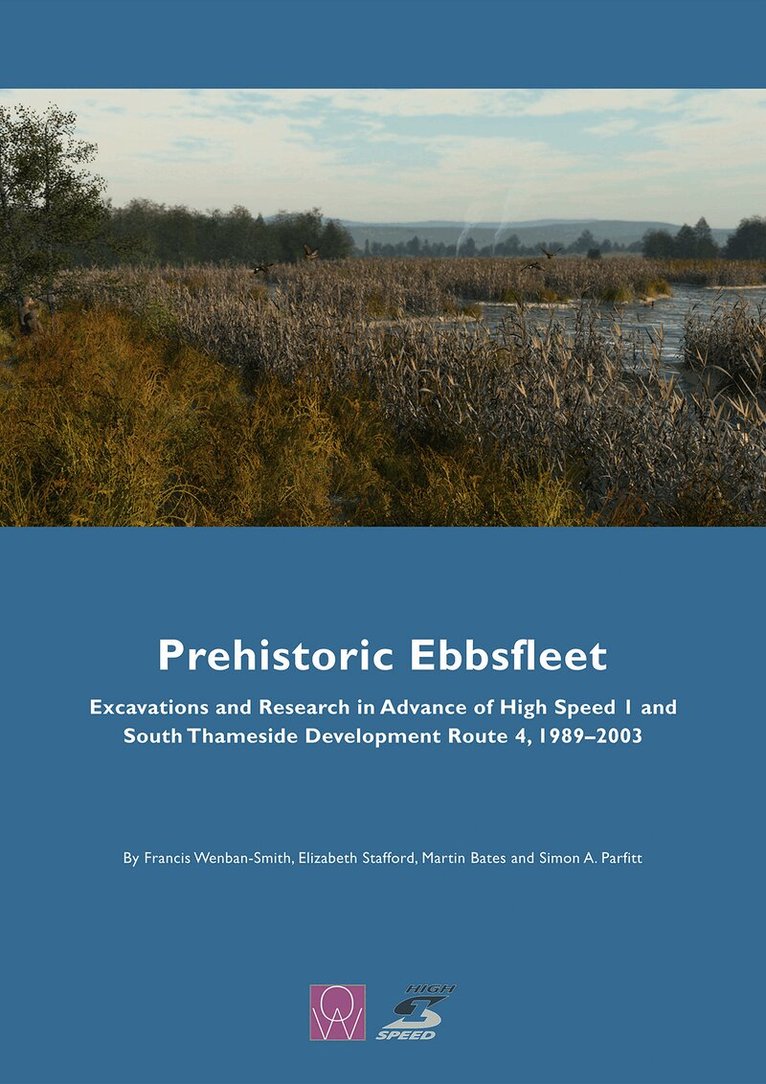
Prehistoric Ebbsfleet
Excavations and Research in Advance of High Speed I and South Thameside Development Route 4, 1989-2003
Inbunden, Engelska, 2020
466 kr
Tillfälligt slut
The construction of High Speed 1 (HS1; formerly the Channel Tunnel Rail Link) entailed a major programme of archaeological investigations across Kent, Essex and Greater London. This volume, the last in a series of reports, presents the archaeological results from investigations in the Ebbsfleet Valley undertaken between 1997 and 2003 on HS1. It also incorporates the results from the associated South Thameside Development Route 4 (STDR 4) road link improvements in the Lower Ebbsfleet Valley carried out for Kent County Council in 2000 and 2001, and investigations on the Ebbsfleet Development (Northfleet Rise) site carried out in 1997.The results of the 2004 Oxford Archaeology early Palaeolithic ‘Ebbsfleet elephant’ excavation, carried out late in the HS1 construction programme, are reported separately (Wenban-Smith 2013).This volume concerns the HS1 study theme defined as ‘Prehistoric Ebbsfleet’. It focuses on landscape development and human occupation from the Palaeolithic through to the Early Iron Age, a span of around 300,000 years. This period incorporates fluctuating extremes of climate between harsh sub-arctic conditions when southern Britain would have been a frozen and uninhabitable treeless waste, and warmer interludes when luxuriant forest was interspersed with grassy plains, rich in what we would now regard as tropical fauna, such as lion, hippopotamus and hyaena.The Ebbsfleet Valley and its immediate area are rich in prehistoric remains, and the area has seen numerous investigations carried out from the 19th century onwards. Despite the lack of ‘modern’ excavation and recording methods, these sites have produced some nationally important sites including Baker’s Hole − Britain’s foremost Palaeolithic site with Levalloisian flint artefacts − rare evidence for ‘Long Blade’ occupation of Final Palaeolithic date, and the type-site for Neolithic Ebbsfleet Ware pottery.The approach taken in this volume is to develop a framework for the changing landscape and environment of the Ebbsfleet Valley through this period, and to present the evidence of human occupation against this background. Although direct human evidence is largely lacking from the present investigations, the prolific results of earlier work have been integrated with the environmental and dating framework established as a result of the HS1 and STDR 4 works.The results are initially presented by Zone within the Ebbsfleet Valley, with detailed specialist reports and development of zonal environmental and dating frameworks. The zonal results are then combined into an overall synthesis and discussion. A reappraisal of the important Palaeolithic flint artefact collections from Baker’s Hole and the Ebbsfleet Channel is also presented.