Peninsular War Battlefield Companion - Böcker
Visar alla böcker i serien Peninsular War Battlefield Companion. Handla med fri frakt och snabb leverans.
3 produkter
3 produkter
266 kr
Skickas
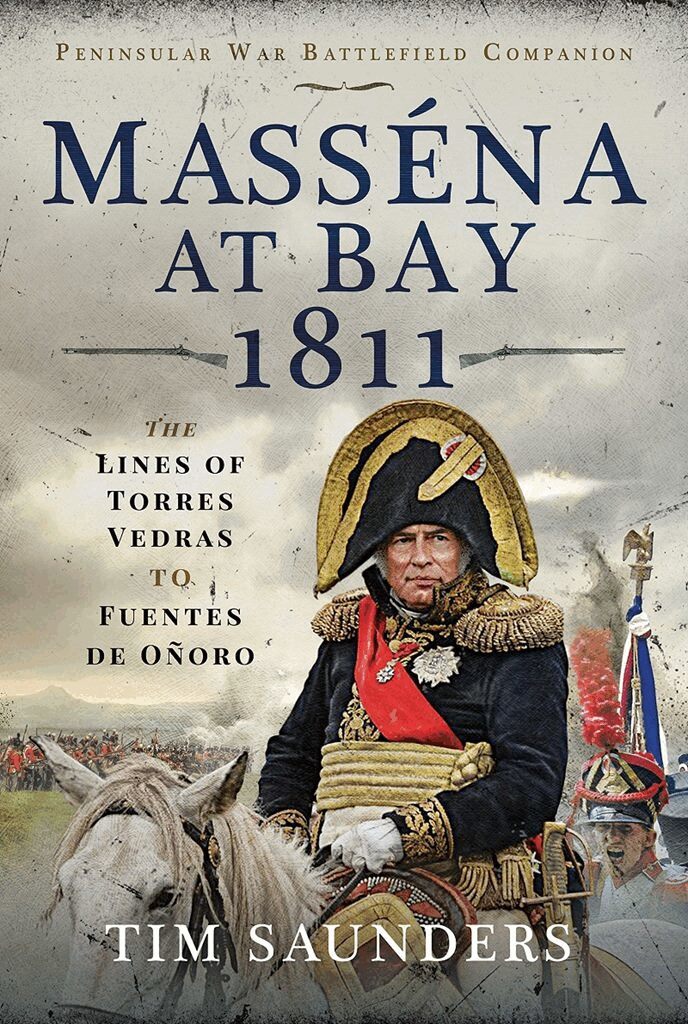
The 1810 French invasion of Portugal, commanded by the veteran marshal Andre Massena, who was known to Napoleon as the 'Spoilt Child of Victory' has been well covered by historians. Conversely, the shock revelation of the presence of the Lines of Torres Vedras baring the French Army of Portugal's way to their objective of Lisbon, and numerous combats through to the Battle of Funtes de Onoro, has been frequently and unjustifiably glossed over.This book, starting with the occupation of the Lines of Torres Vedras, which were at the heart of Wellington's Peninsular strategy from October 1809-1812, is the story of Wellington's pursuit of Massena back to Spain. This was a time when the Peninsular Army was still being forged and Wellington was refining his own art of war. In addition, 1810-1811 was a period when the outcome of the struggle in Iberia was still far from certain, and Wellington could not manoeuvre with the same confidence in the outcome as he could in future years.The series of combats fought at Pombal, Redhina, Foz da Arounce and Sabugal while Massena was at bay, though not categorised as 'general actions', were of the same scale and significance as those of 1808; Rolica and Vimiero. The general action at Funtes de Onoro was one of the most significant of Wellington's victories, but he confessed that 'If Bony had been here we would have been beat'.
266 kr
Skickas
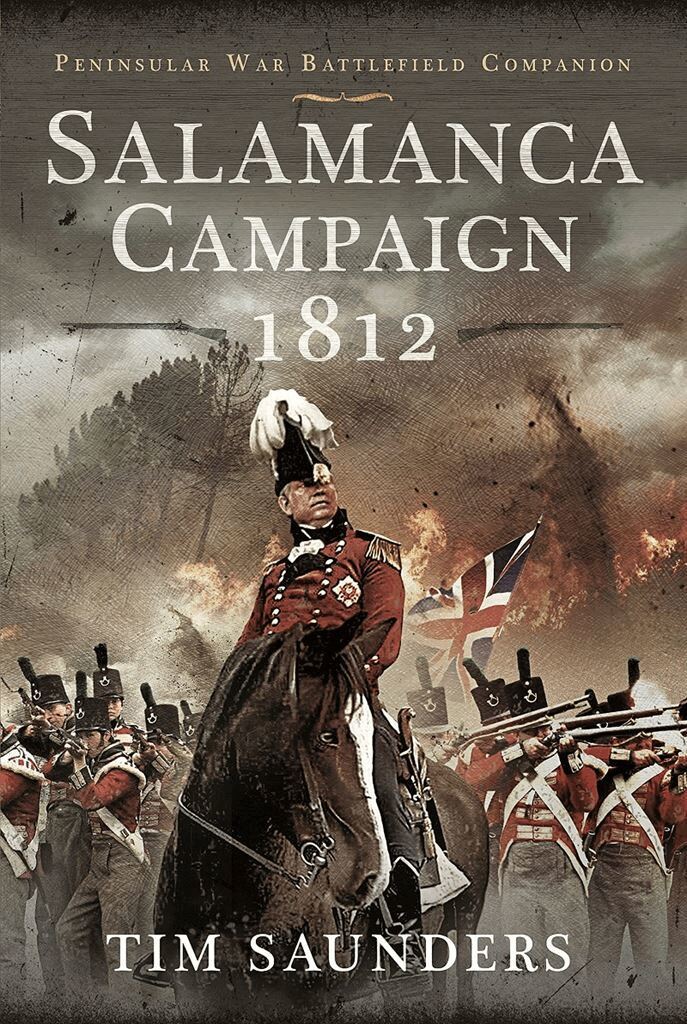
After a gap of two years, the 1812 Salamanca Campaign saw Wellington taking the offensive in Spain against Marshal Marmont's Army of Portugal. Marching from the border fortress of Ciudad Rodrigo which fell to the Allies in January, neither commander was willing to take the risk of a general action without a clear tactical advantage. The result were stand-offs as Wellington offered battle on the San Christobal Heights, but once the small French-garrisoned forts left behind in Salamanca fell, Marmont withdrew to the Douro. For over a week the two armies shared cooling waters of the river before Marmont humbugged' Wellington and fell on the Allied left flank at Castrejon. Wellington rushed to the aid of the Light and 4th divisions with the heavy cavalry. Over the following days Marmont dexterously manoeuvred Wellington back towards Salamanca, with both armies within cannon shot still not risking battle.When it seemed Wellington would have to march back to the safety of Portugal, Marmont finally made a mistake on the plains south of Salamanca on 22 July 1812, by allowing his army to become over extended. Wellington saw what was happening and after weeks of marching and counter marching, the battle the soldiers earnestly hoped for was on.In the past it has been difficult to place the fighting on the ground in the centre of the Salamanca battlefield, where vast clouds of smoke and dust that rolled along the basin' obscured vision even for those fighting. Supplementing their letters, diaries and memoires with modern geographical aids, archaeology and a stout pair of boots, it is now possible to reconcile the sequence of the battle with locations, in a way in which it was not feasible even a few years ago.
297 kr
Skickas
Lieutenant General Sir Arthur Wellesley returned to the Peninsular in 1809 convinced that the country could be held against the French. His audacious crossing of the Duoro and speedy victory at Oporto in May, followed by the deceptively easy ejection of Marshal Soult's corps, confirmed this view, giving him the confidence to plan a campaign with General Cuesta's Army of Extremadura to advance on French-held Madrid via the Tagus Valley.From the outset relations between the two allied generals were poor, not to mention the divisions and enmity within the Spanish juntas and army. Matters only got worse once Wellesley's army entered Spain, thanks to a failure to provide supplies and missed opportunities. Finally, the French army, with King Joseph at its head, marched to confront the allies at Talavera.The fighting did not start well for the British, who were taken by surprise and had to fight hard to extricate themselves from trouble, before inexperienced staff officers and commanders mis-deployed divisions and brigades, nearly resulting in disaster for the Allies when Marshal Victor launched a night attack. The Peninsular Army still had much to learn.The following day, the French attacked again with the full force of a Napoleonic army infantry, cavalry and artillery, but the two-deep British line held and with their confidence shattered, the French withdrew. It was a hard-fought victory for the British commander, who was soon to be ennobled as the Duke of Wellington.