Perspectives on Collecting – serie
Visar alla böcker i serien Perspectives on Collecting. Handla med fri frakt och snabb leverans.
11 produkter
11 produkter
Inbunden, Engelska, 2005
2 244 kr
Skickas inom 10-15 vardagar
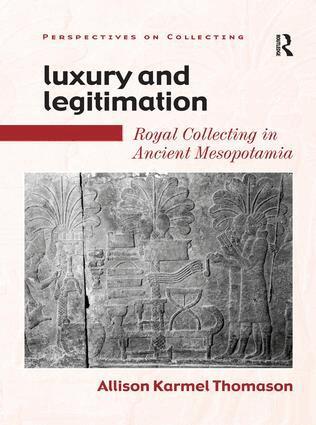
Utilizing a variety of ancient sources, including cuneiform texts, images and archaeological finds, Luxury and Legitimation explores how the collecting of luxury objects contributed to the formation of royal identity in one of the world's oldest civilizations, ancient Mesopotamia (modern Iraq). Allison Thomason makes a significant and timely contribution to the subjects of collecting and material culture studies by bringing a new understanding to the political, cultural and social institutions of an important pre-Classical, non-Western civilization.
Inbunden, Engelska, 2005
2 244 kr
Skickas inom 10-15 vardagar
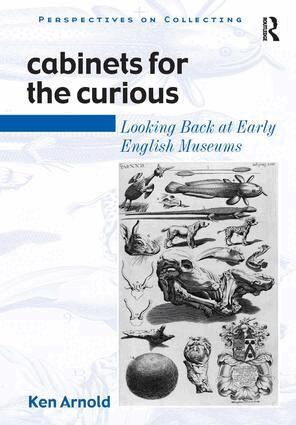
The last few years has, within museums, witnessed nothing short of a revolution. Worried that the very institution was itself in danger of becoming a dusty, forgotten, culturally irrelevant exhibit, vigorous efforts have been made to reshape the museum mission. Fearing that history was coming to be ignored by modern society, many institutions have instead marketed a de-intellectualised heritage, overly relying on computer technology to captivate a contemporary audience. The theme of this work is that we can do much to reassess the rationale that inspires contemporary collections through a study of seventeenth century museums. England's first museums were quite literally wonderful; founded that is on the disciplined application of the faculty of wonder. The type of wonder employed was not that post-Romantic idea of disbelief, but rather an active form of curiosity developed during the Renaissance, particularly by the individuals who set about gathering objects and founding museums to further their enquiries. The argument put forward in this book is that this museological practice of using objects actually to create, as well as disseminate knowledge makes just as much sense today as it did in the seventeenth century and, further, that the best way of reinvigorating contemporary museums, is to return to that form of wonder. By taking such a comparative approach, this book works both as a scholarly historical text, and as an historically informed analysis of the key issues facing today's museums. As such, it will prove essential reading both for historians of collecting and museums, and for anyone interested in the philosophies of modern museum management.
Inbunden, Engelska, 2005
2 349 kr
Skickas inom 10-15 vardagar
During the mid-nineteenth century a debate arose over the form and functions of the public art museum in Britain. Various occurrences caused new debates in Parliament and in the press about the purposes of the public museum which checked the relative complacency with which London's national collections had hitherto been run. This book examines these debates and their influence on the development of professionalism within the museum, trends in collecting and tendencies in museum architecture and decoration. In so doing it accounts for the general development of the London museums between 1850 and 1880, with particular reference to the National Gallery. This involves analysis of art display and its relations with art historiography, alongside institutional and architectural developments at the British Museum, the South Kensington Museum and the National Gallery. It is argued that the underpinning factor in all of these developments was a reformulation of the public museum's mission, which was in turn related to the electoral reform movement. In a potential situation of mass enfranchisement, the 'masses' should be well educated; the museum was openly identified as a useful institution in this sense. This consideration also influenced approaches to collecting and arranging artworks and to configuring their architectural setting within the museum, allowing for displays to be instructive in specific ways. Dissatisfaction with the British Museum and National Gallery buildings and their locations led to proposals to move the national collections, possibly merging and redefining them. Again the socio-political usefulness of the museum was key in determining where the national collections should be housed and in what form of building. This rich debate is analysed with full references to the various forums in and out of Parliament. Part one covers these issues in a thematic structure, examining all of the national collections, their interrelationships and their gradual development of discrete (yet sometimes arbitrary) museological territories. Part two focuses on the individual case of the National Gallery, observing how museological debate was brought to bear on the development of a specific institution. Every architectural development and redisplay is closely analysed in order to gauge the extent to which the products of debate were carried through into practice, and to comprehend the reasons why no museological grand project emerged in London.
3 922 kr
Skickas inom 10-15 vardagar
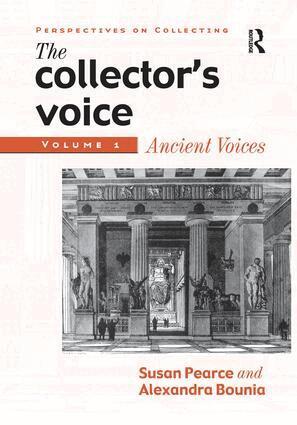
The Collector’s Voice is a major four-volume project which brings together in accessible form material relevant to the history and practice of collecting in the European tradition from c. 1500 BC to the present day. The series demonstrates how attitudes to objects, the collecting of objects, and the shape of the museum institution have developed over the past 3000 years. Material presented includes translations of a wide range of original documents: letters, official reports, verse, fiction, travellers' accounts, catalogues and labels. Volume 1: Ancient Voices, edited by Susan Pearce and Alexandra Bounia Volume 2: Early Voices, edited by Susan Pearce and Kenneth Arnold Volume 3: Imperial Voices, edited by Susan Pearce and Rosemary Flanders Volume 4: Contemporary Voices, edited by Susan Pearce and Paul Martin
Häftad, Engelska, 2016
541 kr
Skickas inom 10-15 vardagar
The Collector’s Voice is a major four-volume project which brings together in accessible form material relevant to the history and practice of collecting in the European tradition from c. 1500 BC to the present day. The series demonstrates how attitudes to objects, the collecting of objects, and the shape of the museum institution have developed over the past 3000 years. Material presented includes translations of a wide range of original documents: letters, official reports, verse, fiction, travellers' accounts, catalogues and labels. Volume 1: Ancient Voices, edited by Susan Pearce and Alexandra Bounia Volume 2: Early Voices, edited by Susan Pearce and Kenneth Arnold Volume 3: Imperial Voices, edited by Susan Pearce and Rosemary Flanders Volume 4: Contemporary Voices, edited by Susan Pearce and Paul Martin
Häftad, Engelska, 2016
541 kr
Skickas inom 10-15 vardagar
The Collector’s Voice is a major four-volume project which brings together in accessible form material relevant to the history and practice of collecting in the European tradition from c. 1500 BC to the present day. The series demonstrates how attitudes to objects, the collecting of objects, and the shape of the museum institution have developed over the past 3000 years. Material presented includes translations of a wide range of original documents: letters, official reports, verse, fiction, travellers' accounts, catalogues and labels. Volume 1: Ancient Voices, edited by Susan Pearce and Alexandra Bounia Volume 2: Early Voices, edited by Susan Pearce and Kenneth Arnold Volume 3: Imperial Voices, edited by Susan Pearce and Rosemary Flanders Volume 4: Contemporary Voices, edited by Susan Pearce and Paul Martin
Inbunden, Engelska, 2001
1 378 kr
Skickas inom 10-15 vardagar
The Collector’s Voice is a major four-volume project which brings together in accessible form material relevant to the history and practice of collecting in the European tradition from c. 1500 BC to the present day. The series demonstrates how attitudes to objects, the collecting of objects, and the shape of the museum institution have developed over the past 3000 years. Material presented includes translations of a wide range of original documents: letters, official reports, verse, fiction, travellers' accounts, catalogues and labels. Volume 1: Ancient Voices, edited by Susan Pearce and Alexandra Bounia Volume 2: Early Voices, edited by Susan Pearce and Kenneth Arnold Volume 3: Imperial Voices, edited by Susan Pearce and Rosemary Flanders Volume 4: Contemporary Voices, edited by Susan Pearce and Paul Martin
Inbunden, Engelska, 2000
426 kr
Skickas inom 10-15 vardagar
The Collector’s Voice is a major four-volume project which brings together in accessible form material relevant to the history and practice of collecting in the European tradition from c. 1500 BC to the present day. The series demonstrates how attitudes to objects, the collecting of objects, and the shape of the museum institution have developed over the past 3000 years. Material presented includes translations of a wide range of original documents: letters, official reports, verse, fiction, travellers' accounts, catalogues and labels. Volume 1: Ancient Voices, edited by Susan Pearce and Alexandra Bounia Volume 2: Early Voices, edited by Susan Pearce and Kenneth Arnold Volume 3: Imperial Voices, edited by Susan Pearce and Rosemary Flanders Volume 4: Contemporary Voices, edited by Susan Pearce and Paul Martin
Inbunden, Engelska, 2002
2 460 kr
Skickas inom 10-15 vardagar
The Collector’s Voice is a major four-volume project which brings together in accessible form material relevant to the history and practice of collecting in the European tradition from c. 1500 BC to the present day. The series demonstrates how attitudes to objects, the collecting of objects, and the shape of the museum institution have developed over the past 3000 years. Material presented includes translations of a wide range of original documents: letters, official reports, verse, fiction, travellers' accounts, catalogues and labels. Volume 1: Ancient Voices, edited by Susan Pearce and Alexandra Bounia Volume 2: Early Voices, edited by Susan Pearce and Kenneth Arnold Volume 3: Imperial Voices, edited by Susan Pearce and Rosemary Flanders Volume 4: Contemporary Voices, edited by Susan Pearce and Paul Martin
Inbunden, Engelska, 2002
1 378 kr
Skickas inom 10-15 vardagar
The Collector’s Voice is a major four-volume project which brings together in accessible form material relevant to the history and practice of collecting in the European tradition from c. 1500 BC to the present day. The series demonstrates how attitudes to objects, the collecting of objects, and the shape of the museum institution have developed over the past 3000 years. Material presented includes translations of a wide range of original documents: letters, official reports, verse, fiction, travellers' accounts, catalogues and labels. Volume 1: Ancient Voices, edited by Susan Pearce and Alexandra Bounia Volume 2: Early Voices, edited by Susan Pearce and Kenneth Arnold Volume 3: Imperial Voices, edited by Susan Pearce and Rosemary Flanders Volume 4: Contemporary Voices, edited by Susan Pearce and Paul Martin
Inbunden, Engelska, 2004
1 434 kr
Tillfälligt slut
The phenomenon of collecting as a systematic activity undertaken for symbolic rather than actual needs, is traditionally taken to originate in the middle of the fifteenth century, when the first cabinets of curiosities appear in Italy. Yet it is clear that the practice of collecting started long before that, indeed its origins can be traced back thousands of years to European prehistoric communities. Whilst this early genesis is, due to lack of written records, still shrouded in much mystery, The Nature of Classical Collecting argues that the collecting practices of classical Greece and Rome offer a rich tapestry of experiences which can be reconstructed to illuminate a pivotal period in the long and ever developing phenomenon of collecting. Utilizing a wide variety of examples of classical collections - including grave goods, the accumulations of Greek temples and open-air shrines, the royal collections of Hellenistic kings, Roman art and curiosity collections, and relics - The Nature of Classical Collecting focuses on the field of the 'pre-history' of collecting, a neglected yet critical phase that helped crystallize the western concept of collecting. Drawing primarily on Latin writings from the period 100 BCE to 100 CE it shows how collecting underwent a transition from a religious and political activity, to an intellectual practice in which connoisseurship could impart social status. It also demonstrates how the appreciation of objects and artists changed as new qualities were attributed to material culture, resulting in the establishment of art markets, patronage and an interest in the history of art. By exploring these early developments, The Nature of Classical Collecting not only provides a fascinating insight into the culture of late Hellenistic/early Imperial Roman collecting, but also offers a much fuller grounding for understanding the influences and inspirations of those Renaissance collectors who themselves were to have such a profound influence on the course of European art, architecture and culture.