Plains Histories – serie
Visar alla böcker i serien Plains Histories. Handla med fri frakt och snabb leverans.
13 produkter
13 produkter
Inbunden, Engelska, 2011
391 kr
Skickas inom 3-6 vardagar
In 1910 a central Nebraska newspaper, the Aurora Sun, printed an editorial condemning a physician it dubbed “the notorious Dr. Flippin.” Dr. Charles Flippin’s reputation came under siege throughout the state as another newspaper editor alleged that the African American physician had committed “that most despicable of all crimes”—illegal abortion. For thirty years rural Kansans and Nebraskans had hailed Flippin as a godsend because of his skill as a physician and his willingness to help anyone regardless of race or social class. Despite performing abortions even for young white women, Flippin managed to avoid conviction in several trials until finally pleading guilty in 1924. Tallman details the doctor’s extraordinary life and analyzes the forces behind the prosecution of the aging physician. The first book to focus exclusively on attitudes towards abortion in early twentieth-century rural communities, The Notorious Dr. Flippin supplies long overlooked context for current debate and enriches studies of African American, western, women’s, and medical history.
Inbunden, Engelska, 2011
635 kr
Skickas inom 3-6 vardagar
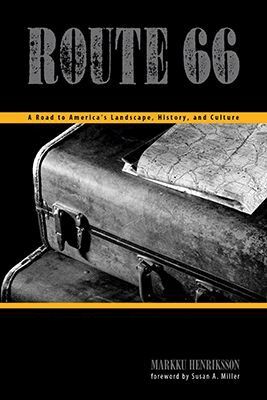
When Markku Henriksson was growing up in Finland, the song ""(Get Your Kicks on) Route 66"" was one of only two he could recognize in English or Finnish. It was not until 1989 that Henriksson would catch his first glimpse of the legendary highway. It was enough to lure Henriksson four years later to the second international Route 66 festival in Flagstaff. There he realized that Route 66 was the perfect basis for a multidisciplinary American Studies course, one that he has been teaching at the University of Helsinki ever since.Forming the soul of this work and yielding a more holistic and complex picture than any previous study are Henriksson's 1996 (east to west) and 2002 (west to east) journeys along the full length of the Route and his mastery of the literature and film that illuminate the Route's place in Americana. Not a history of the road itself and the towns along the way, Henriksson's perspective offers insight into America and its culture as revealed in its peoples, their histories, cultures, and music as displayed along the Mother Road.
Inbunden, Engelska, 2011
411 kr
Skickas inom 3-6 vardagar
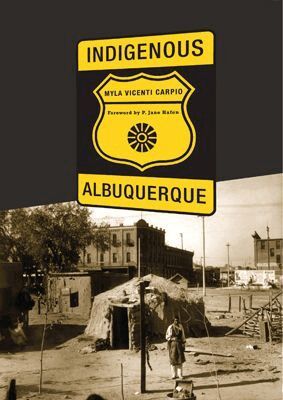
Some 30,000 American Indians call Albuquerque, New Mexico, home, and twelve Indigenous nations, mostly Pueblo, live within a fifty-mile radius of it. Yet no study until now has focused on the complexities of urban American Indian experience in the state’s largest city. Indigenous Albuquerque examines the dilemmas confronting urban Indians as a result of a colonized past—and present—and the relationship between the City of Albuquerque and its Native residents. Treating not only issues of identity but also education, welfare, health care, community organizations, and community efforts to counter colonization, Myla Vicenti Carpio explores every aspect of Indigenous life in the city. “Urban” as a lived experience, she suggests, does not occur in isolation from either Indigenous communities’ survival or the legacies of Euroamerican colonization. This experience is integrally connected not only through cultural, religious, political, and economic spheres, but also through the legacy of federal reservation police, and thus cannot be understood as distinct from reservation life. By specifically considering the intersection of city and citizen, Vicenti Carpio expresses the dilemmas confronting urban Indians as a result of their colonized past. While Indigenous Albuquerque reflects the discipline of American Indian Studies, it is also relevant to American Indian history, ethnic studies, public policy, and urban history.
Inbunden, Engelska, 2012
380 kr
Skickas inom 3-6 vardagar
From 1894 to 1934, a span of forty years that saw its parent company go from coal mining to oil drilling, the Texas Pacific Mercantile and Manufacturing Company operated and managed the various commercial and service enterprises essential to the life and history of Thurber, Texas. Thurber was a company town, wholly owned by the Texas and Pacific Coal Company, and the inhabitants viewed the “company store” with suspicion before and after unionisation in 1903, believing it monopolistic and exploitative. But to call the mercantile a monopoly, or a mere contrivance to exploit labourers, paints an incomplete portrait of the company store as it existed in Thurber and elsewhere. With a keen eye for spotting telling detail, Gene Rhea Tucker examines a wealth of company ledgers, interviews, and newspaper accounts, presenting a case study not only of the microcosm of Thurber and TPM&M but of relations between labour and management in industrialising Texas, and a larger story of the complex role of the company store and company town in America.
Inbunden, Engelska, 2013
410 kr
Skickas inom 3-6 vardagar
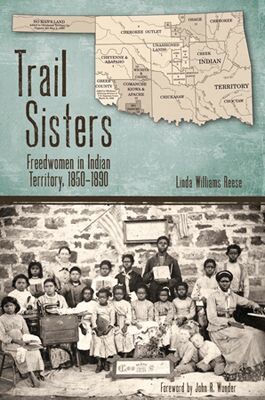
African American women enslaved by the Cherokee, Choctaw, Chickasaw, Seminole, and Creek Nations faced an arduous journey from Indian Territory to free citizen status in 1890. Following the Trail of Tears in the footsteps of their Indian slaveholders, they experienced the same hardships, death, and poverty of relocation. The trail from enslavement to freedom was harsh and often bitter, but Indian Territory freedwomen join their Indian and white sisters as pioneers in the American West.
Häftad, Engelska, 2016
283 kr
Skickas inom 10-15 vardagar
Amid the deadly racial violence of the 1960s, an unassuming student from a fundamentalist Christian home in Omaha emerged as a leader and nationally recognized black activist. Ernest Chambers, elected to the Nebraska State Legislature in 1970, eventually became one of the most powerful legislators the state has ever known. Omaha native Tekla Agbala Ali Johnson illuminates his embattled career as a fiercely independent defender of the downtrodden.Tracing the growth of the Black Power Movement in Nebraska and throughout the US, Johnson discovers its unprecedented emphasis on electoral politics. For the first time since Reconstruction, voters catapulted hundreds of African American community leaders into state and national political arenas. Special-interest groups and political machines would curb the success of aspiring African American politicians, just as urban renewal would erode their geographical and political bases, compelling the majority to join the Democratic or Republican parties. Chambers was one of few not to capitulate. In her revealing study of this man and those he represented, Johnson portrays one intellectual’s struggle alongside other African Americans to actualize their latent political power
Häftad, Engelska, 2017
295 kr
Skickas inom 3-6 vardagar
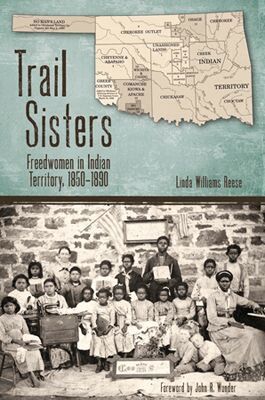
African American women enslaved by the Cherokee, Choctaw, Chickasaw, Seminole, and Creek Nations led lives ranging from utter subjection to recognized kinship. Regardless of status, during Removal, they followed the Trail of Tears in the footsteps of the slaveholders, suffering the same life-threatening hardships and poverty. As if Removal to Indian Territory weren’t cataclysmic enough, the Civil War shattered the worlds of these slave women even more, scattering families, destroying property, and disrupting social and family relationships. Suddenly free, they had nowhere to turn. Freedwomen found themselves negotiating new lives within a labyrinth of federal and tribal oversight, Indian resentment, and intruding entrepreneurs and settlers. Remarkably, they reconstructed their families and marshaled the skills to fashion livelihoods in a burgeoning capitalist environment. They sought education and forged new relationships with immigrant black women and men, managing to establish a foundation for survival. Linda Williams Reese is the first to trace the harsh and often bitter journey of these women from arrival in Indian Territory to free-citizen status in 1890. In doing so, she establishes them as pioneers of the American West equal to their Indian and other Plains sisters.
Inbunden, Engelska, 2019
465 kr
Skickas inom 3-6 vardagar
The Elkhorn River originates in north-central Nebraska and empties into the Platte River just west of Omaha. One of the first written records of the Elkhorn describes a flood. A flood hindered travel up the river by the valley's first non-Indian settlers. Decade after decade, floods have swept away mill dams, destroyed crops, drowned stock, soaked inventories, filled basements, undercut roads, washed out railroads and bridges, turned unfortunate riverside homes–even a dance hall–into unwieldy watercraft, and killed people. Everyone in the Elkhorn Valley agreed the Flood of 1944 was the worst in history. Until the deadly Flood of 2010 took the title. From a perspective unusual on the Great Plains–the problem of too much water– Flood on the Tracks offers an intimate portrait of life in the Elkhorn River Basin of northeast Nebraska. In a region often defined by aridity, rivers and their basins have provided sustenance, shelter, fertile soil, and overland highways. In many ways Plains rivers organize human lives. When they overflow, which they can be counted on to do, they disorganize them. Using Plains Indian winter counts, postcards, photographs, newspaper accounts, government records, and more, Flood on the Tracks chronicles the river's natural and human history from the Plains Indians into the twenty-first century. The Elkhorn's floods show us how the nature of disaster has changed and how Plainsfolk live–and die–with a river.
Inbunden, Engelska, 2019
465 kr
Skickas inom 3-6 vardagar
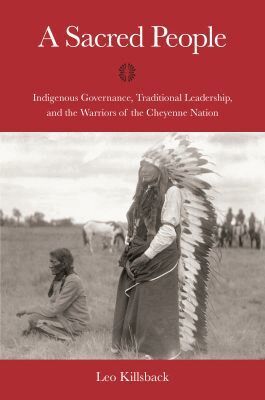
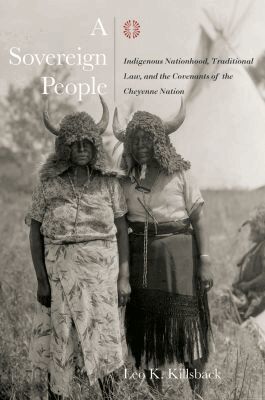
Selected for the 2021 Donald L. Fixico Award for Best Book on American Indian and Canadian First Nations HistoryBefore an indigenous people can decolonize, Leo Killsback explains, they must first understand what the world was like before colonization. Such understanding allows indigenous people to generate realistic goals and achieve positive change, reinventing themselves into people and nations who can honor original ways without corrupting or disgracing them.In two volumes, A Sacred People and A Sovereign People, Killsback, a citizen of the Northern Cheyenne Nation, reconstructs and rekindles an ancient Cheyenne world--ways of living and thinking that became casualties of colonization and forced assimilation. Spanning more than a millennium of antiquity and recovering stories and ideas interpreted from a Cheyenne worldview, the works’ joint purpose is rooted as much in a decolonization roadmap as it is in preservation of culture and identity for the next generations of Cheyenne people.Dividing the story of the Cheyenne Nation into pre- and post-contact, A Sacred People and A Sovereign People lay out indigenously conceived possibilities for employing traditional worldviews to replace unhealthy and dysfunctional ones bred of territorial, cultural, and psychological colonization.Together these volumes use an ancient past to confront long-standing challenges and to speak to the future. Comprising teachings that go to the true identities of the old ones, they reveal a way of thinking that today very few people know and even fewer live. Within such revelations about past leaders and events, Killsback demonstrates, lie the foundations for rebuilding and healing the Cheyenne Nation.
Häftad, Engelska, 2019
465 kr
Skickas inom 3-6 vardagar
Selected for the 2021 Donald L. Fixico Award for Best Book on American Indian and Canadian First Nations History(Volume 2 of 2) Killsback, a citizen of the Northern Cheyenne Nation, reconstructs and rekindles an ancient Cheyenne world--ways of living and thinking that became casualties of colonization and forced assimilation. Spanning more than a millennium of antiquity and recovering stories and ideas interpreted from a Cheyenne worldview, the works' joint purpose is rooted as much in a decolonization roadmap as it is in preservation of culture and identity for the next generations of Cheyenne people. Dividing the story of the Cheyenne Nation into pre- and post-contact, A Sacred People and A Sovereign People lay out indigenously conceived possibilities for employing traditional worldviews to replace unhealthy and dysfunctional ones bred of territorial, cultural, and psychological colonization.
Häftad, Engelska, 2022
422 kr
Skickas inom 3-6 vardagar
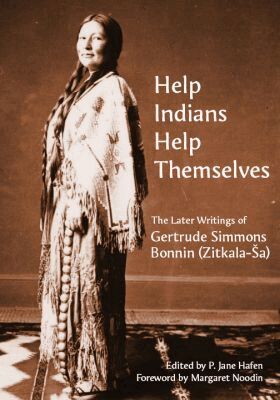
Zitkala-Ša, also known as Gertrude Simmons Bonnin, was born on the Yankton Sioux reservation in 1876 and went on to become one of the most influential American Indian writer/activists of the twentieth century. "Help Indians Help Themselves": The Later Writings of Gertrude Simmons Bonnin (Zitkala-Ša) is a critical collection of primary documents written by Bonnin who was principally known for the memoir of her boarding school experience, "Help Indians Help Themselves" expands the published work of Zitkala-Ša, adding insight to a life of writing and political activism on behalf of American Indians in the early twentieth century. Edited by P. Jane Hafen, "Help Indians Help Themselves" documents Bonnin's passion for justice in Indian America and outlines the broad scope of her life's work. In the American Indian Magazine, the publication of the Society of American Indians, and through her work for the National Council of American Indians, Bonnin developed her emphasis, as Hafen writes, on "resistance, tribal nationalism, land rights and call for civil rights." "Help Indians Help Themselves" also brings to light Bonnin's letters, speeches, and congressional testimony, which coincide with important developments of the relationship between American Indians and the U.S. federal government. Legislation such as the Citizenship Act of 1924, the Meriam Report of 1928, and the Indian Reorganization Act of 1934 is reflected through the work collected in "Help Indians Help Themselves". In these writings, in newsletters, and in voluminous correspondence—most of which have never before been published—Bonnin advocates tirelessly for "the Indian Cause.
Inbunden, Engelska, 2020
422 kr
Skickas inom 3-6 vardagar
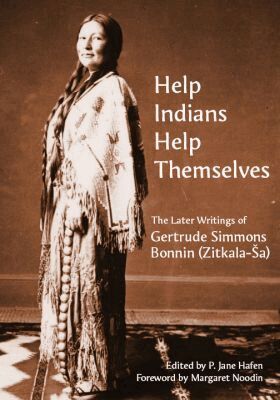
Zitkala-Ša, also known as Gertrude Simmons Bonnin, was born on the Yankton Sioux reservation in 1876 and went on to become one of the most influential American Indian writer/activists of the twentieth century. "Help Indians Help Themselves": The Later Writings of Gertrude Simmons Bonnin (Zitkala-Ša) is a critical collection of primary documents written by Bonnin who was principally known for the memoir of her boarding school experience, "Help Indians Help Themselves" expands the published work of Zitkala-Ša, adding insight to a life of writing and political activism on behalf of American Indians in the early twentieth century. Edited by P. Jane Hafen, "Help Indians Help Themselves" documents Bonnin's passion for justice in Indian America and outlines the broad scope of her life's work. In the American Indian Magazine, the publication of the Society of American Indians, and through her work for the National Council of American Indians, Bonnin developed her emphasis, as Hafen writes, on "resistance, tribal nationalism, land rights and call for civil rights." "Help Indians Help Themselves" also brings to light Bonnin's letters, speeches, and congressional testimony, which coincide with important developments of the relationship between American Indians and the U.S. federal government. Legislation such as the Citizenship Act of 1924, the Meriam Report of 1928, and the Indian Reorganization Act of 1934 is reflected through the work collected in "Help Indians Help Themselves". In these writings, in newsletters, and in voluminous correspondence—most of which have never before been published—Bonnin advocates tirelessly for "the Indian Cause.
Häftad, Engelska, 2023
324 kr
Skickas inom 10-15 vardagar
In Texas, Wichita Falls lies at the nexus of many strains of American environmental history. Covering Progressive Era land ethics, water management, boom and bust oil towns, colorful municipal boosters, and many other topics. The Falls of Wichita Falls analyzes a local history with dramatically national implications.Beginning with Teddy Roosevelt's famous wolf hunt in Frederick, Oklahoma and covering the long twentieth century up through the emergence of Indian Casinos, Jahue Anderson's incisive book challenges the myth of rugged individualism as the central feature of the Red Rolling Plains cultural landscape.Crucially, Anderson examines how local indigenous environmental knowledge was washed out by moonshot plans to irrigate a valley, a project that ultimately failed to improve living conditions. The dreams of an "irrigated valley" gave way to a cultural landscape of oil derricks, military installations, suburbs, and a complex system of reservoirs and pumping stations built on the Little Wichita River to bring water to people living in the Big Wichita River Valley.The Falls of Wichita Falls sketches an environmental blueprint that encapsulates a thirsty city and its people, the commodification of natural resources, and the endemic ideological postures shaping how Americans attempt to subdue the land of the American west.