• Fri frakt över 249 kr
  • •
  • Snabba leveranser
  • •
  • Billiga böcker
Kundservice

Du är på sajten för privatpersoner.

Företag, bibliotek eller offentlig verksamhet?

Du handlar på classic.bokus.com, där alla dina funktioner finns intakta.
Till classic.bokus.com
Bokus logotyp. Gå till startsidan.
  • Erbjudanden
  • Nyheter
  • Student
  • Topplistor
  • Barn & ungdom
  • Bokus Play
  • E-böcker
  • Pocketböcker
  • Spel & pussel

10% rabatt på allt med kod NYSTART10 →

Sidfot

Mina sidor

    Hjälp

    • Kundservice
    • Vanliga frågor och svar
    • Frakt och leverans
    • Retur vid ångerrätt
    • Reklamera vara
    • Betalning
    • Köpvillkor
    • Allmänna villkor
    • Information om webbplatsens tillgänglighet

    Om Bokus

    • Om oss
    • Pressrum
    • För studenter
    • För företag
    • För bibliotek och offentlig verksamhet
    • För leverantörer
    • Hållbarhet

    Populärt

    • Aktuella erbjudanden
    • Presentkort
    • Studentlitteratur
    • Nya böcker
    • Topplistor
    • Signerade böcker
    • Engelska böcker

    Inspiration

    • Boktips
    • BookTok
    • Populära bokserier
    • Barnbokskaraktärer
    • Populära författare
    Logotyp för Bokus
    Följ oss på Facebook (extern länk)Följ oss på Instagram (extern länk)Följ oss på YouTube (extern länk)Följ oss på TikTok (extern länk)
    bokus @ CookiesAnpassa cookiesIntegritetspolicyKöpvillkor
    Till Citymail hemsida (extern länk)Till Budbee hemsida (extern länk)Till Postnord hemsida (extern länk)Till Schenker hemsida (extern länk)Till Early Bird hemsida (extern länk)Till Walleys hemsida (extern länk)
    1. Biografier
    2. Biografier
    3. Biografi: historia, politik och försvar

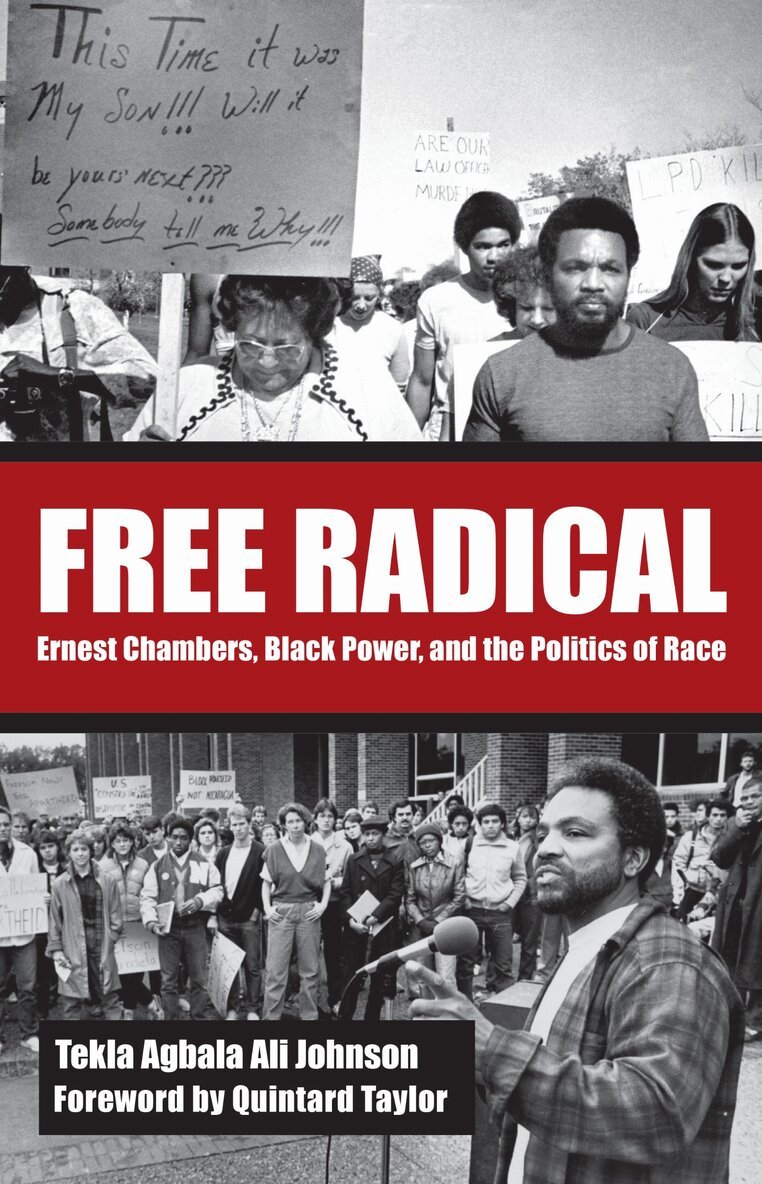
    Free Radical

    Ernest Chambers, Black Power, and the Politics of Race

    AvTekla Agbala Ali Johnson

    Häftad, Engelska, 2016

    Del i serien Plains Histories

    287 kr

    Beställningsvara. Skickas inom 10-15 vardagar. Fri frakt över 249 kr.

    Beskrivning

    Amid the deadly racial violence of the 1960s, an unassuming student from a fundamentalist Christian home in Omaha emerged as a leader and nationally recognized black activist. Ernest Chambers, elected to the Nebraska State Legislature in 1970, eventually became one of the most powerful legislators the state has ever known. Omaha native Tekla Agbala Ali Johnson illuminates his embattled career as a fiercely independent defender of the downtrodden.Tracing the growth of the Black Power Movement in Nebraska and throughout the US, Johnson discovers its unprecedented emphasis on electoral politics. For the first time since Reconstruction, voters catapulted hundreds of African American community leaders into state and national political arenas. Special-interest groups and political machines would curb the success of aspiring African American politicians, just as urban renewal would erode their geographical and political bases, compelling the majority to join the Democratic or Republican parties. Chambers was one of few not to capitulate. In her revealing study of this man and those he represented, Johnson portrays one intellectual’s struggle alongside other African Americans to actualize their latent political power

    Produktinformation

    • Utgivningsdatum:2016-01-15
    • Mått:210 x 233 x 22 mm
    • Vikt:471 g
    • Format:Häftad
    • Språk:Engelska
    • Serie:Plains Histories
    • Antal sidor:320
    • Förlag:Texas Tech Press,U.S.
    • Medarbetare:Quintard Taylor
    • ISBN:9780896729834

    Utforska kategorier

    • Biografi: historia, politik och försvar inom Biografier
    • Regionalt styre och förvaltning inom Samhälle och politik
    • Politiskt förtryck inom Samhälle och politik

    Mer om författaren

    Tekla Agbala Ali Johnson, born in North Omaha, Nebraska, is the professional public historian at the Southern Preservation Center in Charlotte, North Carolina.

    Recensioner i media

    Johnson’s analysis . . . puts Chambers’ career into context with those of other significant civil rights leaders on the state and national scenes. It also draws parallels between Chambers’ beliefs and those of international philosophers who studied colonialism and oppression.—Omaha.com