Plenum Behavior Therapy Series - Böcker
Visar alla böcker i serien Plenum Behavior Therapy Series. Handla med fri frakt och snabb leverans.
13 produkter
13 produkter
2 246 kr
Skickas inom 10-15 vardagar
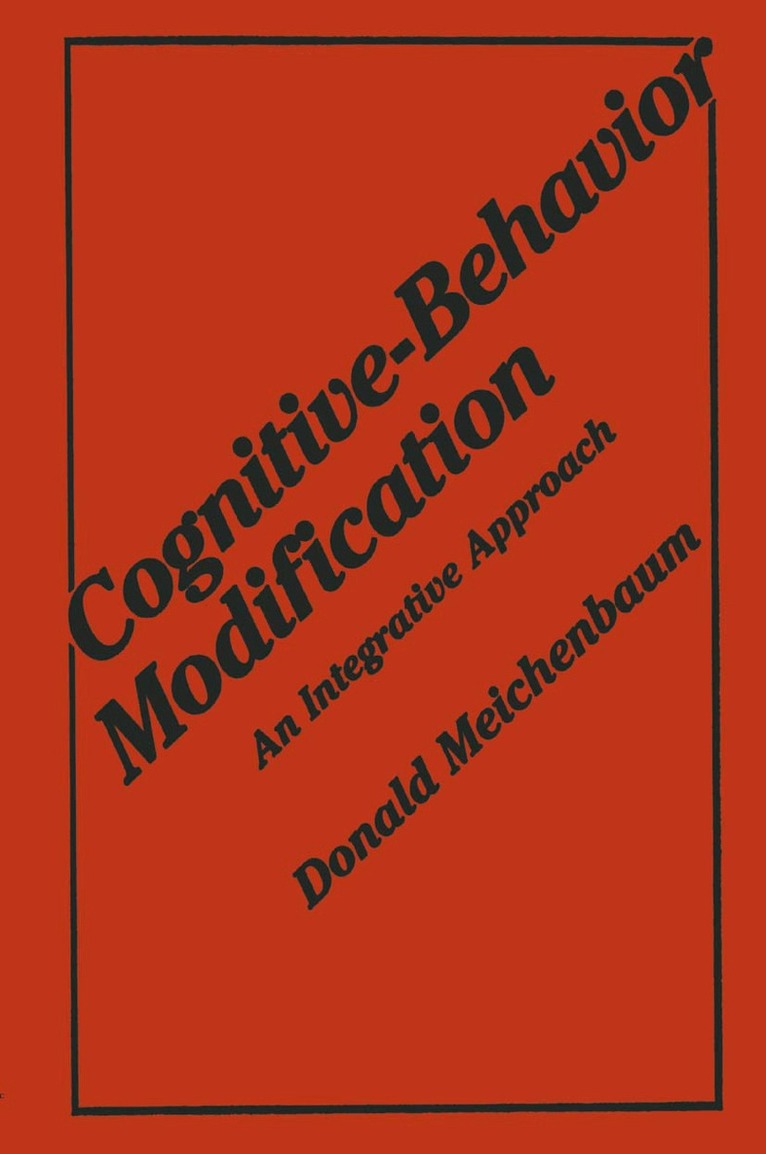
This book is an account of a personal journey through a research program. A number of people have helped guide my way. To them I am deeply grateful. Special thanks are offered to my students, whose constant stimulation and provocation were incentives to write this book. Moreover, in the belief that they would never show the initiative to put together a festschrift for me (Le., a book dedicated to someone for his contributions), I decided to do it myself. Several people cared enough to offer editorial criticisms, namely, Myles Genest, Barney Gilmore, Roy Cameron, Sherryl Goodman, and Dennis Turk. The reader benefits from their perspicacity. Finally, to my parents, who taught me to talk to myself, and to my family, without whose constant input this book would have been completed much sooner, but would have been much less fun, I dedicate this book. D.M. 5 Contents Prologue 11 Chapter 1 17 Self-Instructional Training Hyperactive, Impulsive Children: An Illustration of a Search for a Deficit 23 Luria's Model (24), Private Speech and Mediational Skills (27) Self-Instructional Treatment of Hyperactive, Impulsive Children: A Beginning 31 Empirical Studies of Self-Instructional Training 34 Combining Self-Instructions and Operant Procedures (44), Reasoning Rediscovered (47), Importance of Attributional Style (48), Taking Stock (54) Chapter 2 The Clinical Application of Self-Instructional Training to Other Clinical Populations: Three Illustrations 55 Social Isolates 56 Creative Problem-Solving 58 Adult Schizophrenics 68 What Shall We Say to Ourselves When We Obtain Negative Results? 77 7 8 Contents Chapter 3
1 533 kr
Skickas inom 10-15 vardagar
This book owes its existence to an ideal, a burning frustration, and a trusted believer. The ideal was the sense that governed my feelings about systematic desensitization during my early introduction to its benefits. It is hard to put into words the initial doubts that pervaded me during my first attempt with desensitization with a seriously phobic client, as I re ligiously worked my way through the procedure: "Will this client really become relaxed? And then what-will the visualization actually occur? And then what-will the fear really vanish, just like that?" And oh, the feeling of discovery, and validation, when indeed the process worked, and worked well. Desensitization was everything it was claimed to be: systematic, clean, theoretically grounded, empirically tested, applicable as a behavioral technology regardless of one's own theoretical bias. And there were testable outcomes; concrete evidence for change. So I became invested and aimed at doing more with desensitization. My students and I raised some theoretical questions in order to open the doors for revising the desensitization to improve on its applications. We tested the rapidity with which desensitization could be accomplished, shortening the time by shortening the anxiety hierarchy. Along with others, we studied the question of group delivery, and reducing the total number of sessions, as well as examining the use of audiotaped delivery of services.
1 096 kr
Skickas inom 10-15 vardagar
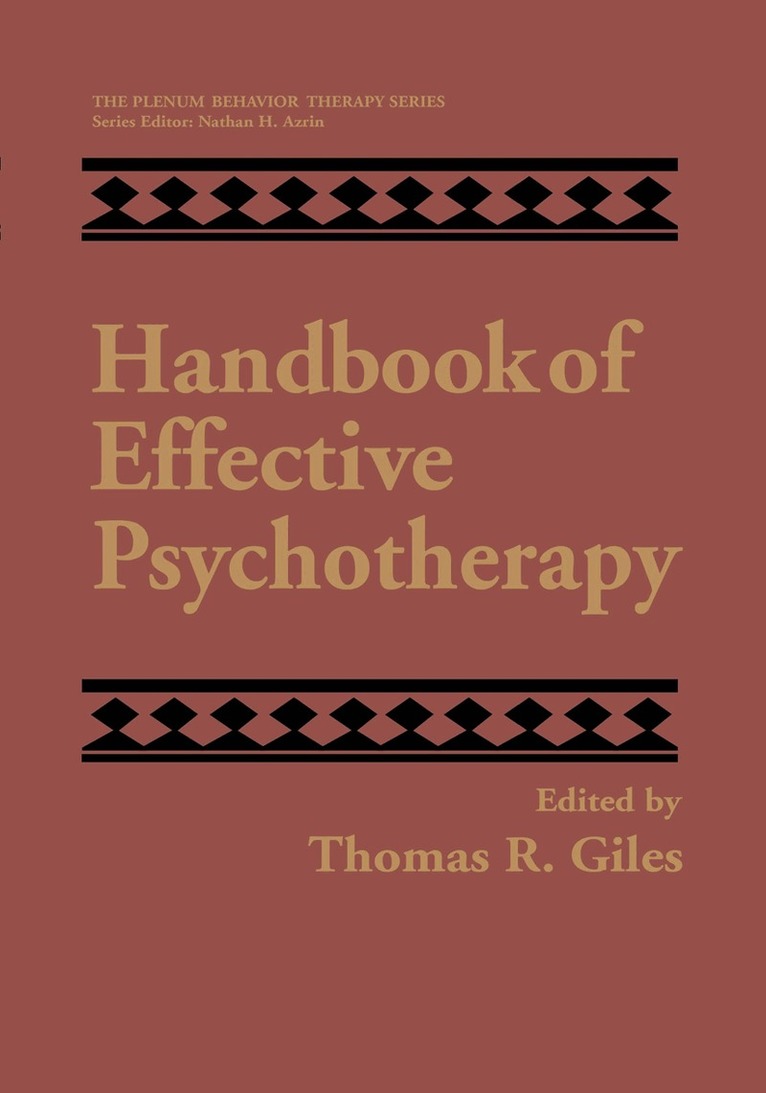
Handbook of Effective Psydwtherapy is the culmination of 15 years of personal interest in the area of psychotherapy outcome research. In my view, this is one of the most interesting and crucial areas in the field: it has relevance across disparate clinical disciplines and orientations; it provides a measure of how far the field has progressed in its efforts to improve the effectiveness of psychotherapeutic inter vention; and it provides an ongoing measure of how readily clinicians adapt to scientific indications in state-of-the-art care. Regrettably, as several of the chapters in this volume indicate, there is a vast chasm between what is known about the best available treatments and what is applied as the usual standard of care. On the most basic level there appears to be a significant number of clinicians who remain reluctant to acknowledge that scien tific study can add to their ability to aid the emotionally distressed. I hope that this handbook, with its many delineations of empirically supported treatments, will do something to remedy this state of affairs.
536 kr
Skickas inom 10-15 vardagar
In December 1993, ISNAR, in collaboration with International Consortium for Application of Systems Approaches, organized a three-day workshop on systems approaches and modelling for agricultural development. Sponsored by the Dutch Ministry for Development Cooperation, the workshop was attended by participants from 12 national agricultural research systems (NARS), nine international agricul tural research centers (lARCs), and five advanced research organizations (AROs). Although application of systems approaches in agricultural research and resource management is a rather new field, there is already increasing demand for implemen tation of these approaches. This will require a critical mass of specialists in the NARS and IARCs. Before this critical mass can be obtained, however, the experience that has been gained in this area needs to be evaluated, further possibilities need to be explored, and new objectives and targets need to be set. This book, which contains the papers presented at the workshop, assesses the state of the art of systems approaches in agricultural research, resource management, and rural planning. It also gives an impression of the evolution of this interdisciplinary field and its use in national and international research centers. Another, less tangible, outcome of the workshop was its contribution toward strengthening the network of NARS, lARCs, and AROs. It gave participants and organizers a chance to develop contacts, and provided an opportunity to make the first proposals for collaborative programs. Special thanks are due to Peter Goldsworthy and Luc Boerboom for their crucial role in making the workshop a success in this regard.
1 064 kr
Skickas inom 10-15 vardagar
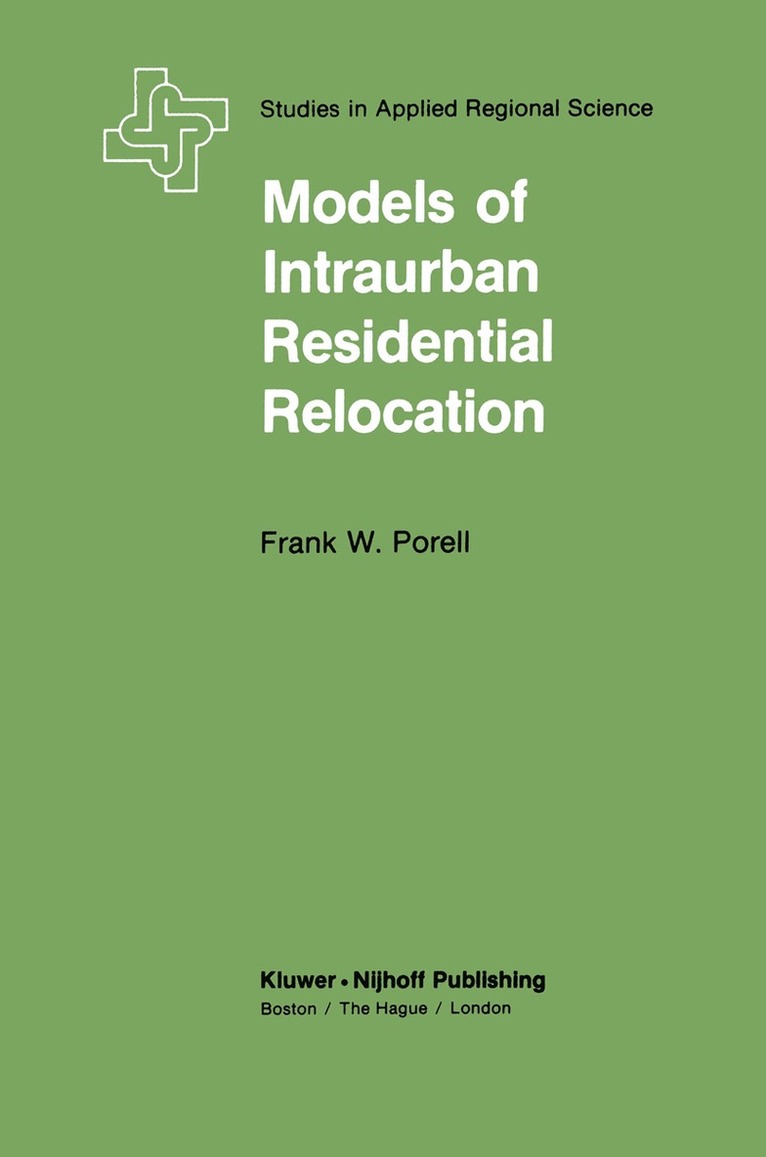
Most of the research incorporated in this monograph was initially undertaken as part of the author's Ph.D. dissertation submitted to the School of Urban and Public Affairs, Carnegie-Mellon University. The research was funded through a Doctoral Dissertation Grant from the U.S. Department of Housing and Urban Development. The dissertation was a winning entry in the 1979-80 Ph.D. Disser tation Competition of the North American Regional Science Association, funded through a grant from the Economic Development Agency of the U.S. Depart ment of Commerce. Revisions and extensions of the initial research were con ducted at the University of Wisconsin-Milwaukee. I would like to thank in particular Chang-I Hua for his guidance and direc tion in reviewing this research. In addition, I would like to acknowledge the useful comments provided by Robert Avery, Shelby Stewman, Tong Hun Lee, Swarnjit Arora, and Charles Manski regarding the substance and econometric approaches used in the research. Stephen Gale is acknowledged for his help in providing the data used in this study from a National Science Foundation Grant (SOC #76-12358).
1 096 kr
Skickas inom 10-15 vardagar
One of the United States Food and Drug Administration's most difficult tasks is the assessment of risk-benefit ratios for a broad spectrum of therapeutic and prophylactic drugs. Furthermore, it is now widely recog nized that no drug, chemical or even natural substance is completely devoid of risk. Nowhere has this issue been the subject of more controversy than with steroidal contraceptive drugs. Regulated as a special class of products because of their prophylactic use in healthy individuals for prevention of pregnancy rather than for treatment of disease, steroid contraceptives drugs undergo more extensive animal safety tests than any other pharmaceutical agent. This view also contemplates the availability of alternative contraceptive measures posing fewer risks, but the use of less effective methods must take into consideration the hazards associated with pregnancy itself. In April 1983, the Food and Drug Administration and the National Insti tutes of Health in cooperation with the World Health Organization, the Population Council, and the Agency for International Development sponsored a three-day workshop to evaluate current guidelines for preclinical safety studies of contraceptive drugs in light of our extensive knowledge of the side effects of marketed products. The meeting included presenta tions by experts in the fields of comparative metabolism, pharmacokinetics, pharmacology, carcinogenicity, toxicology, coagulation, lipid metabolism, epidemiology and pathology at a meeting of the Fertility and Maternal Health Drugs Advisory Committee of the National Center for Drugs and Biologics, Food and Drug Administration.
536 kr
Skickas inom 10-15 vardagar
This book is conceived as a monograph, and represents an up-to-date collection of information concerning the use of the method of X-ray photoelectron spec troscopy in the study of the electron structure of crystals, as well as a personal interpretation of the subject by the authors. In a natural way, the book starts in Chapter 1 with a recapitulation of the fundamentals of the method, basic relations, principles of operation, and a com parative presentation of the characteristics and performances of the most com monly used ESCA instruments (from the classical ones-Varian, McPherson, Hewlett Packard, and IEEE-up to the latest model developed by Professor Siegbahn in Uppsala), and continues with a discussion of some of the difficult problems the experimentalist must face such as calibration of spectra, prepara tion of samples, and evaluation of the escape depth of electrons. The second chapter is devoted to the theory of photoemission from crystal line solids. A discussion of the methods of Hartree-Fock and Hartree-Fock Slater for the calculation of bonding energy levels in multielectronic systems is presented, and the necessity of including in the theory both relativistic and relaxation effects is argued.
1 064 kr
Skickas inom 10-15 vardagar
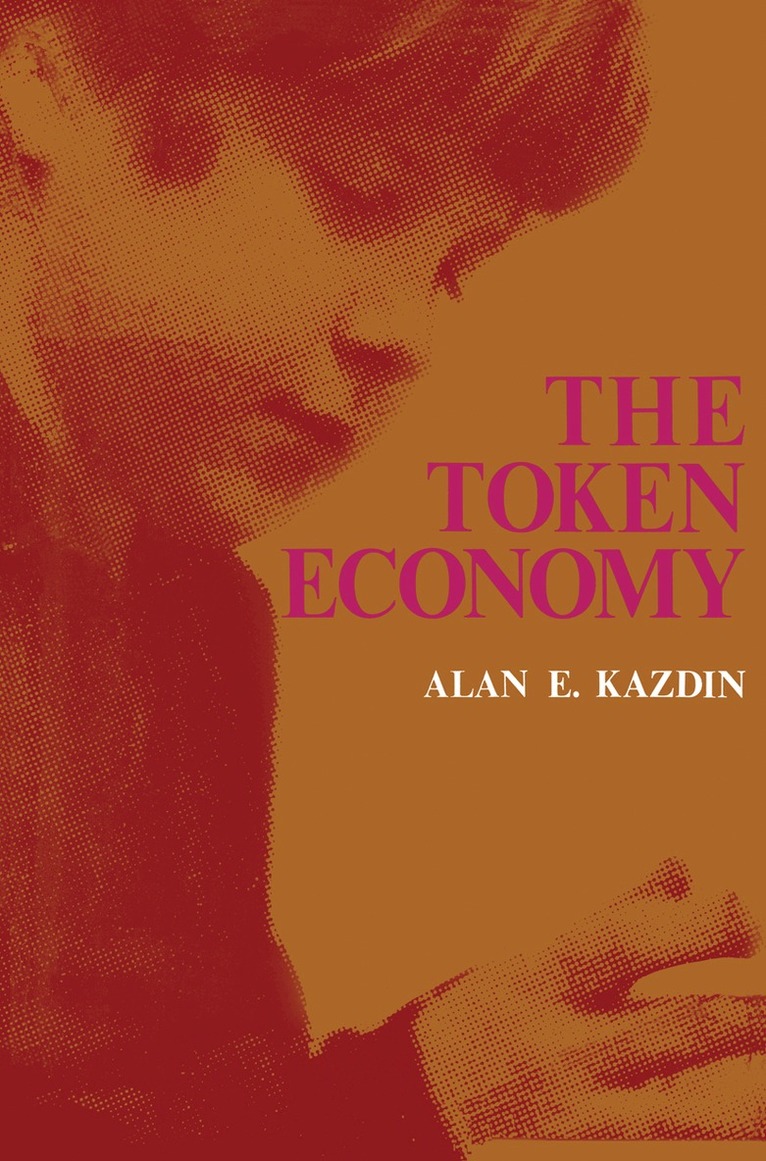
Applications of operant techniques in treatment and education have proliferated in recent years. Among the various techniques, the token economy has been particu larly popular. The token economy has been extended to many populations included in psychiatry, clinical psychology, education, and the mental health fields in general. Of course, merely because a technique is applied widely does not neces sarily argue for its efficacy. Yet, the token economy has been extensively re searched. The main purpose of this book is to review, elaborate, and evaluate critically research bearing on the token economy. The book examines several features of the token economy including the variables that contribute to its efficacy, the accomplishments, limitations, and potential weaknesses, and recent advances. Because the token economy literature is vast, the book encompasses programs in diverse treatment, rehabilitation, and educational settings across a wide range of populations and behaviors. Within the last few years, a small number of books on token economies have appeared. Each of these books describes a particular token economy in one treatment ,etting, details practical problems encountered, and provides suggestions for ad ministering the program. This focus is important but neglects the extensive scholarly research on token economies. The present book reviews research across diverse settings and clients. Actually, this focus is quite relevant for implementing token economies because the research reveals those aspects and treatment variations that contribute to or enhance client performance.
1 096 kr
Skickas inom 10-15 vardagar
Handbook of Effective Psydwtherapy is the culmination of 15 years of personal interest in the area of psychotherapy outcome research. In my view, this is one of the most interesting and crucial areas in the field: it has relevance across disparate clinical disciplines and orientations; it provides a measure of how far the field has progressed in its efforts to improve the effectiveness of psychotherapeutic inter vention; and it provides an ongoing measure of how readily clinicians adapt to scientific indications in state-of-the-art care. Regrettably, as several of the chapters in this volume indicate, there is a vast chasm between what is known about the best available treatments and what is applied as the usual standard of care. On the most basic level there appears to be a significant number of clinicians who remain reluctant to acknowledge that scien tific study can add to their ability to aid the emotionally distressed. I hope that this handbook, with its many delineations of empirically supported treatments, will do something to remedy this state of affairs.
552 kr
Skickas inom 10-15 vardagar
In the last decade, the literature of phobic and obsessive-compulsive disorders has increased enormously. In view of this explosive growth it becomes increasingly difficult for the practitioner to keep abreast of important developments that have led to significant changes in treat ment procedures. The purpose of this volume is to present a critical account of the current status of theory, research, and practice in the field of phobic and obsessive-compulsive disorders. More specifically, this book attempts to bridge the gap between theory, laboratory investiga tion, and application. For purposes of clarity the volume has been divided into several parts. Parts I and II provide, it is hoped, a reasonably comprehensive account of the theory and research relevant to the etiology, assessment, and treatment of these disorders. Part I deals with phobic disorders and Part II with obsessive-compulsive disorders. The third part of the text is devoted to the clinical management of these disorders. The opening chapter deals with phenomenology, classification, and prevalence of the various disorders. In addition, the status of analog research vis-a-vis clinical research is discussed. The chapters on etiology discuss the many variables inherent in a comprehensive theory of the development of phobic (Chapter 2) and obsessive-compulsive behavior (Chapter 6). An explicit effort has been made to extend the discussion beyond the boundaries oflearning theory. Attention is devoted to examining the contributions from other areas (e.g., biological, cognitive, psychoanalytical).
2 380 kr
Skickas inom 10-15 vardagar
This book is an account of a personal journey through a research program. A number of people have helped guide my way. To them I am deeply grateful. Special thanks are offered to my students, whose constant stimulation and provocation were incentives to write this book. Moreover, in the belief that they would never show the initiative to put together a festschrift for me (Le., a book dedicated to someone for his contributions), I decided to do it myself. Several people cared enough to offer editorial criticisms, namely, Myles Genest, Barney Gilmore, Roy Cameron, Sherryl Goodman, and Dennis Turk. The reader benefits from their perspicacity. Finally, to my parents, who taught me to talk to myself, and to my family, without whose constant input this book would have been completed much sooner, but would have been much less fun, I dedicate this book. D.M. 5 Contents Prologue 11 Chapter 1 17 Self-Instructional Training Hyperactive, Impulsive Children: An Illustration of a Search for a Deficit 23 Luria's Model (24), Private Speech and Mediational Skills (27) Self-Instructional Treatment of Hyperactive, Impulsive Children: A Beginning 31 Empirical Studies of Self-Instructional Training 34 Combining Self-Instructions and Operant Procedures (44), Reasoning Rediscovered (47), Importance of Attributional Style (48), Taking Stock (54) Chapter 2 The Clinical Application of Self-Instructional Training to Other Clinical Populations: Three Illustrations 55 Social Isolates 56 Creative Problem-Solving 58 Adult Schizophrenics 68 What Shall We Say to Ourselves When We Obtain Negative Results? 77 7 8 Contents Chapter 3
1 625 kr
Skickas inom 10-15 vardagar
This book owes its existence to an ideal, a burning frustration, and a trusted believer. The ideal was the sense that governed my feelings about systematic desensitization during my early introduction to its benefits. It is hard to put into words the initial doubts that pervaded me during my first attempt with desensitization with a seriously phobic client, as I re ligiously worked my way through the procedure: "Will this client really become relaxed? And then what-will the visualization actually occur? And then what-will the fear really vanish, just like that?" And oh, the feeling of discovery, and validation, when indeed the process worked, and worked well. Desensitization was everything it was claimed to be: systematic, clean, theoretically grounded, empirically tested, applicable as a behavioral technology regardless of one's own theoretical bias. And there were testable outcomes; concrete evidence for change. So I became invested and aimed at doing more with desensitization. My students and I raised some theoretical questions in order to open the doors for revising the desensitization to improve on its applications. We tested the rapidity with which desensitization could be accomplished, shortening the time by shortening the anxiety hierarchy. Along with others, we studied the question of group delivery, and reducing the total number of sessions, as well as examining the use of audiotaped delivery of services.
1 096 kr
Skickas inom 10-15 vardagar
Most of the research incorporated in this monograph was initially undertaken as part of the author's Ph.D. dissertation submitted to the School of Urban and Public Affairs, Carnegie-Mellon University. The research was funded through a Doctoral Dissertation Grant from the U.S. Department of Housing and Urban Development. The dissertation was a winning entry in the 1979-80 Ph.D. Disser tation Competition of the North American Regional Science Association, funded through a grant from the Economic Development Agency of the U.S. Depart ment of Commerce. Revisions and extensions of the initial research were con ducted at the University of Wisconsin-Milwaukee. I would like to thank in particular Chang-I Hua for his guidance and direc tion in reviewing this research. In addition, I would like to acknowledge the useful comments provided by Robert Avery, Shelby Stewman, Tong Hun Lee, Swarnjit Arora, and Charles Manski regarding the substance and econometric approaches used in the research. Stephen Gale is acknowledged for his help in providing the data used in this study from a National Science Foundation Grant (SOC #76-12358).