Princeton Studies in Contemporary China - Böcker
Visar alla böcker i serien Princeton Studies in Contemporary China. Handla med fri frakt och snabb leverans.
14 produkter
14 produkter
402 kr
Skickas inom 7-10 vardagar
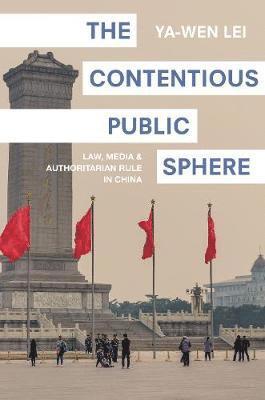
Since the mid-2000s, public opinion and debate in China have become increasingly common and consequential, despite the ongoing censorship of speech and regulation of civil society. How did this happen? In The Contentious Public Sphere, Ya-Wen Lei shows how the Chinese state drew on law, the media, and the Internet to further an authoritarian project of modernization, but in so doing, inadvertently created a nationwide public sphere in China--one the state must now endeavor to control. Lei examines the influence this unruly sphere has had on Chinese politics and the ways that the state has responded. Using interviews, newspaper articles, online texts, official documents, and national surveys, Lei shows that the development of the public sphere in China has provided an unprecedented forum for citizens to influence the public agenda, demand accountability from the government, and organize around the concepts of law and rights.She demonstrates how citizens came to understand themselves as legal subjects, how legal and media professionals began to collaborate in unexpected ways, and how existing conditions of political and economic fragmentation created unintended opportunities for political critique, particularly with the rise of the Internet. The emergence of this public sphere--and its uncertain future--is a pressing issue with important implications for the political prospects of the Chinese people. Investigating how individuals learn to use public discourse to influence politics, The Contentious Public Sphere offers new possibilities for thinking about the transformation of state-society relations.
877 kr
Skickas inom 7-10 vardagar
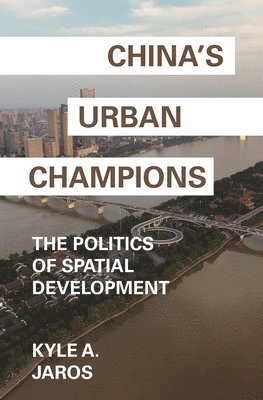
An exploration of how key provinces in China shape urban and regional development The rise of major metropolises across China since the 1990s has been a double-edged sword: although big cities function as economic powerhouses, concentrated urban growth can worsen regional inequalities, governance challenges, and social tensions. Wary of these dangers, China’s national leaders have tried to forestall top-heavy urbanization. However, urban and regional development policies at the subnational level have not always followed suit. China’s Urban Champions explores the development paths of different provinces and asks why policymakers in many cases favor big cities in a way that reinforces spatial inequalities rather than reducing them.Kyle Jaros combines in-depth case studies of Hunan, Jiangxi, Shaanxi, and Jiangsu provinces with quantitative analysis to shed light on the political drivers of uneven development. Drawing on numerous Chinese-language written sources, including government documents and media reports, as well as a wealth of field interviews with officials, policy experts, urban planners, academics, and businesspeople, Jaros shows how provincial development strategies are shaped by both the horizontal relations of competition among different provinces and the vertical relations among different tiers of government. Metropolitan-oriented development strategies advance when lagging economic performance leads provincial leaders to fixate on boosting regional competitiveness, and when provincial governments have the political strength to impose their policy priorities over the objections of other actors.Rethinking the politics of spatial policy in an era of booming growth, China’s Urban Champions highlights the key role of provincial units in determining the nation’s metropolitan and regional development trajectory.
284 kr
Skickas inom 7-10 vardagar
An exploration of how key provinces in China shape urban and regional development The rise of major metropolises across China since the 1990s has been a double-edged sword: although big cities function as economic powerhouses, concentrated urban growth can worsen regional inequalities, governance challenges, and social tensions. Wary of these dangers, China’s national leaders have tried to forestall top-heavy urbanization. However, urban and regional development policies at the subnational level have not always followed suit. China’s Urban Champions explores the development paths of different provinces and asks why policymakers in many cases favor big cities in a way that reinforces spatial inequalities rather than reducing them.Kyle Jaros combines in-depth case studies of Hunan, Jiangxi, Shaanxi, and Jiangsu provinces with quantitative analysis to shed light on the political drivers of uneven development. Drawing on numerous Chinese-language written sources, including government documents and media reports, as well as a wealth of field interviews with officials, policy experts, urban planners, academics, and businesspeople, Jaros shows how provincial development strategies are shaped by both the horizontal relations of competition among different provinces and the vertical relations among different tiers of government. Metropolitan-oriented development strategies advance when lagging economic performance leads provincial leaders to fixate on boosting regional competitiveness, and when provincial governments have the political strength to impose their policy priorities over the objections of other actors.Rethinking the politics of spatial policy in an era of booming growth, China’s Urban Champions highlights the key role of provincial units in determining the nation’s metropolitan and regional development trajectory.
276 kr
Skickas inom 7-10 vardagar
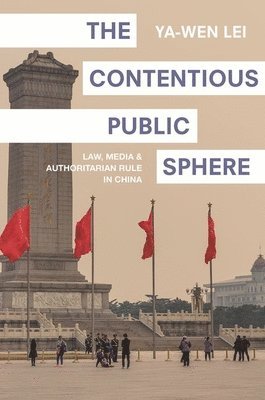
Since the mid-2000s, public opinion and debate in China have become increasingly common and consequential, despite the ongoing censorship of speech and regulation of civil society. How did this happen? In The Contentious Public Sphere, Ya-Wen Lei shows how the Chinese state drew on law, the media, and the Internet to further an authoritarian project of modernization, but in so doing, inadvertently created a nationwide public sphere in China—one the state must now endeavor to control. Lei examines the influence this unruly sphere has had on Chinese politics and the ways that the state has responded.Using interviews, newspaper articles, online texts, official documents, and national surveys, Lei shows that the development of the public sphere in China has provided an unprecedented forum for citizens to influence the public agenda, demand accountability from the government, and organize around the concepts of law and rights. She demonstrates how citizens came to understand themselves as legal subjects, how legal and media professionals began to collaborate in unexpected ways, and how existing conditions of political and economic fragmentation created unintended opportunities for political critique, particularly with the rise of the Internet. The emergence of this public sphere—and its uncertain future—is a pressing issue with important implications for the political prospects of the Chinese people.Investigating how individuals learn to use public discourse to influence politics, The Contentious Public Sphere offers new possibilities for thinking about the transformation of state-society relations.
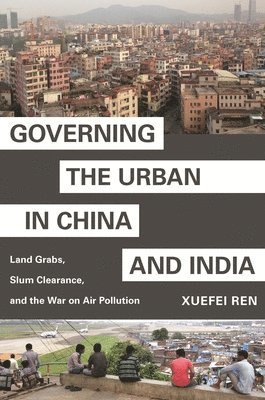
Governing the Urban in China and India
Land Grabs, Slum Clearance, and the War on Air Pollution
Häftad, Engelska, 2020
316 kr
Skickas inom 7-10 vardagar
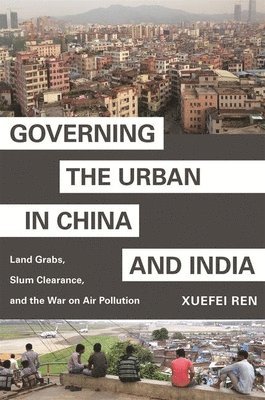
An in-depth look at the distinctly different ways that China and India govern their cities and how this impacts their residentsUrbanization is rapidly overtaking China and India, the two most populous countries in the world. One-sixth of humanity now lives in either a Chinese or Indian city. This transformation has unleashed enormous pressures on land use, housing, and the environment. Despite the stakes, the workings of urban governance in China and India remain obscure and poorly understood.In this book, Xuefei Ren explores how China and India govern their cities and how their different styles of governance produce inequality and exclusion. Drawing upon historical-comparative analyses and extensive fieldwork (in Beijing, Guangzhou, Wukan, Delhi, Mumbai, and Kolkata), Ren investigates the ways that Chinese and Indian cities manage land acquisition, slum clearance, and air pollution. She discovers that the two countries address these issues through radically different approaches. In China, urban governance centers on territorial institutions, such as hukou and the cadre evaluation system. In India, urban governance centers on associational politics, encompassing contingent alliances formed among state actors, the private sector, and civil society groups. Ren traces the origins of territorial and associational forms of governance to late imperial China and precolonial India. She then shows how these forms have evolved to shape urban growth and residents’ struggles today.As the number of urban residents in China and India reaches beyond a billion, Governing the Urban in China and India makes clear that the development of cities in these two nations will have profound consequences well beyond their borders.
Governing the Urban in China and India
Land Grabs, Slum Clearance, and the War on Air Pollution
Inbunden, Engelska, 2020
1 051 kr
Skickas inom 7-10 vardagar
An in-depth look at the distinctly different ways that China and India govern their cities and how this impacts their residentsUrbanization is rapidly overtaking China and India, the two most populous countries in the world. One-sixth of humanity now lives in either a Chinese or Indian city. This transformation has unleashed enormous pressures on land use, housing, and the environment. Despite the stakes, the workings of urban governance in China and India remain obscure and poorly understood.In this book, Xuefei Ren explores how China and India govern their cities and how their different styles of governance produce inequality and exclusion. Drawing upon historical-comparative analyses and extensive fieldwork (in Beijing, Guangzhou, Wukan, Delhi, Mumbai, and Kolkata), Ren investigates the ways that Chinese and Indian cities manage land acquisition, slum clearance, and air pollution. She discovers that the two countries address these issues through radically different approaches. In China, urban governance centers on territorial institutions, such as hukou and the cadre evaluation system. In India, urban governance centers on associational politics, encompassing contingent alliances formed among state actors, the private sector, and civil society groups. Ren traces the origins of territorial and associational forms of governance to late imperial China and precolonial India. She then shows how these forms have evolved to shape urban growth and residents’ struggles today.As the number of urban residents in China and India reaches beyond a billion, Governing the Urban in China and India makes clear that the development of cities in these two nations will have profound consequences well beyond their borders.
222 kr
Skickas inom 7-10 vardagar
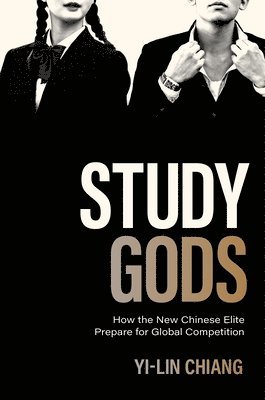
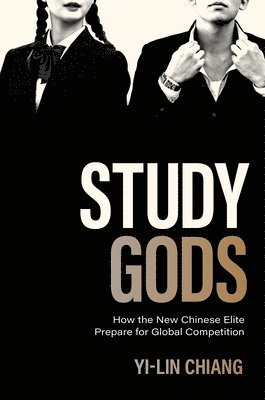
How privileged adolescents in China acquire status and why this helps them succeed Study Gods offers a rare look at the ways privileged youth in China prepare themselves to join the ranks of the global elite. Yi-Lin Chiang shows how these competitive Chinese high schoolers first become “study gods” (xueshen), a term describing academically high-performing students. Constant studying, however, is not what explains their success, for these young people appear god-like in their effortless abilities to excel. Instead, Chiang explores how elite adolescents achieve by absorbing and implementing the rules surrounding status.Drawing from eight years of fieldwork and extensive interviews, Chiang reveals the important lessons that Chinese youth learn in their pursuit of elite status. They understand the hierarchy of the status system, recognizing and acquiring the characteristics that are prized, while avoiding those that are not. They maintain status by expecting differential treatment and performing status-based behaviors, which guide their daily interactions with peers, teachers, and parents. Lastly, with the help of resourceful parents, they rely on external assistance in the face of potential obstacles and failures. Chiang looks at how students hone these skills, applying them as they head to colleges and careers around the world, and in their relationships with colleagues and supervisors.Highlighting another facet of China’s rising power, Study Gods announces the arrival of a new generation to the realm of global competition.
814 kr
Skickas inom 7-10 vardagar
How privileged adolescents in China acquire status and why this helps them succeed Study Gods offers a rare look at the ways privileged youth in China prepare themselves to join the ranks of the global elite. Yi-Lin Chiang shows how these competitive Chinese high schoolers first become “study gods” (xueshen), a term describing academically high-performing students. Constant studying, however, is not what explains their success, for these young people appear god-like in their effortless abilities to excel. Instead, Chiang explores how elite adolescents achieve by absorbing and implementing the rules surrounding status.Drawing from eight years of fieldwork and extensive interviews, Chiang reveals the important lessons that Chinese youth learn in their pursuit of elite status. They understand the hierarchy of the status system, recognizing and acquiring the characteristics that are prized, while avoiding those that are not. They maintain status by expecting differential treatment and performing status-based behaviors, which guide their daily interactions with peers, teachers, and parents. Lastly, with the help of resourceful parents, they rely on external assistance in the face of potential obstacles and failures. Chiang looks at how students hone these skills, applying them as they head to colleges and careers around the world, and in their relationships with colleagues and supervisors.Highlighting another facet of China’s rising power, Study Gods announces the arrival of a new generation to the realm of global competition.
292 kr
Skickas inom 7-10 vardagar
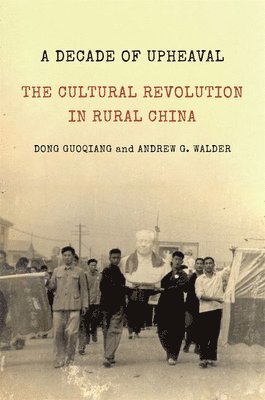
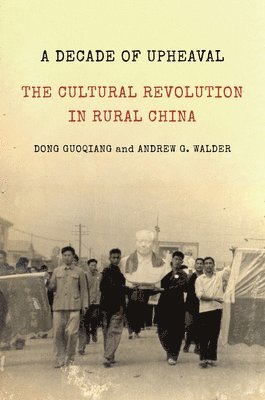
A revealing exploration of political disruption and violence in a rural Chinese county during the Cultural RevolutionA Decade of Upheaval chronicles the surprising and dramatic political conflicts of a rural Chinese county over the course of the Cultural Revolution. Drawing on an unprecedented range of sources—including work diaries, interviews, internal party documents, and military directives—Dong Guoqiang and Andrew Walder uncover a previously unimagined level of strife in the countryside that began with the Red Guard Movement in 1966 and continued unabated until the death of Mao Zedong in 1976.Showing how the upheavals of the Cultural Revolution were not limited to urban areas, but reached far into isolated rural regions, Dong and Walder reveal that the intervention of military forces in 1967 encouraged factional divisions in Feng County because different branches of China’s armed forces took various sides in local disputes. The authors also lay bare how the fortunes of local political groups were closely tethered to unpredictable shifts in the decisions of government authorities in Beijing. Eventually, a backlash against suppression and victimization grew in the early 1970s and resulted in active protests, which presaged the settling of scores against radical Maoism.A meticulous look at how one overlooked region experienced the Cultural Revolution, A Decade of Upheaval illuminates the all-encompassing nature of one of the most unstable periods in modern Chinese history.
903 kr
Skickas inom 7-10 vardagar
A revealing exploration of political disruption and violence in a rural Chinese county during the Cultural RevolutionA Decade of Upheaval chronicles the surprising and dramatic political conflicts of a rural Chinese county over the course of the Cultural Revolution. Drawing on an unprecedented range of sources—including work diaries, interviews, internal party documents, and military directives—Dong Guoqiang and Andrew Walder uncover a previously unimagined level of strife in the countryside that began with the Red Guard Movement in 1966 and continued unabated until the death of Mao Zedong in 1976.Showing how the upheavals of the Cultural Revolution were not limited to urban areas, but reached far into isolated rural regions, Dong and Walder reveal that the intervention of military forces in 1967 encouraged factional divisions in Feng County because different branches of China’s armed forces took various sides in local disputes. The authors also lay bare how the fortunes of local political groups were closely tethered to unpredictable shifts in the decisions of government authorities in Beijing. Eventually, a backlash against suppression and victimization grew in the early 1970s and resulted in active protests, which presaged the settling of scores against radical Maoism.A meticulous look at how one overlooked region experienced the Cultural Revolution, A Decade of Upheaval illuminates the all-encompassing nature of one of the most unstable periods in modern Chinese history.
292 kr
Skickas inom 7-10 vardagar
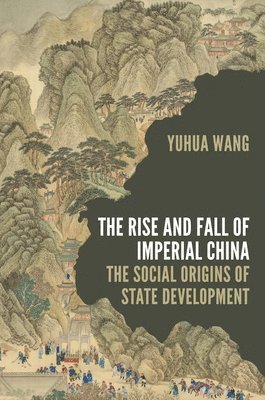
How social networks shaped the imperial Chinese stateChina was the world’s leading superpower for almost two millennia, falling behind only in the last two centuries and now rising to dominance again. What factors led to imperial China’s decline? The Rise and Fall of Imperial China offers a systematic look at the Chinese state from the seventh century through to the twentieth. Focusing on how short-lived emperors often ruled a strong state while long-lasting emperors governed a weak one, Yuhua Wang shows why lessons from China’s history can help us better understand state building.Wang argues that Chinese rulers faced a fundamental trade-off that he calls the sovereign’s dilemma: a coherent elite that could collectively strengthen the state could also overthrow the ruler. This dilemma emerged because strengthening state capacity and keeping rulers in power for longer required different social networks in which central elites were embedded. Wang examines how these social networks shaped the Chinese state, and vice versa, and he looks at how the ruler’s pursuit of power by fragmenting the elites became the final culprit for China’s fall.Drawing on more than a thousand years of Chinese history, The Rise and Fall of Imperial China highlights the role of elite social relations in influencing the trajectories of state development.
1 025 kr
Skickas inom 7-10 vardagar
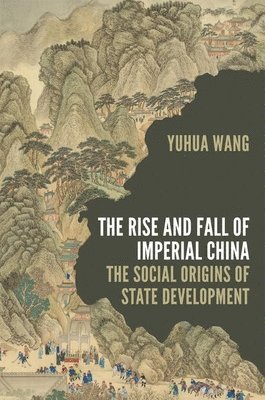
How social networks shaped the imperial Chinese stateChina was the world’s leading superpower for almost two millennia, falling behind only in the last two centuries and now rising to dominance again. What factors led to imperial China’s decline? The Rise and Fall of Imperial China offers a systematic look at the Chinese state from the seventh century through to the twentieth. Focusing on how short-lived emperors often ruled a strong state while long-lasting emperors governed a weak one, Yuhua Wang shows why lessons from China’s history can help us better understand state building.Wang argues that Chinese rulers faced a fundamental trade-off that he calls the sovereign’s dilemma: a coherent elite that could collectively strengthen the state could also overthrow the ruler. This dilemma emerged because strengthening state capacity and keeping rulers in power for longer required different social networks in which central elites were embedded. Wang examines how these social networks shaped the Chinese state, and vice versa, and he looks at how the ruler’s pursuit of power by fragmenting the elites became the final culprit for China’s fall.Drawing on more than a thousand years of Chinese history, The Rise and Fall of Imperial China highlights the role of elite social relations in influencing the trajectories of state development.
985 kr
Skickas inom 7-10 vardagar
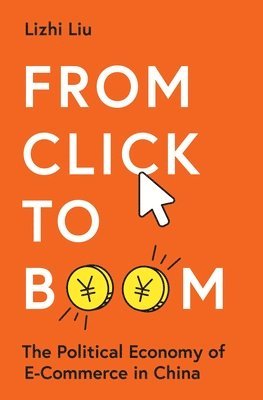
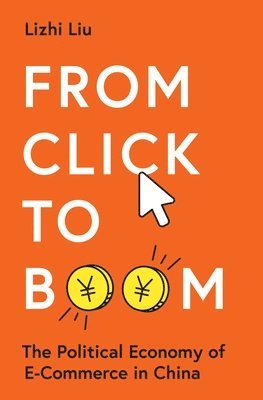
How the world’s largest e-commerce market highlights a digital path to developmentHow do states build vital institutions for market development? Too often, governments confront technical or political barriers to providing the rule of law, contract enforcement, and loan access. In From Click to Boom, Lizhi Liu examines a digital solution: governments strategically outsourcing tasks of institutional development and enforcement to digital platforms—a process she calls “institutional outsourcing.”China’s e-commerce boom showcases this digital path to development. In merely two decades, China built from scratch a two-trillion-dollar e-commerce market, with 800 million users, seventy million jobs, and nearly fifty percent of global online retail sales. Contrary to conventional wisdom, Liu argues, this market boom occurred because of weak government institutions, not despite them. Gaps in government institutions compelled e-commerce platforms to build powerful private institutions for contract enforcement, fraud detection, and dispute resolution. For a surprisingly long period, the authoritarian government acquiesced, endorsed, and even partnered with this private institutional building despite its disruptive nature. Drawing on a plethora of interviews, original surveys, proprietary data, and a field experiment, Liu shows that the resulting e-commerce boom had far-reaching effects on China.Institutional outsourcing nonetheless harbors its own challenges. With inadequate regulation, platforms may abuse market power, while excessive regulation stifles institutional innovation. China’s regulatory oscillations toward platforms—from laissez-faire to crackdown and back to support—underscore the struggle to strike the right balance.
251 kr
Skickas inom 7-10 vardagar
How the world’s largest e-commerce market highlights a digital path to developmentHow do states build vital institutions for market development? Too often, governments confront technical or political barriers to providing the rule of law, contract enforcement, and loan access. In From Click to Boom, Lizhi Liu examines a digital solution: governments strategically outsourcing tasks of institutional development and enforcement to digital platforms—a process she calls “institutional outsourcing.”China’s e-commerce boom showcases this digital path to development. In merely two decades, China built from scratch a two-trillion-dollar e-commerce market, with 800 million users, seventy million jobs, and nearly fifty percent of global online retail sales. Contrary to conventional wisdom, Liu argues, this market boom occurred because of weak government institutions, not despite them. Gaps in government institutions compelled e-commerce platforms to build powerful private institutions for contract enforcement, fraud detection, and dispute resolution. For a surprisingly long period, the authoritarian government acquiesced, endorsed, and even partnered with this private institutional building despite its disruptive nature. Drawing on a plethora of interviews, original surveys, proprietary data, and a field experiment, Liu shows that the resulting e-commerce boom had far-reaching effects on China.Institutional outsourcing nonetheless harbors its own challenges. With inadequate regulation, platforms may abuse market power, while excessive regulation stifles institutional innovation. China’s regulatory oscillations toward platforms—from laissez-faire to crackdown and back to support—underscore the struggle to strike the right balance.