Protecting Critical Infrastructure - Böcker
Visar alla böcker i serien Protecting Critical Infrastructure. Handla med fri frakt och snabb leverans.
6 produkter
6 produkter
2 101 kr
Skickas inom 10-15 vardagar
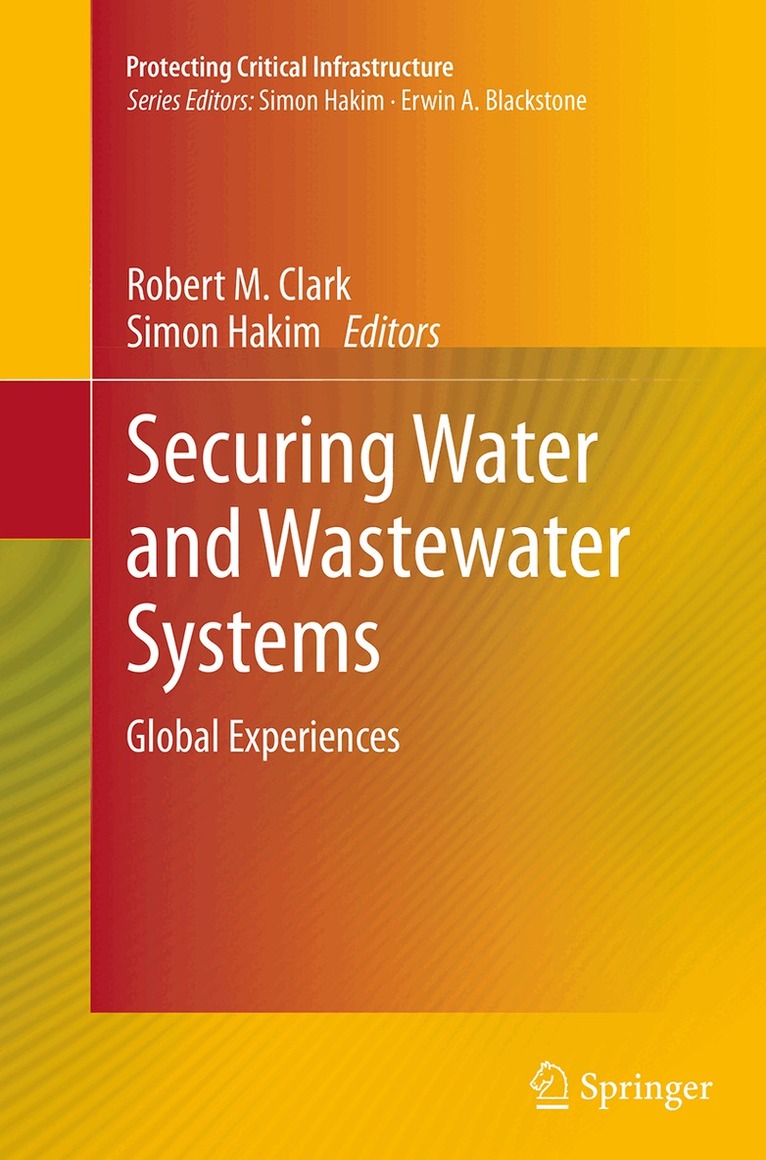
Following the events of 9/11, the Administrator of the US Environmental Protection Agency created the Water Protection Task Force (WPTF), which identified water and wastewater systems as a major area of vulnerability to deliberate attack. The WPTF suggested that there are steps that can be taken to reduce these vulnerabilities and to make it as difficult as possible for potential saboteurs to succeed. The WPTF recommended that be scrutinized with renewed vigor to secure water and wastewater systems against these possible threats. It also recommended that water and wastewater systems have a response plan in place in the event an act of terrorism occurs. The WPTF identified water distribution networks as an area of special vulnerability and highlighted the need for rapid on-line detection methods that are accurate and have a wide detection range. As a result of these recommendations novel technologies from various fields of science and engineering are now addressing water security issues and water and wastewater utilities are looking for innovative solutions. Once such technologies are available, there will be a rapid implementation process that will present many business opportunities for the private sector. However, in addition to terrorist threats water and wastewater systems are inherently vulnerable to natural disasters such as earthquakes and floods. This volume will address the problems associated with both intended terrorist attacks and natural disasters affecting water or wastewater systems. The book is divided into parts based on the kinds of threats facing water and wastewater systems: (1) a direct attack on water and wastewater infrastructure storage reservoirs, and distribution and collection networks; (2) a cyber attack disabling the functionality of the water and wastewater systems or taking over control of key components which might result in system failures; and (3) a deliberate chemical or biological contaminant injection at one of the waterdistribution system’s nodes. It will examine unique plans, technological and managerial innovations for protecting such systems, and includes descriptions of projects that were implemented to respond to natural disasters. Case studies are presented that discuss existing projects and evaluate their performance, with an emphasis on providing guidelines and techniques that can be implemented by water and wastewater planners and managers to deal with natural and manmade disasters should they occur.
2 101 kr
Skickas inom 10-15 vardagar
Following the events of 9/11, the Administrator of the US Environmental Protection Agency created the Water Protection Task Force (WPTF), which identified water and wastewater systems as a major area of vulnerability to deliberate attack. The WPTF suggested that there are steps that can be taken to reduce these vulnerabilities and to make it as difficult as possible for potential saboteurs to succeed. The WPTF recommended that be scrutinized with renewed vigor to secure water and wastewater systems against these possible threats. It also recommended that water and wastewater systems have a response plan in place in the event an act of terrorism occurs. The WPTF identified water distribution networks as an area of special vulnerability and highlighted the need for rapid on-line detection methods that are accurate and have a wide detection range. As a result of these recommendations novel technologies from various fields of science and engineering are now addressing water security issues and water and wastewater utilities are looking for innovative solutions. Once such technologies are available, there will be a rapid implementation process that will present many business opportunities for the private sector. However, in addition to terrorist threats water and wastewater systems are inherently vulnerable to natural disasters such as earthquakes and floods. This volume will address the problems associated with both intended terrorist attacks and natural disasters affecting water or wastewater systems. The book is divided into parts based on the kinds of threats facing water and wastewater systems: (1) a direct attack on water and wastewater infrastructure storage reservoirs, and distribution and collection networks; (2) a cyber attack disabling the functionality of the water and wastewater systems or taking over control of key components which might result in system failures; and (3) a deliberate chemical or biological contaminant injection at one of the waterdistribution system’s nodes. It will examine unique plans, technological and managerial innovations for protecting such systems, and includes descriptions of projects that were implemented to respond to natural disasters. Case studies are presented that discuss existing projects and evaluate their performance, with an emphasis on providing guidelines and techniques that can be implemented by water and wastewater planners and managers to deal with natural and manmade disasters should they occur.
Del 2 - Protecting Critical Infrastructure
Securing Water and Wastewater Systems
Global Experiences
Inbunden, Engelska, 2013
1 064 kr
Skickas inom 10-15 vardagar
Urban water and wastewater systems have an inherent vulnerability to both manmade and natural threats and disasters including droughts, earthquakes and terrorist attacks. It is well established that natural disasters including major storms, such as hurricanes and flooding, can effect water supply security and integrity. Earthquakes and terrorist attacks have many characteristics in common because they are almost impossible to predict and can cause major devastation and confusion. Terrorism is also a major threat to water security and recent attention has turned to the potential that these attacks have for disrupting urban water supplies. There is a need to introduce the related concept of Integrated Water Resources Management which emphasizes linkages between land-use change and hydrological systems, between ecosystems and human health, and between political and scientific aspects of water management. An expanded water security agenda should include a conceptual focus on vulnerability, risk, and resilience; an emphasis on threats, shocks, and tipping points; and a related emphasis on adaptive management given limited predictability. Internationally, concerns about water have often taken a different focus and there is also a growing awareness, including in the US, that water security should include issues related to quantity, climate change, and biodiversity impacts, in addition to terrorism. This presents contributions from a group of internationally recognized experts that attempt to address the four areas listed above and includes suggestions as to how to deal with related problems. It also addresses the new and potentially growing issue of cyber attacks against water and waste water infrastructure including descriptions of actual attacks, making it of interest to scholars and policy-makers concerned with protecting the water supply.
Del 3 - Protecting Critical Infrastructure
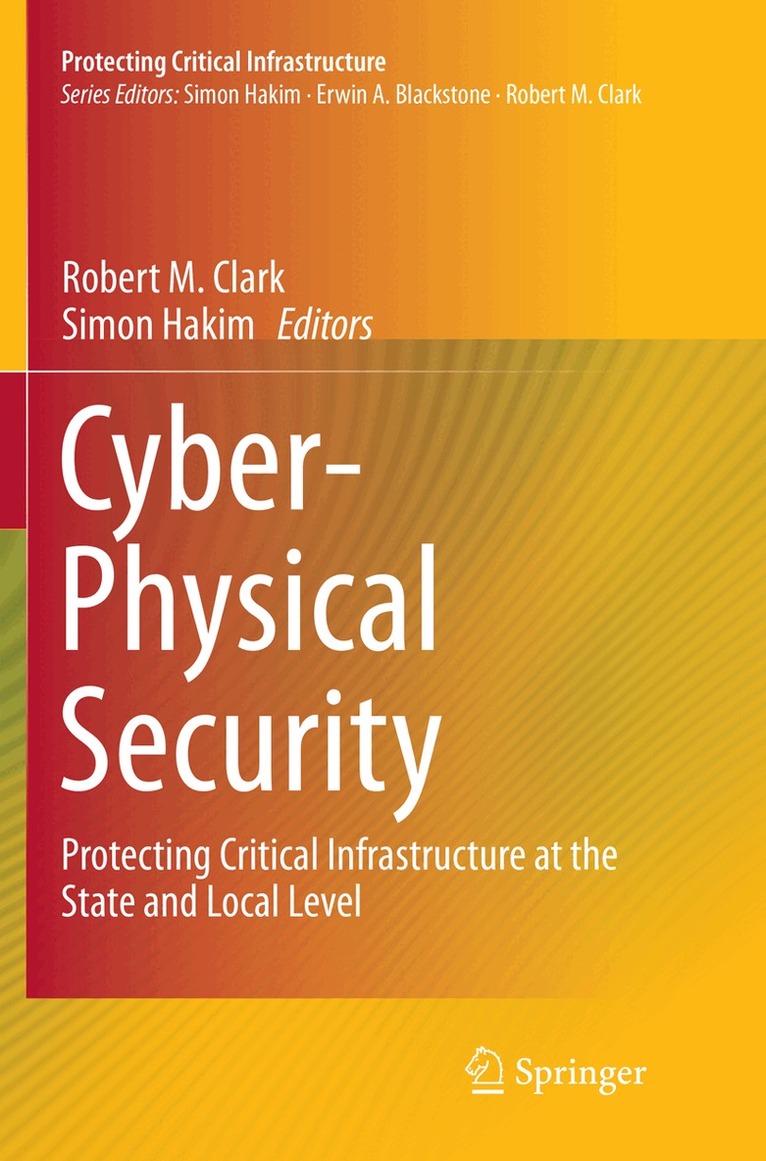
Cyber-Physical Security
Protecting Critical Infrastructure at the State and Local Level
Inbunden, Engelska, 2016
1 473 kr
Skickas inom 10-15 vardagar
This book focuses on the vulnerabilities of state and local services to cyber-threats and suggests possible protective action that might be taken against such threats. Cyber-threats to U.S. critical infrastructure are of growing concern to policymakers, managers and consumers. Information and communications technology (ICT) is ubiquitous and many ICT devices and other components are interdependent; therefore, disruption of one component may have a negative, cascading effect on others. Cyber-attacks might include denial of service, theft or manipulation of data. Damage to critical infrastructure through a cyber-based attack could have a significant impact on the national security, the economy, and the livelihood and safety of many individual citizens. Traditionally cyber security has generally been viewed as being focused on higher level threats such as those against the internet or the Federal government. Little attention has been paid to cyber-security at the state and local level. However, these governmental units play a critical role in providing services to local residents and consequently are highly vulnerable to cyber-threats. The failure of these services, such as waste water collection and water supply, transportation, public safety, utility services, and communication services, would pose a great threat to the public. Featuring contributions from leading experts in the field, this volume is intended for state and local government officials and managers, state and Federal officials, academics, and public policy specialists.
Del 2 - Protecting Critical Infrastructure
Securing Water and Wastewater Systems
Global Experiences
Häftad, Engelska, 2016
1 064 kr
Skickas inom 10-15 vardagar
Urban water and wastewater systems have an inherent vulnerability to both manmade and natural threats and disasters including droughts, earthquakes and terrorist attacks. It is well established that natural disasters including major storms, such as hurricanes and flooding, can effect water supply security and integrity. Earthquakes and terrorist attacks have many characteristics in common because they are almost impossible to predict and can cause major devastation and confusion. Terrorism is also a major threat to water security and recent attention has turned to the potential that these attacks have for disrupting urban water supplies. There is a need to introduce the related concept of Integrated Water Resources Management which emphasizes linkages between land-use change and hydrological systems, between ecosystems and human health, and between political and scientific aspects of water management. An expanded water security agenda should include a conceptual focus on vulnerability, risk, and resilience; an emphasis on threats, shocks, and tipping points; and a related emphasis on adaptive management given limited predictability. Internationally, concerns about water have often taken a different focus and there is also a growing awareness, including in the US, that water security should include issues related to quantity, climate change, and biodiversity impacts, in addition to terrorism. This presents contributions from a group of internationally recognized experts that attempt to address the four areas listed above and includes suggestions as to how to deal with related problems. It also addresses the new and potentially growing issue of cyber attacks against water and waste water infrastructure including descriptions of actual attacks, making it of interest to scholars and policy-makers concerned with protecting the water supply.
Del 3 - Protecting Critical Infrastructure
Cyber-Physical Security
Protecting Critical Infrastructure at the State and Local Level
Häftad, Engelska, 2018
1 064 kr
Skickas inom 10-15 vardagar
This book focuses on the vulnerabilities of state and local services to cyber-threats and suggests possible protective action that might be taken against such threats.