Public History in European Perspectives - Böcker
Visar alla böcker i serien . Handla med fri frakt och snabb leverans.
6 produkter
6 produkter
Public History on the Battlefields of Europe
Experiences of Dealing with Painful Pasts in Former Yugoslavia
Inbunden, Engelska, 2024
870 kr
Kommande
History and representations of the past have become an increasingly public issue, especially over the past decades. Public and Applied History are aiming at responding to this challenge. They provide an innovative approach to historical sciences that deals with the intersections between academic research and society’s methods of producing historical knowledge. This approach is the underlying idea of the Jean Monnet Network “Applied European Contemporary History” as well. As part of the broad field of Public History, the network aims to explore how methods of dealing with the past can be informed by a deeper understanding of the historical cultures of the neighbouring European countries. Comprising members from Belgium, Bosnia and Herzegovina, Germany, Poland, and Serbia, the network strives to explain national cultures of history in their specific constructions and further create relationships between them, thus makingpotential conflicts both appreciated and understood. During our first conference, we would like to discuss the network’s approach with interested scholars and practitioners from European countries in order to map the European landscape of Public and Applied History.
720 kr
Skickas inom 7-10 vardagar
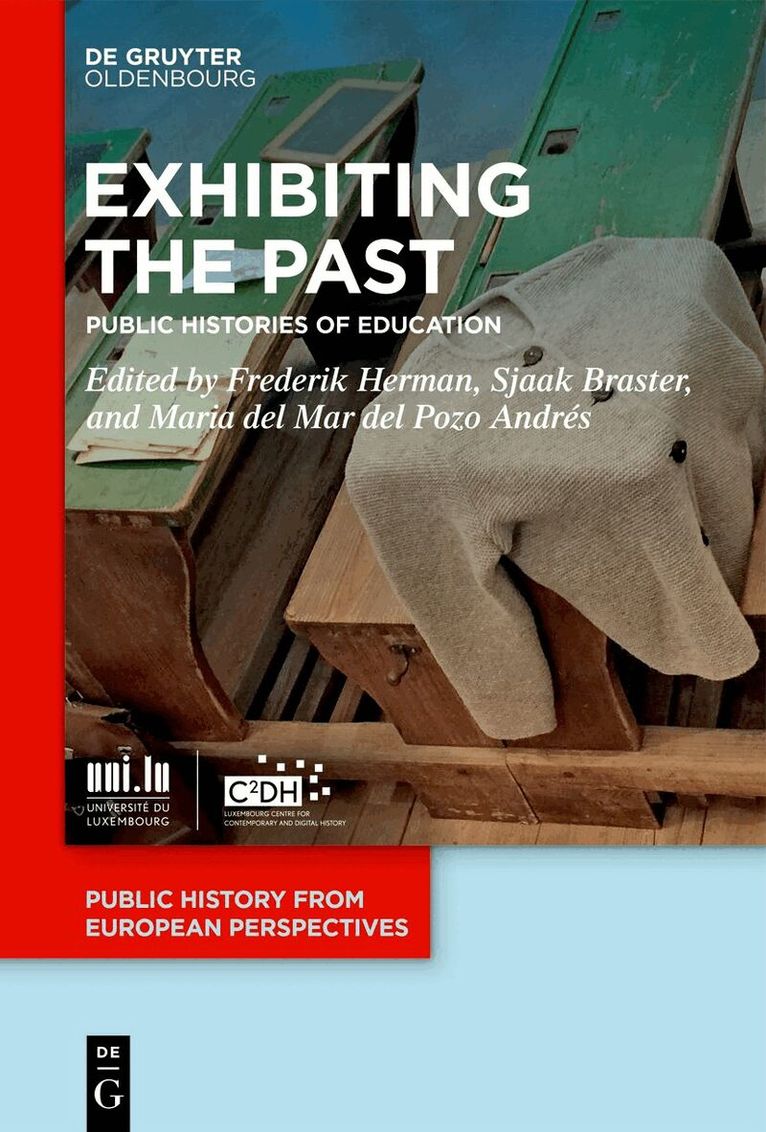
Gradually the historians of education have broken out of the traditional school museums — which are no longer the sole places to communicate research findings with the wider public — and gone beyond the traditional publication formats. Indeed, they started exploring how to work with the [educational] past in the present, experimenting with presenting the educational past in new ways, and reflecting on how these new forms of mediation and musealisation of sources impacts the research and the (hi)stories told. By zooming in on three themes, musealisation, new ways of exhibiting, and historical storytelling —, this edited volume illustrates the vitality of the history of education, as field of study, and demonstrates its adaptability to the “changing contexts” of its public function. So, rather than being an “endangered species”, the historians of education seem to get fit for the future by showing traditional craftsmanship as well as “engagement with” and “appropriation of” (interdisciplinary) approaches of thinking with the past in the present for wider audiences — stances which are richly illustrated in the various contributions.
Del 3 - Public History in European Perspectives
Europe’s Troubled Pasts in Comparative Perspective
Past and Present of a Complex Relation
Inbunden, Engelska, 2023
870 kr
Kommande
How are deep, divisive conflicts remembered after they have ended? How can collective memories of the past shape the future? And what is the impact of the EU as an actor that helps the countries to overcome their troubled pasts? This book examines the processes of construction of collective and individual memories in post-conflict societies. The focus is on different types of troubled pasts, such as civil wars, genocides, and authoritarian past, and their representation in the public and private sphere through historical texts, fiction, cinema and art in eight different case studies. It specifically examines the impact of the recent crises on the emergence of past narratives as part of an anti-european movement. This book provides insights to scholars, policy makers and the general readers demonstrating the complex relation between violent events of the past, their representation in countries as Germany, Greece, Spain, Poland (and others) and the European entanglement.
983 kr
Skickas inom 3-6 vardagar
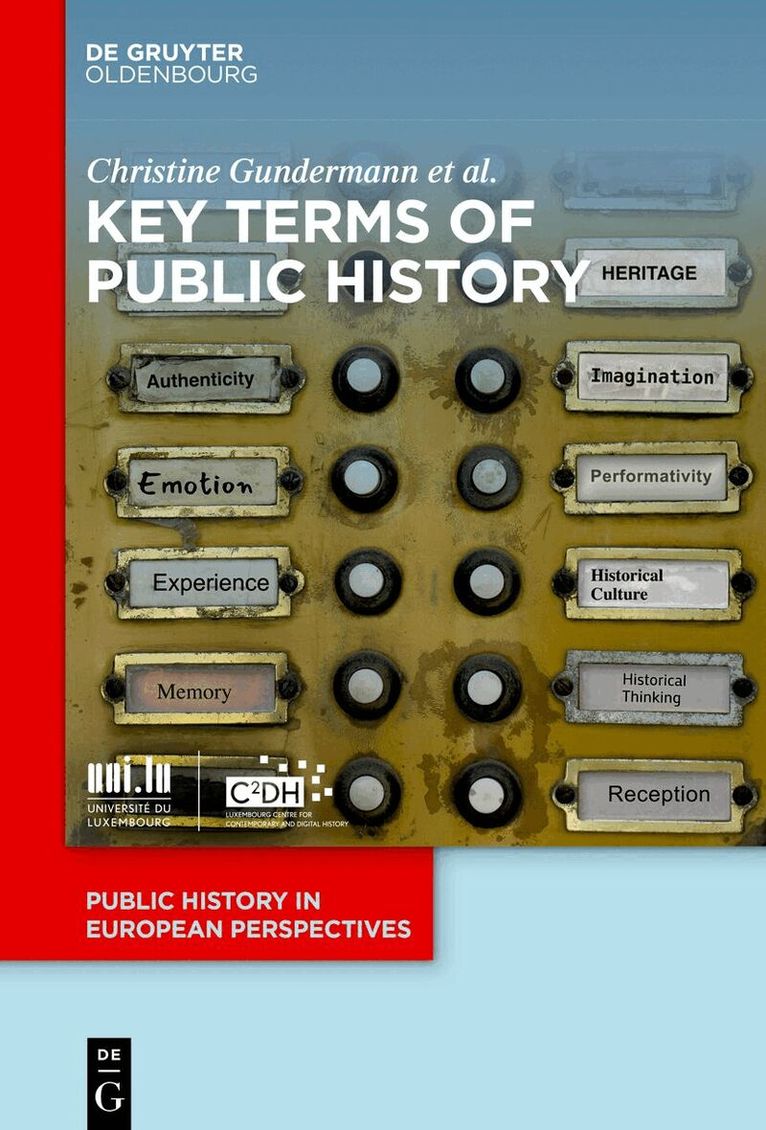
This volume introduces key terms of public history and makes them accessible via the most important subject areas and central research perspectives. It is aimed at students, teachers and practitioners who deal with history in the public sphere and offers approaches to the theoretical foundation of public history as part of historical cultural studies.
720 kr
Skickas inom 7-10 vardagar
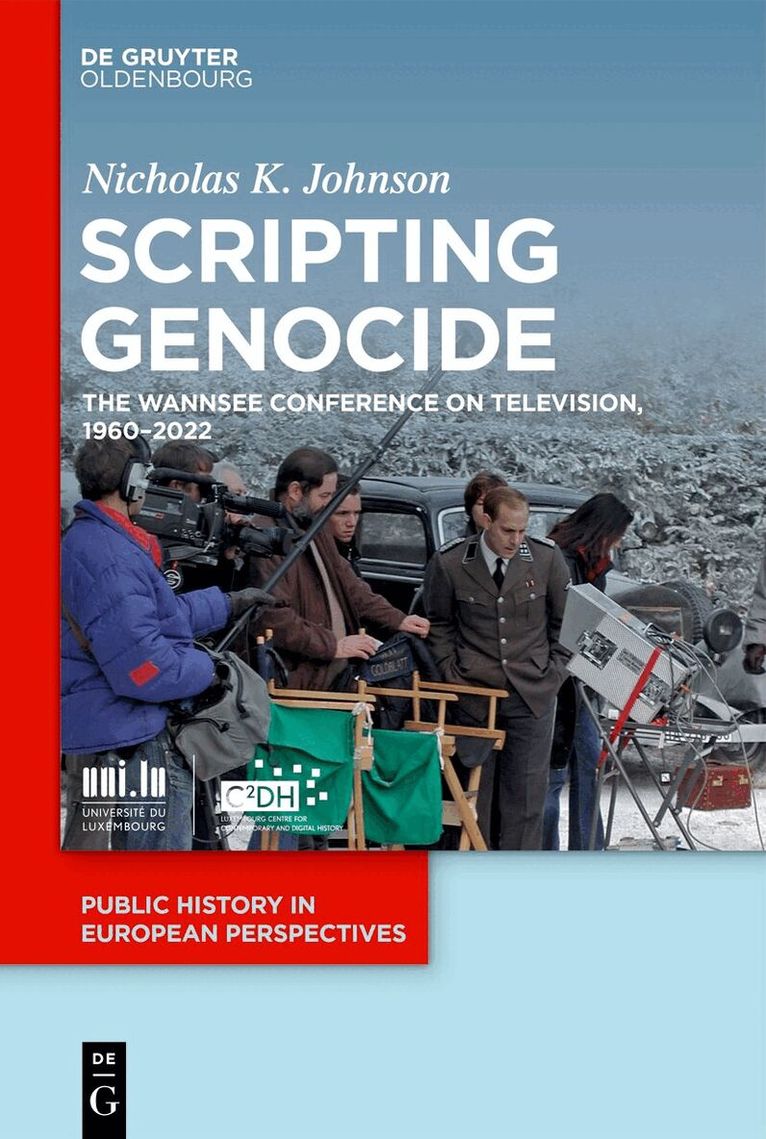
Scripting Genocide traces the history of how and why the Wannsee Conference has repeatedly attracted the attention of American, British, and German artists, writers, and filmmakers since 1960. Almost all of their televisual depictions of the conference itself are sparse, minimalist, dialogue-driven productions. Their subtle, almost scholarly projection of the conference stands in stark contrast to the large-scale and often critically acclaimed attention devoted to other aspects of the Holocaust in both big-budget theatrical films and European art cinema. Scripting Genocide investigates how the dramatic, fictionalized depictions of the Wannsee Conference offered filmmakers, and especially screenwriters, opportunities to be public historians. This book also contains the final interviews with screenwriters Paul Mommertz and Loring Mandel. Following the methods of the New Film History, which is grounded in archival production material, oral history interviews, and screenplay analysis, this book asks why and how filmmakers have grappled with portraying Wannsee in dramatic form since the 1960s. Each of these docudramas contributed to a diffuse body of work the author conceptualizes as "antifascist television." In the end, all of these productions argue that words prefigure deeds.
869 kr
Kommande
Public history has been a rising field of theory and practice for a few decades now. Its origins are debated but the current literature places its popularization in the 1970s in the United States of America. While professional and academic history merely developed in the late 19th and early 20th centuries, plenty of other historical practices testified of the way certain people, groups and institutions were engaging with the past in older times. This book puts public history into longer historical perspectives in Europe. Following a chronological order, the book includes chapters on historical practices involving and addressing publics from the Antiquity to the mid-twentieth century. The case studies show the richness and diversity of public historical practices as well as re-visit the question of the role of the public in interpreting the past in countries such as Greece, Britain, Ireland, France, Italy, Poland, Belgium, and Spain. In a current international context of rising public history projects, we need to be able to place the field into longer historical debates. Our objective is to contribute to and invite more research on the history of public historical practices in Europe and beyond.