Regional International Politics – serie
Visar alla böcker i serien Regional International Politics. Handla med fri frakt och snabb leverans.
4 produkter
4 produkter
Häftad, Engelska, 2015
361 kr
Skickas inom 5-8 vardagar
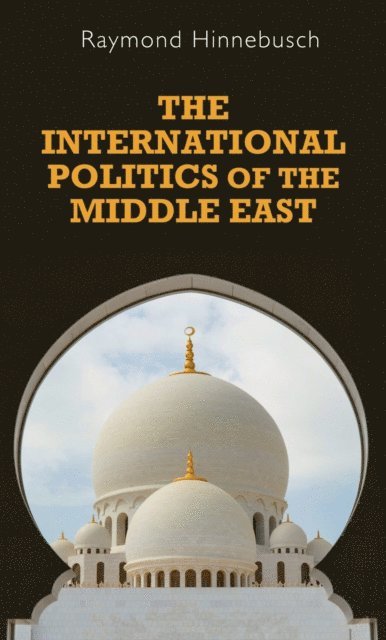
One of the major internationally recognised works on the international politics of the Middle East, this book systematically combines International Relations theory and Middle East case studies to provide a macro overview of the international relations of the region. The book has been widely used at both undergraduate levels, Masters degree and PhD levels. In providing a unique interpretation of Middle East North African (MENA) international politics, it will also be valuable for scholars of the region. The book provide readers with both theoretical and concrete information, with theoretically-framed major topics, liberally illustrated with case study material on key dimensions of regional politics. Topics include the place of the Middle East in the wider global system; the role of Arabism and Islam in regional politics; the impact of state formation in the region on its international relations; comparative foreign policy making looking at pivotal country cases, including Egypt, Syria, Saudi Arabia and Turkey; major regional wars and efforts at order building; the role of US hegemony and the two Iraq wars; and the impact of the Arab Uprising on regional politics.
Inbunden, Engelska, 2015
1 150 kr
Skickas inom 5-8 vardagar
One of the major internationally recognised works on the international politics of the Middle East, this book systematically combines international relations theory and Middle East case studies to provide a macro overview of the international relations of the region. The book has been widely used at both undergraduate levels, Masters degree and PhD levels. In providing a unique interpretation of Middle East North Africa (MENA) international politics, it will also be valuable for scholars of the region. The book provide readers with both theoretical and concrete information, with theoretically-framed major topics, liberally illustrated with case study material on key dimensions of regional politics. Topics include the place of the Middle East in the wider global system; the role of Arabism and Islam in regional politics; the impact of state formation in the region on its international relations; comparative foreign policy making looking at pivotal country cases, including Egypt, Syria, Saudi Arabia and Turkey; major regional wars and efforts at order building; the role of US hegemony and the two Iraq wars; and the impact of the Arab Uprising on regional politics.
E-bok
PDF, Engelska, 201854 kr
Läs direkt efter köp
This text aims to fill a gap in the field of Middle Eastern political studies by combining international relations theory with concrete case studies. It begins with an overview of the rules and features of the Middle East regional system—the arena in which the local states, including Egypt, Turkey, Iran, Israel and the Arab states of Syria, Jordan and Iraq, operate. The book goes on to analyse foreign-policy-making in key states, illustrating how systemic determinants constrain this policy-making, and how these constraints are dealt with in distinctive ways depending on the particular domestic features of the individual states. Finally, it goes on to look at the outcomes of state policies by examining several major conflicts including the Arab-Israeli conflict and the Gulf War, and the system of regional alignment. The study assesses the impact of international penetration in the region, including the historic reasons behind the formation of the regional state system. It also analyses the continued role of external great powers, such as the United States and the former Soviet Union, and explains the process by which the region has become incorporated into the global capitalist market.An electronic edition of this book is freely available under a Creative Commons (CC BY-NC-ND) licence.
E-bok
Engelska, 201354 kr
Läs direkt efter köp
This text aims to fill a gap in the field of Middle Eastern political studies by combining international relations theory with concrete case studies. It begins with an overview of the rules and features of the Middle East regional system—the arena in which the local states, including Egypt, Turkey, Iran, Israel and the Arab states of Syria, Jordan and Iraq, operate. The book goes on to analyse foreign-policy-making in key states, illustrating how systemic determinants constrain this policy-making, and how these constraints are dealt with in distinctive ways depending on the particular domestic features of the individual states. Finally, it goes on to look at the outcomes of state policies by examining several major conflicts including the Arab-Israeli conflict and the Gulf War, and the system of regional alignment. The study assesses the impact of international penetration in the region, including the historic reasons behind the formation of the regional state system. It also analyses the continued role of external great powers, such as the United States and the former Soviet Union, and explains the process by which the region has become incorporated into the global capitalist market.An electronic edition of this book is freely available under a Creative Commons (CC BY-NC-ND) licence.