Reproductive Rights and Policy – serie
Visar alla böcker i serien Reproductive Rights and Policy. Handla med fri frakt och snabb leverans.
5 produkter
5 produkter
Inbunden, Engelska, 2007
834 kr
Skickas inom 10-15 vardagar
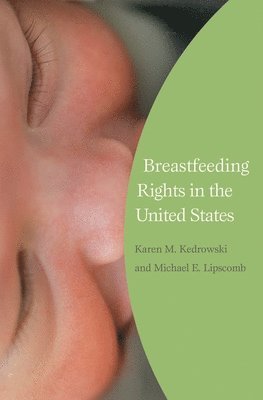
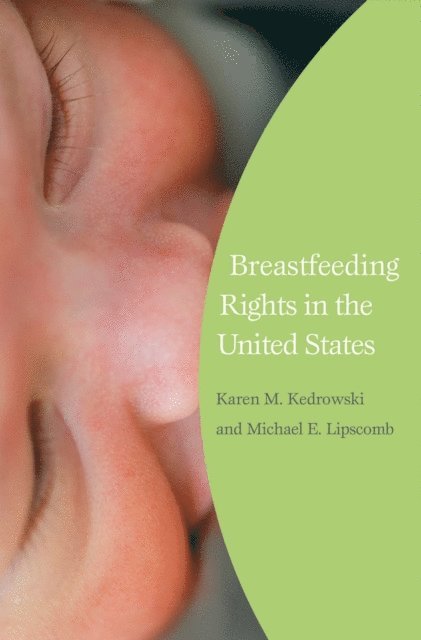
Breastfeeding Rights in the United States shows that the right to breastfeed in this country exists only in a negative sense: you can do it unless someone takes you to court. Kedrowski and Lipscomb catalog and analyze all the laws, policies, judicial opinions, cultural mores, and public attitudes that bear on breastfeeding in America. They then explore the classic double bind: social norms promulgated by the medical and public health establishment say breast is best; but social practices in the workplace and in public spaces make breastfeeding difficult. Aggravating the double bind is the prominence of the breast in American culture as a sexual object. The double bind creates coercively structured choices that are incompatible with the meaningful exercise of rights.The authors conclude that the solution to this problem requires new theory and new strategy. They posit a new democratic, feminist theory of the breastfeeding right that is predicated on the following distinctions: DT It is not a right to breastfeed, but a right to choose to breastfeed. DT It is a woman's right to choose, not a baby's right to be breastfeed. DT It is a right, not a duty. The authors predict that framing the breastfeeding right in this way provides the basis for a new strategic coalition between breastfeeding advocates and liberal feminists, who have historically been wary of one another's rhetoric. Breastfeeding Rights in the United States represents an important advance toward policy change.
E-bok
PDF, Engelska, 2006672 kr
Läs direkt efter köp
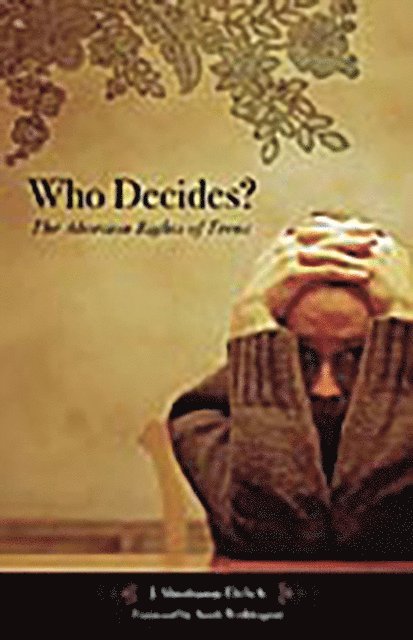
The question of whether a young woman should be allowed to terminate a pregnancy without her parents' knowledge has been one of the most contentious issues of the post Roe v. Wade era. Parental involvement laws reach to the core of the parent-teen relationship in the highly contested realm of adolescent sexuality. This is the first book to examine in thorough detail the decision-making experiences of teens considering abortion. Shoshanna Ehrlich evaluates the Supreme Court's efforts to reconcile the historically based understanding of teens as dependent persons in need of protection with a more contemporary understanding of them as autonomous individuals with adult-like claims to constitutional recognition.Arriving at a compromise, the Court has made clear that, like adult women, teens have a protected right of choice, but that states may impose a parental involvement requirement. However, so that parents are not vested with veto power over their daughters' decisions, young women must be allowed to seek a waiver of the requirement. Integrating a wealth of social science literature, including in-depth interviews with 26 young women from Massachusetts who obtained court authorization for an abortion, the book raises important questions about the logic of a legal approach that requires young women to involve adults when they seek to terminate a pregnancy, but that allows them to make a decision to become mothers on their own.
E-bok
PDF, Engelska, 2007902 kr
Läs direkt efter köp
Breastfeeding Rights in the United States shows that the right to breastfeed in this country exists only in a negative sense: you can do it unless someone takes you to court. Kedrowski and Lipscomb catalog and analyze all the laws, policies, judicial opinions, cultural mores, and public attitudes that bear on breastfeeding in America. They then explore the classic double bind: social norms promulgated by the medical and public health establishment say breast is best; but social practices in the workplace and in public spaces make breastfeeding difficult. Aggravating the double bind is the prominence of the breast in American culture as a sexual object. The double bind creates coercively structured choices that are incompatible with the meaningful exercise of rights.The authors conclude that the solution to this problem requires new theory and new strategy. They posit a new democratic, feminist theory of the breastfeeding right that is predicated on the following distinctions: DT It is not a right to breastfeed, but a right to choose to breastfeed. DT It is a woman's right to choose, not a baby's right to be breastfeed. DT It is a right, not a duty. The authors predict that framing the breastfeeding right in this way provides the basis for a new strategic coalition between breastfeeding advocates and liberal feminists, who have historically been wary of one another's rhetoric. Breastfeeding Rights in the United States represents an important advance toward policy change.
E-bok
PDF, Engelska, 2013647 kr
Läs direkt efter köp
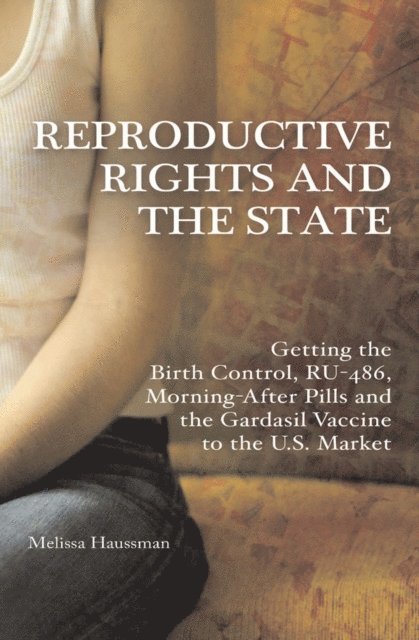
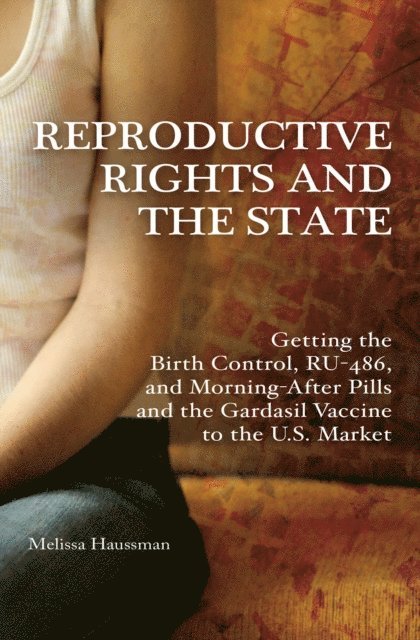
Simultaneously examining four significant, never-before-combined case studies, this unique feminist analysis offers troubling revelations about the private-public interaction in U.S. policy affecting birth control drugs.Reproductive Rights and the State: Getting the Birth Control, RU-486, and Morning-After Pills and the Gardasil Vaccine to the U.S. Market tackles a subject that remains controversial more than 60 years after "the pill" was approved for use in the United States. The first book to examine the politicization of the FDA approval process for reproductive drugs, this study maps the hard-fought battles over the four major drugs currently on the U.S. market.To make her case, Melissa Haussman scrutinizes the history of the FDA and the statutes that have governed it, as well as interactions between the U.S. government, American pharmaceutical companies, and the medical community. The analysis centers on explaining how three reproductive drugs were kept off the U.S. market well after their efficacy had been proven, while the availability of the fourth, Gardasil, has less to do with helping girls than with preserving the financial wellbeing of Merck. Readers will come away understanding how, when it comes to reproductive drugs, women's health concerns have consistently taken a backseat to political agendas and corporate profits.
E-bok
Engelska, 2013628 kr
Läs direkt efter köp
Simultaneously examining four significant, never-before-combined case studies, this unique feminist analysis offers troubling revelations about the private-public interaction in U.S. policy affecting birth control drugs.Reproductive Rights and the State: Getting the Birth Control, RU-486, and Morning-After Pills and the Gardasil Vaccine to the U.S. Market tackles a subject that remains controversial more than 60 years after "the pill" was approved for use in the United States. The first book to examine the politicization of the FDA approval process for reproductive drugs, this study maps the hard-fought battles over the four major drugs currently on the U.S. market.To make her case, Melissa Haussman scrutinizes the history of the FDA and the statutes that have governed it, as well as interactions between the U.S. government, American pharmaceutical companies, and the medical community. The analysis centers on explaining how three reproductive drugs were kept off the U.S. market well after their efficacy had been proven, while the availability of the fourth, Gardasil, has less to do with helping girls than with preserving the financial wellbeing of Merck. Readers will come away understanding how, when it comes to reproductive drugs, women's health concerns have consistently taken a backseat to political agendas and corporate profits.