Research Monographs in GIS - Böcker
Visar alla böcker i serien Research Monographs in GIS. Handla med fri frakt och snabb leverans.
7 produkter
7 produkter
713 kr
Skickas inom 10-15 vardagar
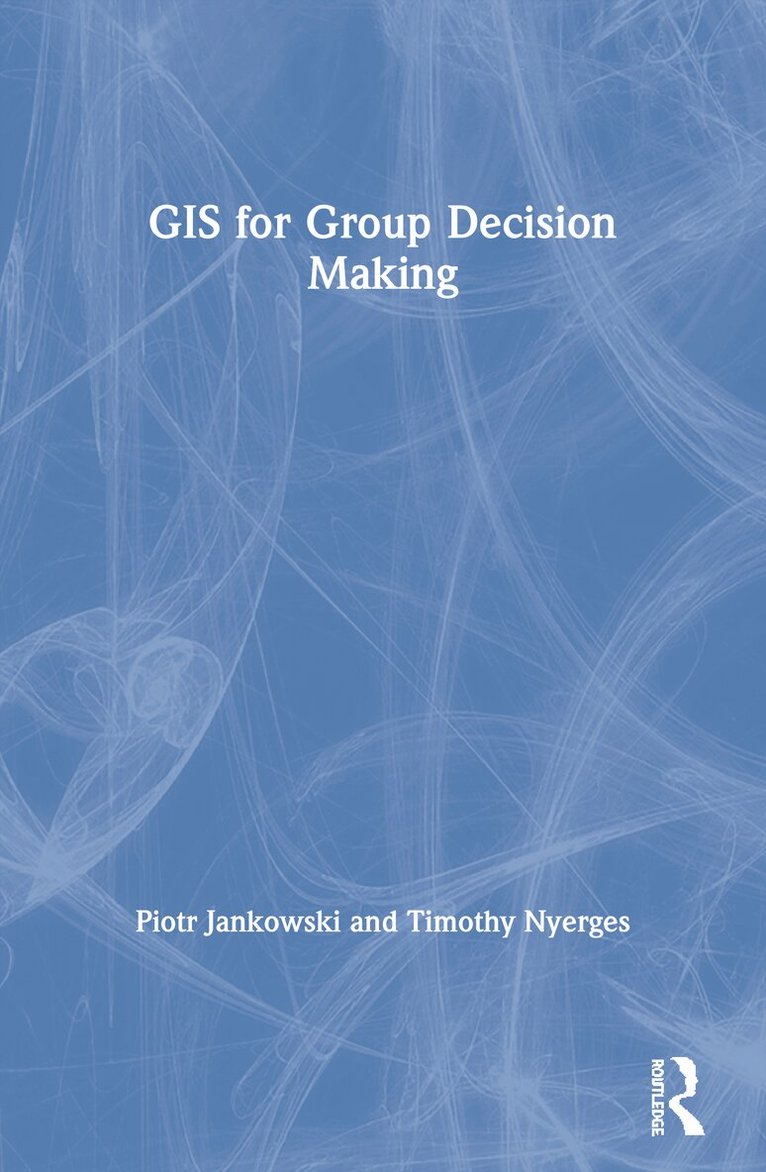
In today's society, it is very common for decisions that influence us all to be made by a combination of interested parties, all with their own agenda. In this instance, how can we be sure that the decision is the correct one, not just decided by the group with the most political influence or most money? Such groups have now become fundamental decision-making units within and between organisations in most societies and are more often than not very complex structures. The use of Geographic Information Systems (GIS) Groupware can be used in several practical contexts to make sure that spatial decision problems are overcome in the most effective way.A fundamental aspect of a spatial decision problem is the matter of location. The complexity of spatial decision problems result from the multiplicity of stakeholders involved, their often conflicting interests, and the intangible variables of the decision environment. Examples of such problems include: where to locate a public facility, which brownfield redevelopment strategy to choose, which sites to select for environmental restoration, or which comprehensive land use plan to adopt. Good solutions to such problems -if they exist at all- are characterised by a certain minimum level of secretarial support; hence the decision-making process should involve experts, citizens, and interest groups alike. Such a collaborative approach to spatial decision-making needs methodology, tools, and application examples to inspire its adoption and more widespread use. This book sets out the key to the collaborative spatial decision-making approach: its theoretical basis, the requisite tools, and a number of application examples.GIS professionals and researchers should find this an invaluable guide to an emerging area of GIS
713 kr
Skickas inom 10-15 vardagar
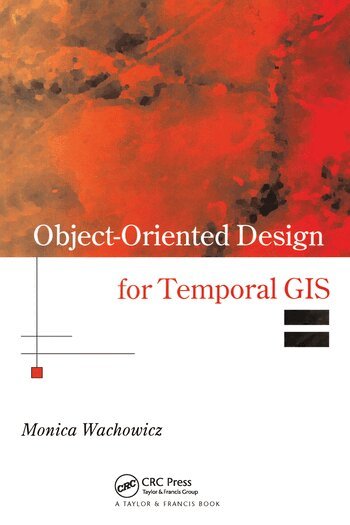
There has been an increasing demand in GIS for systems that support historical data: time-series data as well as mobility information. From a modelling perspective, there are advantages in integrating object-oriented analysis and design to databases as well as to visualisation capabilities of GIS.Object-Oriented Design for Temporal GIS explores the major components of the object-oriented analysis and design methods, how they can be used for modelling spatio-temporal data, and how these components are developed and maintained within a GIS. It also offers practical guidance to object-oriented methods by demonstrating the feasibility of applying such methods to issues involved in handling spatio-temporal data. The author demonstrates how this knowledge might be used in a wide range of applications such as political boundary record maintenance (historical data), disease incidence rate analysis in epidemics (diffusion rate), and environmental studies of climate change (time-series data). This understanding contributes to the development of theory in GIS and improves the design of GIS to support the modelling of semantics, space and time elements of geographical information.
1 637 kr
Skickas inom 10-15 vardagar
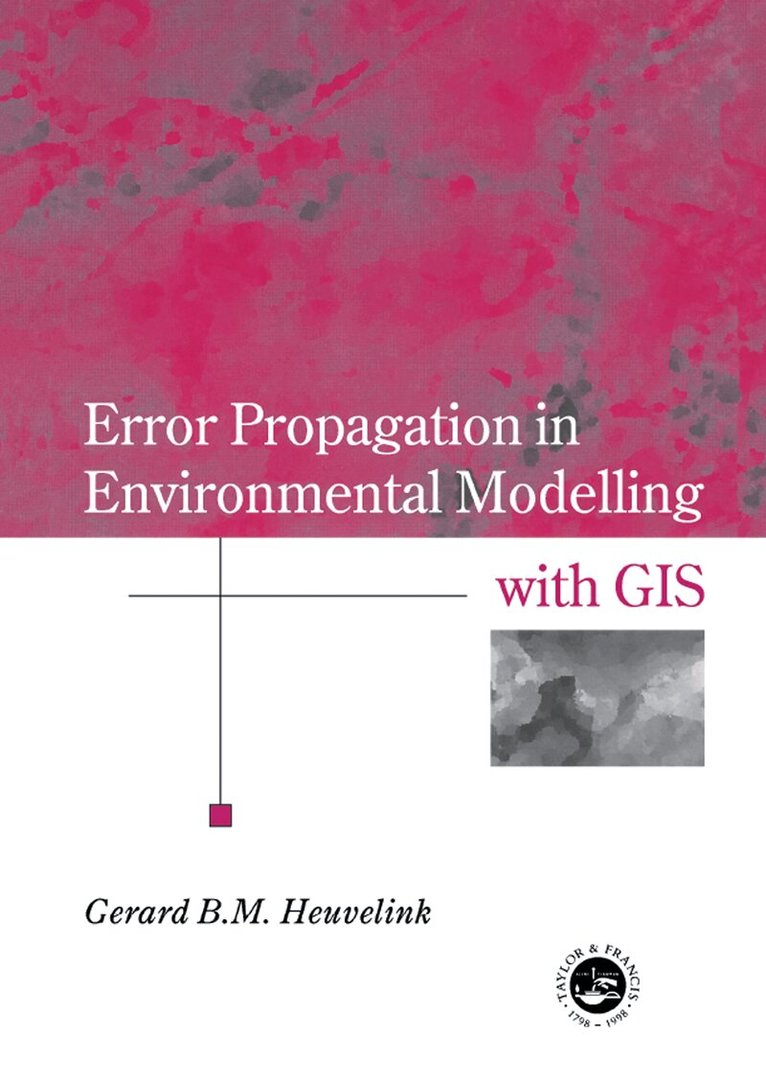
GIS users and professionals are aware that the accuracy of GIS results cannot be naively based on the quality of the graphical output. Data stored in a GIS will have been collected or measured, classified, generalised, interpreted or estimated, and in all cases this allows the introduction of errors.; With the processing of translation of this data into the GIS itself further propagation or amplification or errors also occur. It is essential that GIS professionals understand these issues systematically if they are to build ever more accurate systems.; In this book the authors decade of study into these problems is brought into focus with an account of the development, application and implementation of error propagation techniques for use in environmental modelling with GIS. Its purpose is to provide a methodology for handling error and error propagation.
1 900 kr
Skickas inom 7-10 vardagar
There has been an increasing demand in GIS for systems that support historical data: time-series data as well as mobility information. From a modelling perspective, there are advantages in integrating object-oriented analysis and design to databases as well as to visualisation capabilities of GIS.Object-Oriented Design for Temporal GIS explores the major components of the object-oriented analysis and design methods, how they can be used for modelling spatio-temporal data, and how these components are developed and maintained within a GIS. It also offers practical guidance to object-oriented methods by demonstrating the feasibility of applying such methods to issues involved in handling spatio-temporal data. The author demonstrates how this knowledge might be used in a wide range of applications such as political boundary record maintenance (historical data), disease incidence rate analysis in epidemics (diffusion rate), and environmental studies of climate change (time-series data). This understanding contributes to the development of theory in GIS and improves the design of GIS to support the modelling of semantics, space and time elements of geographical information.
3 472 kr
Skickas inom 10-15 vardagar
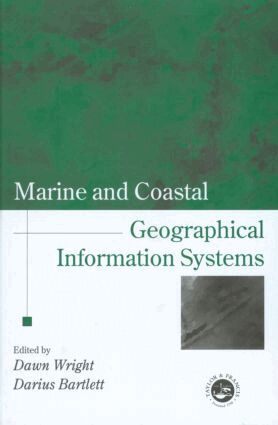
Marine and coastal applications of GIS are finally gaining wide acceptance in scientific as well as GIS communities, and cover the fields of deep sea geology, chemistry and biology, and coastal geology, biology, engineering and resource management. Comprising rigorous contributions from a group of leading scholars in marine and coastal GIS, this book will inspire and stimulate continued research in this important new application domain.Launched as a project to mark the UN International Year of the Ocean (1998) and supported by the International Geographical Union's Commission on Coastal Systems, this book covers progress and research in the marine and coastal realms, in the areas of theory, applications and empirical results. It is the first book of its kind to address basic and applied scientific problems in deep sea and coastal science using GIS and remote sensing technologies. It is designed for GIS and remote sensing specialists, but also for those with an interest in oceans, lakes and shores. Coverage ranges from seafloor spreading centres to Exclusive Economic Zones to microscale coastal habitats; and techniques include submersibles, computer modelling, image display, 3-D temporal data visualization, and development and application of new algorithms and spatial data structures. It illustrates the broad usage of GIS, image processing, and computer modelling in deep sea and coastal environments, and also addresses important institutional issues arising out of the use of these technologies.
1 298 kr
Skickas inom 10-15 vardagar
Marine and coastal applications of GIS are finally gaining wide acceptance in scientific as well as GIS communities, and cover the fields of deep sea geology, chemistry and biology, and coastal geology, biology, engineering and resource management. Comprising rigorous contributions from a group of leading scholars in marine and coastal GIS, this book will inspire and stimulate continued research in this important new application domain.Launched as a project to mark the UN International Year of the Ocean (1998) and supported by the International Geographical Union's Commission on Coastal Systems, this book covers progress and research in the marine and coastal realms, in the areas of theory, applications and empirical results. It is the first book of its kind to address basic and applied scientific problems in deep sea and coastal science using GIS and remote sensing technologies. It is designed for GIS and remote sensing specialists, but also for those with an interest in oceans, lakes and shores. Coverage ranges from seafloor spreading centres to Exclusive Economic Zones to microscale coastal habitats; and techniques include submersibles, computer modelling, image display, 3-D temporal data visualization, and development and application of new algorithms and spatial data structures. It illustrates the broad usage of GIS, image processing, and computer modelling in deep sea and coastal environments, and also addresses important institutional issues arising out of the use of these technologies.
1 327 kr
Tillfälligt slut
In today's society, it is very common for decisions that influence us all to be made by a combination of interested parties, all with their own agenda. In this instance, how can we be sure that the decision is the correct one, not just decided by the group with the most political influence or most money? Such groups have now become fundamental decision-making units within and between organisations in most societies and are more often than not very complex structures. The use of Geographic Information Systems (GIS) Groupware can be used in several practical contexts to make sure that spatial decision problems are overcome in the most effective way.A fundamental aspect of a spatial decision problem is the matter of location. The complexity of spatial decision problems result from the multiplicity of stakeholders involved, their often conflicting interests, and the intangible variables of the decision environment. Examples of such problems include: where to locate a public facility, which brownfield redevelopment strategy to choose, which sites to select for environmental restoration, or which comprehensive land use plan to adopt. Good solutions to such problems -if they exist at all- are characterised by a certain minimum level of secretarial support; hence the decision-making process should involve experts, citizens, and interest groups alike. Such a collaborative approach to spatial decision-making needs methodology, tools, and application examples to inspire its adoption and more widespread use. This book sets out the key to the collaborative spatial decision-making approach: its theoretical basis, the requisite tools, and a number of application examples.GIS professionals and researchers should find this an invaluable guide to an emerging area of GIS