Routledge Advances in Experimental and Computable Economics – serie
Visar alla böcker i serien Routledge Advances in Experimental and Computable Economics. Handla med fri frakt och snabb leverans.
20 produkter
20 produkter
Häftad, Engelska, 2020
656 kr
Skickas inom 10-15 vardagar
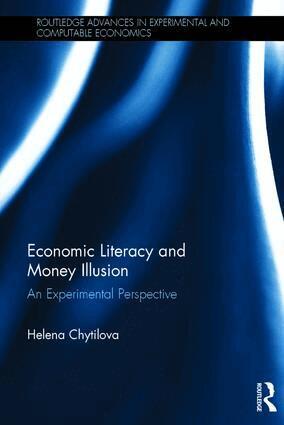
The concept of money illusion, a recently resurrected phenomenon of behavioral economics, is a real fact of economic life, the potential role of which should no longer be dismissed. Despite money illusion being utterly suppressed by mainstream economists, small deviations from rationality, together with trends in behavioral economics, alleviate the denial of money illusion induced by the rational expectations revolution. This book argues that money illusion seems to be a ubiquitous phenomenon, affecting various areas such as financial markets, housing markets, labor markets, consumption-saving decisions, and even development at the aggregate level induced by coordination issues. Furthermore, in light of the educational efforts of central banks and other institutions, it is worth considering whether solid economic training would provide guidance for the public regarding their decision-making and thereby alleviate the effects of money illusion. The emerging field of experimental economics provides a unique opportunity for us to verify the presence of money illusion. Specifically, attention is devoted to the experimental investigation of reduction in the direct and indirect effects of money illusion with respect to the level of economic literacy acquired through economic education.Economic Literacy and Money Illusion will be of interest to the general audience and to those who are interested in behavioral economics, economics education, and experimental economics, as well as to policy makers and institutions. Last but not least, it will help develop students’ interest in alternative economic theories.NB. The research and writing of this book was made possible with the support of the University of Economics, Prague, Faculty of Economics, Department of Economics.
Häftad, Engelska, 2020
656 kr
Skickas inom 10-15 vardagar
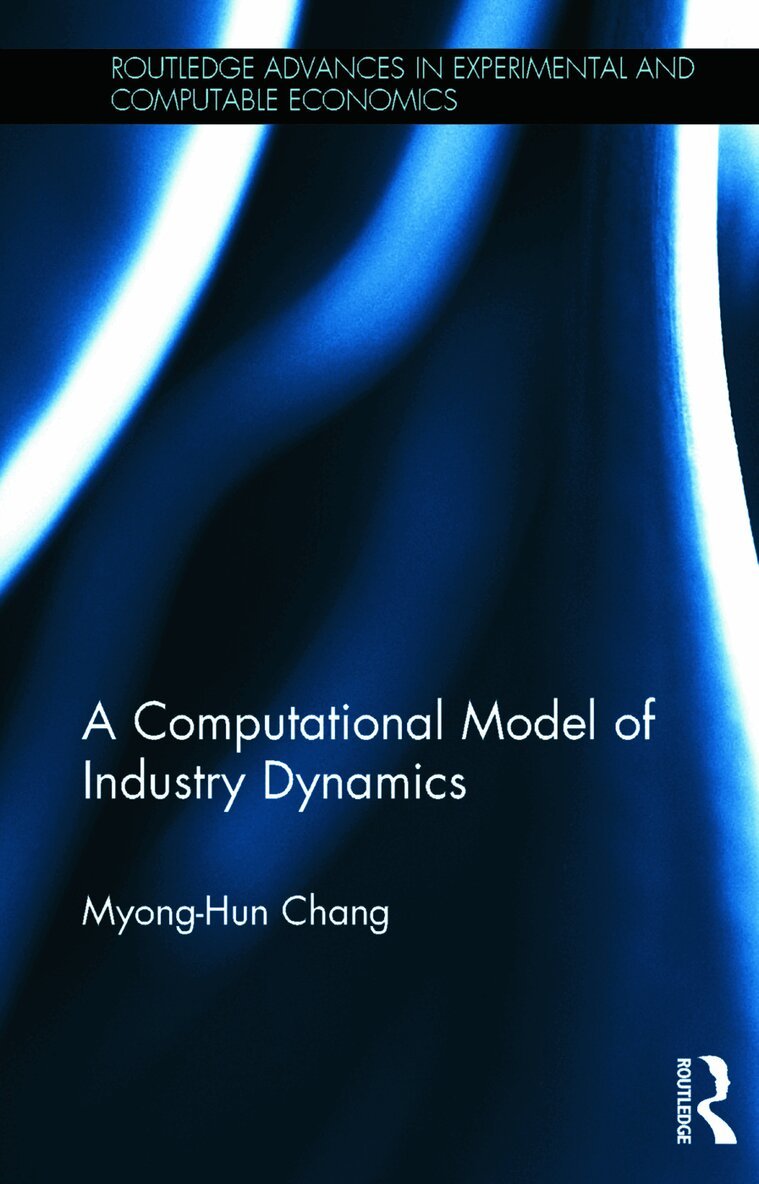
The economics literature on industry dynamics contains a wide array of empirical works identifying a set of stylized facts. There have been several attempts at constructing analytical models to explain some of these regularities. These attempts are highly stylized and limited in scope to keep the analyses tractable. A general model of industry evolution capable of generating firm and industry behaviour that can match the data is needed.This book endeavours to explain many well-documented aspects of the evolution of industries over time. It uses an agent-based computational model in which artificial industries are created and grown to maturity in silico. While the firms in the model are assumed to have bounded rationality, they are nevertheless adaptive in the sense that their experience-based R&D efforts allow them to search for improved technologies. Given a technological environment subject to persistent and unexpected external shocks, the computationally generated industry remains in a perennial state of flux. The main objective of this study is to identify patterns that exist in the movements of firms as the industry evolves over time along the steady state in which the measured behaviour of the firms and the industry stochastically fluctuate around steady means.The computational model developed in this book is able to replicate many of the stylized facts from the empirical industrial organization literature, particularly as the facts pertain to the dynamics of firm entry and exit. Furthermore, the model allows examination of cross-industry variations in entry and exit patterns by systematically varying the characteristics of the market and the technological environment within which the computationally generated industry evolves. The model demonstrates that the computational approach based on boundedly rational agents in a dynamic setting can be useful and effective in carrying out both positive and normative economic analysis.
Inbunden, Engelska, 2007
2 460 kr
Skickas inom 10-15 vardagar
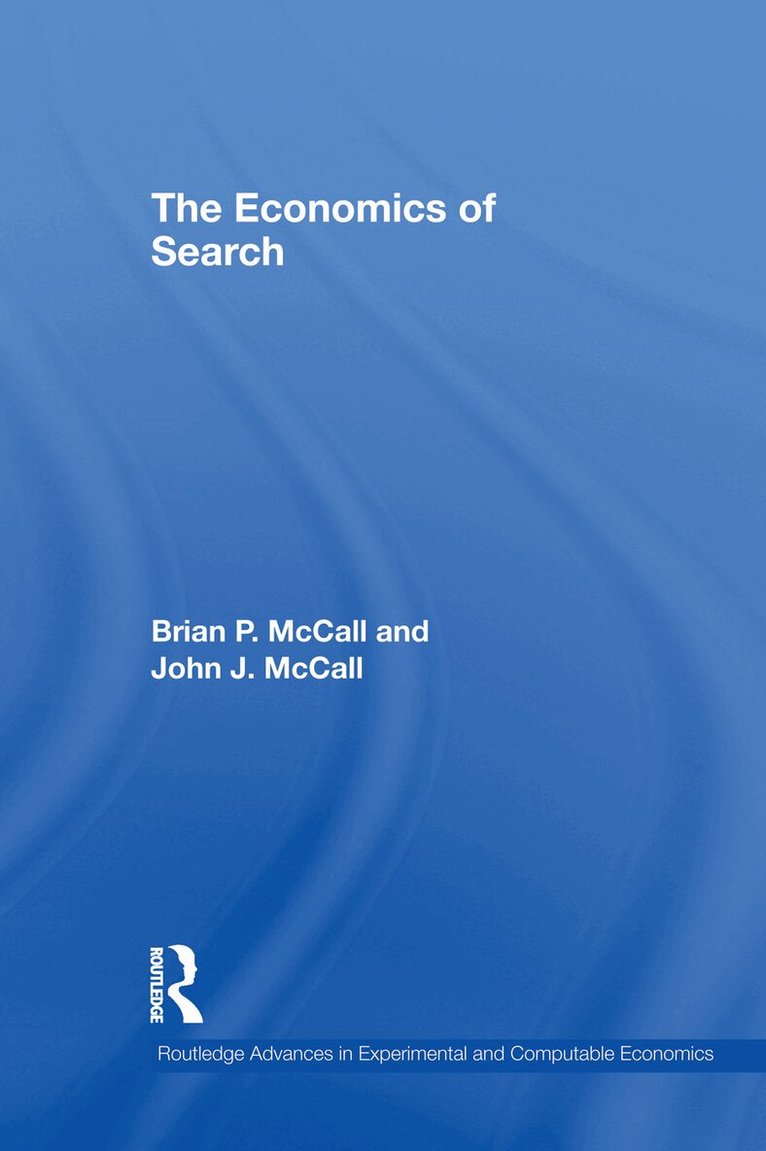
The economics of search is a prominent component of economic theory, and it has a richness and elegance that underpins a host of practical applications. In this book Brian and John McCall present a comprehensive overview of the economic theory of search, from the classical model of job search formulated 40 years ago to the recent developments in equilibrium models of search.The book gives decision-theoretic foundations to seemingly slippery issues in labour market theory, estimation theory and economic dynamics in general, and surveys the entire field of the economics of search, including its history, theory, and econometric applications. Theoretical models of the economics of search are covered as well as estimation methods used in search theory and topics covered include job search, turnover, unemployment, liquidity, house selling, real options and auctions. The mathematical methods used in search theory such as dynamic programming are reviewed as well as structural estimation methods and econometric methods for duration models. The authors also explore the classic sequential search model and its extensions in addition to recent advances in equilibrium search theory.
Inbunden, Engelska, 2004
2 893 kr
Skickas inom 10-15 vardagar
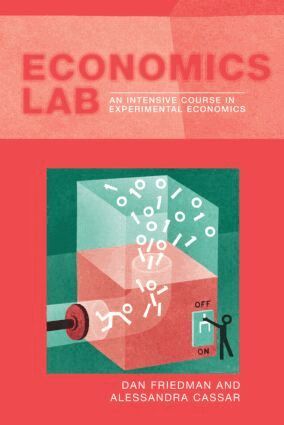
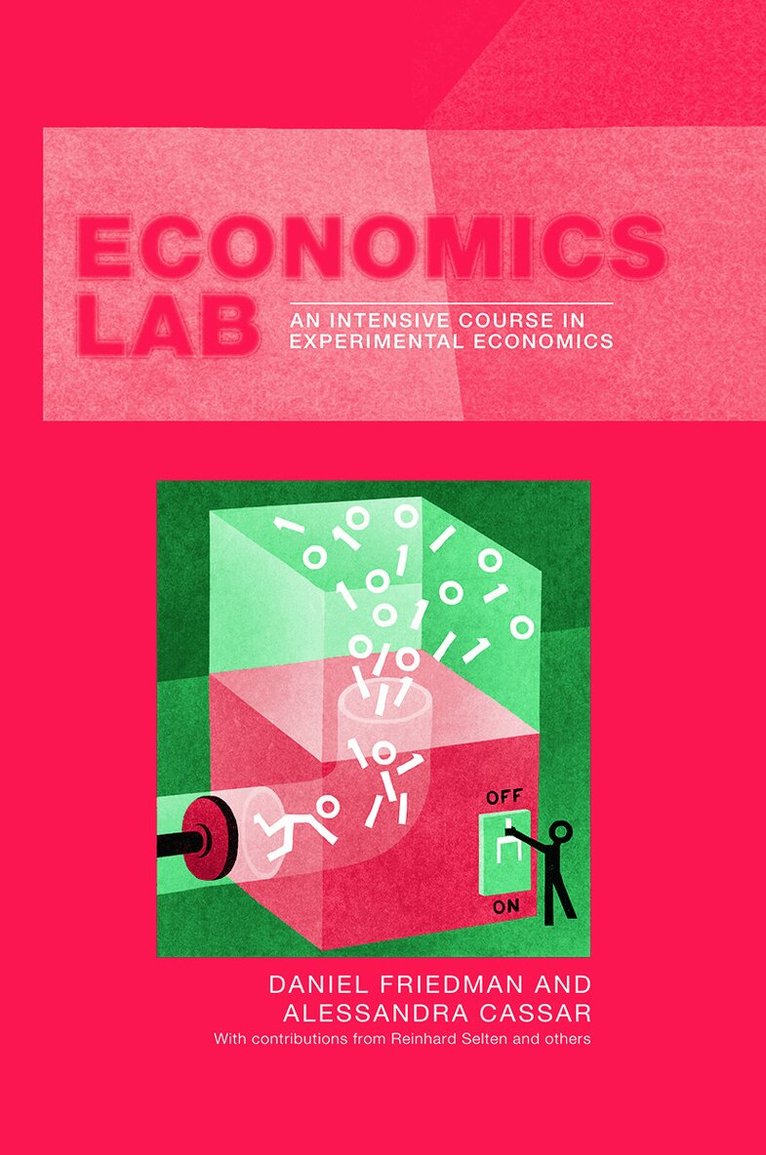
Laboratory experiments with human subjects now provide crucial data in most fields of economics and there has been a tremendous upsurge in interest in this relatively new field of economics. This textbook introduces the student to the world of experimental economics. Contributors including Reinhard Selten and Axel Leijonhufvud that sketch the history of experimental economics before moving on to describe how to set up an economics experiment and to survey selected applications and the latest methods. This user-friendly book demonstrates how students can use the lessons to conduct original research.With their freeflowing, discursive yet precise style, Friedman and Cassar have created a book that is essential to students of experimental economics across the world. On account of its authoritative content, Economics Lab will also find its way on to the bookshelves of leading researchers in all fields of economics.
Häftad, Engelska, 2004
873 kr
Skickas inom 10-15 vardagar
Laboratory experiments with human subjects now provide crucial data in most fields of economics and there has been a tremendous upsurge in interest in this relatively new field of economics. This textbook introduces the student to the world of experimental economics. Contributors including Reinhard Selten and Axel Leijonhufvud that sketch the history of experimental economics before moving on to describe how to set up an economics experiment and to survey selected applications and the latest methods. This user-friendly book demonstrates how students can use the lessons to conduct original research.With their freeflowing, discursive yet precise style, Friedman and Cassar have created a book that is essential to students of experimental economics across the world. On account of its authoritative content, Economics Lab will also find its way on to the bookshelves of leading researchers in all fields of economics.
Inbunden, Engelska, 2010
2 749 kr
Skickas inom 10-15 vardagar
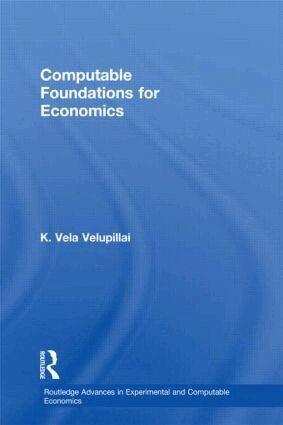
Computable Foundations for Economics is a unified collection of essays, some of which are published here for the first time and all of which have been updated for this book, on an approach to economic theory from the point of view of algorithmic mathematics. By algorithmic mathematics the author means computability theory and constructive mathematics. This is in contrast to orthodox mathematical economics and game theory, which are formalised with the mathematics of real analysis, underpinned by what is called the ZFC formalism, i.e., set theory with the axiom of choice. This reliance on ordinary real analysis and the ZFC system makes economic theory in its current mathematical mode completely non-algorithmic, which means it is numerically meaningless. The book provides a systematic attempt to dissect and expose the non-algorithmic content of orthodox mathematical economics and game theory and suggests a reformalization on the basis of a strictly rigorous algorithmic mathematics. This removes the current schizophrenia in mathematical economics and game theory, where theory is entirely divorced from algorithmic applicability – for experimental and computational exercises.The chapters demonstrate the uncomputability and non-constructivity of core areas of general equilibrium theory, game theory and recursive macroeconomics. The book also provides a fresh look at the kind of behavioural economics that lies behind Herbert Simon’s work, and resurrects a role for the noble classical traditions of induction and verification, viewed and formalised, now, algorithmically. It will therefore be of particular interest to postgraduate students and researchers in algorithmic economics, game theory and classical behavioural economics.
Inbunden, Engelska, 2009
2 389 kr
Skickas inom 10-15 vardagar
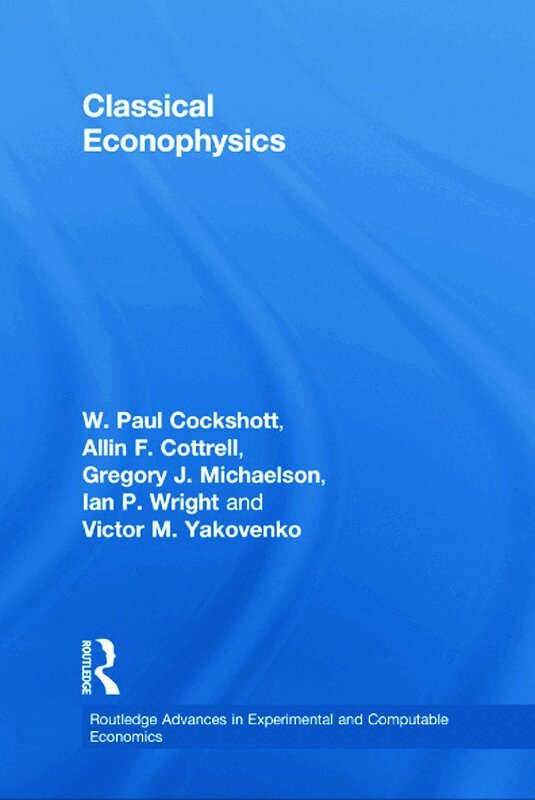
This monograph examines the domain of classical political economy using the methodologies developed in recent years both by the new discipline of econo-physics and by computing science. This approach is used to re-examine the classical subdivisions of political economy: production, exchange, distribution and finance.The book begins by examining the most basic feature of economic life – production – and asks what it is about physical laws that allows production to take place. How is it that human labour is able to modify the world? It looks at the role that information has played in the process of mass production and the extent to which human labour still remains a key resource. The Ricardian labour theory of value is re-examined in the light of econophysics, presenting agent based models in which the Ricardian theory of value appears as an emergent property. The authors present models giving rise to the class distribution of income, and the long term evolution of profit rates in market economies. Money is analysed using tools drawn both from computer science and the recent Chartalist school of financial theory.Covering a combination of techniques drawn from three areas, classical political economy, theoretical computer science and econophysics, to produce models that deepen our understanding of economic reality, this new title will be of interest to higher level doctoral and research students, as well as scientists working in the field of econophysics.
Inbunden, Engelska, 2009
2 185 kr
Skickas inom 10-15 vardagar
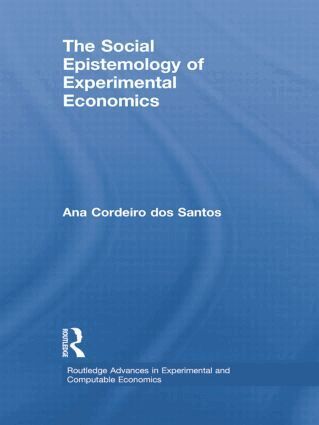
Any experimental field consists of preparing special conditions for examining interesting objects for research. So naturally, the particular ways in which scientists prepare their objects determine the kind and the content of knowledge produced. This book provides a framework for the analysis of experimental practices - the Social Epistemology of Experiment - that incorporates both the ‘material’ and the ‘social’ dimensions of knowledge production. The Social Epistemology of Experiment is applied to experimental economics and in so doing, it introduces the epistemic role of the participation of human subjects in experiments and the causal efficacy of institutions in constraining and enabling human behaviour. It also develops the role of the social and socially established practices in overcoming the methodological difficulties associated with experimenting with humans subjects in the social sciences as well as the effect of scientists’ interventions in the laboratory worlds. This book provides an historical and contextualized account of the emergence of experimental economics, the methodological discussions that have informed and constituted it, its main research programmes, and stylized facts. The analysis of its three main research programmes – market experiments, game theory experiments and individual decision-making experiments – shows how economics experiments are particularly tailored to produce knowledge about market institutions and individual behaviour in contexts where there might be conflicts of individual and social goals, and also about the processes of individual decision-making.
Häftad, Engelska, 2010
584 kr
Skickas inom 10-15 vardagar
Computable Foundations for Economics is a unified collection of essays, some of which are published here for the first time and all of which have been updated for this book, on an approach to economic theory from the point of view of algorithmic mathematics. By algorithmic mathematics the author means computability theory and constructive mathematics. This is in contrast to orthodox mathematical economics and game theory, which are formalised with the mathematics of real analysis, underpinned by what is called the ZFC formalism, i.e., set theory with the axiom of choice. This reliance on ordinary real analysis and the ZFC system makes economic theory in its current mathematical mode completely non-algorithmic, which means it is numerically meaningless. The book provides a systematic attempt to dissect and expose the non-algorithmic content of orthodox mathematical economics and game theory and suggests a reformalization on the basis of a strictly rigorous algorithmic mathematics. This removes the current schizophrenia in mathematical economics and game theory, where theory is entirely divorced from algorithmic applicability – for experimental and computational exercises.The chapters demonstrate the uncomputability and non-constructivity of core areas of general equilibrium theory, game theory and recursive macroeconomics. The book also provides a fresh look at the kind of behavioural economics that lies behind Herbert Simon’s work, and resurrects a role for the noble classical traditions of induction and verification, viewed and formalised, now, algorithmically. It will therefore be of particular interest to postgraduate students and researchers in algorithmic economics, game theory and classical behavioural economics.
Inbunden, Engelska, 2015
2 460 kr
Skickas inom 10-15 vardagar
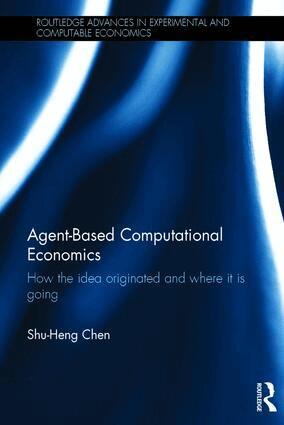
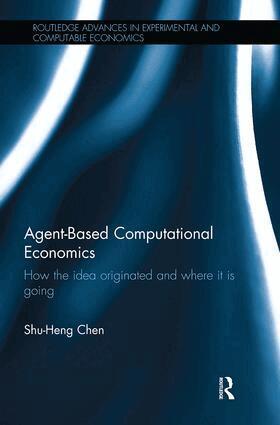
This book aims to answer two questions that are fundamental to the study of agent-based economic models: what is agent-based computational economics and why do we need agent-based economic modelling of economy? This book provides a review of the development of agent-based computational economics (ACE) from a perspective on how artificial economic agents are designed under the influences of complex sciences, experimental economics, artificial intelligence, evolutionary biology, psychology, anthropology and neuroscience. This book begins with a historical review of ACE by tracing its origins. From a modelling viewpoint, ACE brings truly decentralized procedures into market analysis, from a single market to the whole economy. This book also reviews how experimental economics and artificial intelligence have shaped the development of ACE. For the former, the book discusses how ACE models can be used to analyse the economic consequences of cognitive capacity, personality and cultural inheritance. For the latter, the book covers the various tools used to construct artificial adaptive agents, including reinforcement learning, fuzzy decision rules, neural networks, and evolutionary computation. This book will be of interest to graduate students researching computational economics, experimental economics, behavioural economics, and research methodology.
Inbunden, Engelska, 2014
613 kr
Skickas inom 10-15 vardagar
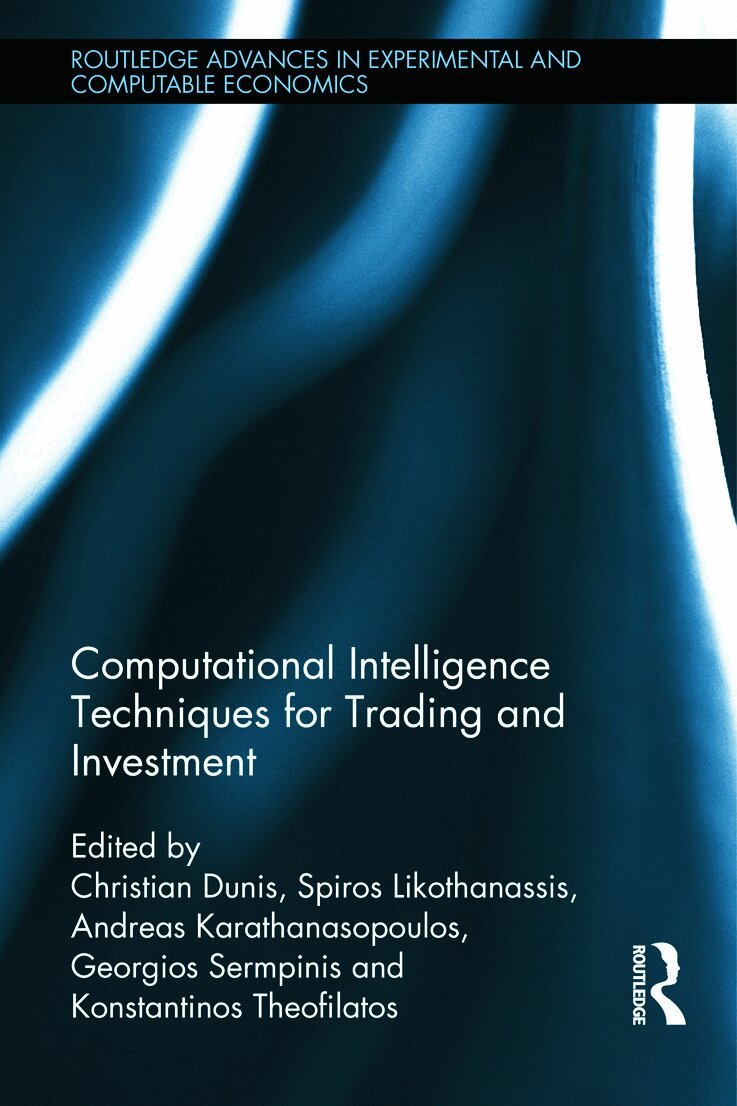
Computational intelligence, a sub-branch of artificial intelligence, is a field which draws on the natural world and adaptive mechanisms in order to study behaviour in changing complex environments. This book provides an interdisciplinary view of current technological advances and challenges concerning the application of computational intelligence techniques to financial time-series forecasting, trading and investment. The book is divided into five parts. The first part introduces the most important computational intelligence and financial trading concepts, while also presenting the most important methodologies from these different domains. The second part is devoted to the application of traditional computational intelligence techniques to the fields of financial forecasting and trading, and the third part explores the applications of artificial neural networks in these domains. The fourth part delves into novel evolutionary-based hybrid methodologies for trading and portfolio management, while the fifth part presents the applications of advanced computational intelligence modelling techniques in financial forecasting and trading. This volume will be useful for graduate and postgraduate students of finance, computational finance, financial engineering and computer science. Practitioners, traders and financial analysts will also benefit from this book.
Inbunden, Engelska, 2012
2 249 kr
Skickas inom 10-15 vardagar
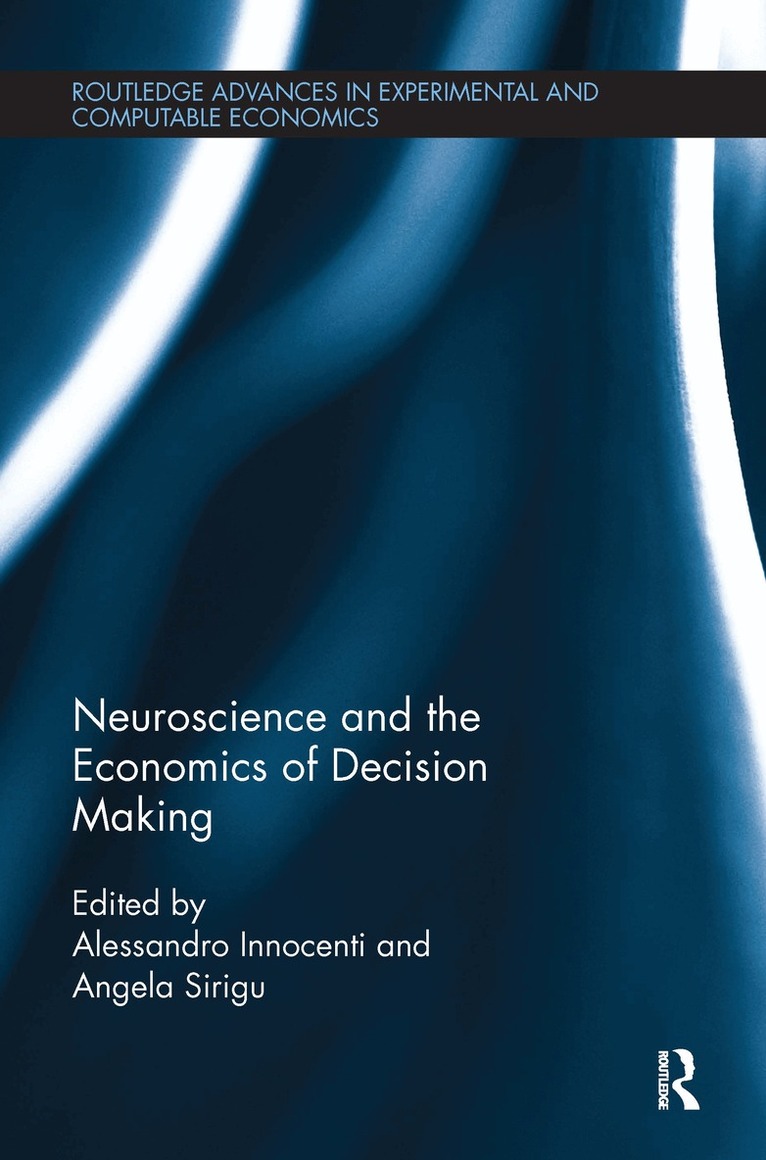
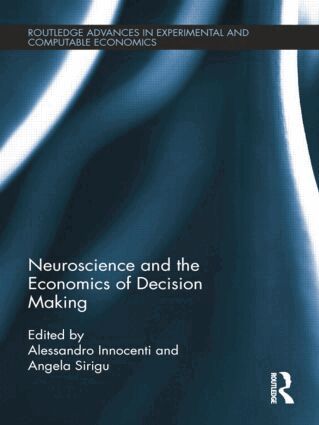
In the last two decades there has been a flourishing research carried out jointly by economists, psychologists and neuroscientists. This meltdown of competences has lead towards original approaches to investigate the mental and cognitive mechanisms involved in the way the economic agent collects, processes and uses information to make choices. This research field involves a new kind of scientist, trained in different disciplines, familiar in managing experimental data, and with the mathematical foundations of decision making. The ultimate goal of this research is to open the black-box to understandthe behavioural and neural processes through which humans set preferences and translate these behaviours into optimal choices. This volume intends to bring forward new results and fresh insights into this matter.
Häftad, Engelska, 2011
834 kr
Skickas inom 10-15 vardagar
This monograph examines the domain of classical political economy using the methodologies developed in recent years both by the new discipline of econo-physics and by computing science. This approach is used to re-examine the classical subdivisions of political economy: production, exchange, distribution and finance.The book begins by examining the most basic feature of economic life – production – and asks what it is about physical laws that allows production to take place. How is it that human labour is able to modify the world? It looks at the role that information has played in the process of mass production and the extent to which human labour still remains a key resource. The Ricardian labour theory of value is re-examined in the light of econophysics, presenting agent based models in which the Ricardian theory of value appears as an emergent property. The authors present models giving rise to the class distribution of income, and the long term evolution of profit rates in market economies. Money is analysed using tools drawn both from computer science and the recent Chartalist school of financial theory.Covering a combination of techniques drawn from three areas, classical political economy, theoretical computer science and econophysics, to produce models that deepen our understanding of economic reality, this new title will be of interest to higher level doctoral and research students, as well as scientists working in the field of econophysics.
Inbunden, Engelska, 2015
2 388 kr
Skickas inom 10-15 vardagar
The economics literature on industry dynamics contains a wide array of empirical works identifying a set of stylized facts. There have been several attempts at constructing analytical models to explain some of these regularities. These attempts are highly stylized and limited in scope to keep the analyses tractable. A general model of industry evolution capable of generating firm and industry behaviour that can match the data is needed.This book endeavours to explain many well-documented aspects of the evolution of industries over time. It uses an agent-based computational model in which artificial industries are created and grown to maturity in silico. While the firms in the model are assumed to have bounded rationality, they are nevertheless adaptive in the sense that their experience-based R&D efforts allow them to search for improved technologies. Given a technological environment subject to persistent and unexpected external shocks, the computationally generated industry remains in a perennial state of flux. The main objective of this study is to identify patterns that exist in the movements of firms as the industry evolves over time along the steady state in which the measured behaviour of the firms and the industry stochastically fluctuate around steady means.The computational model developed in this book is able to replicate many of the stylized facts from the empirical industrial organization literature, particularly as the facts pertain to the dynamics of firm entry and exit. Furthermore, the model allows examination of cross-industry variations in entry and exit patterns by systematically varying the characteristics of the market and the technological environment within which the computationally generated industry evolves. The model demonstrates that the computational approach based on boundedly rational agents in a dynamic setting can be useful and effective in carrying out both positive and normative economic analysis.
Häftad, Engelska, 2014
858 kr
Skickas inom 10-15 vardagar
The economics of search is a prominent component of economic theory, and it has a richness and elegance that underpins a host of practical applications. In this book Brian and John McCall present a comprehensive overview of the economic theory of search, from the classical model of job search formulated 40 years ago to the recent developments in equilibrium models of search.The book gives decision-theoretic foundations to seemingly slippery issues in labour market theory, estimation theory and economic dynamics in general, and surveys the entire field of the economics of search, including its history, theory, and econometric applications. Theoretical models of the economics of search are covered as well as estimation methods used in search theory and topics covered include job search, turnover, unemployment, liquidity, house selling, real options and auctions. The mathematical methods used in search theory such as dynamic programming are reviewed as well as structural estimation methods and econometric methods for duration models. The authors also explore the classic sequential search model and its extensions in addition to recent advances in equilibrium search theory.
E-bok
Engelska, 20041 003 kr
Läs direkt efter köp
Laboratory experiments with human subjects now provide crucial data in most fields of economics and there has been a tremendous upsurge in interest in this relatively new field of economics. This textbook introduces the student to the world of experimental economics. Contributors including Reinhard Selten and Axel Leijonhufvud that s
Inbunden, Engelska, 2017
2 244 kr
Skickas inom 10-15 vardagar
The concept of money illusion, a recently resurrected phenomenon of behavioral economics, is a real fact of economic life, the potential role of which should no longer be dismissed. Despite money illusion being utterly suppressed by mainstream economists, small deviations from rationality, together with trends in behavioral economics, alleviate the denial of money illusion induced by the rational expectations revolution. This book argues that money illusion seems to be a ubiquitous phenomenon, affecting various areas such as financial markets, housing markets, labor markets, consumption-saving decisions, and even development at the aggregate level induced by coordination issues. Furthermore, in light of the educational efforts of central banks and other institutions, it is worth considering whether solid economic training would provide guidance for the public regarding their decision-making and thereby alleviate the effects of money illusion. The emerging field of experimental economics provides a unique opportunity for us to verify the presence of money illusion. Specifically, attention is devoted to the experimental investigation of reduction in the direct and indirect effects of money illusion with respect to the level of economic literacy acquired through economic education.Economic Literacy and Money Illusion will be of interest to the general audience and to those who are interested in behavioral economics, economics education, and experimental economics, as well as to policy makers and institutions. Last but not least, it will help develop students’ interest in alternative economic theories.NB. The research and writing of this book was made possible with the support of the University of Economics, Prague, Faculty of Economics, Department of Economics.
Häftad, Engelska, 2018
743 kr
Skickas inom 10-15 vardagar
This book aims to answer two questions that are fundamental to the study of agent-based economic models: what is agent-based computational economics and why do we need agent-based economic modelling of economy? This book provides a review of the development of agent-based computational economics (ACE) from a perspective on how artificial economic agents are designed under the influences of complex sciences, experimental economics, artificial intelligence, evolutionary biology, psychology, anthropology and neuroscience. This book begins with a historical review of ACE by tracing its origins. From a modelling viewpoint, ACE brings truly decentralized procedures into market analysis, from a single market to the whole economy. This book also reviews how experimental economics and artificial intelligence have shaped the development of ACE. For the former, the book discusses how ACE models can be used to analyse the economic consequences of cognitive capacity, personality and cultural inheritance. For the latter, the book covers the various tools used to construct artificial adaptive agents, including reinforcement learning, fuzzy decision rules, neural networks, and evolutionary computation. This book will be of interest to graduate students researching computational economics, experimental economics, behavioural economics, and research methodology.
Häftad, Engelska, 2014
848 kr
Skickas inom 10-15 vardagar
In the last two decades there has been a flourishing research carried out jointly by economists, psychologists and neuroscientists. This meltdown of competences has lead towards original approaches to investigate the mental and cognitive mechanisms involved in the way the economic agent collects, processes and uses information to make choices. This research field involves a new kind of scientist, trained in different disciplines, familiar in managing experimental data, and with the mathematical foundations of decision making. The ultimate goal of this research is to open the black-box to understandthe behavioural and neural processes through which humans set preferences and translate these behaviours into optimal choices. This volume intends to bring forward new results and fresh insights into this matter.
Häftad, Engelska, 2014
756 kr
Skickas inom 10-15 vardagar
Any experimental field consists of preparing special conditions for examining interesting objects for research. So naturally, the particular ways in which scientists prepare their objects determine the kind and the content of knowledge produced. This book provides a framework for the analysis of experimental practices - the Social Epistemology of Experiment - that incorporates both the ‘material’ and the ‘social’ dimensions of knowledge production. The Social Epistemology of Experiment is applied to experimental economics and in so doing, it introduces the epistemic role of the participation of human subjects in experiments and the causal efficacy of institutions in constraining and enabling human behaviour. It also develops the role of the social and socially established practices in overcoming the methodological difficulties associated with experimenting with humans subjects in the social sciences as well as the effect of scientists’ interventions in the laboratory worlds. This book provides an historical and contextualized account of the emergence of experimental economics, the methodological discussions that have informed and constituted it, its main research programmes, and stylized facts. The analysis of its three main research programmes – market experiments, game theory experiments and individual decision-making experiments – shows how economics experiments are particularly tailored to produce knowledge about market institutions and individual behaviour in contexts where there might be conflicts of individual and social goals, and also about the processes of individual decision-making.