Routledge Contemporary Political Philosophy – serie
Visar alla böcker i serien Routledge Contemporary Political Philosophy. Handla med fri frakt och snabb leverans.
10 produkter
10 produkter
2 113 kr
Skickas inom 10-15 vardagar
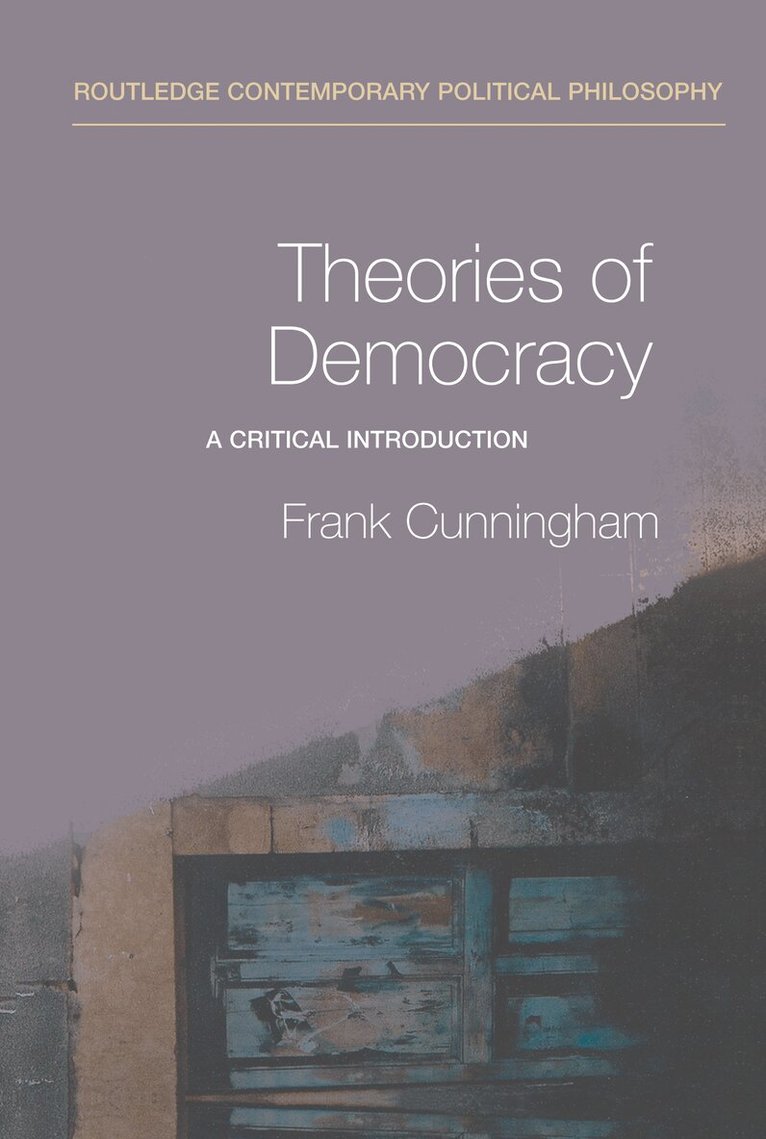
This is the first book to be published in this exciting new series on political philosophy. Cunningham provides a critical and clear introduction to the main contemporary approaches to democracy: participatory democracy, classic and radical pluralism, deliberative democracy, catallaxy, and others. Also discussed are theorists in the background of current democratic thought, such as Tocqueville, Mill, and Rousseau. The book includes applications of democratic theories including an extended discussion of democracy and globalisation.
578 kr
Skickas inom 10-15 vardagar
This is the first book to be published in this exciting new series on political philosophy. Cunningham provides a critical and clear introduction to the main contemporary approaches to democracy: participatory democracy, classic and radical pluralism, deliberative democracy, catallaxy, and others. Also discussed are theorists in the background of current democratic thought, such as Tocqueville, Mill, and Rousseau. The book includes applications of democratic theories including an extended discussion of democracy and globalisation.
2 113 kr
Skickas inom 10-15 vardagar
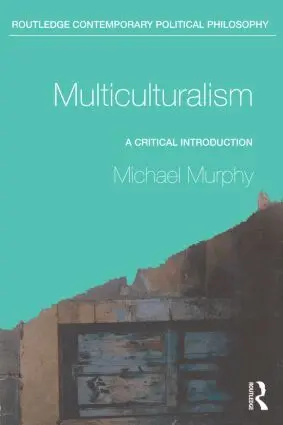
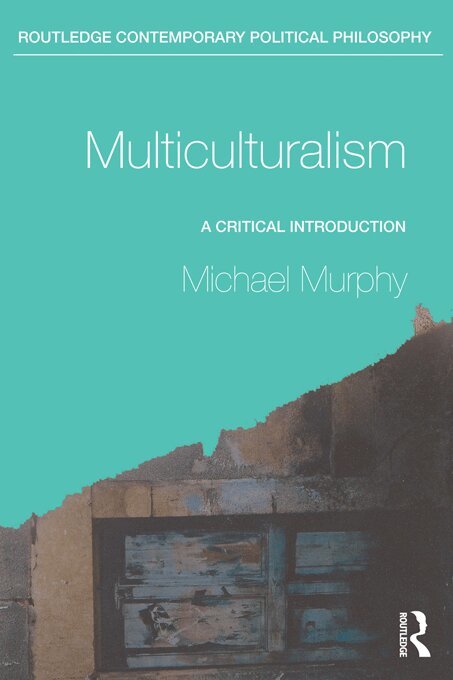
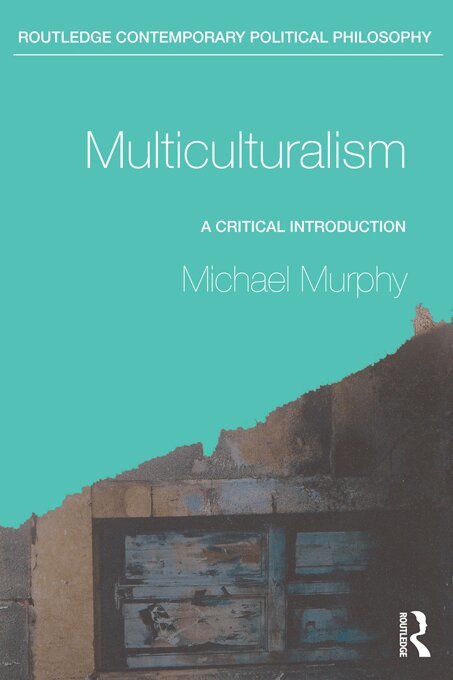
What is multiculturalism and what are the different theories used to justify it? Are multicultural policies a threat to liberty and equality? Can liberal democracies accommodate minority groups without sacrificing peace and stability? In this clear introduction to the subject, Michael Murphy explores these questions and critically assesses multiculturalism from the standpoint of political philosophy and political practice.The book explores the origins and contemporary usage of the concept of multiculturalism in the context of debates about citizenship, egalitarian justice and conflicts between individual and collective rights. The ideas of some of the most influential champions and critics of multiculturalism, including Will Kymlicka, Chandran Kukathas, Susan Okin and Brian Barry, are also clearly explained and evaluated. Key themes include the tension between multiculturalism and gender equality, cultural relativism and the limits of liberal toleration, and the impact of multicultural policies on social cohesion ethnic conflict. Murphy also surveys the legal practices and policies enacted to accommodate multiculturalism, drawing on examples from the Americas, Australasia, Europe, Asia and the Middle East. Multiculturalism: A Critical Introduction is an ideal starting point for anyone coming to the topic for the first time as well as those already familiar with some of the key issues.
727 kr
Skickas inom 10-15 vardagar
What is multiculturalism and what are the different theories used to justify it? Are multicultural policies a threat to liberty and equality? Can liberal democracies accommodate minority groups without sacrificing peace and stability? In this clear introduction to the subject, Michael Murphy explores these questions and critically assesses multiculturalism from the standpoint of political philosophy and political practice.The book explores the origins and contemporary usage of the concept of multiculturalism in the context of debates about citizenship, egalitarian justice and conflicts between individual and collective rights. The ideas of some of the most influential champions and critics of multiculturalism, including Will Kymlicka, Chandran Kukathas, Susan Okin and Brian Barry, are also clearly explained and evaluated. Key themes include the tension between multiculturalism and gender equality, cultural relativism and the limits of liberal toleration, and the impact of multicultural policies on social cohesion ethnic conflict. Murphy also surveys the legal practices and policies enacted to accommodate multiculturalism, drawing on examples from the Americas, Australasia, Europe, Asia and the Middle East. Multiculturalism: A Critical Introduction is an ideal starting point for anyone coming to the topic for the first time as well as those already familiar with some of the key issues.
2 113 kr
Skickas inom 10-15 vardagar
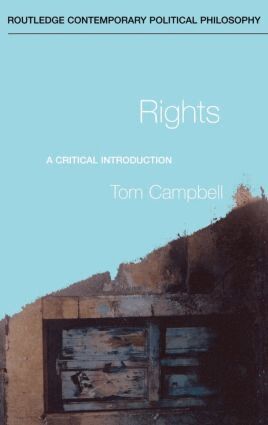
We take rights to be fundamental to everyday life. Rights are also controversial and hotly debated both in theory and practice. Where do rights come from? Are they invented or discovered? What sort of rights are there and who is entitled to them? In this comprehensive introduction, Tom Campbell introduces and critically examines the key philosophical debates about rights.The first part of the book covers historical and contemporary theories of rights, including the origin and variety of rights and standard justifications of them. He considers challenges to rights from philosophers such as Bentham, Burke and Marx. He also examines different theories of rights, such as natural law, social contract, utilitarian and communitarian theories of rights and the philosophers and political theorists associated with them, such as John Stuart Mill, John Rawls, Robert Nozick and Michael Sandel. The second part of the book explores the role of rights-promoting institutions and critically assesses legal rights and international human rights, including the United Nations. The final part of the book examines how philosophies of rights can be applied to freedom of speech, issues of social welfare and the question of self-determination for certain groups or peoples.Rights: A Critical Introduction is essential reading for anyone new to the subject of rights and any student of political philosophy, politics and law.
578 kr
Skickas inom 10-15 vardagar
We take rights to be fundamental to everyday life. Rights are also controversial and hotly debated both in theory and practice. Where do rights come from? Are they invented or discovered? What sort of rights are there and who is entitled to them? In this comprehensive introduction, Tom Campbell introduces and critically examines the key philosophical debates about rights.The first part of the book covers historical and contemporary theories of rights, including the origin and variety of rights and standard justifications of them. He considers challenges to rights from philosophers such as Bentham, Burke and Marx. He also examines different theories of rights, such as natural law, social contract, utilitarian and communitarian theories of rights and the philosophers and political theorists associated with them, such as John Stuart Mill, John Rawls, Robert Nozick and Michael Sandel. The second part of the book explores the role of rights-promoting institutions and critically assesses legal rights and international human rights, including the United Nations. The final part of the book examines how philosophies of rights can be applied to freedom of speech, issues of social welfare and the question of self-determination for certain groups or peoples.Rights: A Critical Introduction is essential reading for anyone new to the subject of rights and any student of political philosophy, politics and law.
2 113 kr
Skickas inom 10-15 vardagar
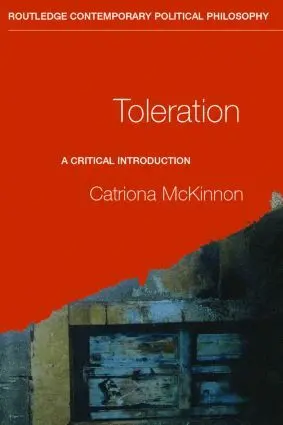
Why should we be tolerant? What does it mean to ‘live and let live’? What ought to be tolerated and what not?Catriona McKinnon presents a comprehensive, yet accessible introduction to toleration in her new book. Divided into two parts, the first clearly introduces and assesses the major theoretical accounts of toleration, examining it in light of challenges from scepticism, value pluralism and reasonableness. The second part applies the theories of toleration to contemporary debates such as female circumcision, French Headscarves, artistic freedom, pornography and censorship, and holocaust denial. Drawing on the work of philosophers, such as Locke, Mill and Rawls, whose theories are central to toleration, the book provides a solid theoretical base to those who value toleration, whilst considering the challenges toleration faces in practice. It is the ideal starting point for those coming to the topic for the first time, as well as anyone interested in the challenges facing toleration today.
632 kr
Skickas inom 10-15 vardagar
Why should we be tolerant? What does it mean to ‘live and let live’? What ought to be tolerated and what not?Catriona McKinnon presents a comprehensive, yet accessible introduction to toleration in her new book. Divided into two parts, the first clearly introduces and assesses the major theoretical accounts of toleration, examining it in light of challenges from scepticism, value pluralism and reasonableness. The second part applies the theories of toleration to contemporary debates such as female circumcision, French Headscarves, artistic freedom, pornography and censorship, and holocaust denial. Drawing on the work of philosophers, such as Locke, Mill and Rawls, whose theories are central to toleration, the book provides a solid theoretical base to those who value toleration, whilst considering the challenges toleration faces in practice. It is the ideal starting point for those coming to the topic for the first time, as well as anyone interested in the challenges facing toleration today.
2 113 kr
Skickas inom 10-15 vardagar
Political obligation is concerned with the clash between the individual’s claim to self-governance and the right of the state to claim obedience. It is a central and ancient problem in political philosophy. In this authoritative introduction, Dudley Knowles frames the problem of obligation in terms of the duties citizens have to the state and each other. Drawing on a wide range of key works in political philosophy, from Thomas Hobbes, John Locke, David Hume and G. W. F. Hegel to John Rawls, A. John Simmons, Joseph Raz and Ronald Dworkin, Political Obligation: A Critical Introduction is an ideal starting point for those coming to the topic for the first time, as well as being an original and distinctive contribution to the literature.Knowles distinguishes the philosophical problem of obligation - which types of argument may successfully ground the legitimacy of the state and the duties of citizens - from the political problem of obligation - whether successful arguments apply to the actual citizens of particular states.Against the anarchist and modern skeptics, Knowles claims that a plurality of arguments promise success when carefully formulated and defended, and discusses in turn ancient and modern theories of social contract and consent, fairness and gratitude, utilitarianism, justice and a Samaritan duty of care for others. Against modern communitarians, he defends a distinctive liberalism: ‘the state proposes, the citizen disposes’.
578 kr
Skickas inom 10-15 vardagar
Political obligation is concerned with the clash between the individual’s claim to self-governance and the right of the state to claim obedience. It is a central and ancient problem in political philosophy. In this authoritative introduction, Dudley Knowles frames the problem of obligation in terms of the duties citizens have to the state and each other. Drawing on a wide range of key works in political philosophy, from Thomas Hobbes, John Locke, David Hume and G. W. F. Hegel to John Rawls, A. John Simmons, Joseph Raz and Ronald Dworkin, Political Obligation: A Critical Introduction is an ideal starting point for those coming to the topic for the first time, as well as being an original and distinctive contribution to the literature.Knowles distinguishes the philosophical problem of obligation - which types of argument may successfully ground the legitimacy of the state and the duties of citizens - from the political problem of obligation - whether successful arguments apply to the actual citizens of particular states.Against the anarchist and modern skeptics, Knowles claims that a plurality of arguments promise success when carefully formulated and defended, and discusses in turn ancient and modern theories of social contract and consent, fairness and gratitude, utilitarianism, justice and a Samaritan duty of care for others. Against modern communitarians, he defends a distinctive liberalism: ‘the state proposes, the citizen disposes’.