Frank Cunningham – författare
Visar alla böcker från författaren Frank Cunningham. Handla med fri frakt och snabb leverans.
17 produkter
17 produkter
Häftad, Engelska, 2012
220 kr
Skickas inom 5-8 vardagar
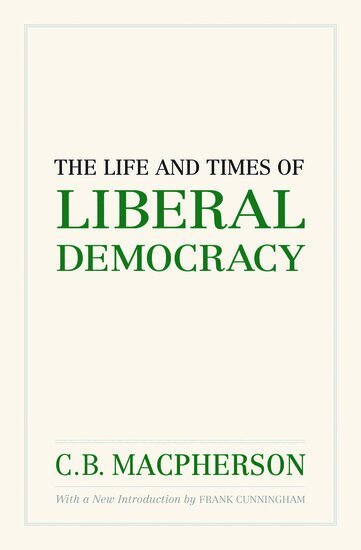
In this brief but powerful book, acclaimed political philosopher C.B. Macpherson sets out in bold relief the essence of liberal democracy, both as it is currently conceived and as it might be reimagined. Macpherson argues that from its beginnings liberal democracy has accepted the underpinning principle of capitalist societies, that the "market maketh man." If that remains the central assumption of liberal democracy, Macpherson declares, then as an organizing framework for society, liberal democracy has reached the end of its useful life. But if a broader concept of liberal democracy is accepted-"if [Macpherson writes] liberal democracy is taken to mean a society striving to ensure that all its members are equally free to realize their capabilities"-the great days of liberal democracy may yet lie ahead. The Wynford edition includes a new Introduction by Frank Cunningham of the University of Toronto.
Inbunden, Engelska, 2001
2 179 kr
Skickas inom 10-15 vardagar
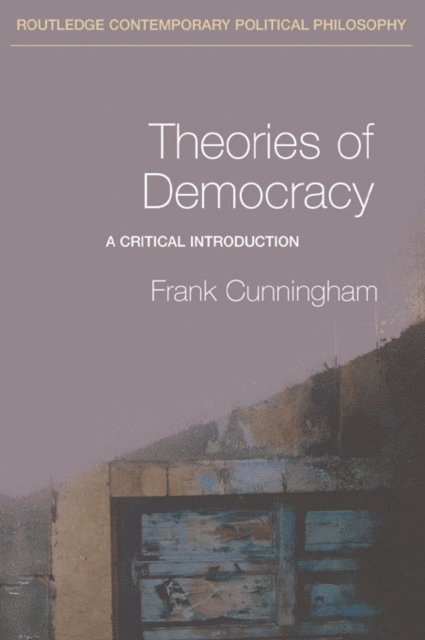
This is the first book to be published in this exciting new series on political philosophy. Cunningham provides a critical and clear introduction to the main contemporary approaches to democracy: participatory democracy, classic and radical pluralism, deliberative democracy, catallaxy, and others. Also discussed are theorists in the background of current democratic thought, such as Tocqueville, Mill, and Rousseau. The book includes applications of democratic theories including an extended discussion of democracy and globalisation.
Häftad, Engelska, 2001
595 kr
Skickas inom 10-15 vardagar
This is the first book to be published in this exciting new series on political philosophy. Cunningham provides a critical and clear introduction to the main contemporary approaches to democracy: participatory democracy, classic and radical pluralism, deliberative democracy, catallaxy, and others. Also discussed are theorists in the background of current democratic thought, such as Tocqueville, Mill, and Rousseau. The book includes applications of democratic theories including an extended discussion of democracy and globalisation.
Häftad, Engelska, 1987
526 kr
Skickas inom 7-10 vardagar
This book is an important contribution to the theory of democracy and socialism. The underlying question it poses is: how, if at all, can one have both socialism and democracy? In posing an answer to this question, Professor Cunningham addresses the following topics: the definition of democracy and whether socialism is necessary to its progress: the socialist retrieval of liberal democracy associated with the work of C. B. Macpherson: the political consciousness that Gramsci placed at the center of socialist politics: and attempts by those in women's and national liberation movements to go beyond 'class reductionism' in socialist theory and practice. Unlike other works on this topic, the book devotes much attention to defining key terms and drawing politically relevant conclusions. It will therefore be fully accessible to undergraduates as well as graduates and teachers of philosophy and political science.
Häftad, Engelska, 1998
205 kr
Skickas inom 5-8 vardagar
This is the story of Stand Watie, the only Indian to attain the rank of general in the Confederate Army. An aristocratic, prosperous slaveholding planter and leader of the Cherokee mixed bloods, Watie was recruited in Indian Territory by Albert Pike to fight the Union forces on the western front. He organized the First Cherokee Rifles on July 29, 1861, and was commissioned a colonel. In 1864, after battling at Wilson's Creek and Pea Ridge, he became brigadier general. Watie was the last Confederate general to lay down his arms in surrender, two months after Appomattox. In his foreword, Brad Agnew discusses Watie's role in the Civil War and his reception by later historians.
E-bok
Engelska, 2002682 kr
Läs direkt efter köp
This is the first book to be published in this exciting new series on political philosophy. Cunningham provides a critical and clear introduction to the main contemporary approaches to democracy: participatory democracy, classic and radical pluralism, deliberative democracy, catallaxy, and others. Also discussed are theorists in the background of current democratic thought, such as Tocqueville, Mill, and Rousseau. The book includes applications of democratic theories including an extended discussion of democracy and globalisation.
E-bok
PDF, Engelska, 2002682 kr
Läs direkt efter köp
This is the first book to be published in this exciting new series on political philosophy. Cunningham provides a critical and clear introduction to the main contemporary approaches to democracy: participatory democracy, classic and radical pluralism, deliberative democracy, catallaxy, and others. Also discussed are theorists in the background of current democratic thought, such as Tocqueville, Mill, and Rousseau. The book includes applications of democratic theories including an extended discussion of democracy and globalisation.
Inbunden, Engelska
664 kr
Skickas inom 3-6 vardagar
E-bok
Engelska, 1973367 kr
Läs direkt efter köp
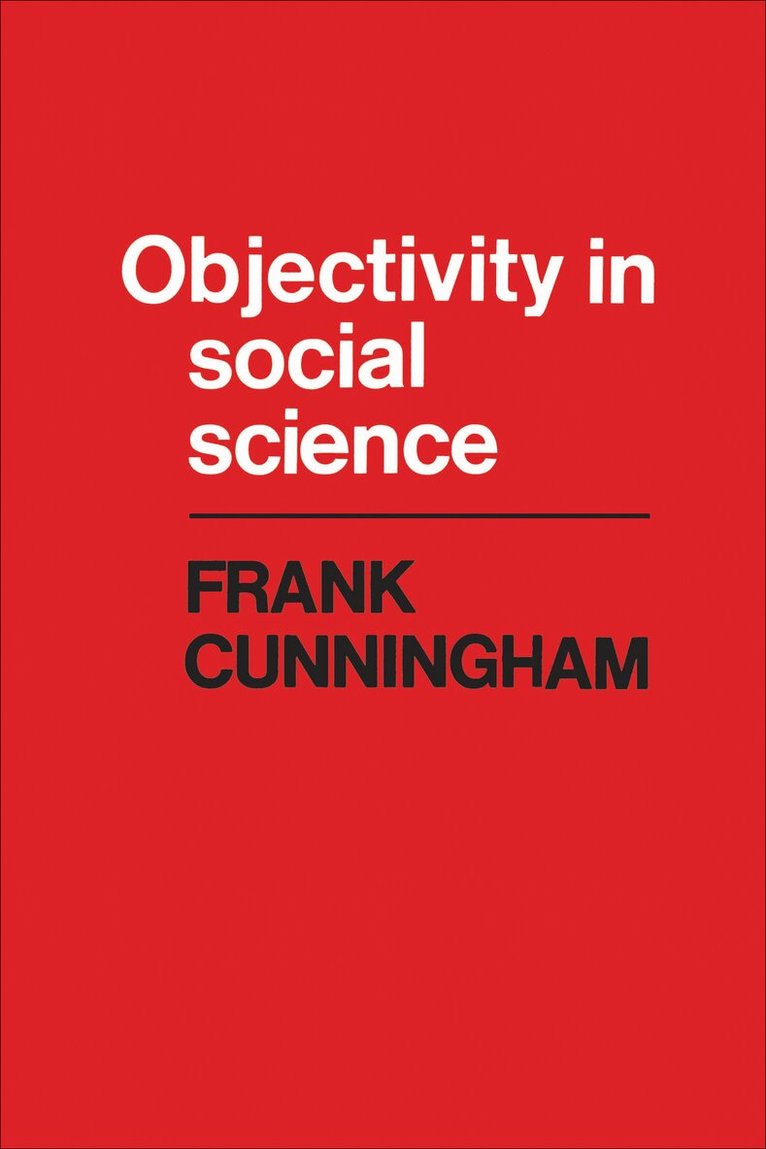
The debates over objectivity in the social sciences have a long history; there have been contributions by philosophers and social theorists from a variety of viewpoints, including empiricism, phenomenology, pragmatism, and Marxism. Objectivity in Social Science combats the widespread opinion that objective inquiry is impossible in the social sciences by drawing together and exhibiting the weaknesses of arguments, taken from positions in the philosophies of science, social science, language, and perception, in favour of anti-objectivism, arguments which have recurred in one form or another throughout the course of these debates.As the author puts it, 'What I have attempted to offer is at the least a convenient map for finding one's way about in the tangle of issues surrounding the question of objectivity in social science and at the most a set of arguments sufficient to convince the perplexed, and presently wrong-headed, of the (objective) falsity of social-scientific anti-objectivism.' In the course of the book arguments advanced by such influential figures as Thomas Kuhn, Benjamin Lee Whorf, Karl Mannheim, N.R. Hanson, Peter Winch, Michael Polanyi, P.K. Feyerabend, and Jürgen Habermas, among others, are critically examined, as are attempts of pragmatists, phenomenologists, and others to construct alternatives to the objectivist interpretation of conflict and progress in the development of social-scientific knowledge.
Häftad, Engelska, 1973
279 kr
Skickas inom 5-8 vardagar
The debates over objectivity in the social sciences have a long history; there have been contributions by philosophers and social theorists from a variety of viewpoints, including empiricism, phenomenology, pragmatism, and Marxism. Objectivity in Social Science combats the widespread opinion that objective inquiry is impossible in the social sciences by drawing together and exhibiting the weaknesses of arguments, taken from positions in the philosophies of science, social science, language, and perception, in favour of anti-objectivism, arguments which have recurred in one form or another throughout the course of these debates.As the author puts it, 'What I have attempted to offer is at the least a convenient map for finding one's way about in the tangle of issues surrounding the question of objectivity in social science and at the most a set of arguments sufficient to convince the perplexed, and presently wrong-headed, of the (objective) falsity of social-scientific anti-objectivism.' In the course of the book arguments advanced by such influential figures as Thomas Kuhn, Benjamin Lee Whorf, Karl Mannheim, N.R. Hanson, Peter Winch, Michael Polanyi, P.K. Feyerabend, and Jürgen Habermas, among others, are critically examined, as are attempts of pragmatists, phenomenologists, and others to construct alternatives to the objectivist interpretation of conflict and progress in the development of social-scientific knowledge.
E-bok
PDF, Engelska, 1973306 kr
Läs direkt efter köp
The debates over objectivity in the social sciences have a long history; there have been contributions by philosophers and social theorists from a variety of viewpoints, including empiricism, phenomenology, pragmatism, and Marxism. Objectivity in Social Science combats the widespread opinion that objective inquiry is impossible in the social sciences by drawing together and exhibiting the weaknesses of arguments, taken from positions in the philosophies of science, social science, language, and perception, in favour of anti-objectivism, arguments which have recurred in one form or another throughout the course of these debates.As the author puts it, 'What I have attempted to offer is at the least a convenient map for finding one's way about in the tangle of issues surrounding the question of objectivity in social science and at the most a set of arguments sufficient to convince the perplexed, and presently wrong-headed, of the (objective) falsity of social-scientific anti-objectivism.' In the course of the book arguments advanced by such influential figures as Thomas Kuhn, Benjamin Lee Whorf, Karl Mannheim, N.R. Hanson, Peter Winch, Michael Polanyi, P.K. Feyerabend, and Jürgen Habermas, among others, are critically examined, as are attempts of pragmatists, phenomenologists, and others to construct alternatives to the objectivist interpretation of conflict and progress in the development of social-scientific knowledge.
519 kr
Skickas inom 3-6 vardagar
Häftad, Engelska
531 kr
Skickas inom 3-6 vardagar
E-bok
Engelska, 201655 kr
Läs direkt efter köp
This is the story of Stand Watie, the only Indian to attain the rank of general in the Confederate Army. An aristocratic, prosperous slaveholding planter and leader of the Cherokee mixed bloods, Watie was recruited in Indian Territory by Albert Pike to fight the Union forces on the western front. He organized the First Cherokee Rifles on July 29, 1861, and was commissioned a colonel. In 1864, after battling at Wilson’s Creek and Pea Ridge, he became brigadier general. Watie was the last Confederate general to lay down his arms in surrender, two months after Appomattox.“Frank Cunningham tells with all its gusto, hard riding, triumph, and heartbreak, the story of Stand Watie’s Cherokee Brigade that fought mightily in Missouri, Arkansas, and the present Oklahoma, under Generals Sterling Price, Thomas C. Hindman, Kirby Smith, and other commanders of the Trans-Mississippi Department, and when no superior officer was available, then pell mell and uncompromisingly on its own.”—North Carolina Historical Review“A graphic and authentic account of General Stand Watie and his Indian troops....[It] fills a long-neglected gap in the Civil War annals.”—Civil War History
E-bok
Engelska, 201755 kr
Läs direkt efter köp
Pat Barham sensed a huge opportunity and jumped at the chance to be assigned to become one of the first war correspondents to report on the Korean War. She knew that she would face many difficulties taking the post, not least of which was that she would be a woman in a very deadly man’s world. She reported back as the eyes and ears of the Hearst corporation and was shocked by the lack of support for the troops that she met on the frontline from Stateside audiences. In this book she records her tumultuous adventures and encounters in Korea among the American and Republic of Korean troops during the seemingly “forgotten war”.
Häftad, Engelska, 2018
287 kr
Skickas inom 5-8 vardagar
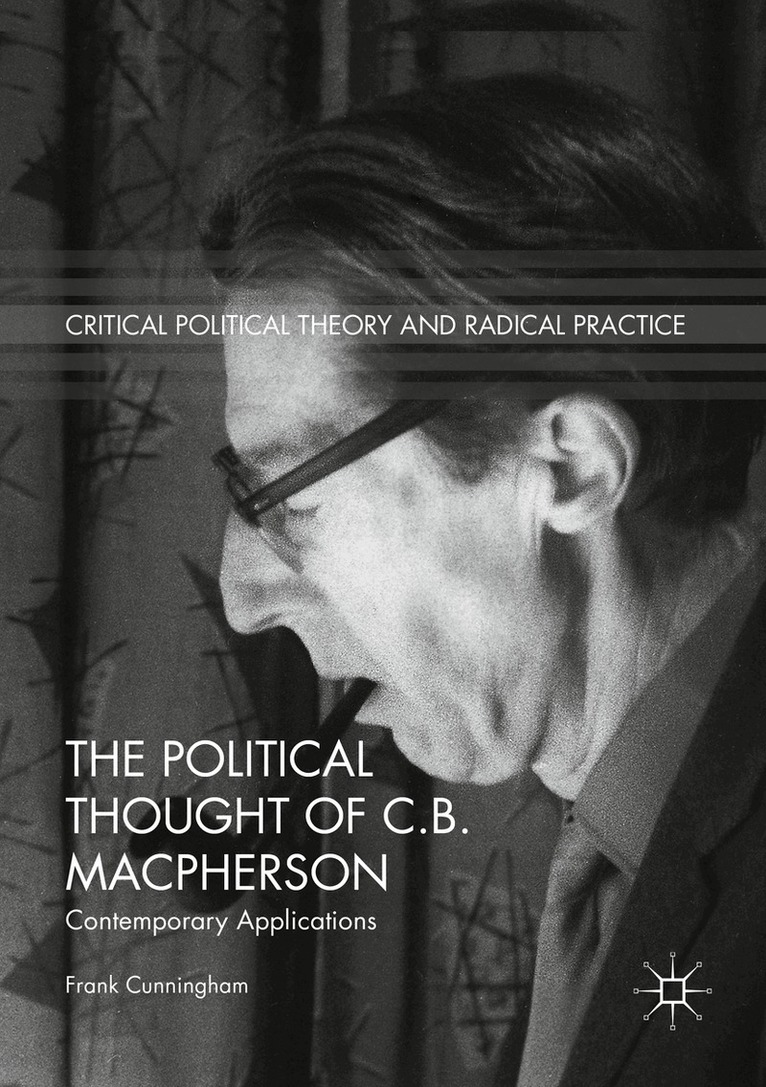
Central to the thought of C.B. Macpherson (1911-1987) are his critique of the culture of ‘possessive individualism’ and his defence of liberal-democratic socialism. Resurgence of interest in his works is in reaction to the rise of neoliberalism and efforts to find an alternative to societies dominated by capitalist markets. Macpherson’s theories are explained and applied to 21st century challenges.
E-bok
Engelska, 2018428 kr
Läs direkt efter köp
Central to the thought of C.B. Macpherson (1911-1987) are his critique of the culture of ‘possessive individualism’ and his defence of liberal-democratic socialism. Resurgence of interest in his works is in reaction to the rise of neoliberalism and efforts to find an alternative to societies dominated by capitalist markets. Macpherson’s theories are explained and applied to 21st century challenges.