Routledge Key Thinkers in Criminology - Böcker
Visar alla böcker i serien Routledge Key Thinkers in Criminology. Handla med fri frakt och snabb leverans.
9 produkter
9 produkter
594 kr
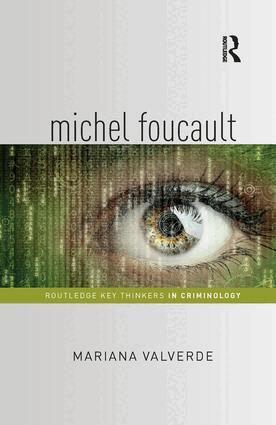
This book explores the theoretical contribution of Michel Foucault to the fields of criminology, law, justice and penology. It surveys both the ways in which the work of Foucault has been applied in criminology, but also how his work can be used to understand and explain contemporary issues and policies. Moreover, this book seeks to dispel some of the common misconceptions about the relevance of Foucault’s work to criminology and law. Mariana Valverde clearly explains the insights that Foucault’s rich body of work provides about different practices found in the fields of law, security, justice, and punishment; and how these insights have been used or could be used to understand and explain issues and policies that Foucault himself did not write about, including those that had not yet emerged during his lifetime.Drawing on key texts by Foucault such as Discipline and Punish, and also lectures he gave at the College de France and Louvain Criminology Institute which offer a more nuanced account of the development of criminal justice, Mariana Valverde offers the essential text on Foucault and his contribution and continued relevance to criminology. This book will be important reading for students and scholars of criminology, law, sociolegal studies, security studies, political theory and sociological theory.
1 944 kr
Skickas inom 10-15 vardagar
This book offers an assessment of Barbara Wootton’s legacy as a pioneering public criminologist. Barbara Wootton (1897-1988) was a leading British social scientist, magistrate, academic and public servant. She was also a life peer (Baroness Wootton of Abinger) and the first woman to sit on the Woolsack in the House of Lords as Deputy Speaker. One of the Royal Commissions on which she served was on the Penal System, (1964) and two of the Departmental Committees were on the Business of the Criminal Courts (1958) and Criminal Statistics (1963). Of her written work perhaps the most famous is `Social Science and Social Pathology` (published in 1959) which was an attempt to discover what the social sciences had to say about criminality, its causes and its social effects. This book examines her career in historical context, and her contribution to thinking and scholarship on a range of topics. These topics range from the courts and the penal system and her report on the Community Service Order, to crime and criminal law and her analysis of the notions of mens rea, to her work on psychiatry and criminal justice. It explores her contribution as a utilitarian critic in Criminology, within the British empiricist tradition.Written in a clear and direct style, this book will appeal to students and scholars of criminology, sociology, criminal justice, law and all those interested in learning more about Barbara’s life and times.
646 kr
Skickas inom 10-15 vardagar
Edwin H. Sutherland is widely identified as the single most important and influential criminologist of the twentieth century. He is especially well-known for his path-breaking criminology textbook (first published in 1924), his promotion of a sociological (and scientific) approach to the understanding of crime and its control, his theory of differential association, and his work over his final ten years on white-collar crime, a term he is credited with having introduced. This book explores the contemporary meaning of Edwin Sutherland and considers why criminologists today should continue to engage with his work. What can and should Sutherland mean to future 21st century criminologists, those working in the field say between 2021 and 2050, or some one hundred years after the 1921 to 1950 period that encompassed Sutherland’s criminological career? Which dimensions of Sutherland’s work have best survived the march of time and which are most likely to – and deserve to – survive going forward?Making the case that Sutherland is important to both mainstream and critical criminologists, to positivistic criminologists and those who study crimes of the powerful, this book is essential reading for both students and scholars interested in exploring the enduring legacy of this key thinker in criminology.
1 944 kr
Skickas inom 10-15 vardagar
This book is a critical summary and exegesis of the work of Nicole Rafter, who was a leading scholar of the history of biological theories of crime causation as well as a profound theorist of the role of history within criminology. It introduces Rafter’s key works and assesses her contributions to the fields of feminist criminology, cultural criminology, visual criminology and historical criminology. It also explores her theorization of criminology’s identity, scientific status, and possible futures. While many books on criminological theory explain and historically contextualize theory, they do not interrogate the production of theory or the epistemological assumptions behind it. Drawing on the world of Nicole Rafter, this book offers an accessible handbook to her extensive historical studies and to how her work demonstrated the importance of historical theory to criminological knowledge. Furthermore, the author brings Rafter’s historical research to life and shows how it speaks to contemporary issues in criminology and punishment.Written in a clear and direct style, this book will appeal to students and scholars of criminological theory, intellectual history, sociology, comparative criminology, and feminist criminology.
569 kr
Skickas inom 10-15 vardagar
This book is a critical summary and exegesis of the work of Nicole Rafter, who was a leading scholar of the history of biological theories of crime causation as well as a profound theorist of the role of history within criminology. It introduces Rafter’s key works and assesses her contributions to the fields of feminist criminology, cultural criminology, visual criminology and historical criminology. It also explores her theorization of criminology’s identity, scientific status, and possible futures. While many books on criminological theory explain and historically contextualize theory, they do not interrogate the production of theory or the epistemological assumptions behind it. Drawing on the world of Nicole Rafter, this book offers an accessible handbook to her extensive historical studies and to how her work demonstrated the importance of historical theory to criminological knowledge. Furthermore, the author brings Rafter’s historical research to life and shows how it speaks to contemporary issues in criminology and punishment.Written in a clear and direct style, this book will appeal to students and scholars of criminological theory, intellectual history, sociology, comparative criminology, and feminist criminology.
569 kr
Skickas inom 10-15 vardagar
This book offers an assessment of Barbara Wootton’s legacy as a pioneering public criminologist. Barbara Wootton (1897-1988) was a leading British social scientist, magistrate, academic and public servant. She was also a life peer (Baroness Wootton of Abinger) and the first woman to sit on the Woolsack in the House of Lords as Deputy Speaker. One of the Royal Commissions on which she served was on the Penal System, (1964) and two of the Departmental Committees were on the Business of the Criminal Courts (1958) and Criminal Statistics (1963). Of her written work perhaps the most famous is `Social Science and Social Pathology` (published in 1959) which was an attempt to discover what the social sciences had to say about criminality, its causes and its social effects. This book examines her career in historical context, and her contribution to thinking and scholarship on a range of topics. These topics range from the courts and the penal system and her report on the Community Service Order, to crime and criminal law and her analysis of the notions of mens rea, to her work on psychiatry and criminal justice. It explores her contribution as a utilitarian critic in Criminology, within the British empiricist tradition.Written in a clear and direct style, this book will appeal to students and scholars of criminology, sociology, criminal justice, law and all those interested in learning more about Barbara’s life and times.
1 944 kr
Skickas inom 10-15 vardagar
Edwin H. Sutherland is widely identified as the single most important and influential criminologist of the twentieth century. He is especially well-known for his path-breaking criminology textbook (first published in 1924), his promotion of a sociological (and scientific) approach to the understanding of crime and its control, his theory of differential association, and his work over his final ten years on white-collar crime, a term he is credited with having introduced. This book explores the contemporary meaning of Edwin Sutherland and considers why criminologists today should continue to engage with his work. What can and should Sutherland mean to future 21st century criminologists, those working in the field say between 2021 and 2050, or some one hundred years after the 1921 to 1950 period that encompassed Sutherland’s criminological career? Which dimensions of Sutherland’s work have best survived the march of time and which are most likely to – and deserve to – survive going forward?Making the case that Sutherland is important to both mainstream and critical criminologists, to positivistic criminologists and those who study crimes of the powerful, this book is essential reading for both students and scholars interested in exploring the enduring legacy of this key thinker in criminology.
2 176 kr
Skickas inom 10-15 vardagar
Travis Hirschi challenged many enduring conventions within criminology. His incisive critiques and exchanges with leading theorists managed to generate substantive advances not only for control theory but for the criminological perspective more broadly. This book offers an intellectual history of Hirschi’s contribution to the formative arguments that comprise the modern history of criminology.This book expands beyond a rendering of Hirschi’s publication record through the inclusion of biographical content. The book draws from original interviews with several scholars with whom he engaged in debate: Ronald Akers (social learning theory), Alfred Blumstein (career criminals), Delbert Elliott (theory integration), David Greenberg (critical theory and the age-crime curve), and Jackson Toby (social control). The book is framed around the paradox of science needing path breakers but often branding messengers as “controversial.” Hirschi showed resolve by advancing our understanding through “creative destruction” and Popperian falsification. His refrain was that knowledge is built not by accumulation and accommodation but by unapologetically erasing bias and weak logic. Despite his frequent professional disagreements, he maintained friendships because his dissent commanded respect.This book is essential reading for students and scholars interested in exploring the enduring legacy of this key thinker in criminology.
2 131 kr
Skickas inom 10-15 vardagar
This book explores the theoretical contribution of Michel Foucault to the fields of criminology, law, justice and penology. It surveys both the ways in which the work of Foucault has been applied in criminology, but also how his work can be used to understand and explain contemporary issues and policies. Moreover, this book seeks to dispel some of the common misconceptions about the relevance of Foucault’s work to criminology and law. Mariana Valverde clearly explains the insights that Foucault’s rich body of work provides about different practices found in the fields of law, security, justice, and punishment; and how these insights have been used or could be used to understand and explain issues and policies that Foucault himself did not write about, including those that had not yet emerged during his lifetime.Drawing on key texts by Foucault such as Discipline and Punish, and also lectures he gave at the College de France and Louvain Criminology Institute which offer a more nuanced account of the development of criminal justice, Mariana Valverde offers the essential text on Foucault and his contribution and continued relevance to criminology. This book will be important reading for students and scholars of criminology, law, sociolegal studies, security studies, political theory and sociological theory.