Routledge Library Editions: Freud - Böcker
Visar alla böcker i serien Routledge Library Editions: Freud. Handla med fri frakt och snabb leverans.
15 produkter
15 produkter
1 909 kr
Skickas inom 10-15 vardagar
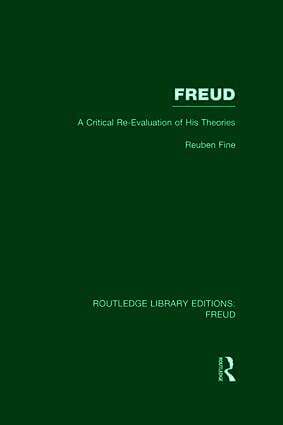
In this book, originally published in 1963, Dr Fine sets out to describe what Freud said, and to re-evaluate his views critically in the light of the best knowledge of the time.Freud’s numerous changes of view, his constant searching for the truth wherever it might lead him, as well as his resolute adherence to certain hard-won positions once he had achieved them, are all skilfully traced. Freud’s intellectual Odyssey is divided into four periods. From 1886 to 1895 he was a neurologist investigating hysteria and other ‘nervous’ disorders. Then came his self-analysis, from 1896 to 1899, the real matrix from which psycho-analysis grew. The first psycho-analytic system of psychology was developed in the period from 1900 to 1914. The remainder of his life, from 1914 to 1939, was devoted to the elaboration of ego psychology, and heart of contemporary psycho-analysis.Dr Fine undertook, in writing this book, the formidable task of examining the whole body of Freud’s thought, to clarify what he said, and to review his ideas critically in the light of the best available existing knowledge. As he says ‘In this process of criticism I have tried to specify which aspects of Freud have stood the test of time and which have not.’ ‘So far as I can see no one has ever before taken the trouble to ask: "What did Freud actually say? How does what Freud said stand up in terms of what we now know?"’In answering these questions, Dr Fine develops a major thesis that all modern psycho-analysis derives from Freud, though it has moved far in many different directions. The contention is that emphasis on schools is misleading and has obscured the actual historical growth of the science.As he states in his Preface to this volume, Dr Fine’s conviction is: ‘By building on Freud’s fundamental insights, we can move on most readily to empirical research and thus construct a more satisfactory science of psychology.’
1 627 kr
Skickas inom 10-15 vardagar
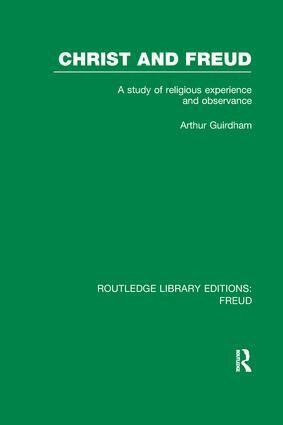
Originally published in 1959, this book is primarily concerned with the question of psychiatric factors in religion, and, conversely, with that of religious factors in psychiatry. It rejects the Freudian theory that religion is a form of obsessional neurosis. Though this latter hypothesis may explain many of the phenomena of religious observance, it cannot explain the reality of religious experience. Dr Guirdham believes that orthodox Christianity is a perversion of the psychologically irrefutable teaching of Christ and that its conception of God as a supreme being endowed with supreme power, its teaching on the resurrection, and its contamination with a sense of guilt, are especially conducive to psychiatric disorder. He shows how theology may actually be inimical to religious experience and how faith differs from belief and is a response of the whole man. The book explains also the psychological origins of clericalism and demonstrates the role played by the latter in stifling religious experience.
2 565 kr
Skickas inom 10-15 vardagar
Originally published in 1972, this second edition in 1981 was fully revised and updated to cover recent developments in the field at the time. Fact and Fantasy in Freudian Theory was written to answer many questions and criticisms surrounding psychoanalysis.How much, if any, of Freudian theory is verifiable according to the usual criteria of scientific enquiry? Much work had been carried out at the time to discover which parts of Freudian theory are verifiable and which insupportable by experiment. In this book Dr Kline surveys this vast body of work. He takes, one by one, the central postulates of Freudian psychology and discusses the experiments which have been performed to test them. He scrutinizes each test, examines its methodology and its findings and weighs up its value. For some of the theories, it will be seen, there is no evidence whatsoever; for others, on the other hand, there is impressive and sometimes incontrovertible experimental support – for example, for the theory of repression. This work will continue to be an invaluable, highly detailed reference work for those involved with Freud’s work, and a book of great interest to those concerned with the method of psychological enquiry in general.
1 581 kr
Skickas inom 10-15 vardagar
Originally published in 1920, this book was intended as a brief outline of psychoanalysis for those interested in the subject, but without the time to study the work of Freud and his followers first hand.
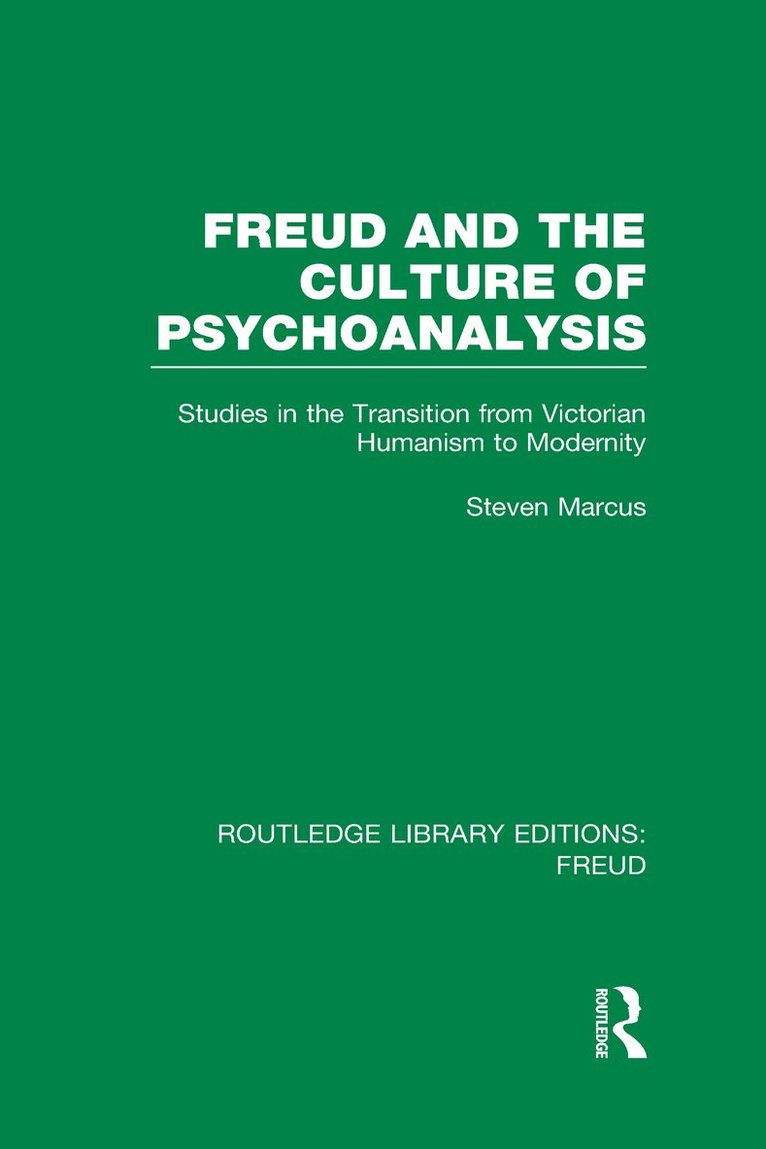
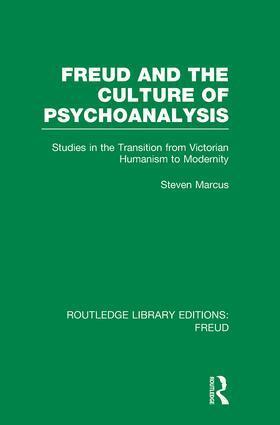
Freud and the Culture of Psychoanalysis (RLE: Freud)
Studies in the Transition from Victorian Humanism to Modernity
Inbunden, Engelska, 2013
1 909 kr
Skickas inom 10-15 vardagar
Originally published in 1984, this book broke new ground in assessing Freud as both an exemplary late-Victorian and as a pivotal figure in the creation of modern thought and culture. In his close reading of various of Freud’s theoretical and clinical texts, including two of the most famous case histories, Steven Marcus uncovers the steps in the development of Freud’s thought, the dynamics and contradictions and ‘the intellectual and emotional urgings, forces and conflicts that were at work… as the first original insights and discoveries that constituted the inception of psychoanalysis as a theory, discipline of inquiry, and new kind of therapy, came suddenly, often unexpectedly and without being bidden, upon Freud’.Central to Professor Marcus’ inquiry is the relationship of Freud’s work to cultural change and to the very process of disclosure, formation and construction in the transition to modernity. Freud’s writings, and the psychoanalytic discipline of which they are the foundations, are placed in the context of their contribution to modern modes of thought, and of their influence on our notions of the centres of significance of each existence as a whole.Freud and the Culture of Psychoanalysis is a major contribution to our understanding of how ideas and theories become internalized into the intellectual framework of our lives and affect the way we think about the world. By moving backward and forward from pre-Freudian to post-Freudian thinkers, Professor Marcus takes us on a journey through cultural transition that is also an exploration of how the individual interacts with his own moment in history to forge new modes of consciousness.
1 909 kr
Skickas inom 10-15 vardagar
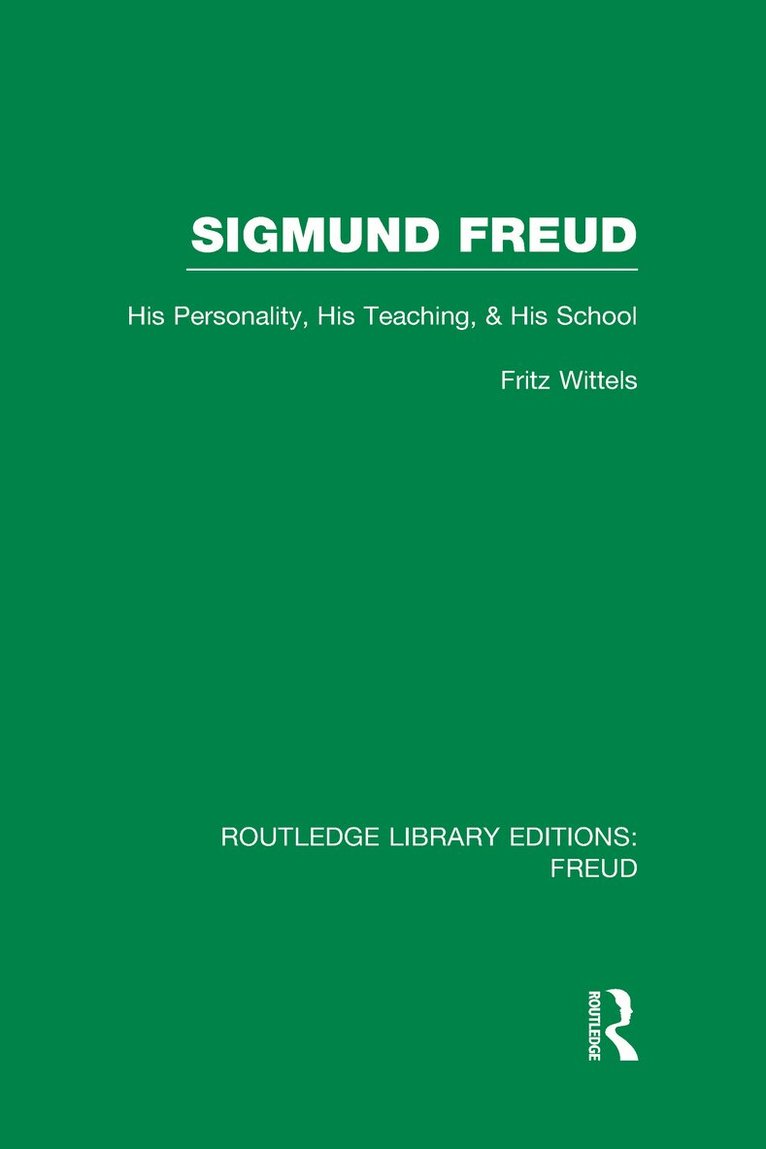
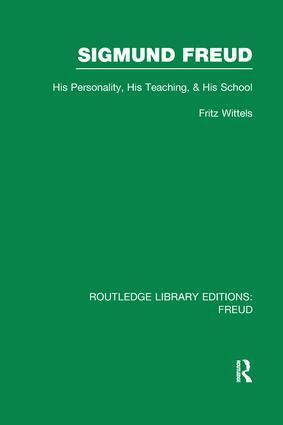
Originally published in 1924, this biography of Freud looks at his early life as well as the development of his theories and his relationships with other well-known physicians of the time.
1 909 kr
Skickas inom 10-15 vardagar
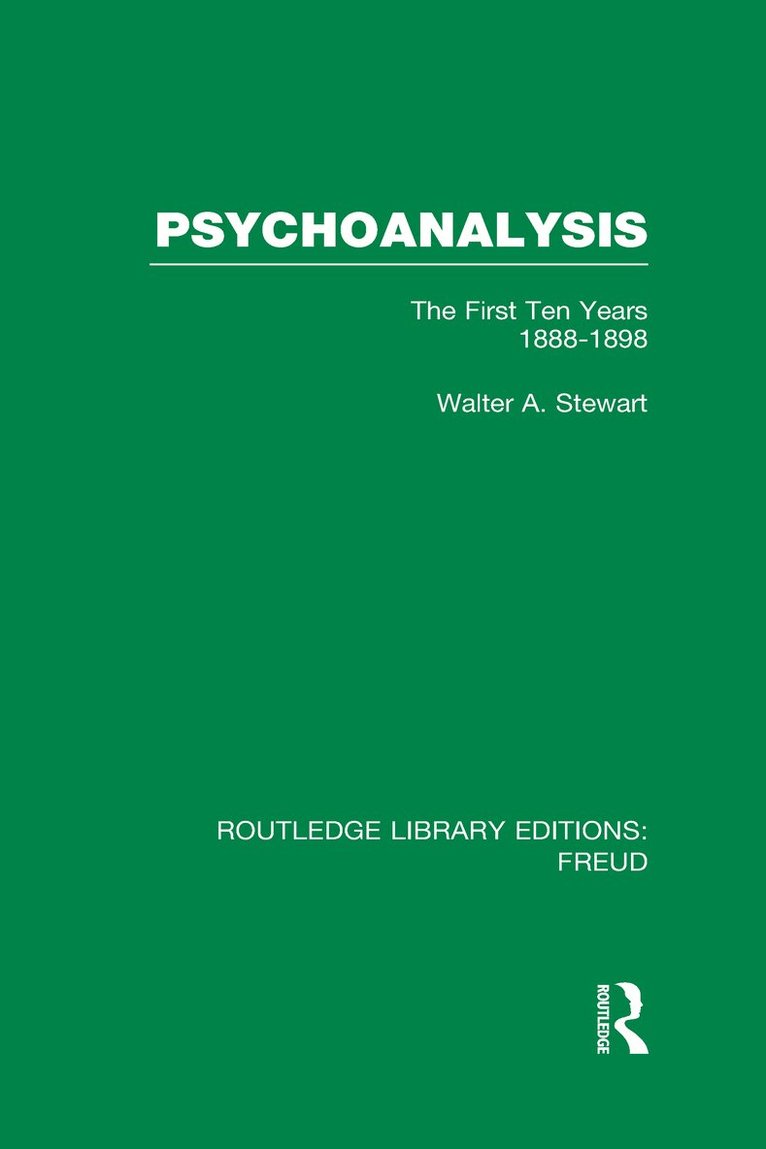
First published in 1969, this was a new assessment of Freud’s most creative years and the formative period in psychoanalysis and was the first book to attempt a systematic presentation of Freud’s early ideas, relating them to his later work and to contemporary psychoanalysis. During the years 1888-1898 Freud published 15 papers and one book. In addition many of his ideas were formulated in a series of letters and drafts that he wrote to Dr Wilhelm Fliess. This material provided new insights into the nature of Freud’s creative genius and gave new meaning to his published works. Psychoanalysis: The First Ten Years reviews these early papers, drafts and letters, and describes tentative formulations that, in spite of their value, were not developed further because of lack of time or a shift in interest. As Dr Stewart observes, ‘the study of this aspect of Freud’s work is perhaps the most exciting. Freud’s creativity in these years was remarkable. The ideas he discarded in this short period of time would, for a less gifted person, have been a full life’s work of which he could have been proud.’There is a good deal of historical and literary interest in his account of Freud’s relationships with Fliess, Breuer and others, but the core of the book is the critical assessment and systematic presentation of Freud’s early major insights, which dramatically reveal a creative genius in the process of discovery.
15 711 kr
Skickas inom 10-15 vardagar
Routledge Library Editions: Freud brings together as one set, or individual volumes, a series of previously out-of-print titles, originally published between 1920 and 1984. From a variety of academic imprints this set reflects the continued interest in both Freud the man and his theories. It provides in one place a wealth of important reference sources from a wide range of authors.
674 kr
Skickas inom 10-15 vardagar
Originally published in 1972, this second edition in 1981 was fully revised and updated to cover recent developments in the field at the time. Fact and Fantasy in Freudian Theory was written to answer many questions and criticisms surrounding psychoanalysis.How much, if any, of Freudian theory is verifiable according to the usual criteria of scientific enquiry? Much work had been carried out at the time to discover which parts of Freudian theory are verifiable and which insupportable by experiment. In this book Dr Kline surveys this vast body of work. He takes, one by one, the central postulates of Freudian psychology and discusses the experiments which have been performed to test them. He scrutinizes each test, examines its methodology and its findings and weighs up its value. For some of the theories, it will be seen, there is no evidence whatsoever; for others, on the other hand, there is impressive and sometimes incontrovertible experimental support – for example, for the theory of repression. This work will continue to be an invaluable, highly detailed reference work for those involved with Freud’s work, and a book of great interest to those concerned with the method of psychological enquiry in general.
682 kr
Skickas inom 10-15 vardagar
Originally published in 1959, this book is primarily concerned with the question of psychiatric factors in religion, and, conversely, with that of religious factors in psychiatry. It rejects the Freudian theory that religion is a form of obsessional neurosis. Though this latter hypothesis may explain many of the phenomena of religious observance, it cannot explain the reality of religious experience. Dr Guirdham believes that orthodox Christianity is a perversion of the psychologically irrefutable teaching of Christ and that its conception of God as a supreme being endowed with supreme power, its teaching on the resurrection, and its contamination with a sense of guilt, are especially conducive to psychiatric disorder. He shows how theology may actually be inimical to religious experience and how faith differs from belief and is a response of the whole man. The book explains also the psychological origins of clericalism and demonstrates the role played by the latter in stifling religious experience.
637 kr
Skickas inom 10-15 vardagar
In this book, originally published in 1963, Dr Fine sets out to describe what Freud said, and to re-evaluate his views critically in the light of the best knowledge of the time.Freud’s numerous changes of view, his constant searching for the truth wherever it might lead him, as well as his resolute adherence to certain hard-won positions once he had achieved them, are all skilfully traced. Freud’s intellectual Odyssey is divided into four periods. From 1886 to 1895 he was a neurologist investigating hysteria and other ‘nervous’ disorders. Then came his self-analysis, from 1896 to 1899, the real matrix from which psycho-analysis grew. The first psycho-analytic system of psychology was developed in the period from 1900 to 1914. The remainder of his life, from 1914 to 1939, was devoted to the elaboration of ego psychology, and heart of contemporary psycho-analysis.Dr Fine undertook, in writing this book, the formidable task of examining the whole body of Freud’s thought, to clarify what he said, and to review his ideas critically in the light of the best available existing knowledge. As he says ‘In this process of criticism I have tried to specify which aspects of Freud have stood the test of time and which have not.’ ‘So far as I can see no one has ever before taken the trouble to ask: "What did Freud actually say? How does what Freud said stand up in terms of what we now know?"’In answering these questions, Dr Fine develops a major thesis that all modern psycho-analysis derives from Freud, though it has moved far in many different directions. The contention is that emphasis on schools is misleading and has obscured the actual historical growth of the science.As he states in his Preface to this volume, Dr Fine’s conviction is: ‘By building on Freud’s fundamental insights, we can move on most readily to empirical research and thus construct a more satisfactory science of psychology.’
663 kr
Skickas inom 10-15 vardagar
Originally published in 1924, this biography of Freud looks at his early life as well as the development of his theories and his relationships with other well-known physicians of the time.
637 kr
Skickas inom 10-15 vardagar
First published in 1969, this was a new assessment of Freud’s most creative years and the formative period in psychoanalysis and was the first book to attempt a systematic presentation of Freud’s early ideas, relating them to his later work and to contemporary psychoanalysis. During the years 1888-1898 Freud published 15 papers and one book. In addition many of his ideas were formulated in a series of letters and drafts that he wrote to Dr Wilhelm Fliess. This material provided new insights into the nature of Freud’s creative genius and gave new meaning to his published works. Psychoanalysis: The First Ten Years reviews these early papers, drafts and letters, and describes tentative formulations that, in spite of their value, were not developed further because of lack of time or a shift in interest. As Dr Stewart observes, ‘the study of this aspect of Freud’s work is perhaps the most exciting. Freud’s creativity in these years was remarkable. The ideas he discarded in this short period of time would, for a less gifted person, have been a full life’s work of which he could have been proud.’There is a good deal of historical and literary interest in his account of Freud’s relationships with Fliess, Breuer and others, but the core of the book is the critical assessment and systematic presentation of Freud’s early major insights, which dramatically reveal a creative genius in the process of discovery.
Freud and the Culture of Psychoanalysis (RLE: Freud)
Studies in the Transition from Victorian Humanism to Modernity
Häftad, Engelska, 2016
637 kr
Skickas inom 10-15 vardagar
Originally published in 1984, this book broke new ground in assessing Freud as both an exemplary late-Victorian and as a pivotal figure in the creation of modern thought and culture. In his close reading of various of Freud’s theoretical and clinical texts, including two of the most famous case histories, Steven Marcus uncovers the steps in the development of Freud’s thought, the dynamics and contradictions and ‘the intellectual and emotional urgings, forces and conflicts that were at work… as the first original insights and discoveries that constituted the inception of psychoanalysis as a theory, discipline of inquiry, and new kind of therapy, came suddenly, often unexpectedly and without being bidden, upon Freud’.Central to Professor Marcus’ inquiry is the relationship of Freud’s work to cultural change and to the very process of disclosure, formation and construction in the transition to modernity. Freud’s writings, and the psychoanalytic discipline of which they are the foundations, are placed in the context of their contribution to modern modes of thought, and of their influence on our notions of the centres of significance of each existence as a whole.Freud and the Culture of Psychoanalysis is a major contribution to our understanding of how ideas and theories become internalized into the intellectual framework of our lives and affect the way we think about the world. By moving backward and forward from pre-Freudian to post-Freudian thinkers, Professor Marcus takes us on a journey through cultural transition that is also an exploration of how the individual interacts with his own moment in history to forge new modes of consciousness.
674 kr
Skickas inom 10-15 vardagar
Originally published in 1920, this book was intended as a brief outline of psychoanalysis for those interested in the subject, but without the time to study the work of Freud and his followers first hand.