Routledge Studies in Agricultural Economics - Böcker
Visar alla böcker i serien Routledge Studies in Agricultural Economics. Handla med fri frakt och snabb leverans.
12 produkter
12 produkter
2 113 kr
Skickas inom 10-15 vardagar
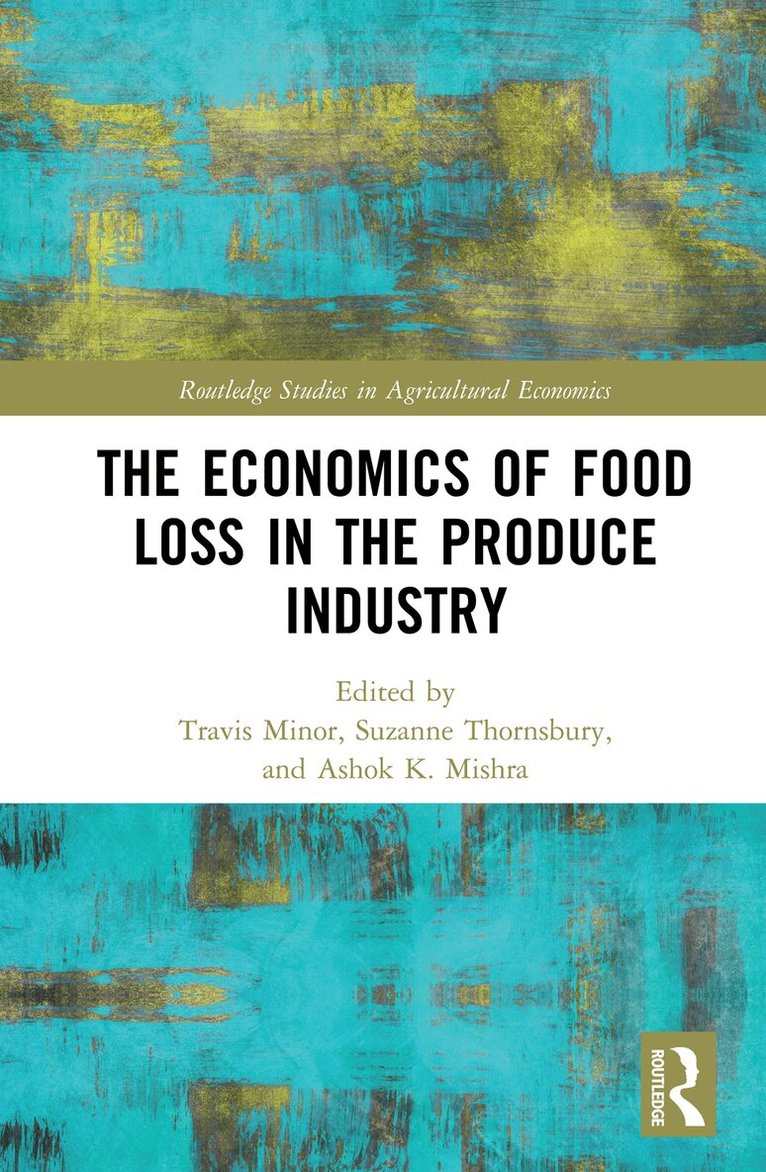
Food loss is a serious issue in the United States. It affects all aspects of the supply chain, from farmers to consumers. While much is already known about loss at the consumer level, our understanding of the amount of food that never makes it to this stage is more limited. The Economics of Food Loss in the Produce Industry focuses on the economics of food loss as they apply to on-farm produce production, and the losses that are experienced early.The book both analyses current food loss literature and presents new empirical research. It draws lessons from those who have encountered these issues by focusing on how past regional or national estimates of food loss have been conducted with varying degrees of success. It includes chapters on several themes: understanding food loss from an economic perspective; efforts to measure food loss; case studies across commodities within the produce industry; and economic risks and opportunities. The commodity case studies provide detailed discussion of factors impacting changes in loss levels within the produce industry, and a wealth of knowledge on strategies and contexts is developed. The book concludes by identifying critical knowledge gaps and establishing future priorities.This book serves as an essential reference guide for academics, researchers, students, legislative liaisons, non-profit associations, and think tank groups in agriculture and agricultural economics.
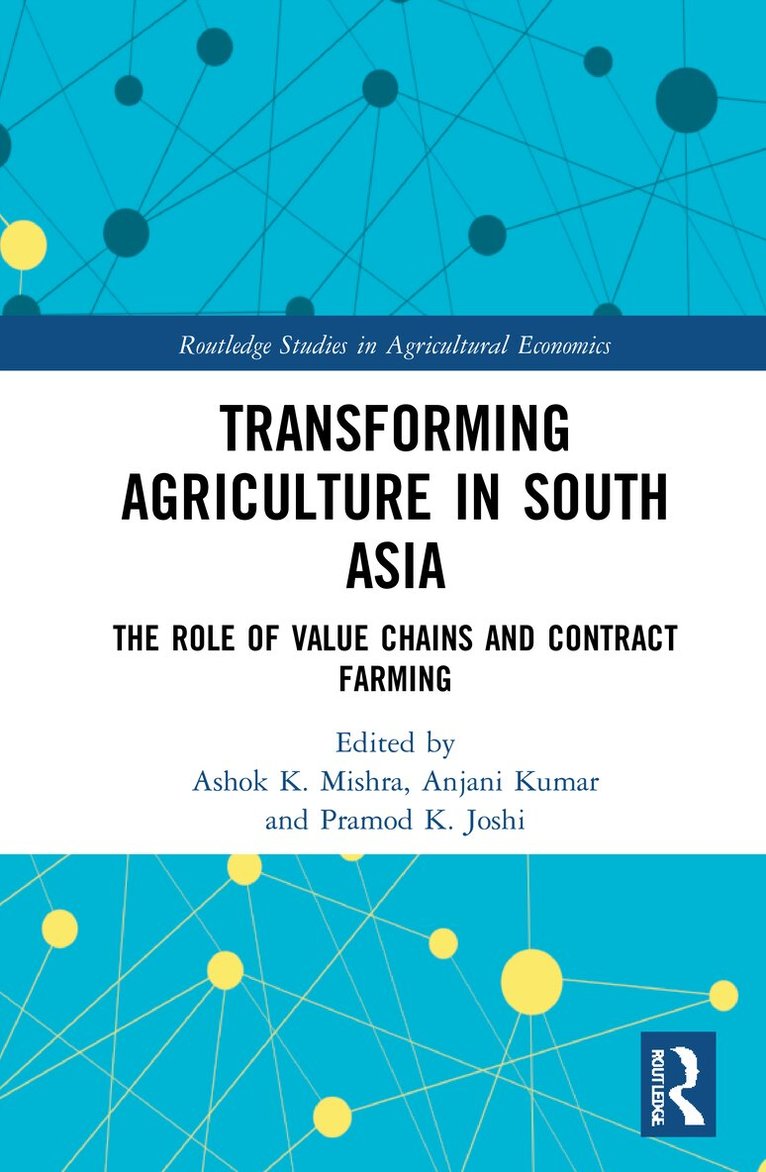
Transforming Agriculture in South Asia
The Role of Value Chains and Contract Farming
Inbunden, Engelska, 2020
2 317 kr
Skickas inom 10-15 vardagar
Debates about public expenditure in the agricultural sector have reopened in many developing and emerging economies because of high budget deficits and changes in public opinion. As a result, agricultural policy in many of these countries is beginning to take a more market-oriented approach to agrarian problems, most notably through the introduction of contract farming. This book explores the policy issues around contract farming and its transformative potential and addresses the lack of empirical research on this topic by focusing on South Asia: principally India, Bangladesh and Nepal.The book first addresses the effects of contract farming (vertical coordination) on productivity, food security indicators (yield, consumption expenditures, prices), employment and input usage. Then it draws lessons from the South Asian case studies on the impact of institutional changes, like contract farming, on income and food security of smallholder households. The core of the book includes case study chapters on several commodities that are produced under contract farming, including vegetables and fisheries in Bangladesh, low-value crops in Nepal and coffee in India. Other chapters also explore contracts, storage, input usage and technical efficiency in these cases. This book serves as an essential guide to academics, researchers, students, legislative liaisons and think tank groups interested in agrarian issues, agricultural economics and agricultural policy in emerging economies and particularly in South Asia.
Transforming Agriculture in South Asia
The Role of Value Chains and Contract Farming
Häftad, Engelska, 2022
618 kr
Skickas inom 10-15 vardagar
Debates about public expenditure in the agricultural sector have reopened in many developing and emerging economies because of high budget deficits and changes in public opinion. As a result, agricultural policy in many of these countries is beginning to take a more market-oriented approach to agrarian problems, most notably through the introduction of contract farming. This book explores the policy issues around contract farming and its transformative potential and addresses the lack of empirical research on this topic by focusing on South Asia: principally India, Bangladesh and Nepal.The book first addresses the effects of contract farming (vertical coordination) on productivity, food security indicators (yield, consumption expenditures, prices), employment and input usage. Then it draws lessons from the South Asian case studies on the impact of institutional changes, like contract farming, on income and food security of smallholder households. The core of the book includes case study chapters on several commodities that are produced under contract farming, including vegetables and fisheries in Bangladesh, low-value crops in Nepal and coffee in India. Other chapters also explore contracts, storage, input usage and technical efficiency in these cases. This book serves as an essential guide to academics, researchers, students, legislative liaisons and think tank groups interested in agrarian issues, agricultural economics and agricultural policy in emerging economies and particularly in South Asia.
637 kr
Skickas inom 10-15 vardagar
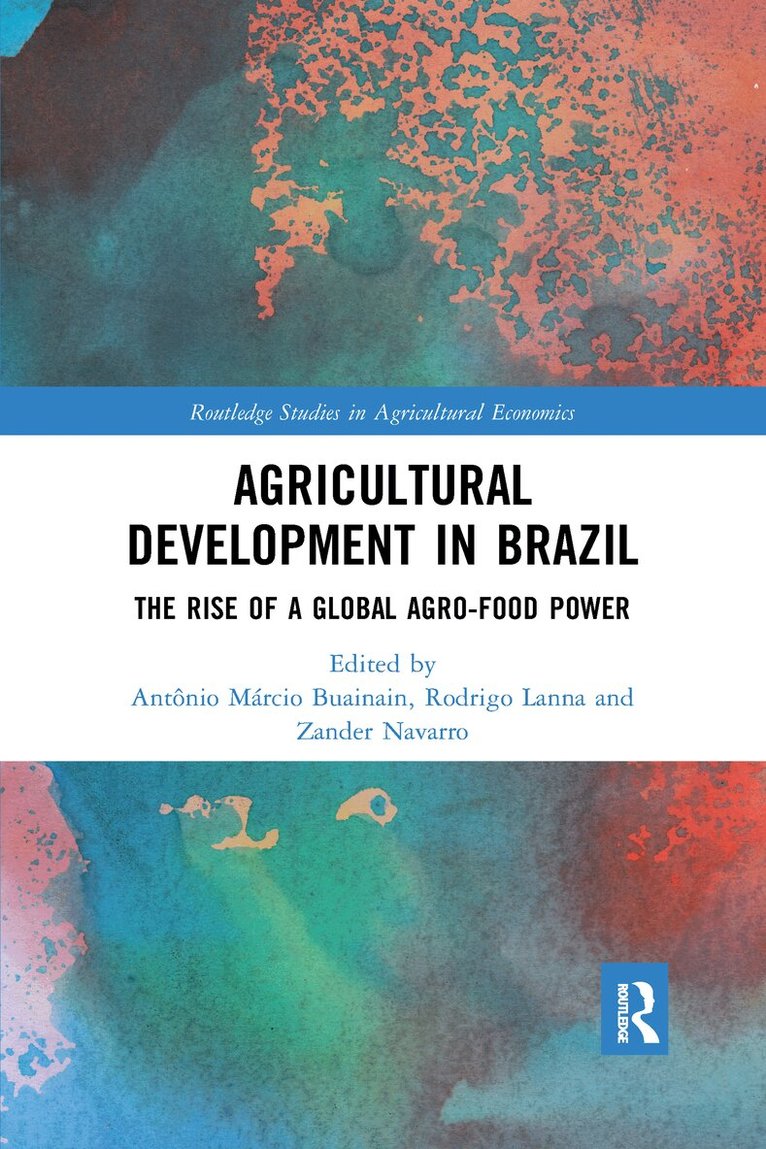
In the last few decades, Brazilian agriculture has experienced a seismic transformation, and its contradictory facets have fed different and opposing narratives regarding recent changes. This book covers these changes, exploring the issues from several empirical and analytical angles, including the role of agriculture in the contemporary Brazilian economy, the dynamics of Brazilian agricultural value chains, environmental challenges and the processes of social differentiation.Brazilian agriculture continues to be viewed in the international literature, either through the lenses of the past century – those of former problems relating to land use and land tenure – or apologetically. This collection of essays aims at updating the current interpretations, providing objective accounting of the main transformations, its determinants, results, contradictions and limitations. As it covers the most relevant traits of Brazilian agricultural and rural development, the book will provide the reader with an encompassing view of contemporary Brazilian agriculture, including the positive and negative sides of the so-called tropical agriculture revolution. It highlights the tremendous economic potential as well as the continuing structural heterogeneity, concentration of production and marginalization of millions of small farmers. Written in an engaging and accessible style, this book will be perfect for all those interested in learning about Brazilian agriculture. It will be of particular interest to undergraduate and graduate students of economic development, agricultural economics, rural sociology, comparative economic development, rural development and agricultural policies.
646 kr
Skickas inom 10-15 vardagar
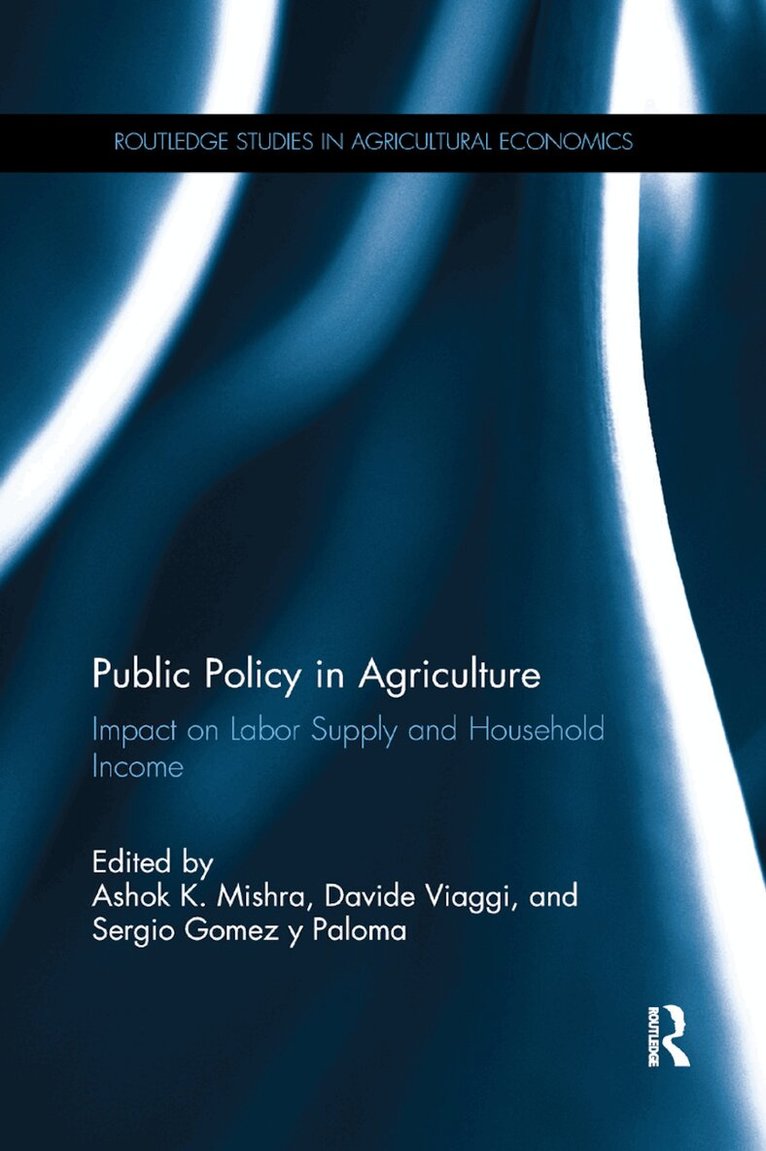
In recent years, developed countries have formulated public policies in agriculture ranging from supporting rural life and farm income to promoting sustainability of food and fibre production. Public Policy in Agriculture: Impact on Labor Supply and Household Income addresses the lack of empirical research in this area. It explores the impact of differing approaches to public policy through a series of international case studies, from the USA and Canada to South Korea, Norway, Slovenia and Taiwan. At a time when much of the developed world has been experiencing budget deficits and policy-makers and the public in general have re-opened the debate on public expenditures in the agricultural sector, this is a timely volume. Mishra, Viaggi and Gomez y Paloma have written an authoritative guide to agricultural public policy that will serve as a reference for academics, researchers, students, and policy-makers.
618 kr
Skickas inom 10-15 vardagar
Food loss is a serious issue in the United States. It affects all aspects of the supply chain, from farmers to consumers. While much is already known about loss at the consumer level, our understanding of the amount of food that never makes it to this stage is more limited. The Economics of Food Loss in the Produce Industry focuses on the economics of food loss as they apply to on-farm produce production, and the losses that are experienced early.The book both analyses current food loss literature and presents new empirical research. It draws lessons from those who have encountered these issues by focusing on how past regional or national estimates of food loss have been conducted with varying degrees of success. It includes chapters on several themes: understanding food loss from an economic perspective; efforts to measure food loss; case studies across commodities within the produce industry; and economic risks and opportunities. The commodity case studies provide detailed discussion of factors impacting changes in loss levels within the produce industry, and a wealth of knowledge on strategies and contexts is developed. The book concludes by identifying critical knowledge gaps and establishing future priorities.This book serves as an essential reference guide for academics, researchers, students, legislative liaisons, non-profit associations, and think tank groups in agriculture and agricultural economics.
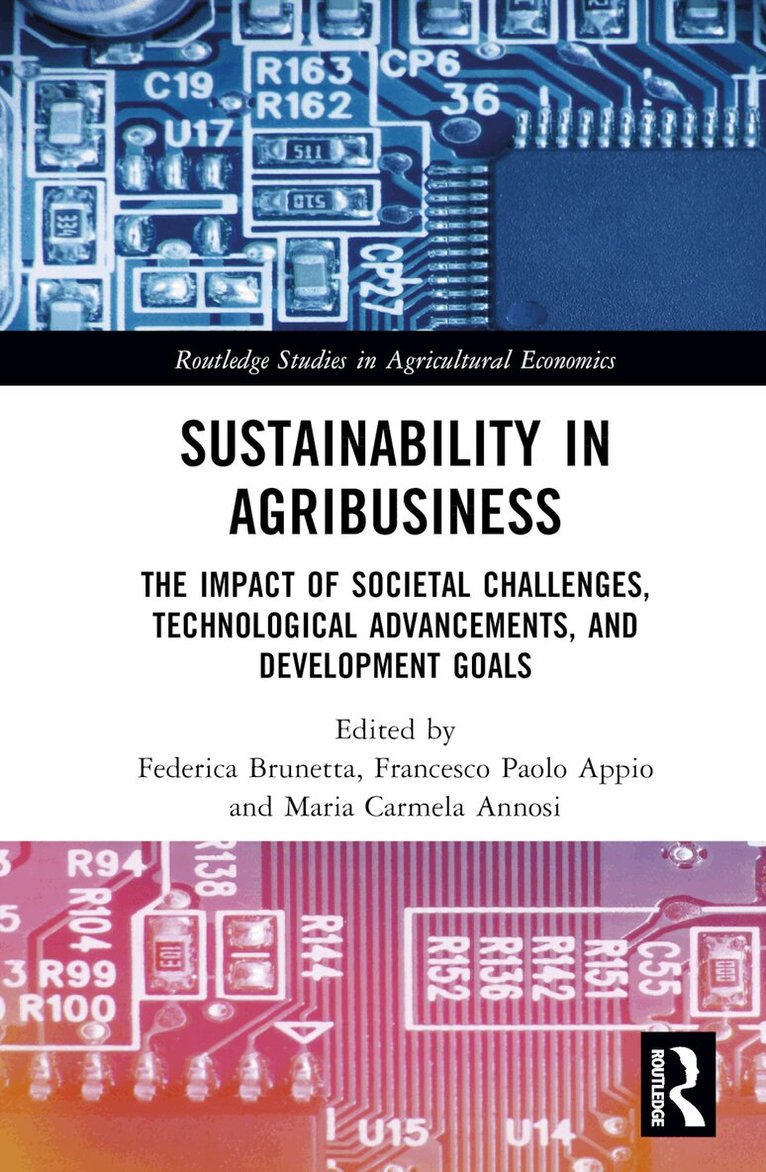
Sustainability in Agribusiness
The Impact of Societal Challenges, Technological Advancements, and Development Goals
Inbunden, Engelska, 2022
1 909 kr
Skickas inom 10-15 vardagar
Accomplishing sustainability in the agribusiness sector is a significant, yet time-sensitive, challenge, especially when balanced with the need to grow sufficient quantity and quality of food to keep the growing global population healthy.Through both quantitative and qualitative methods, this book explores the extent to which the agribusiness sector is already evolving to become sustainable and the ways in which innovation in the industry can help address sustainable development goals, particularly around zero hunger, gender equality, decent work, responsible consumption and production, and climate action. The contributors to this volume address the following key questions: What are the drivers and barriers for the agribusiness sector to become sustainable? Which business models best facilitate the implementation of sustainable goals? How can we measure the extent to which the agribusiness sector is becoming more sustainable? How can the agribusiness sector leverage recent technological advancements to achieve its sustainability goals? The analysis of the sustainability challenges for the sector ranges across various facets of the industry including employment, pre-production industries, agriculture, food processing, distribution, and trade.This book will be of significant interest to readers in agribusiness, innovation management, and sustainability.
Sustainability in Agribusiness
The Impact of Societal Challenges, Technological Advancements, and Development Goals
Häftad, Engelska, 2022
550 kr
Skickas inom 10-15 vardagar
Accomplishing sustainability in the agribusiness sector is a significant, yet time-sensitive, challenge, especially when balanced with the need to grow sufficient quantity and quality of food to keep the growing global population healthy.Through both quantitative and qualitative methods, this book explores the extent to which the agribusiness sector is already evolving to become sustainable and the ways in which innovation in the industry can help address sustainable development goals, particularly around zero hunger, gender equality, decent work, responsible consumption and production, and climate action. The contributors to this volume address the following key questions: What are the drivers and barriers for the agribusiness sector to become sustainable? Which business models best facilitate the implementation of sustainable goals? How can we measure the extent to which the agribusiness sector is becoming more sustainable? How can the agribusiness sector leverage recent technological advancements to achieve its sustainability goals? The analysis of the sustainability challenges for the sector ranges across various facets of the industry including employment, pre-production industries, agriculture, food processing, distribution, and trade.This book will be of significant interest to readers in agribusiness, innovation management, and sustainability.
795 kr
Skickas inom 10-15 vardagar
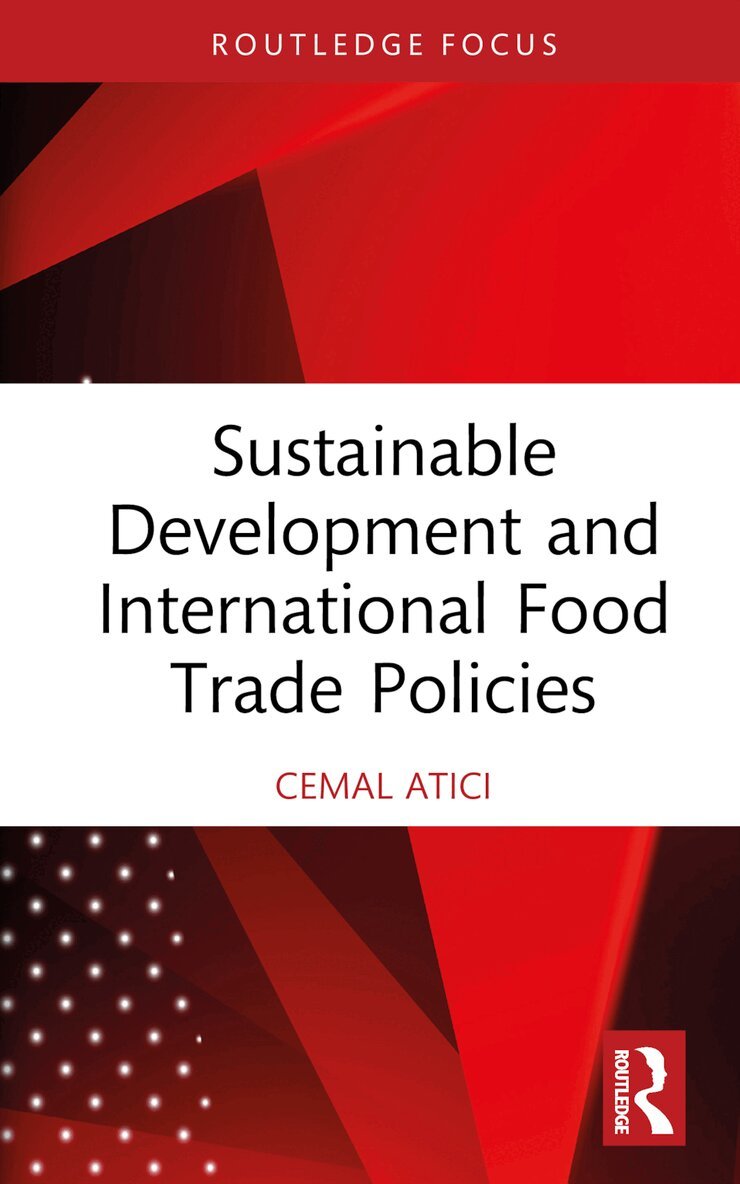
With a particular focus on developing economies, this book explores the intersection between agri-environmental policy, food policy, agricultural trade policy, and sustainable development. This book explores the many factors which shape sustainable development policies in agriculture. On the production side, using environmentally friendly inputs and good agricultural practices to protect the land and other related resources are necessary conditions for sustainable agriculture. On the other hand, ensuring food safety, security, and sustainable consumption are necessary elements of sustainable food policies and development. In addition, as the agricultural sector grows in an economy, energy needs become a major issue, especially for countries that depend on import. This book explores how these elements are balanced – along with global factors such as foreign direct investment, international climate change provisions, and the role of the WTO – in domains such as value chains, biotechnology, gender equality, ecology, and trade-environment interaction. This book will be of great interest to advanced readers in the fields of agricultural policy, food trade policy, and sustainable development.
333 kr
Skickas inom 10-15 vardagar
With a particular focus on developing economies, this book explores the intersection between agri-environmental policy, food policy, agricultural trade policy, and sustainable development. This book explores the many factors which shape sustainable development policies in agriculture. On the production side, using environmentally friendly inputs and good agricultural practices to protect the land and other related resources are necessary conditions for sustainable agriculture. On the other hand, ensuring food safety, security, and sustainable consumption are necessary elements of sustainable food policies and development. In addition, as the agricultural sector grows in an economy, energy needs become a major issue, especially for countries that depend on import. This book explores how these elements are balanced – along with global factors such as foreign direct investment, international climate change provisions, and the role of the WTO – in domains such as value chains, biotechnology, gender equality, ecology, and trade-environment interaction. This book will be of great interest to advanced readers in the fields of agricultural policy, food trade policy, and sustainable development.
2 176 kr
Skickas inom 10-15 vardagar
In the last few decades, Brazilian agriculture has experienced a seismic transformation, and its contradictory facets have fed different and opposing narratives regarding recent changes. This book covers these changes, exploring the issues from several empirical and analytical angles, including the role of agriculture in the contemporary Brazilian economy, the dynamics of Brazilian agricultural value chains, environmental challenges and the processes of social differentiation.Brazilian agriculture continues to be viewed in the international literature, either through the lenses of the past century – those of former problems relating to land use and land tenure – or apologetically. This collection of essays aims at updating the current interpretations, providing objective accounting of the main transformations, its determinants, results, contradictions and limitations. As it covers the most relevant traits of Brazilian agricultural and rural development, the book will provide the reader with an encompassing view of contemporary Brazilian agriculture, including the positive and negative sides of the so-called tropical agriculture revolution. It highlights the tremendous economic potential as well as the continuing structural heterogeneity, concentration of production and marginalization of millions of small farmers. Written in an engaging and accessible style, this book will be perfect for all those interested in learning about Brazilian agriculture. It will be of particular interest to undergraduate and graduate students of economic development, agricultural economics, rural sociology, comparative economic development, rural development and agricultural policies.
2 181 kr
Skickas inom 10-15 vardagar
In recent years, developed countries have formulated public policies in agriculture ranging from supporting rural life and farm income to promoting sustainability of food and fibre production. Public Policy in Agriculture: Impact on Labor Supply and Household Income addresses the lack of empirical research in this area. It explores the impact of differing approaches to public policy through a series of international case studies, from the USA and Canada to South Korea, Norway, Slovenia and Taiwan. At a time when much of the developed world has been experiencing budget deficits and policy-makers and the public in general have re-opened the debate on public expenditures in the agricultural sector, this is a timely volume. Mishra, Viaggi and Gomez y Paloma have written an authoritative guide to agricultural public policy that will serve as a reference for academics, researchers, students, and policy-makers.