Routledge Studies in Indigenous Peoples and Policy – serie
Visar alla böcker i serien Routledge Studies in Indigenous Peoples and Policy. Handla med fri frakt och snabb leverans.
16 produkter
16 produkter
Inbunden, Engelska, 2020
2 139 kr
Skickas inom 10-15 vardagar
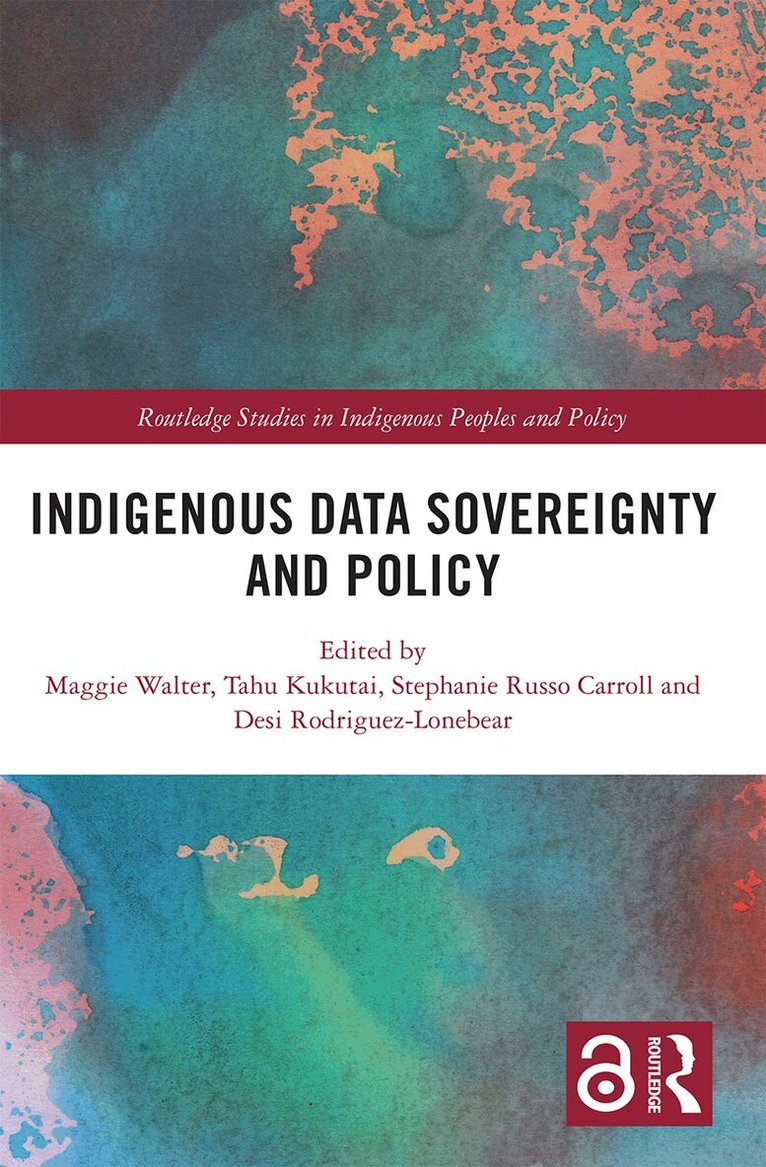
This book examines how Indigenous Peoples around the world are demanding greater data sovereignty, and challenging the ways in which governments have historically used Indigenous data to develop policies and programs.In the digital age, governments are increasingly dependent on data and data analytics to inform their policies and decision-making. However, Indigenous Peoples have often been the unwilling targets of policy interventions and have had little say over the collection, use and application of data about them, their lands and cultures. At the heart of Indigenous Peoples’ demands for change are the enduring aspirations of self-determination over their institutions, resources, knowledge and information systems. With contributors from Australia, Aotearoa New Zealand, North and South America and Europe, this book offers a rich account of the potential for Indigenous data sovereignty to support human flourishing and to protect against the ever-growing threats of data-related risks and harms.The Open Access version of this book, available athttps://www.taylorfrancis.com/books/e/9780429273957, has been made available under a Creative Commons Attribution-Non Commercial-No Derivatives 4.0 license
Inbunden, Engelska, 2020
2 139 kr
Skickas inom 10-15 vardagar
This book discusses the vital importance of including indigenous knowledges in the sustainable development agenda. In the wake of colonialism and imperialism, dialogue between indigenous knowledges and Western epistemology has broken down time and again. However, in recent decades the broader indigenous struggle for rights and recognition has led to a better understanding of indigenous knowledges, and in 2015 the Sustainable Development Goals (SDGs) outlined the importance of indigenous engagement in contributing to the implementation of the agenda.Drawing on experiences and field work from Africa, Asia, Latin America and Europe, Indigenous Knowledges and the Sustainable Development Agenda brings together authors who explore social, educational, institutional and ecological sustainability in relation to indigenous knowledges. In doing so, this book provides a comprehensive understanding of the concept of "sustainability", at both national and international levels, from a range of diverse perspectives.As the decolonizing debate gathers pace within mainstream academic discourse, this book offers an important contribution to scholars across development studies, environmental studies, education, and political ecology.The Open Access version of this book, available at http://www.taylorfrancis.com, has been made available under a Creative Commons Attribution-Non Commercial-No Derivatives (CC-BY-NC-ND) 4.0 license.
Inbunden, Engelska, 2021
2 139 kr
Skickas inom 10-15 vardagar
This book argues that there is a need to develop greater indigenous-led intergenerational resilience in order to meet the challenges posed by contemporary crises of climate change, cultural clashes, and adversity.In today’s media, the climate crisis is kept largely separate and distinct from the violent cultural clashes unfolding on the grounds of religion and migration, but each is similarly symptomatic of the erasure of the human connection to place and the accompanying tensions between generations and cultures. This book argues that both forms of crisis are intimately related, under-scored and driven by the structures of white supremacism which at their most immediate and visible, manifest as the discipline of black bodies, and at more fundamental and far-reaching proportions, are about the power, privilege and patterns of thinking associated with but no longer exclusive to white people. In the face of such crisis, it is essential to bring the experience and wisdom of Elders and traditional knowledge keepers together with the contemporary realities and vision of youth.This book’s inclusive and critical perspective on Indigenous-led intergenerational resilience will be valuable to Indigenous and non-Indigenous interdisciplinary scholars working on human-ecological resilience.
Häftad, Engelska, 2020
328 kr
Skickas inom 10-15 vardagar
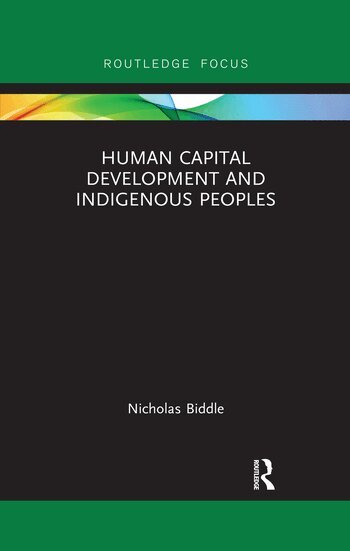
In all countries for which data is available, Indigenous peoples have lower rates of formal educational participation and attainment than their non-Indigenous counterparts. There are many structural reasons for this, but it may in part be related to the perceived relationship between the costs and benefits of education. Human Capital Development and Indigenous Peoples systematically applies a human capital approach to educational policy, to help understand the education and broader development outcomes of indigenous peoples. The basic Human Capital Model states that individuals, families and communities will invest in education until the benefits of doing so no longer outweigh the costs. This trade-off is often considered in monetary terms. Here the author broadens cost-benefit definitions to include health and wellbeing improvements alongside social costs driven by discrimination and unfair treatment in schools. With coverage of the Americas, Asia, Australia and New Zealand, the book critiques existing approaches, and provides an outlet for the self-described experiences of a diverse set of indigenous peoples on the breadth of educational costs and benefits. Combining new quantitative analysis, cross-national perspectives and an explicit policy focus, this book provides policy actors with a detailed understanding of the education decision and equips them with the knowledge to enhance benefits while minimising costs.This book will appeal to policy-engaged researchers in the fields of economics, demography, sociology, political science, development studies and anthropology, as well as policy makers or practitioners who are interested in incorporating the most recent evidence into their practice or frameworks.
Häftad, Engelska, 2022
626 kr
Skickas inom 10-15 vardagar
This book examines how Indigenous Peoples around the world are demanding greater data sovereignty, and challenging the ways in which governments have historically used Indigenous data to develop policies and programs.In the digital age, governments are increasingly dependent on data and data analytics to inform their policies and decision-making. However, Indigenous Peoples have often been the unwilling targets of policy interventions and have had little say over the collection, use and application of data about them, their lands and cultures. At the heart of Indigenous Peoples’ demands for change are the enduring aspirations of self-determination over their institutions, resources, knowledge and information systems. With contributors from Australia, Aotearoa New Zealand, North and South America and Europe, this book offers a rich account of the potential for Indigenous data sovereignty to support human flourishing and to protect against the ever-growing threats of data-related risks and harms.The Open Access version of this book, available athttps://www.taylorfrancis.com/books/e/9780429273957, has been made available under a Creative Commons Attribution-Non Commercial-No Derivatives 4.0 license
Inbunden, Engelska, 2021
2 139 kr
Skickas inom 10-15 vardagar
This book demonstrates how active and meaningful collaboration between researchers and local stakeholders and indigenous communities can lead to the co-production of knowledge and the empowerment of communities.Focusing on the Asia Pacific region, this interdisciplinary volume looks at local and indigenous relations to the landscape, showing how applied scholarship and collaborative research can work to empower indigenous and descendant communities. With cases ranging across Indonesia, Thailand, Taiwan, the Philippines, Cambodia, Pohnpei, Guam, and Easter Island, this book demonstrates the many ways in which co-production of knowledge is reconnecting local and indigenous relations to the landscape, and diversifying the philosophy of human-land relations. In so doing, the book is enriching the knowledge of landscape, and changing the landscape of knowledge.This important contribution to our understanding of knowledge production will be of interest to readers across Anthropology, Archaeology, Development, Geography, Heritage Studies, Indigenous Studies, and Policy Studies.
Häftad, Engelska, 2023
585 kr
Skickas inom 10-15 vardagar
This book demonstrates how active and meaningful collaboration between researchers and local stakeholders and indigenous communities can lead to the co-production of knowledge and the empowerment of communities.Focusing on the Asia Pacific region, this interdisciplinary volume looks at local and indigenous relations to the landscape, showing how applied scholarship and collaborative research can work to empower indigenous and descendant communities. With cases ranging across Indonesia, Thailand, Taiwan, the Philippines, Cambodia, Pohnpei, Guam, and Easter Island, this book demonstrates the many ways in which co-production of knowledge is reconnecting local and indigenous relations to the landscape, and diversifying the philosophy of human-land relations. In so doing, the book is enriching the knowledge of landscape, and changing the landscape of knowledge.This important contribution to our understanding of knowledge production will be of interest to readers across Anthropology, Archaeology, Development, Geography, Heritage Studies, Indigenous Studies, and Policy Studies.
Inbunden, Engelska, 2022
2 132 kr
Skickas inom 10-15 vardagar
This book investigates the impact of the COVID-19 pandemic on the health and well-being of Indigenous Peoples and assesses the policy responses taken by governments and Indigenous communities across the world.Bringing together innovative research and policy insights from a range of disciplines, this book investigates the impact of the COVID-19 pandemic on the health and well-being of Indigenous Peoples across the world, with coverage of North America, Central America, Africa, and Oceania. Further, it explores the actions taken by governments and Indigenous communities in addressing the challenges posed by this public health crisis. The book emphasises the social determinants of health and well-being, reflecting on issues such as self-governance, human rights law, housing, socioeconomic conditions, access to health care, culture, environmental deprivation, and resource extraction. Chapters also highlight the resilience and agency of Indigenous Peoples in combating the COVID-19 pandemic, despite the legacy of colonialism, patterns of systemic discrimination, and social exclusion.Providing concrete pathways for improving the conditions of Indigenous Peoples in the wake of the COVID-19 pandemic, this book is essential reading for researchers across indigenous studies, public health, and social policy.
Häftad, Engelska, 2024
645 kr
Skickas inom 10-15 vardagar
This book investigates the impact of the COVID-19 pandemic on the health and well-being of Indigenous Peoples and assesses the policy responses taken by governments and Indigenous communities across the world.Bringing together innovative research and policy insights from a range of disciplines, this book investigates the impact of the COVID-19 pandemic on the health and well-being of Indigenous Peoples across the world, with coverage of North America, Central America, Africa, and Oceania. Further, it explores the actions taken by governments and Indigenous communities in addressing the challenges posed by this public health crisis. The book emphasises the social determinants of health and well-being, reflecting on issues such as self-governance, human rights law, housing, socioeconomic conditions, access to health care, culture, environmental deprivation, and resource extraction. Chapters also highlight the resilience and agency of Indigenous Peoples in combating the COVID-19 pandemic, despite the legacy of colonialism, patterns of systemic discrimination, and social exclusion.Providing concrete pathways for improving the conditions of Indigenous Peoples in the wake of the COVID-19 pandemic, this book is essential reading for researchers across indigenous studies, public health, and social policy.
Häftad, Engelska, 2023
626 kr
Skickas inom 10-15 vardagar
This book argues that there is a need to develop greater indigenous-led intergenerational resilience in order to meet the challenges posed by contemporary crises of climate change, cultural clashes, and adversity.In today’s media, the climate crisis is kept largely separate and distinct from the violent cultural clashes unfolding on the grounds of religion and migration, but each is similarly symptomatic of the erasure of the human connection to place and the accompanying tensions between generations and cultures. This book argues that both forms of crisis are intimately related, under-scored and driven by the structures of white supremacism which at their most immediate and visible, manifest as the discipline of black bodies, and at more fundamental and far-reaching proportions, are about the power, privilege and patterns of thinking associated with but no longer exclusive to white people. In the face of such crisis, it is essential to bring the experience and wisdom of Elders and traditional knowledge keepers together with the contemporary realities and vision of youth.This book’s inclusive and critical perspective on Indigenous-led intergenerational resilience will be valuable to Indigenous and non-Indigenous interdisciplinary scholars working on human-ecological resilience.
Häftad, Engelska, 2022
528 kr
Skickas inom 10-15 vardagar
In this book, author Helene Thiesen recounts her experience of being removed from her family in Greenland as a young Inuk child, to be ‘re-educated’ in Denmark and an orphanage in Greenland. The practice of forcible assimilation of Indigenous children into colonial societies through ‘education’ has echoes in North America and Australasia, and the painful legacy of these practices remains under-acknowledged. In this poignant book, Helene recounts in detail the process of being taken from her family in 1951, aged seven, along with twenty-one other children, in the attempt to re-make them into ‘model Danish citizens’, in a social ‘experiment’ led by the Danish government and Save the Children Denmark. When the children returned to Greenland a year and a half later, they were sent to live in a Danish Red Cross orphanage, where they were forbidden to speak their native languages, and were compelled to adopt Danish language, culture and customs. With a detailed introductory analysis from Dr Stephen James Minton, who also provides the translation, Helene’s account serves as a compelling and powerful testimony of a devastating colonial experiment.Richly illustrated with forty photos to help to situate the reader, this book provides an invaluable case study for researchers and students in the fields of Indigenous Studies, Critical Pedagogy and Education, Psychology, European History, and Cultural Studies.
Inbunden, Engelska, 2022
1 878 kr
Skickas inom 10-15 vardagar
In this book, author Helene Thiesen recounts her experience of being removed from her family in Greenland as a young Inuk child, to be ‘re-educated’ in Denmark and an orphanage in Greenland. The practice of forcible assimilation of Indigenous children into colonial societies through ‘education’ has echoes in North America and Australasia, and the painful legacy of these practices remains under-acknowledged. In this poignant book, Helene recounts in detail the process of being taken from her family in 1951, aged seven, along with twenty-one other children, in the attempt to re-make them into ‘model Danish citizens’, in a social ‘experiment’ led by the Danish government and Save the Children Denmark. When the children returned to Greenland a year and a half later, they were sent to live in a Danish Red Cross orphanage, where they were forbidden to speak their native languages, and were compelled to adopt Danish language, culture and customs. With a detailed introductory analysis from Dr Stephen James Minton, who also provides the translation, Helene’s account serves as a compelling and powerful testimony of a devastating colonial experiment.Richly illustrated with forty photos to help to situate the reader, this book provides an invaluable case study for researchers and students in the fields of Indigenous Studies, Critical Pedagogy and Education, Psychology, European History, and Cultural Studies.
Häftad, Engelska, 2021
626 kr
Skickas inom 10-15 vardagar
This book discusses the vital importance of including indigenous knowledges in the sustainable development agenda. In the wake of colonialism and imperialism, dialogue between indigenous knowledges and Western epistemology has broken down time and again. However, in recent decades the broader indigenous struggle for rights and recognition has led to a better understanding of indigenous knowledges, and in 2015 the Sustainable Development Goals (SDGs) outlined the importance of indigenous engagement in contributing to the implementation of the agenda. Drawing on experiences and field work from Africa, Asia, Latin America and Europe, Indigenous Knowledges and the Sustainable Development Agenda brings together authors who explore social, educational, institutional and ecological sustainability in relation to indigenous knowledges. In doing so, this book provides a comprehensive understanding of the concept of "sustainability", at both national and international levels, from a range of diverse perspectives.As the decolonizing debate gathers pace within mainstream academic discourse, this book offers an important contribution to scholars across development studies, environmental studies, education, and political ecology.
Inbunden, Engelska, 2024
2 002 kr
Skickas inom 10-15 vardagar
This book investigates how western anthropological trends, development discourse and transnational activism came to create and define the global indigenous movement.Using Bolivia as a case study, the author demonstrates through a historical research, how international ideas of what it means and does not mean to be indigenous have played out at the national level. Tracing these trends from pre-revolutionary Bolivia, the Inter-American indigenismo in the 1940s up to Evo Morales’ downfall, the book reflects on Bolivia’s national-level policy discourse and constitutional changes, but also asks to what extent these principles have been transmitted to the country’s grassroots organisations and movements such as “Indianismo”, “Katarismo”, “CSUTCB” and “CIDOB”. Overall, the book argues that indigeneity can only be adequately understood, as a longue durée anthropological, political, and legal construction, crafted within broader geopolitical contexts. Within this context, the classical dichotomy between “indigenous” and “whites” should be challenged, in favour of a more nuanced understanding of plural indigeneities.This book will be of interest to researchers from across the fields of global studies, political anthropology, history of anthropology, international development, socio-legal studies, Latin American history, and indigenous studies.
Häftad, Engelska, 2026
640 kr
Skickas inom 10-15 vardagar
This book investigates how western anthropological trends, development discourse and transnational activism came to create and define the global indigenous movement.Using Bolivia as a case study, the author demonstrates through a historical research, how international ideas of what it means and does not mean to be indigenous have played out at the national level. Tracing these trends from pre-revolutionary Bolivia, the Inter-American indigenismo in the 1940s up to Evo Morales’ downfall, the book reflects on Bolivia’s national-level policy discourse and constitutional changes, but also asks to what extent these principles have been transmitted to the country’s grassroots organisations and movements such as “Indianismo”, “Katarismo”, “CSUTCB” and “CIDOB”. Overall, the book argues that indigeneity can only be adequately understood, as a longue durée anthropological, political, and legal construction, crafted within broader geopolitical contexts. Within this context, the classical dichotomy between “indigenous” and “whites” should be challenged, in favour of a more nuanced understanding of plural indigeneities.This book will be of interest to researchers from across the fields of global studies, political anthropology, history of anthropology, international development, socio-legal studies, Latin American history, and indigenous studies.
Inbunden, Engelska, 2018
808 kr
Skickas inom 10-15 vardagar
In all countries for which data is available, Indigenous peoples have lower rates of formal educational participation and attainment than their non-Indigenous counterparts. There are many structural reasons for this, but it may in part be related to the perceived relationship between the costs and benefits of education. Human Capital Development and Indigenous Peoples systematically applies a human capital approach to educational policy, to help understand the education and broader development outcomes of indigenous peoples. The basic Human Capital Model states that individuals, families and communities will invest in education until the benefits of doing so no longer outweigh the costs. This trade-off is often considered in monetary terms. Here the author broadens cost-benefit definitions to include health and wellbeing improvements alongside social costs driven by discrimination and unfair treatment in schools. With coverage of the Americas, Asia, Australia and New Zealand, the book critiques existing approaches, and provides an outlet for the self-described experiences of a diverse set of indigenous peoples on the breadth of educational costs and benefits. Combining new quantitative analysis, cross-national perspectives and an explicit policy focus, this book provides policy actors with a detailed understanding of the education decision and equips them with the knowledge to enhance benefits while minimising costs.This book will appeal to policy-engaged researchers in the fields of economics, demography, sociology, political science, development studies and anthropology, as well as policy makers or practitioners who are interested in incorporating the most recent evidence into their practice or frameworks.