Routledge Studies on the Governance of Sustainability in Europe – serie
Visar alla böcker i serien Routledge Studies on the Governance of Sustainability in Europe. Handla med fri frakt och snabb leverans.
11 produkter
11 produkter
2 113 kr
Skickas inom 10-15 vardagar
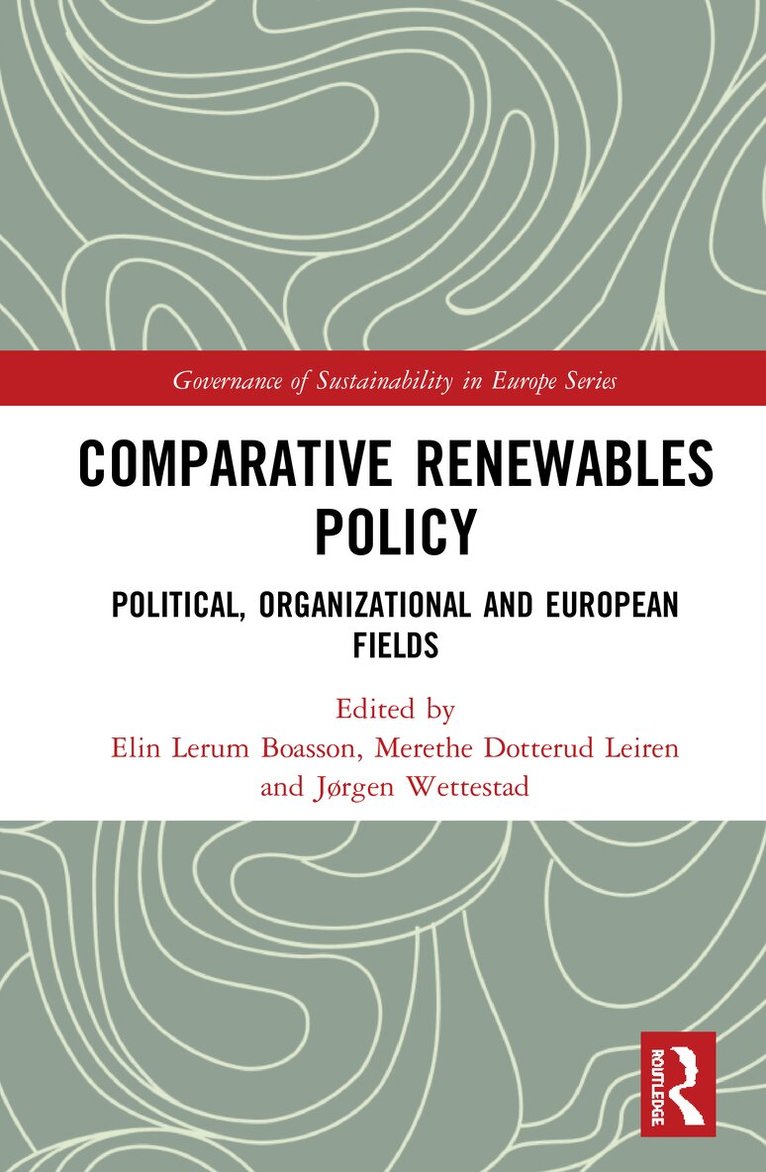
Challenging one-eyed technology-focused accounts of renewables policy, this book provides a ground-breaking, deep-diving and genre-crossing longitudinal study of policy development. The book develops a multi-field explanatory approach, capturing inter-relationships between actors often analyzed in isolation. It provides empirically rich and systematically conducted comparative case studies on the political dynamics of the ongoing energy transition in six European countries. While France, Germany, Poland and the United Kingdom opted for ‘technology-specific’ renewables support mixes, Norway and Sweden embarked on ‘technology-neutral’ support mixes. Differences between the two groups result from variations in domestic political and organizational fields, but developments over time in the European environment also spurred variation. These findings challenge more simplistic and static accounts of Europeanization. This volume will be of key interest to scholars and students of energy transitions, comparative climate politics, policy theory, Europeanization, European integration and comparative European politics more broadly, as well practitioners with an interest in renewable energy and climate transition.The Open Access version of this book, available at: https://www.taylorfrancis.com/books/e/9780429198144, has been made available under a Creative Commons Attribution-Non Commercial-No Derivatives 4.0 license.
578 kr
Skickas inom 10-15 vardagar
Challenging one-eyed technology-focused accounts of renewables policy, this book provides a ground-breaking, deep-diving and genre-crossing longitudinal study of policy development. The book develops a multi-field explanatory approach, capturing inter-relationships between actors often analyzed in isolation. It provides empirically rich and systematically conducted comparative case studies on the political dynamics of the ongoing energy transition in six European countries. While France, Germany, Poland and the United Kingdom opted for ‘technology-specific’ renewables support mixes, Norway and Sweden embarked on ‘technology-neutral’ support mixes. Differences between the two groups result from variations in domestic political and organizational fields, but developments over time in the European environment also spurred variation. These findings challenge more simplistic and static accounts of Europeanization. This volume will be of key interest to scholars and students of energy transitions, comparative climate politics, policy theory, Europeanization, European integration and comparative European politics more broadly, as well practitioners with an interest in renewable energy and climate transition.The Open Access version of this book, available at: https://www.taylorfrancis.com/books/e/9780429198144, has been made available under a Creative Commons Attribution-Non Commercial-No Derivatives 4.0 license.
2 113 kr
Skickas inom 10-15 vardagar
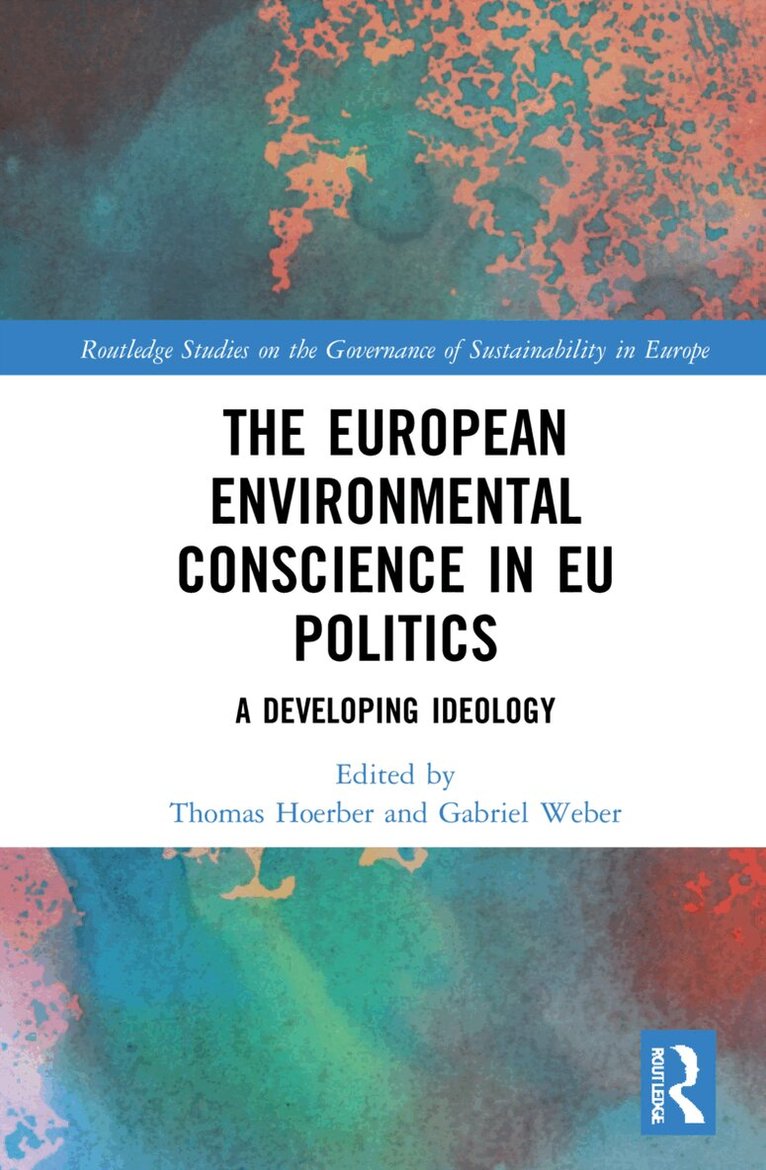
Based on empirical studies of European energy and environmental policies, this book suggests that, in combination, these two policy fields form a consensus in the EU which might also become the basis for a new European ideology, namely European ‘sustainabilism’. It asks why an environmental conscience has grown since the late 1960s in the industrialised world and shows that whilst there is undeniable environmental degradation during this time, and that a European environmental conscience has mainly developed through successive steps of European integration in energy policy. In this connection between energy and the environmental we find one driver for European integration and indeed European identity. If sustainabilism should become a European ideology, it will substantially influence the way future Europeans will live. This book will be of key interest to scholars and students of European Studies, International Relations, Political Science, History, Economics, Sustainability Studies, Environmental and Energy Policies in Europe.
1 977 kr
Skickas inom 10-15 vardagar
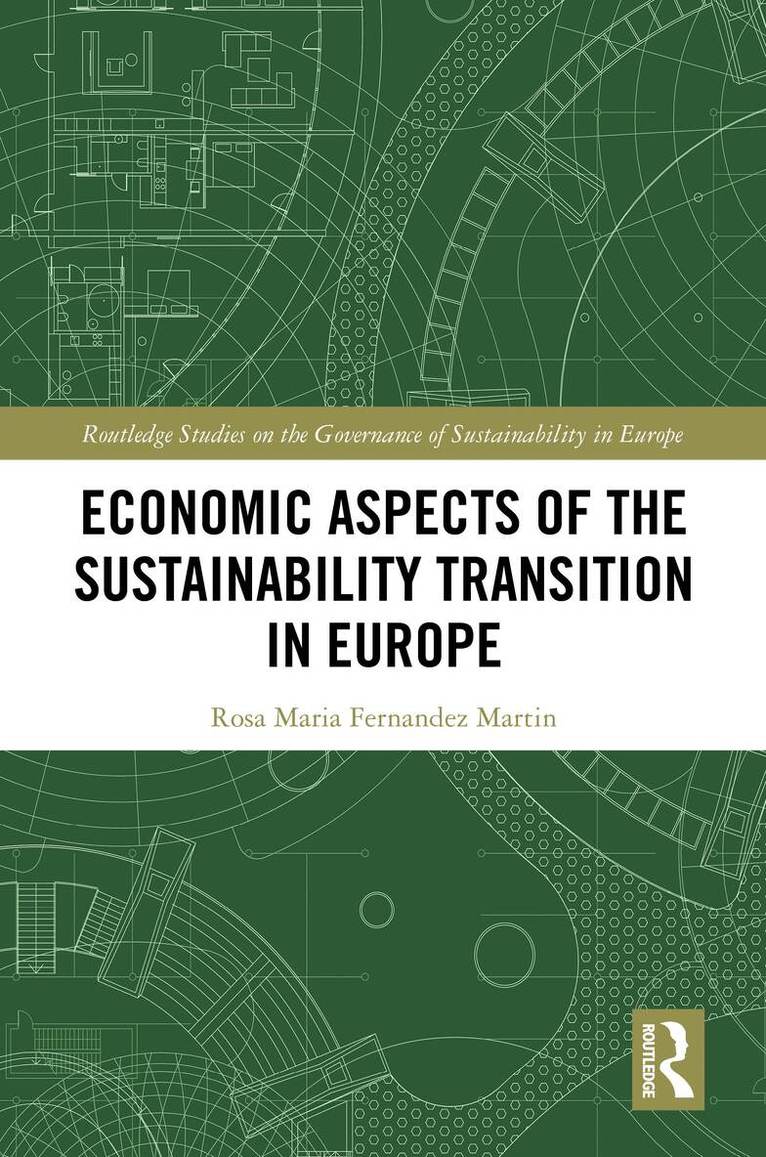
This book comprehensively examines the financial and economic aspects of the ‘sustainability transitions’ demanded by the primary components of the European Green Deal.It asks how the EU has been dealing with the allocation of resources to foster the sustainability transition, how the additional transformations required by the ‘climate emergency’ will be financed and which actors (businesses, governments, citizens) will pay and how. Looking at how the EU has been managing this over time, through changes in the Environment Action Programmes, Structural Funds, or the Multiannual Financial Framework, this book examines policy priorities and analyses the different instruments proposed as part of this evolving context, including market support instruments for renewable energies and the creation of new instruments, such as Climate Awareness Bonds. It also highlights new developments, such as the debate on the role of environmental taxes, or the uneven development across Member States of green financial instruments. This book presents an evolving puzzle into the limited possibilities of the EU to deploy resources that contribute to the overarching goal of achieving a low-carbon economy and illustrates the need for acceptance towards changes and compromises that are required from all affected stakeholders.This book will be of key interest to scholars, students and practitioners of sustainable development, climate governance and EU politics, and more broadly to those working on European Studies, economics, politics, international relations or public policy.
675 kr
Kommande
This book comprehensively examines the financial and economic aspects of the ‘sustainability transitions’ demanded by the primary components of the European Green Deal.It asks how the EU has been dealing with the allocation of resources to foster the sustainability transition, how the additional transformations required by the ‘climate emergency’ will be financed and which actors (businesses, governments, citizens) will pay and how. Looking at how the EU has been managing this over time, through changes in the Environment Action Programmes, Structural Funds, or the Multiannual Financial Framework, this book examines policy priorities and analyses the different instruments proposed as part of this evolving context, including market support instruments for renewable energies and the creation of new instruments, such as Climate Awareness Bonds. It also highlights new developments, such as the debate on the role of environmental taxes, or the uneven development across Member States of green financial instruments. This book presents an evolving puzzle into the limited possibilities of the EU to deploy resources that contribute to the overarching goal of achieving a low-carbon economy and illustrates the need for acceptance towards changes and compromises that are required from all affected stakeholders.This book will be of key interest to scholars, students and practitioners of sustainable development, climate governance and EU politics, and more broadly to those working on European Studies, economics, politics, international relations or public policy.
618 kr
Skickas inom 10-15 vardagar
Based on empirical studies of European energy and environmental policies, this book suggests that, in combination, these two policy fields form a consensus in the EU which might also become the basis for a new European ideology, namely European ‘sustainabilism’. It asks why an environmental conscience has grown since the late 1960s in the industrialised world and shows that whilst there is undeniable environmental degradation during this time, and that a European environmental conscience has mainly developed through successive steps of European integration in energy policy. In this connection between energy and the environmental we find one driver for European integration and indeed European identity. If sustainabilism should become a European ideology, it will substantially influence the way future Europeans will live. This book will be of key interest to scholars and students of European Studies, International Relations, Political Science, History, Economics, Sustainability Studies, Environmental and Energy Policies in Europe.
Making the European Green Deal Work
EU Sustainability Policies at Home and Abroad
Inbunden, Engelska, 2023
2 045 kr
Skickas inom 10-15 vardagar
This book critically analyses different dimensions in the sustainable transitions outlined by the European Green Deal, focusing on both internal actions and external relations and highlighting the EU’s diverging powers and capabilities in achieving the core objectives.As with the Green Deal itself, the chapters cover different policies including financial instruments, energy policies, climate policies and external policies and apply the ideal-type logics of appropriateness and consequences to analyse sustainable transformations. The variety of the cases contribute to a broad understanding of how different actors interpret and implement the aims of the European Green Deal, including especially those lagging behind, who, for various reasons, are struggling with the sustainable transition. From examining their policies, the book illuminates the challenges and opportunities they are facing. Overall, the contributions address key questions surrounding the EU’s powers and limits in inducing transformative change and implementing the European Green Deal.This book will be of key interest to scholars, students and practitioners of EU sustainability policies, sustainability transitions and green economy, environmental studies, energy policy, energy governance and climate change, public policy, comparative politics and international relations.
Making the European Green Deal Work
EU Sustainability Policies at Home and Abroad
Häftad, Engelska, 2024
578 kr
Skickas inom 10-15 vardagar
This book critically analyses different dimensions in the sustainable transitions outlined by the European Green Deal, focusing on both internal actions and external relations and highlighting the EU’s diverging powers and capabilities in achieving the core objectives.As with the Green Deal itself, the chapters cover different policies including financial instruments, energy policies, climate policies and external policies and apply the ideal-type logics of appropriateness and consequences to analyse sustainable transformations. The variety of the cases contribute to a broad understanding of how different actors interpret and implement the aims of the European Green Deal, including especially those lagging behind, who, for various reasons, are struggling with the sustainable transition. From examining their policies, the book illuminates the challenges and opportunities they are facing. Overall, the contributions address key questions surrounding the EU’s powers and limits in inducing transformative change and implementing the European Green Deal.This book will be of key interest to scholars, students and practitioners of EU sustainability policies, sustainability transitions and green economy, environmental studies, energy policy, energy governance and climate change, public policy, comparative politics and international relations.
EU Energy and Climate Policy after COVID-19 and the Invasion of Ukraine
Decarbonisation and Security in Transition
Häftad, Engelska, 2026
675 kr
Kommande
This book discusses the impact of the COVID-19 pandemic and the Russian invasion of Ukraine on the European Union’s climate and energy policy.By examining the positions of the various actors involved, the book analyses whether the COVID-19 pandemic and the Russian invasion of Ukraine has contributed to greater unity, decarbonisation, and security of energy supply, and if not, whether these crises prompted member states to turn inwards and opt for national solutions to climate and energy challenges. It thus provides a new outlook for EU energy policy in relation to the experience of the two crises.This book will be of key interest to scholars, students and practitioners of climate and energy policy, energy security, EU policy, and more broadly to energy politics, European integration and European Union governance.
EU Energy and Climate Policy after COVID-19 and the Invasion of Ukraine
Decarbonisation and Security in Transition
Inbunden, Engelska, 2024
1 977 kr
Skickas inom 10-15 vardagar
This book discusses the impact of the COVID-19 pandemic and the Russian invasion of Ukraine on the European Union’s climate and energy policy.By examining the positions of the various actors involved, the book analyses whether the COVID-19 pandemic and the Russian invasion of Ukraine has contributed to greater unity, decarbonisation, and security of energy supply, and if not, whether these crises prompted member states to turn inwards and opt for national solutions to climate and energy challenges. It thus provides a new outlook for EU energy policy in relation to the experience of the two crises.This book will be of key interest to scholars, students and practitioners of climate and energy policy, energy security, EU policy, and more broadly to energy politics, European integration and European Union governance.
European Environmental Conscience in the EU
Finance, Innovation, and External Relations of the EU
Inbunden, Engelska, 2025
2 113 kr
Skickas inom 10-15 vardagar
This book analyses how sustainability affects internal decision-making within the European Union and its external relations in working towards achieving its long-term goal of a climate-neutral Europe by 2050.Applying the term "European environmental conscience" as the perception of environmental degradation leading to a growing public awareness of the issues, a notion of common responsibility, and European institutions dealing with these growing concerns, the book investigates its emergence as a lever for deeper European integration and in fostering a genuine European identity. Examining policy areas such as green finance, innovation policies, and foreign policy, it reveals the impact these concerns have for other policy fields.This book is of key interest to scholars and students of environmental economics and politics, sustainability governance, green finance, climate policy, energy policy, and more broadly, to European studies and international relations.