Science and the Arts since 1750 – serie
Visar alla böcker i serien Science and the Arts since 1750. Handla med fri frakt och snabb leverans.
17 produkter
17 produkter
Häftad, Engelska, 2019
671 kr
Skickas inom 10-15 vardagar
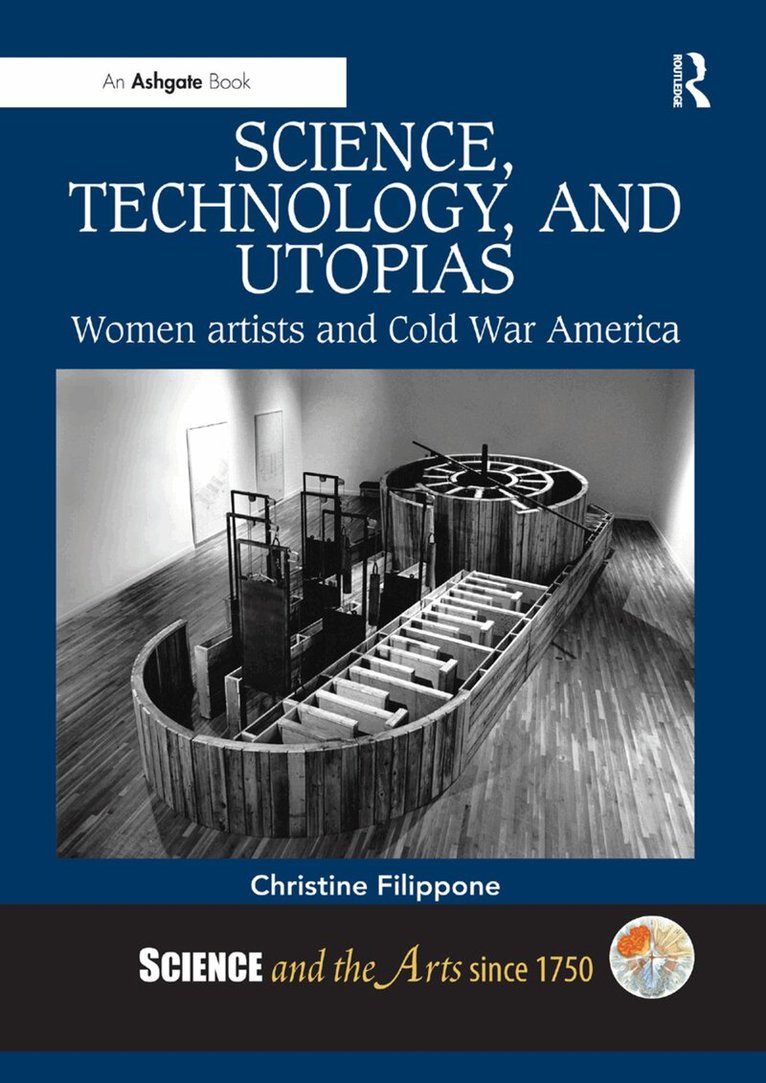
The rise of proxy wars, the Space Race, and cybernetics during the Cold War marked science and technology as vital sites of social and political power. Women artists, historically excluded from these domains, responded critically, while simultaneously redeploying the products of "Technological Society" into works that promoted ideals of progress and alternative concepts of human community. In this innovative book, author Christine Filippone offers the first focused examination of the conceptual use of science and technology by women artists during and just after the women’s movement. She argues that artists Alice Aycock, Agnes Denes, Martha Rosler and Carolee Schneemann used science and technology to mount a critique on Cold War American society as they saw it—conservative and constricting. Motivated by the contemporary American Women’s Movement, these artists transformed science and technology into new modes of artmaking that transgressed modernist, heroic, painterly styles and subverted the traditional economic structures of the gallery, the museum and the dealer. At the same time, the artists also embraced these domains of knowledge and practice as expressions of hope for a better future. Many found inspiration in the scientific theory of open systems, which investigated "problems of wholeness, dynamic interaction and organization", enabling consideration of the porous boundaries between human bodies and their social, political and nonhuman environments. Filippone also establishes that the theory of open systems not only informed feminist art, but also continued to influence women artists’ practice of reclamation and ecological art through the twenty-first century.
Häftad, Engelska, 2020
671 kr
Skickas inom 10-15 vardagar
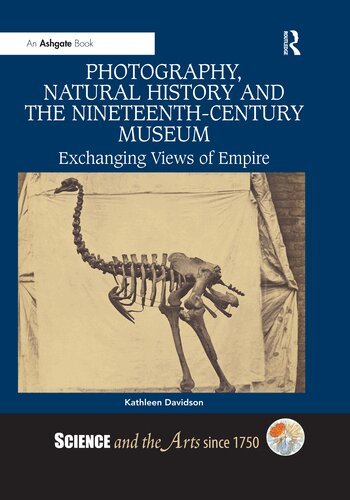
The Victorian era heralded an age of transformation in which momentous changes in the field of natural history coincided with the rise of new visual technologies. Concurrently, different parts of the British Empire began to more actively claim their right to being acknowledged as indispensable contributors to knowledge and the progress of empire. This book addresses the complex relationship between natural history and photography from the 1850s to the 1880s in Britain and its colonies: Australia, New Zealand and, to a lesser extent, India. Coinciding with the rise of the modern museum, photography’s arrival was timely, and it rapidly became an essential technology for recording and publicising rare objects and valuable collections. Also during this period, the medium assumed a more significant role in the professional practices and reputations of naturalists than has been previously recognized, and it figured increasingly within the expanding specialized networks that were central to the production and dissemination of new knowledge. In an interrogation that ranges from the first forays into museum photography and early attempts to document collecting expeditions to the importance of traditional and photographic portraiture for the recognition of scientific discoveries, this book not only recasts the parameters of what we actually identify as natural history photography in the Victorian era but also how we understand the very structure of empire in relation to this genre at that time.
Inbunden, Engelska, 2023
2 027 kr
Skickas inom 10-15 vardagar
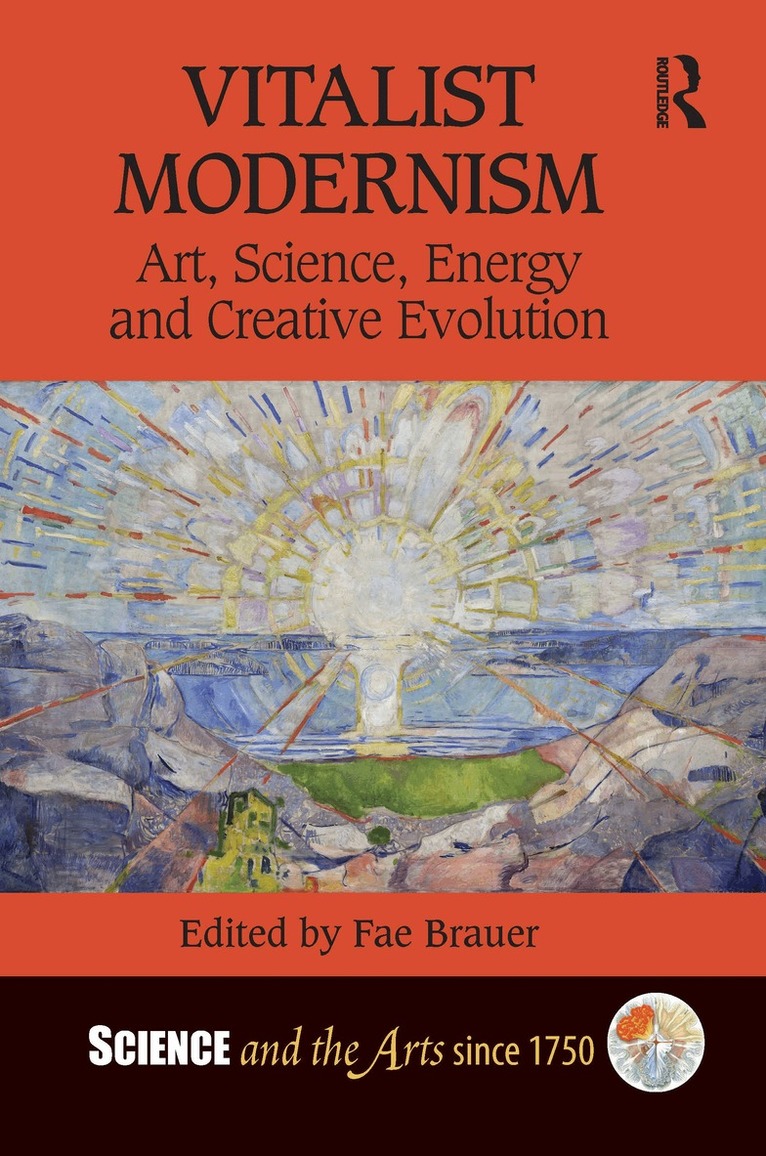
This book reveals how, when, where, and why vitalism and its relationship to new scientific theories, philosophies and concepts of energy became seminal from the fin de siècle until the Second World War for such Modernists as Sophie Taeuber-Arp, Hugo Ball, Juliette Bisson, Eva Carrière, Salvador Dalì, Robert Delaunay, Marcel Duchamp, Edvard Munch, Picasso, Yves Tanguy, Gino Severini and John Cage. For them, Vitalism entailed the conception of life as a constant process of metamorphosis impelled by the free flow of energies, imaginings, intuition and memories, unconstrained by mechanistic materialism and chronometric imperatives, to generate what the philosopher Henri Bergson aptly called Creative Evolution.Following the three main dimensions of Vitalist Modernism, the first part of this book reveals how biovitalism at the fin de siècle entailed the pursuit of corporeal regeneration through absorption in raw nature, wholesome environments, aquatic therapies, electromagnetism, heliotherapy, modern sports, particularly rugby, water sports, the Olympic Games and physical culture to energize the human body and vitalize its life force. This is illuminated by artists as geoculturally diverse as Gustave Caillebotte, Thomas Eakins, Munch and Albert Gleizes. The second part illuminates how simultaneously Vitalism became aligned with anthroposophy, esotericism, magnetism, occultism, parapsychology, spiritism, theosophy and what Bergson called "psychic states", alongside such new sciences as electromagnetism, radiology and the Fourth Dimension, as captured by such artists as Juliette Bisson, Giacomo Balla, Albert Besnard, Umberto Boccioni, Eva Carrière, John Gerrard Keulemans, László Moholy-Nagy, James Tissot, Albert von Schrenck Notzing and Picasso. During and after the devastation of the First World War, the third part explores how Vitalism, particularly Bergson’s theory of becoming, became associated with Dadaist, Neo-Dadaist and Surrealist notions of amorality, atemporality, dysfunctionality, entropy, irrationality, inversion, negation and the nonsensical captured by Hans Arp, Charlie Chaplin, Theo Van Doesburg, Kazimir Malevich, Kurt Schwitters and Vladimir Tatlin alongside Cage’s concept of Nothing. After investigating the widespread engagement with Bergson’s philosophies and Vitalism and art by Anarchists, Marxists and Communists during and after the First World War, it concludes with the official rejection of Bergson and any form of Vitalism in the Soviet Union under Stalin. This book will be of vital interest to gallery, exhibition and museum curators and visitors, plus readers and scholars working in art history, art theory, cultural studies, modernist studies, occult studies, European art and literature, health, histories of science, philosophy, psychology, sociology, sport studies, heritage studies, museum studies and curatorship.
Häftad, Engelska, 2024
595 kr
Skickas inom 10-15 vardagar
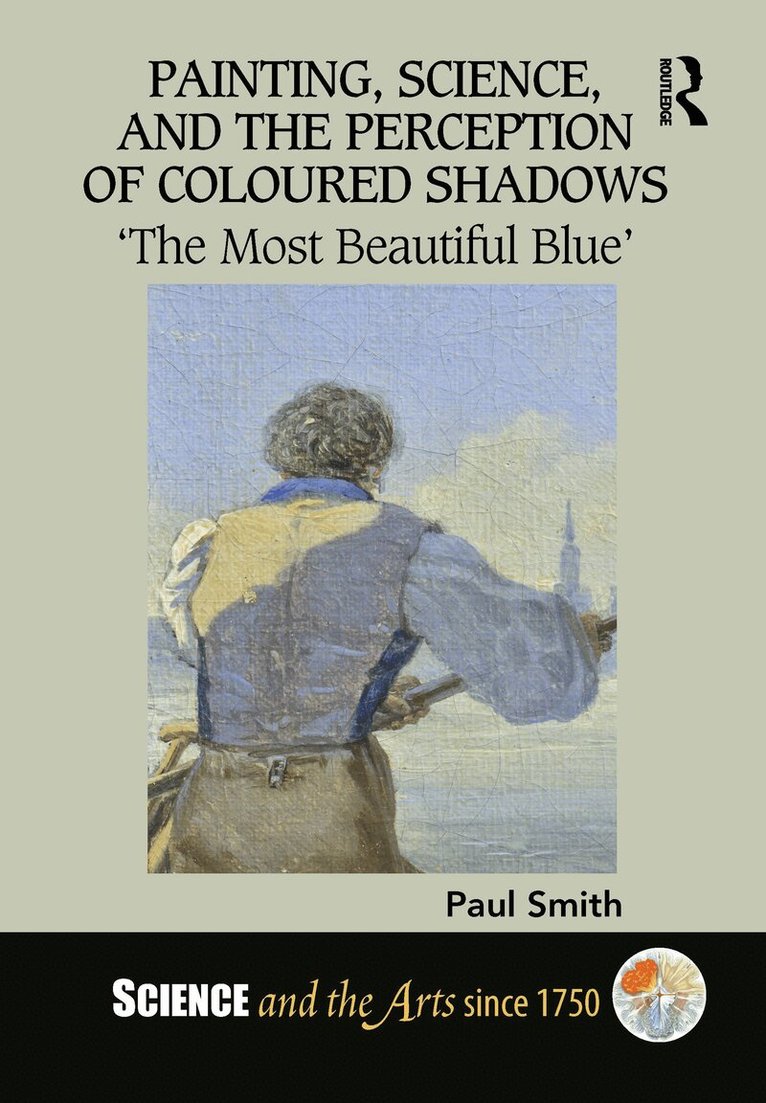
Many artists and scientists – including Buffon, Goethe, and Philipp Otto Runge – who observed the vividly coloured shadows that appear outdoors around dawn and dusk, or indoors when a candle burns under waning daylight, chose to describe their colours as ‘beautiful’. Paul Smith explains what makes these ephemeral effects worthy of such appreciation – or how depictions of coloured shadows have genuine aesthetic and epistemological significance. This multidisciplinary book synthesises methodologies drawn from art history (close pictorial analysis), psychology and neuroscience (theories of colour constancy), history of science (the changing paradigms used to explain coloured shadows), and philosophy (theories of perception and aesthetic value drawn from Wittgenstein and Merleau-Ponty). This title will be of interest to scholars in art history, art theory, and the history of science and technology.
Häftad, Engelska, 2020
671 kr
Skickas inom 10-15 vardagar
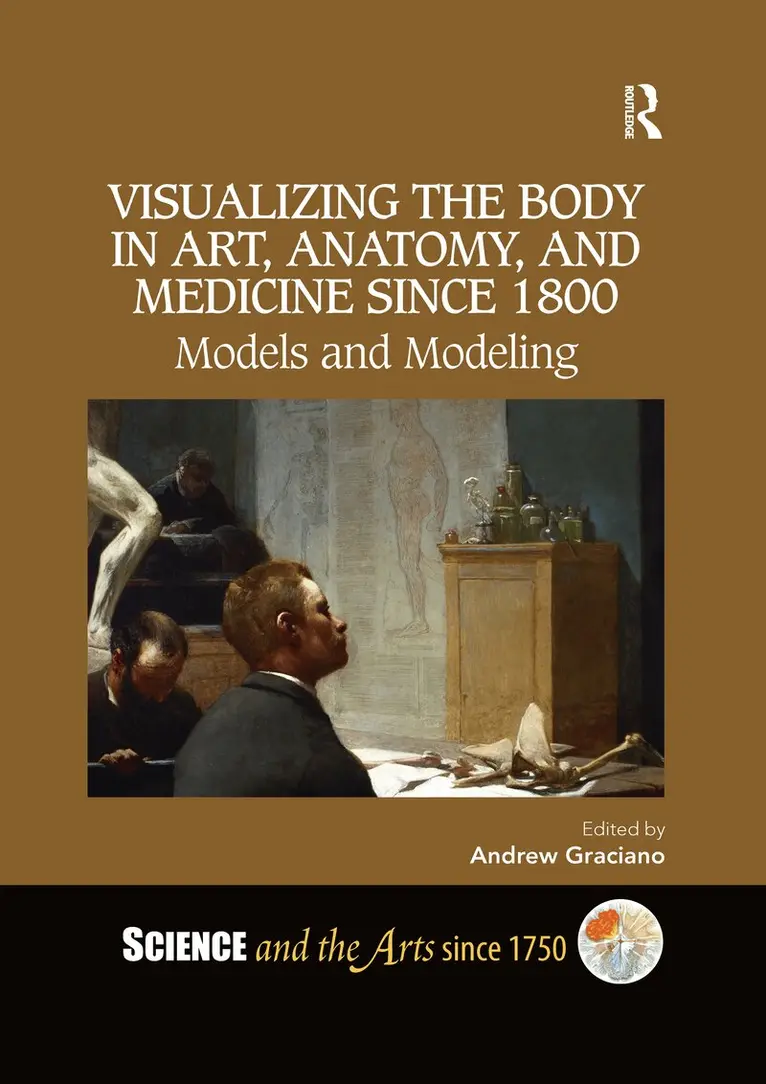
This book expands the art historical perspective on art’s connection to anatomy and medicine, bringing together in one text several case studies from various methodological perspectives. The contributors focus on the common visual and bodily nature of (figural) art, anatomy, and medicine around the central concept of modeling (posing, exemplifying and fabricating). Topics covered include the role of anatomical study in artistic training, the importance of art and visual literacy in anatomical/medical training and in the dissemination (via models) of medical knowledge/information, and artistic representations of the medical body in the contexts of public health and propaganda.
Inbunden, Engelska, 2023
2 316 kr
Skickas inom 10-15 vardagar
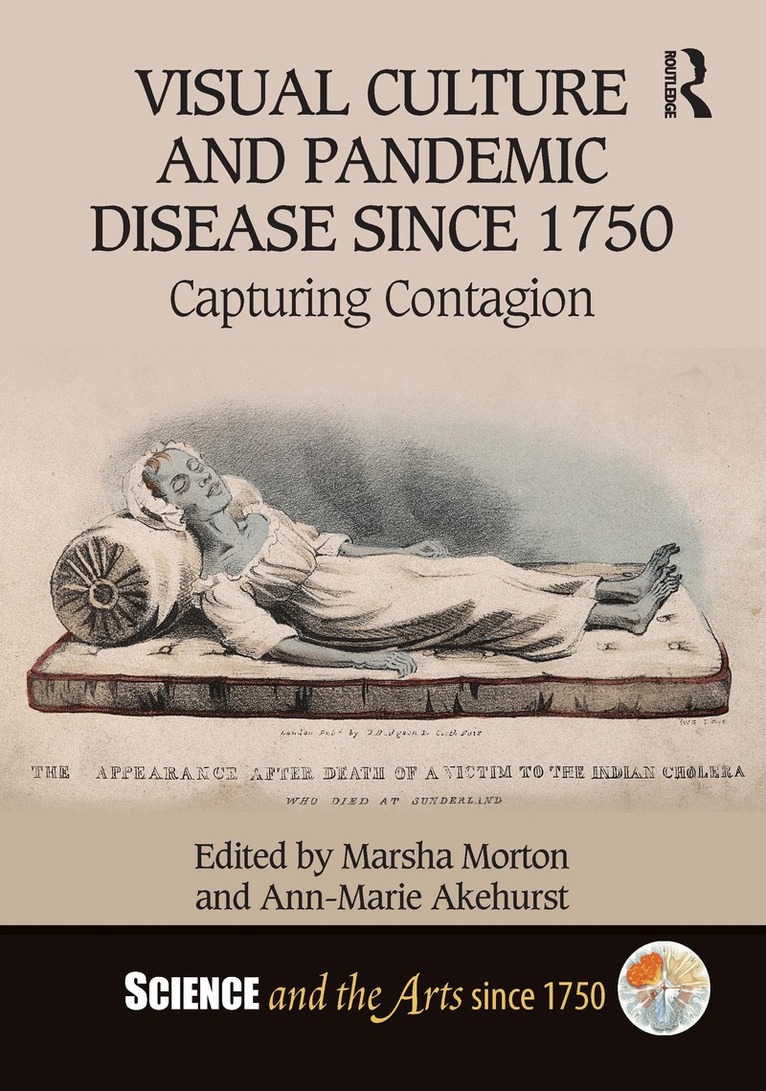
Through case studies, this book investigates the pictorial imaging of epidemics globally, especially from the late eighteenth century through the 1920s when, amidst expanding Western industrialism, colonialism, and scientific research, the world endured a succession of pandemics in tandem with the rise of popular visual culture and new media. Images discussed range from the depiction of people and places to the invisible realms of pathogens and emotions, while topics include the messaging of disease prevention and containment in public health initiatives, the motivations of governments to ensure control, the criticism of authority in graphic satire, and the private experience of illness in the domestic realm. Essays explore biomedical conditions as well as the recurrent constructed social narratives of bias, blame, and othering regarding race, gender, and class that are frequently highlighted in visual representations. This volume offers a pictured genealogy of pandemic experience that has continuing resonance. The book will be of interest to scholars working in art history, visual studies, history of medicine, and medical humanities.
Häftad, Engelska, 2024
656 kr
Skickas inom 10-15 vardagar
Through case studies, this book investigates the pictorial imaging of epidemics globally, especially from the late eighteenth century through the 1920s when, amidst expanding Western industrialism, colonialism, and scientific research, the world endured a succession of pandemics in tandem with the rise of popular visual culture and new media. Images discussed range from the depiction of people and places to the invisible realms of pathogens and emotions, while topics include the messaging of disease prevention and containment in public health initiatives, the motivations of governments to ensure control, the criticism of authority in graphic satire, and the private experience of illness in the domestic realm. Essays explore biomedical conditions as well as the recurrent constructed social narratives of bias, blame, and othering regarding race, gender, and class that are frequently highlighted in visual representations. This volume offers a pictured genealogy of pandemic experience that has continuing resonance. The book will be of interest to scholars working in art history, visual studies, history of medicine, and medical humanities.
Häftad, Engelska, 2023
570 kr
Skickas inom 10-15 vardagar
This book reveals how, when, where, and why vitalism and its relationship to new scientific theories, philosophies and concepts of energy became seminal from the fin de siècle until the Second World War for such Modernists as Sophie Taeuber-Arp, Hugo Ball, Juliette Bisson, Eva Carrière, Salvador Dalì, Robert Delaunay, Marcel Duchamp, Edvard Munch, Picasso, Yves Tanguy, Gino Severini and John Cage. For them, Vitalism entailed the conception of life as a constant process of metamorphosis impelled by the free flow of energies, imaginings, intuition and memories, unconstrained by mechanistic materialism and chronometric imperatives, to generate what the philosopher Henri Bergson aptly called Creative Evolution.Following the three main dimensions of Vitalist Modernism, the first part of this book reveals how biovitalism at the fin de siècle entailed the pursuit of corporeal regeneration through absorption in raw nature, wholesome environments, aquatic therapies, electromagnetism, heliotherapy, modern sports, particularly rugby, water sports, the Olympic Games and physical culture to energize the human body and vitalize its life force. This is illuminated by artists as geoculturally diverse as Gustave Caillebotte, Thomas Eakins, Munch and Albert Gleizes. The second part illuminates how simultaneously Vitalism became aligned with anthroposophy, esotericism, magnetism, occultism, parapsychology, spiritism, theosophy and what Bergson called "psychic states", alongside such new sciences as electromagnetism, radiology and the Fourth Dimension, as captured by such artists as Juliette Bisson, Giacomo Balla, Albert Besnard, Umberto Boccioni, Eva Carrière, John Gerrard Keulemans, László Moholy-Nagy, James Tissot, Albert von Schrenck Notzing and Picasso. During and after the devastation of the First World War, the third part explores how Vitalism, particularly Bergson’s theory of becoming, became associated with Dadaist, Neo-Dadaist and Surrealist notions of amorality, atemporality, dysfunctionality, entropy, irrationality, inversion, negation and the nonsensical captured by Hans Arp, Charlie Chaplin, Theo Van Doesburg, Kazimir Malevich, Kurt Schwitters and Vladimir Tatlin alongside Cage’s concept of Nothing. After investigating the widespread engagement with Bergson’s philosophies and Vitalism and art by Anarchists, Marxists and Communists during and after the First World War, it concludes with the official rejection of Bergson and any form of Vitalism in the Soviet Union under Stalin. This book will be of vital interest to gallery, exhibition and museum curators and visitors, plus readers and scholars working in art history, art theory, cultural studies, modernist studies, occult studies, European art and literature, health, histories of science, philosophy, psychology, sociology, sport studies, heritage studies, museum studies and curatorship.
Inbunden, Engelska, 2025
2 244 kr
Skickas inom 10-15 vardagar
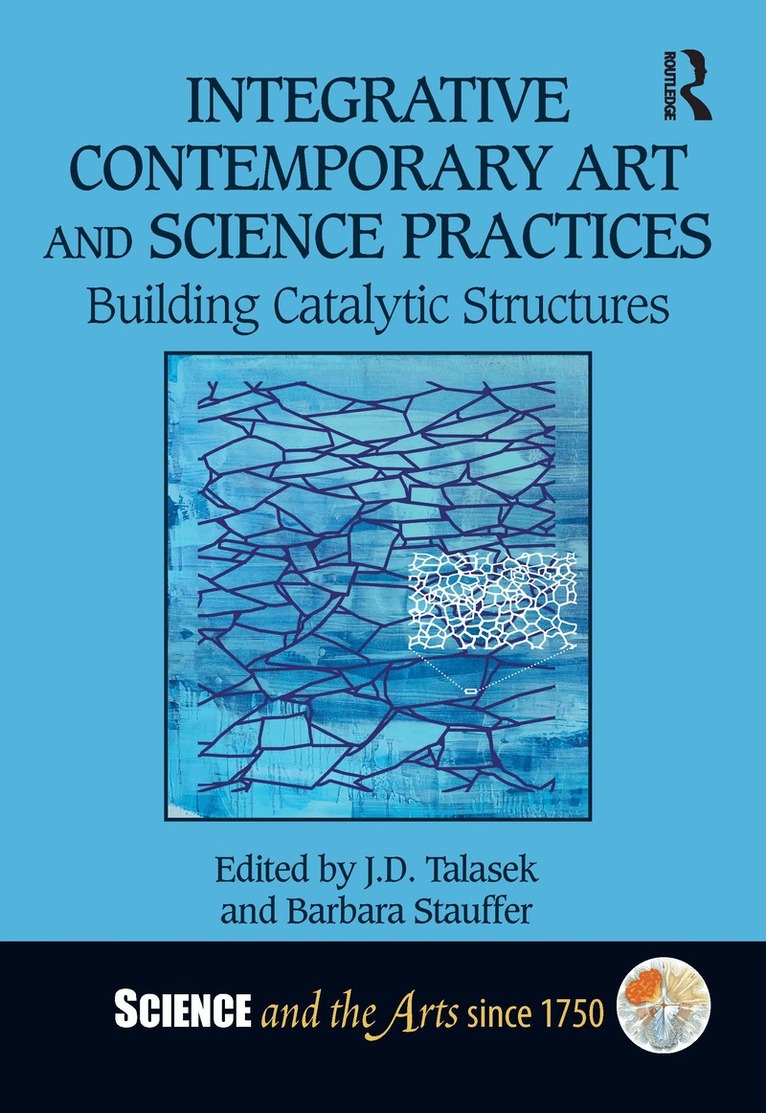
Contributors investigate the motivation behind scientifically-embedded contemporary art practices as well as art-based scientific research and engagement that attempt to shape society. This edited volume reflects the rapidly developing practices comprising integrative and collaborative work across different knowledge domains (including art and science), the benefit of those processes to the individual, to knowledge production (and its complexity) and ultimately the benefits to society (why it is worth doing). The book will provide an overview of the factors in which the exhibition and performance of scientifically-engaged art inside and outside of traditional museum spaces has instigated cultural and aesthetic transformations and social interactions while presenting a variety of opportunities for educators, scientists, artists and the interested public to critically expand its engagement. The book is intended for scholars interested in collaborative and/or integrative work who study research, methodology, art history, science, and museum studies.
Häftad, Engelska, 2019
671 kr
Skickas inom 10-15 vardagar
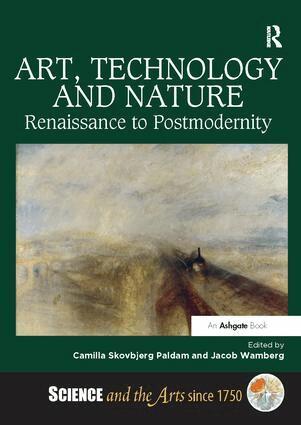
Since 1900, the connections between art and technology with nature have become increasingly inextricable. Through a selection of innovative readings by international scholars, this book presents the first investigation of the intersections between art, technology and nature in post-medieval times. Transdisciplinary in approach, this volume’s 14 essays explore art, technology and nature’s shifting constellations that are discernible at the micro level and as part of a larger chronological pattern. Included are subjects ranging from Renaissance wooden dolls, science in the Italian art academies, and artisanal epistemologies in the followers of Leonardo, to Surrealism and its precursors in Mannerist grotesques and the Wunderkammer, eighteenth-century plant printing, the climate and its artistic presentations from Constable to Olafur Eliasson, and the hermeneutics of bioart. In their comprehensive introduction, editors Camilla Skovbjerg Paldam and Jacob Wamberg trace the Kantian heritage of radically separating art and technology, and inserting both at a distance to nature, suggesting this was a transient chapter in history. Thus, they argue, the present renegotiation between art, technology and nature is reminiscent of the ancient and medieval periods, in which art and technology were categorized as aspects of a common area of cultivated products and their methods (the Latin ars, the Greek techne), an area moreover supposed to imitate the creative forces of nature.
Inbunden, Engelska, 2021
2 179 kr
Skickas inom 10-15 vardagar
Many artists and scientists – including Buffon, Goethe, and Philipp Otto Runge – who observed the vividly coloured shadows that appear outdoors around dawn and dusk, or indoors when a candle burns under waning daylight, chose to describe their colours as ‘beautiful’. Paul Smith explains what makes these ephemeral effects worthy of such appreciation – or how depictions of coloured shadows have genuine aesthetic and epistemological significance. This multidisciplinary book synthesises methodologies drawn from art history (close pictorial analysis), psychology and neuroscience (theories of colour constancy), history of science (the changing paradigms used to explain coloured shadows), and philosophy (theories of perception and aesthetic value drawn from Wittgenstein and Merleau-Ponty). This title will be of interest to scholars in art history, art theory, and the history of science and technology.
Inbunden, Engelska, 2019
2 244 kr
Skickas inom 10-15 vardagar
This book expands the art historical perspective on art’s connection to anatomy and medicine, bringing together in one text several case studies from various methodological perspectives. The contributors focus on the common visual and bodily nature of (figural) art, anatomy, and medicine around the central concept of modeling (posing, exemplifying and fabricating). Topics covered include the role of anatomical study in artistic training, the importance of art and visual literacy in anatomical/medical training and in the dissemination (via models) of medical knowledge/information, and artistic representations of the medical body in the contexts of public health and propaganda.
Häftad, Engelska, 2018
729 kr
Skickas inom 10-15 vardagar
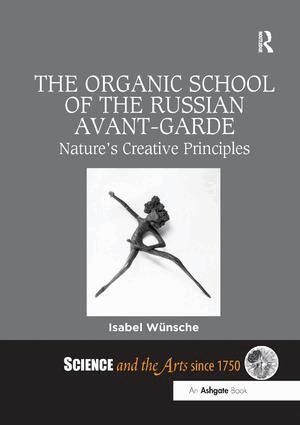
The artists of the Organic School of the Russian avant-garde found inspiration as well as a model for artistic growth in the creative principles of nature. Isabel Wünsche analyzes the artistic influences, intellectual foundations, and scientific publications that shaped the formation of these artists, the majority of whom were based in St. Petersburg. Particular emphasis is given to the holistic worldviews and organic approaches prevalent among artists of the pre-revolutionary avant-garde, specifically Jan Ciągliński, Nikolai Kulbin, and Elena Guro, as well as the emergence of the concept of Organic Culture as developed by Mikhail Matiushin, practiced at the State Institute of Artistic Culture, and taught at the reformed Art Academy in the 1920s. Discussions of faktura and creative intuition explore the biocentric approaches that dominated the work of Pavel Filonov, Kazimir Malevich, Voldemar Matvejs, Olga Rozanova, and Vladimir Tatlin. The artistic approaches of the Organic School of the Russian avant-garde were further promoted and developed by Vladimir Sterligov and his followers between 1960 and 1990. The study examines the cultural potential as well as the utopian dimension of the artists’ approaches to creativity and their ambitious visions for the role of art in promoting human psychophysiological development and shaping post-revolutionary culture.
Inbunden, Engelska, 2016
2 532 kr
Skickas inom 10-15 vardagar
The rise of proxy wars, the Space Race, and cybernetics during the Cold War marked science and technology as vital sites of social and political power. Women artists, historically excluded from these domains, responded critically, while simultaneously redeploying the products of "Technological Society" into works that promoted ideals of progress and alternative concepts of human community. In this innovative book, author Christine Filippone offers the first focused examination of the conceptual use of science and technology by women artists during and just after the women’s movement. She argues that artists Alice Aycock, Agnes Denes, Martha Rosler and Carolee Schneemann used science and technology to mount a critique on Cold War American society as they saw it—conservative and constricting. Motivated by the contemporary American Women’s Movement, these artists transformed science and technology into new modes of artmaking that transgressed modernist, heroic, painterly styles and subverted the traditional economic structures of the gallery, the museum and the dealer. At the same time, the artists also embraced these domains of knowledge and practice as expressions of hope for a better future. Many found inspiration in the scientific theory of open systems, which investigated "problems of wholeness, dynamic interaction and organization", enabling consideration of the porous boundaries between human bodies and their social, political and nonhuman environments. Filippone also establishes that the theory of open systems not only informed feminist art, but also continued to influence women artists’ practice of reclamation and ecological art through the twenty-first century.
Inbunden, Engelska, 2017
2 244 kr
Skickas inom 10-15 vardagar
The Victorian era heralded an age of transformation in which momentous changes in the field of natural history coincided with the rise of new visual technologies. Concurrently, different parts of the British Empire began to more actively claim their right to being acknowledged as indispensable contributors to knowledge and the progress of empire. This book addresses the complex relationship between natural history and photography from the 1850s to the 1880s in Britain and its colonies: Australia, New Zealand and, to a lesser extent, India. Coinciding with the rise of the modern museum, photography’s arrival was timely, and it rapidly became an essential technology for recording and publicising rare objects and valuable collections. Also during this period, the medium assumed a more significant role in the professional practices and reputations of naturalists than has been previously recognized, and it figured increasingly within the expanding specialized networks that were central to the production and dissemination of new knowledge. In an interrogation that ranges from the first forays into museum photography and early attempts to document collecting expeditions to the importance of traditional and photographic portraiture for the recognition of scientific discoveries, this book not only recasts the parameters of what we actually identify as natural history photography in the Victorian era but also how we understand the very structure of empire in relation to this genre at that time.
Inbunden, Engelska, 2015
2 244 kr
Skickas inom 10-15 vardagar
The artists of the Organic School of the Russian avant-garde found inspiration as well as a model for artistic growth in the creative principles of nature. Isabel Wünsche analyzes the artistic influences, intellectual foundations, and scientific publications that shaped the formation of these artists, the majority of whom were based in St. Petersburg. Particular emphasis is given to the holistic worldviews and organic approaches prevalent among artists of the pre-revolutionary avant-garde, specifically Jan Ciągliński, Nikolai Kulbin, and Elena Guro, as well as the emergence of the concept of Organic Culture as developed by Mikhail Matiushin, practiced at the State Institute of Artistic Culture, and taught at the reformed Art Academy in the 1920s. Discussions of faktura and creative intuition explore the biocentric approaches that dominated the work of Pavel Filonov, Kazimir Malevich, Voldemar Matvejs, Olga Rozanova, and Vladimir Tatlin. The artistic approaches of the Organic School of the Russian avant-garde were further promoted and developed by Vladimir Sterligov and his followers between 1960 and 1990. The study examines the cultural potential as well as the utopian dimension of the artists’ approaches to creativity and their ambitious visions for the role of art in promoting human psychophysiological development and shaping post-revolutionary culture.
Inbunden, Engelska, 2015
1 284 kr
Tillfälligt slut
Since 1900, the connections between art and technology with nature have become increasingly inextricable. Through a selection of innovative readings by international scholars, this book presents the first investigation of the intersections between art, technology and nature in post-medieval times. Transdisciplinary in approach, this volume’s 14 essays explore art, technology and nature’s shifting constellations that are discernible at the micro level and as part of a larger chronological pattern. Included are subjects ranging from Renaissance wooden dolls, science in the Italian art academies, and artisanal epistemologies in the followers of Leonardo, to Surrealism and its precursors in Mannerist grotesques and the Wunderkammer, eighteenth-century plant printing, the climate and its artistic presentations from Constable to Olafur Eliasson, and the hermeneutics of bioart. In their comprehensive introduction, editors Camilla Skovbjerg Paldam and Jacob Wamberg trace the Kantian heritage of radically separating art and technology, and inserting both at a distance to nature, suggesting this was a transient chapter in history. Thus, they argue, the present renegotiation between art, technology and nature is reminiscent of the ancient and medieval periods, in which art and technology were categorized as aspects of a common area of cultivated products and their methods (the Latin ars, the Greek techne), an area moreover supposed to imitate the creative forces of nature.