SCOPE Series – serie
Visar alla böcker i serien SCOPE Series. Handla med fri frakt och snabb leverans.
10 produkter
Invasive Alien Species
A New Synthesis
Av Harold A. Mooney, Richard Mack m. fl.
Häftad, 2005
423 kr
Lägg i varukorg
Invasive alien species are among today's most daunting environmental threats, costing billions of dollars in economic damages and wreaking havoc on ecosystems around the world. In 1997, a consortium of scientific organizations including SCOPE, IUCN, and CABI developed the Global Invasive Species. …
Silicon Cycle
Human Perturbations and Impacts on Aquatic Systems
Av Venugopalan Ittekkot, Daniela Unger m. fl.
Häftad, 2006
576 kr
Lägg i varukorg
Silicon is among the most abundant elements on earth. It plays a key but largely unappreciated role in many biogeochemical processes, including those that regulate climate and undergird marine food webs. "The Silicon Cycle" is the first book in more than 20 years to present a comprehensive overview …
Sustainability Indicators
A Scientific Assessment
Av TomAs HAk, Bedrich Moldan m. fl.
Häftad, 2007
678 kr
Lägg i varukorg
While the concept of sustainability has been widely embraced, it has been only vaguely defined and is exceedingly difficult to measure. Sustainability indicators are critical to making the broad concept of sustainability operational by providing specific measures by which decision makers and the …
Communicating Global Change Science to Society
An Assessment and Case Studies
Av Scope, Holm Tiessen m. fl.
Häftad, 2007
602 kr
Lägg i varukorg
The Scientific Committee on Problems of the Environment (SCOPE) was established by the International Council for Science (ICSU) in 1969, to bring together natural and social scientists to identify emerging or potential environmental issues and to address jointly the nature and solution of global …
Interactions of the Major Biogeochemical Cycles
Global Change And Human Impacts
Av Scope, Jerry M. Melillo m. fl.
Häftad, 2003
449 kr
Tillfälligt slut
The circulation and interactions of major elements such as carbon, nitrogen, phosphorus, sulphur, oxygen, and hydrogen are critical for the maintenance of the earth's ecosystems. Human activities including agriculture, industry, and urbanization alter element interactions and contribute to major …
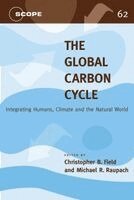
Global Carbon Cycle
Integrating Humans, Climate, and the Natural World
Av Christopher B. Field, Michael R. Raupach m. fl.
Häftad, 2004
593 kr
Tillfälligt slut
While a number of gases are implicated in global warming, carbon dioxide is the most important contributor, and in one sense the entire phenomena can be seen as a human-induced perturbation of the carbon cycle. The Global Carbon Cycle offers a scientific assessment of the state of current knowledge …
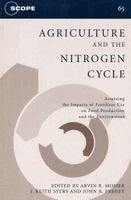
Agriculture and the Nitrogen Cycle
Assessing the Impacts of Fertilizer Use on Food Production and the Environment
Av Arvin Mosier, J. Keith Syers m. fl.
Häftad, 2004
525 kr
Tillfälligt slut
Nitrogen is an essential element for plant growth and development and a key agricultural input-but in excess it can lead to a host of problems for human and ecological health. Across the globe, distribution of fertilizer nitrogen is very uneven, with some areas subject to nitrogen pollution and …
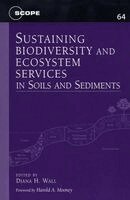
Sustaining Biodiversity and Ecosystem Services in Soils and Sediments
Av Scope, Diana H. Wall
Häftad, 2004
534 kr
Tillfälligt slut
Sustaining Biodiversity and Ecosystem Services in Soils and Sediments brings together the world's leading ecologists, systematists, and evolutionary biologists to present scien-tific information that integrates soil and sediment disciplines across terrestrial, marine, and freshwater ecosystems. It …
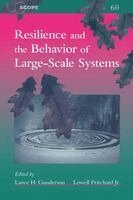
Resilience and the Behavior of Large-Scale Systems
Av Lance H. Gunderson, Lowell Pritchard m. fl.
Häftad, 2002
364 kr
Tillfälligt slut
Scientists and researchers concerned with the behaviour of large ecosystems have focused in recent years on the concept of "resilience". Traditional perspectives held that ecological systems exist close to a steady state and resilience is the ability of the system to return rapidly to that state …
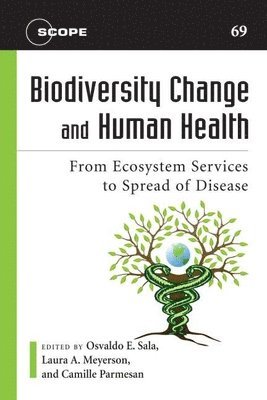
Biodiversity Change and Human Health
From Ecosystem Services to Spread of Disease
Av Scope, Osvaldo Sala m. fl.
Häftad, 2009
559 kr
Tillfälligt slut
Exploring the link between human well-being and the environment, "Biodiversity Change and Human Health" brings together leading experts from the natural science and social science realms as well as the medical community to explore the explicit linkages between human-driven alterations of …