Series in Positive Psychology - Böcker
Visar alla böcker i serien Series in Positive Psychology. Handla med fri frakt och snabb leverans.
7 produkter
7 produkter
1 420 kr
Skickas inom 5-8 vardagar
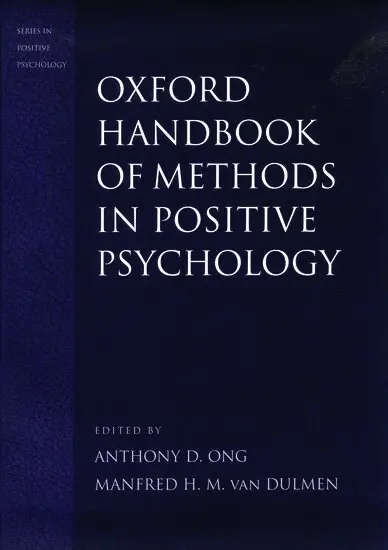
In the short time since the publication of the Handbook of Positive Psychology, research results on the psychology of human strengths have proliferated. However, no major volume has documented the methods and theory used to achieve these results. Oxford Handbook of Methods in Positive Psychology fills this need, providing a broad overview of diverse contemporary methods in positive psychology.With contributions from both leading scholars and promising young investigators, the handbook serves to illuminate and, at times, challenge traditional approaches. Incorporating multiple levels of analysis, from biology to culture, the contributors present state-of-the-art techniques, including those for estimating variability and change at the level of the individual, identifying reliability of measurements within and across individuals, and separating individual differences in growth from aspects of phenomena that exhibit shorter-term variability over time. The volume covers such topics as wisdom, health, hope, resilience, religion, relationships, emotions, well-being, character strengths, and laughter. It enhances our understanding of the balance between human deficits and strengths and demonstrated their connections to other problems.Oxford Handbook of Methods in Positive Psychology will be the essential reference for methods in positive psychology.
946 kr
Skickas inom 5-8 vardagar
A Life Worth Living brings together the latest thought on positive psychology from an international cast of scholars. It includes historical, philosophical, and empirical reviews of what psychologists have found to matter for personal happiness and well-being. The contributions to this volume agree on principles of optimal development that start from purely material and selfish concerns, but then lead to ever broader circles of responsibility embracing the goals of others and the well-being of the environment; on the importance of spirituality; on the development of strengths specific to the individual.Rather than material success, popularity, or power, the investigations reported in this volume suggest that personally constructed goals, intrinsic motivation, and a sense of autonomy are much more important. The chapters indicate that hardship and suffering do not necessarily make us unhappy, and they suggest therapeutical implications for improving the quality of life. Specific topics covered include the formation of optimal childhood values and habits as well as a new perspective on aging.This volume provides a powerful counterpoint to a mistakenly reductionist psychology. They show that subjective experience can be studied scientifically and measured accurately. They highlight the potentiality for autonomy and freedom that is among the most precious elements of the human condition. Moreover, they make a convincing case for the importance of subjective phenomena, which often affect happiness more than external, material conditions.After long decades during which psychologists seemed to have forgotten that misery is not the only option, the blossoming of Positive Psychology promises a better understanding of what a vigorous, meaningful life may consist of.
1 038 kr
Skickas inom 5-8 vardagar
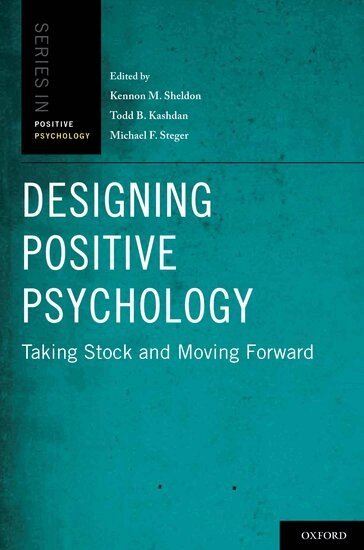
Positive psychology exploded into public consciousness 10 years ago and has continued to capture attention around the world ever since. The movement promised to study positive human nature, using only the most rigorous scientific tools and theories. How well has this promise been fulfilled? This book evaluates the first decade of this fledgling field of study from the perspective of nearly every leading researcher in the field. Scholars in the areas of social, personality, clinical, biological, emotional, and applied psychology take stock of their fields, while bearing in mind the original manifesto and goals of the postive psychology movement. They provide honest, critical evaluations of the flaws and untapped potential of their fields of study. The contributors design the optimal future of positive psychology by addressing gaps, biases, and methodological limitations, and exploring exciting new questions.
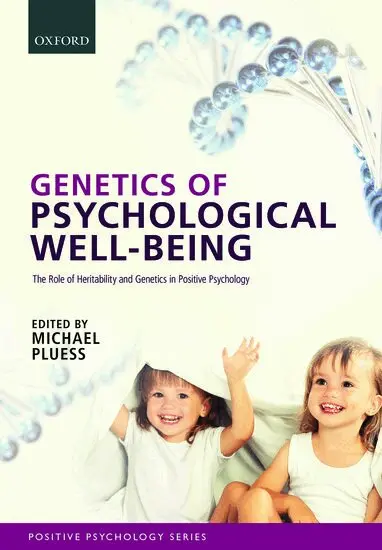
Genetics of Psychological Well-Being
The role of heritability and genetics in positive psychology
Häftad, Engelska, 2015
896 kr
Skickas inom 7-10 vardagar
'In the past decade there has been an explosion of research into the psychology of well-being. While we know that psychological well-being is partly heritable, it is only recently that researchers have started to investigate the specific genetic factors that influence well-being. Such research explores not only heritability, based on traditional twin study designs, but also includes studies combining some of the most recent molecular genetic techniques and methods.This landmark book summarizes the state of knowledge regarding heritability and molecular genetics in positive psychology. Divided into four parts, it starts by exploring the basics of genetics and associated research methodology, providing the reader with the knowledge required to understand the empirical work presented throughout the volume. The second part of the book focuses on heritability estimates of the most important positive psychology concepts based on quantitative behavioural genetics studies. In the third section of the book, results from more recent molecular genetics studies are presented including candidate gene, gene-environment interaction, as well as genome-wide association studies. This section also contains chapters on epigenetics and imaging genetics, both relatively new methodologies that are just about to make their way into the field of positive psychology. The fourth and final part of the book discusses more overarching questions regarding the roles of genes and environment in the development of well-being as well as a review and discussion of the current state of knowledge and future direction in this new field of inquiry.The first book of its kind, The Genetics of Psychological well-being is a major contribution to the positive psychology literature, and important for all those in the fields of positive psychology, psychiatric genetics, and well-being.
1 728 kr
Skickas inom 3-6 vardagar
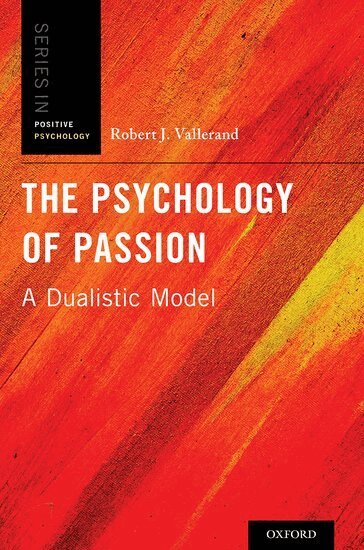
The concept of passion is one we regularly use to describe our interests, and yet there is no broad theory that can explain the development and consequences of passion for activities across people's lives. In The Psychology of Passion, Robert J. Vallerand presents the first such theory, providing a complete presentation of the Dualistic Model of Passion and the empirical evidence that supports it. Vallerand conceives of two types of passion: harmonious passion, which remains under the person's control, and obsessive passion, which controls the person. While the first typically leads to adaptive behaviors, the obsessive form of passion leads to less adaptive and, at times, maladaptive behaviors. Vallerand highlights the effects of these two types of passion on a number of psychological phenomena, such as cognition, emotions, performance, relationships, aggression, and violence. He also discusses the development of passion and reviews a range of literature on passion for activities.
963 kr
Skickas inom 5-8 vardagar
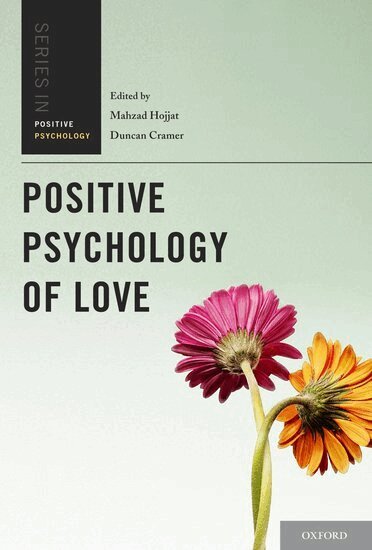
Many topics within the study of close relationships are relevant to positive psychology, such as love, friendship, social support, and forgiveness. However, very little has been done to specifically connect and thus expand these two interrelated and rapidly growing fields. Positive Psychology of Love fills this void by bringing together the latest research and theory in the field of close relationships from a positive psychology point of view, suggesting how we can have more fulfilling close and intimate relationships and how these relationships may enhance our lives. Each of the chapters focuses on a different aspect of close and intimate relationships as related to positive psychology, such as romantic love, friendship, positive emotions, sexuality, attachment, communication, forgiveness, conflict resolution, self-esteem, relational maintenance, mental health, physical health, and culture. International contributors from a variety of disciplines explore how these areas of close relationships relate to positive psychology, and how close relationships function as an important aspect of our personal health, growth, happiness, and well-being. This unique and fascinating approach will be of interest to researchers, educators, and students in a number of fields including psychology, sociology, counseling, social work, communication, family studies, marriage and family therapy, and nursing.
1 200 kr
Skickas inom 5-8 vardagar
The field of positive psychology has blossomed over the past several years. A positive psychology course has become the most popular elective at Harvard, and leaders in many fields regularly draw upon concepts and strategies from the field's growing body of research. Because positive psychology provides a framework for enhancing individual, group, and institutional well-being, it is particularly relevant for college campuses, which are ripe for such strength-based interventions. Positive Psychology on the College Campus provides innovative strategies that can be employed with students to enhance both their personal development and educational experiences. The book also provides an overview of the state of college students' mental health and relevant developmental issues. Individual chapters, all written by experts in their fields, describe practical strategies for readers to use with students. Additionally, the authors explain how positive psychology can be applied in general to the college experience. With its wide-ranging topics and distinguished contributors, Positive Psychology on the College Campus is a must-have resource for all those who work with college students, including faculty, academic advisors, administrators, residence-life staff, counselors, and student-activities staff.