Artificial Intelligence, Simulation and Society – serie
Visar alla böcker i serien Artificial Intelligence, Simulation and Society. Handla med fri frakt och snabb leverans.
9 produkter
9 produkter
Inbunden, Engelska, 2024
549 kr
Skickas inom 5-8 vardagar
This open access novel uses fantasy and romance to pique readers' interest in understanding how AI technologies can be used for social justice across very different political and social terrains. Can you truly reach out to somebody who is in every aspect the direct opposite of yourself? Gabriel and Tilda, the two protagonists of this futuristic novel, are very different people. They work at a Berlin-based international aid company, and the only thing they can agree on is that the world is in a shambles: Scarce public resources, conflict and crises, inequalities, religious and socio-cultural belief systems that cement social injustice, have created a world as deeply divided and set apart as Gabriel and Tilda. They are sent on company business to recruit international partners for a social development project on global justice, and start travelling the world together. On their adventurous journey through many countries, they learn about the impacts of culture on social welfare systems, while trying to define their own relationship, which is intermingled with generational power games and milieu-specific worldview struggles. In Gabriel and Tilda’s attempts to bridge the deep gulf between their personalities, the novel creates a metaphor for finding a cohesive model of global justice using artificial intelligence that can integrate highly contextualized, national value cultures. Gabriel and Tilda are supported by two guardian angels: Assigned to save the planet through interpersonal and intercultural integration, the angels GA and TA team up with English Benedictine monk and mystic guru Bede Griffiths who is very keen to help Tilda and Gabriel in their model pilot of unlikely love.
Häftad, Engelska, 2025
404 kr
Skickas inom 10-15 vardagar
This open access novel uses fantasy and romance to pique readers' interest in understanding how AI technologies can be used for social justice across very different political and social terrains. Can you truly reach out to somebody who is in every aspect the direct opposite of yourself? Gabriel and Tilda, the two protagonists of this futuristic novel, are very different people. They work at a Berlin-based international aid company, and the only thing they can agree on is that the world is in a shambles: Scarce public resources, conflict and crises, inequalities, religious and socio-cultural belief systems that cement social injustice, have created a world as deeply divided and set apart as Gabriel and Tilda. They are sent on company business to recruit international partners for a social development project on global justice, and start travelling the world together. On their adventurous journey through many countries, they learn about the impacts of culture on social welfare systems, while trying to define their own relationship, which is intermingled with generational power games and milieu-specific worldview struggles. In Gabriel and Tilda’s attempts to bridge the deep gulf between their personalities, the novel creates a metaphor for finding a cohesive model of global justice using artificial intelligence that can integrate highly contextualized, national value cultures. Gabriel and Tilda are supported by two guardian angels: Assigned to save the planet through interpersonal and intercultural integration, the angels GA and TA team up with English Benedictine monk and mystic guru Bede Griffiths who is very keen to help Tilda and Gabriel in their model pilot of unlikely love.
Inbunden, Engelska, 2025
548 kr
Skickas inom 10-15 vardagar
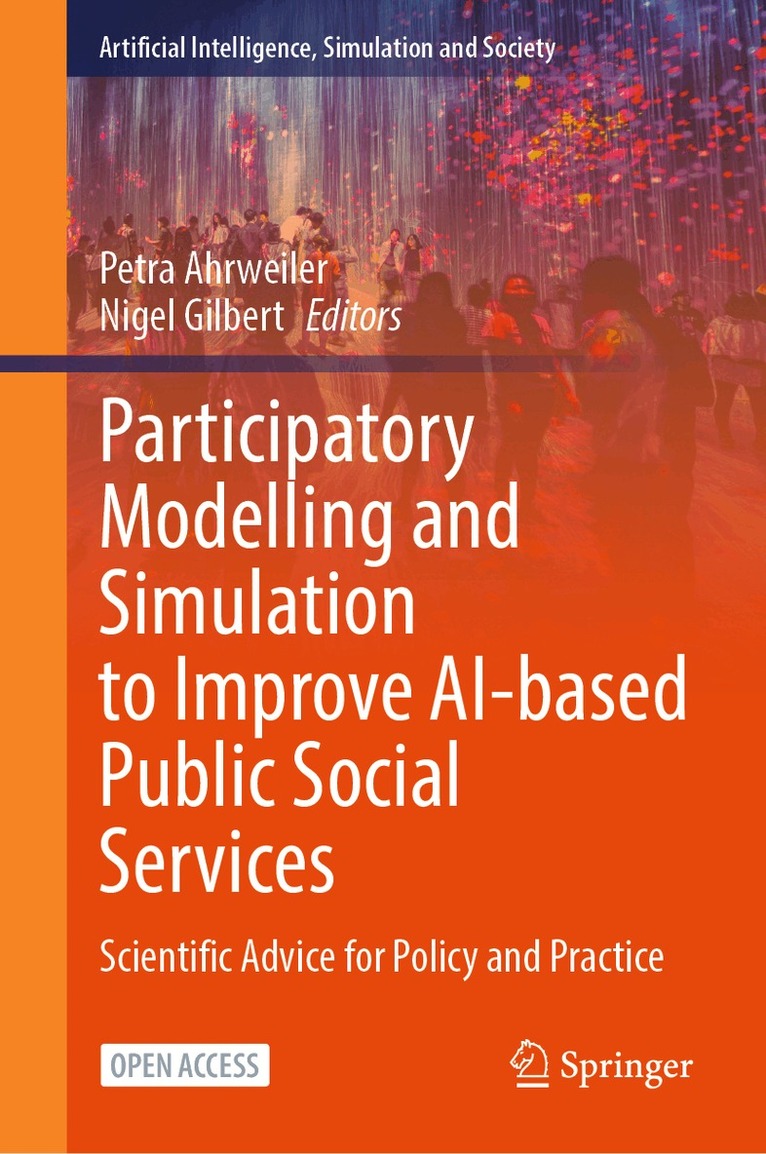
This open access edited volume focuses on fairness issues concerning the use of artificial intelligence (AI) for social service provision in national welfare systems. With this, it touches upon important questions in the innovation agenda of countries across continents about the ethics, justice, quality, responsibility, accountability, and transparency to use AI for state functions. The volume shows that in many countries, AI, or at least data analytics methods, are already in place to support the assessment of beneficiaries for deciding on the value criteria to distinguish between legal /fraudulent, deserving/non-deserving, or needy/non-needy recipients. The book provides a cross-cultural comparison of AI-based social assessment among national welfare systems of 9 countries across 4 continents: Spain, Estonia, Germany, Iran, India, Nigeria, Ukraine, China and USA. Based on participatory research results from multi-stakeholder inputs, especially those from vulnerable groups, the chapters in this volume show that value criteria for fairness and social justice are context-bound and vary across the globe. Furthermore, they are in constant flux, aligned to social change. Thus, the volume looks at pathways to developing culture-sensitive, responsive and participatory AI for social assessment in public service provision. The contributions are interdisciplinary and introduce perspectives from the fields of sociology, computational social science, computer science and public policy. This topical volume is of interest to a wide readership.
Inbunden, Engelska, 2025
1 523 kr
Skickas inom 10-15 vardagar
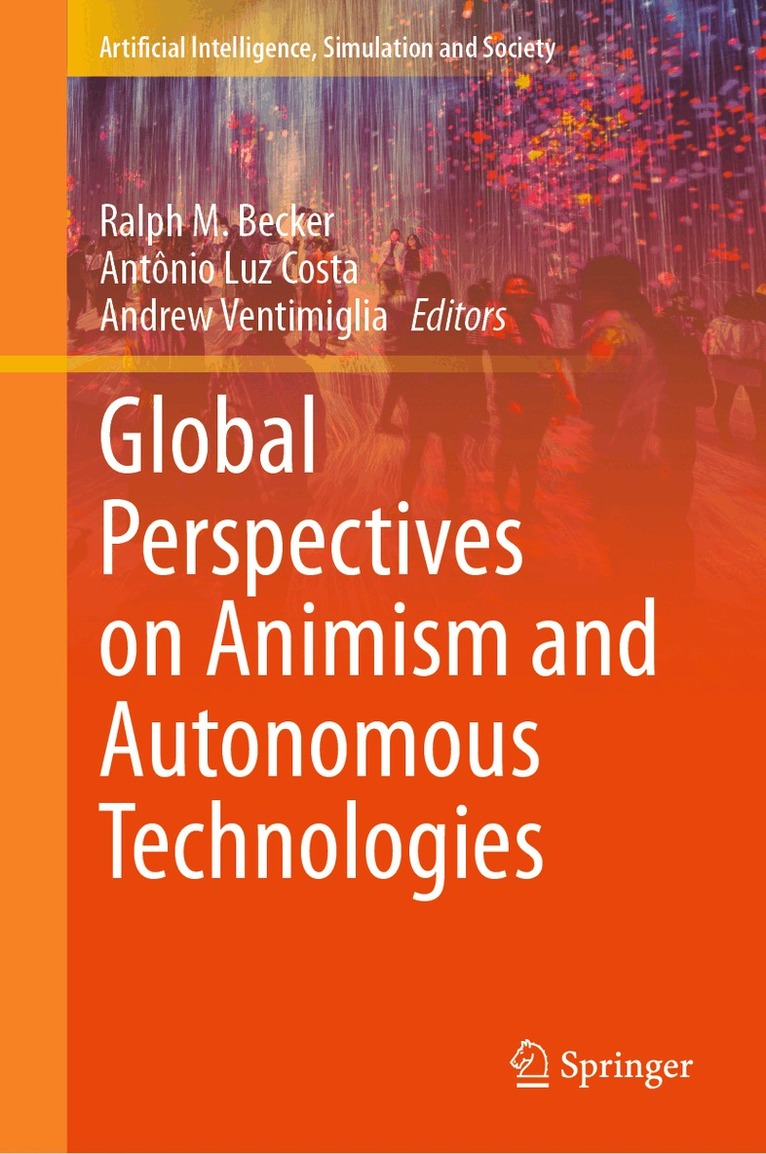
This volume provides a timely analysis of the emerging phenomenon of autonomous technology, a topic of intense contemporary importance given the transformative potential and risks posed by rapidly developing AI systems. It utilizes a unique approach by focusing on the ways that these technologies can be understood via the lens of animism and ‘techno-animism,’ a term that denotes how society and individual users are attributing life-like properties – agency, intention, and will – to technological systems. The volume further interrogates and critiques the ways that autonomous technologies are often intentionally designed to promote socioemotional connections with users. The volume investigates such technologies through a variety of global settings and interdisciplinary lenses. With contributions from scholars across anthropology, sociology, communication studies, law, and design theory, it offers a range of perspectives on how autonomous technologies are reshaping cultural and social institutions worldwide. Furthermore, this collection addresses the urgent need for concrete research on the readiness of legal and social frameworks to incorporate autonomous technologies. With the imminent widespread integration of autonomous technologies into our everyday lives, the volume provides a critical examination of human-technology interaction and its immediate implications, guiding readers through the intricate web of digital interconnectedness that is on course to define the future of humanity.
Häftad, Engelska, 2026
1 523 kr
Skickas inom 10-15 vardagar
This volume provides a timely analysis of the emerging phenomenon of autonomous technology, a topic of intense contemporary importance given the transformative potential and risks posed by rapidly developing AI systems. It utilizes a unique approach by focusing on the ways that these technologies can be understood via the lens of animism and ‘techno-animism,’ a term that denotes how society and individual users are attributing life-like properties – agency, intention, and will – to technological systems. The volume further interrogates and critiques the ways that autonomous technologies are often intentionally designed to promote socioemotional connections with users. The volume investigates such technologies through a variety of global settings and interdisciplinary lenses. With contributions from scholars across anthropology, sociology, communication studies, law, and design theory, it offers a range of perspectives on how autonomous technologies are reshaping cultural and social institutions worldwide. Furthermore, this collection addresses the urgent need for concrete research on the readiness of legal and social frameworks to incorporate autonomous technologies. With the imminent widespread integration of autonomous technologies into our everyday lives, the volume provides a critical examination of human-technology interaction and its immediate implications, guiding readers through the intricate web of digital interconnectedness that is on course to define the future of humanity.
Inbunden, Engelska, 2025
1 090 kr
Skickas inom 10-15 vardagar
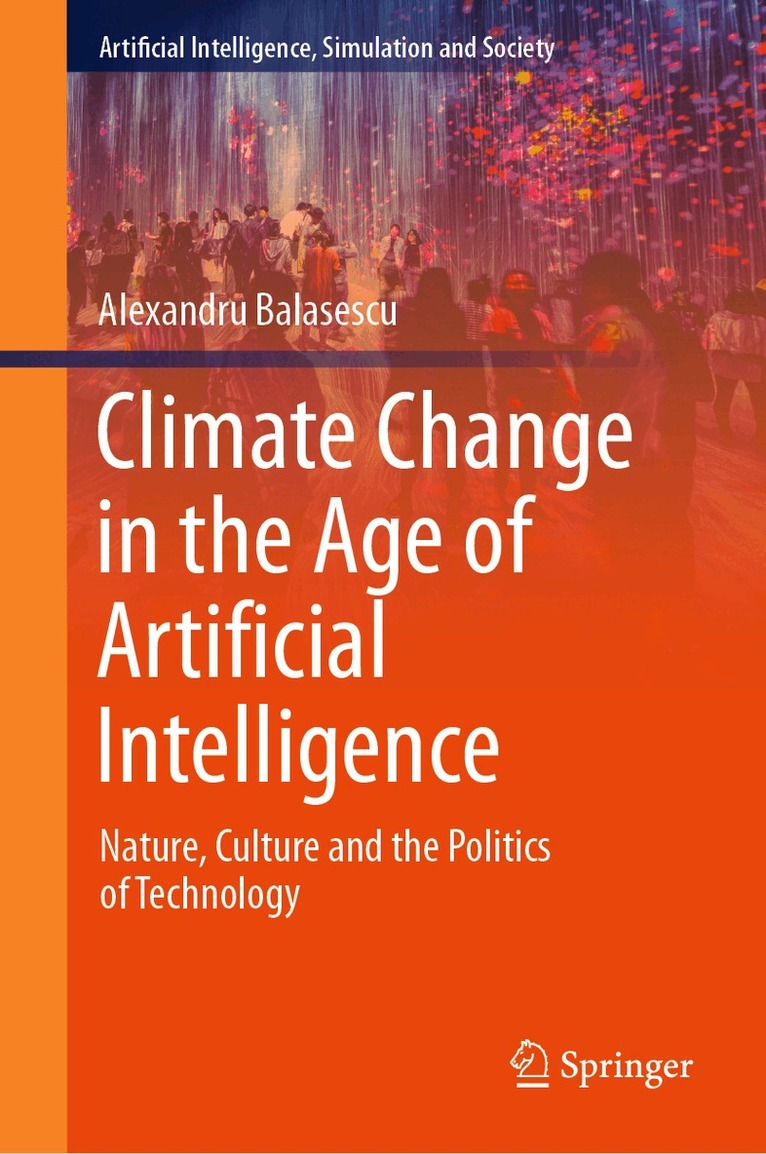
This book invites the reader to follow seemingly unrelated paths towards the same goal: making sense of what it means to be human in a world that casually blends discourses on nature, technology, and biology with ideas of progress, optimization and their capitalization at the centre. The author critically analyses current thinking which often looks at technological solutions to the challenges posed by climate change, and where artificial intelligence is instrumental in fulfilling the promise of ecological capitalism. He instead advocates that we take a closer look at the politics of optimization within and outside managerial perspectives, which could reveal that one of the main sources of our repeated failures related to governance and climate change lies not intrinsically in the qualities of the tools we use, but in the underlying assumptions with which we design, and in the scope of their use. Therefore, the book looks at possible solutions for humanity that may lie between the rock of technology and the hard place of nature. That is, it asks for a revision in our implicit assumptions for building our tools; critiques the thinking about our relationships with them; and re-assesses their use. Richly documented, imaginatively argued, and captivatingly written, this book explores unexpected entanglements of nature, culture, and technology that emerge in A.I.’s unruly and unforeseen trajectories.- George Paul Meiu, Professor of Anthropology, University of Basel Balasescu develops wide-ranging thick-descriptions that provocatively draw together lotus flowers and data banks, snakes and algorithms to delve into how bodies, cultures and power are invisibly ensconced in every aspect of the digital realm.- Susan Ossman, Distinguished Professor of Anthropology, University of California Riverside This important work traces the evolution and development of the paradigms that made artificial intelligence possible and perhaps even inevitable.- Guy Nasmyth, Associate faculty, Royal Roads University Alec Balasescu skillfully broadens our horizons for not just nuanced thinking and diverse ways of knowing, but in a fast-changing landscape how we might more consciously choose to act and relate to nature.- Wanda Krause, award-winning author, program head Global Leadership and associate professor, Royal Roads University
Häftad, Engelska, 2026
1 090 kr
Skickas inom 10-15 vardagar
This book invites the reader to follow seemingly unrelated paths towards the same goal: making sense of what it means to be human in a world that casually blends discourses on nature, technology, and biology with ideas of progress, optimization and their capitalization at the centre. The author critically analyses current thinking which often looks at technological solutions to the challenges posed by climate change, and where artificial intelligence is instrumental in fulfilling the promise of ecological capitalism. He instead advocates that we take a closer look at the politics of optimization within and outside managerial perspectives, which could reveal that one of the main sources of our repeated failures related to governance and climate change lies not intrinsically in the qualities of the tools we use, but in the underlying assumptions with which we design, and in the scope of their use. Therefore, the book looks at possible solutions for humanity that may lie between the rock of technology and the hard place of nature. That is, it asks for a revision in our implicit assumptions for building our tools; critiques the thinking about our relationships with them; and re-assesses their use. Richly documented, imaginatively argued, and captivatingly written, this book explores unexpected entanglements of nature, culture, and technology that emerge in A.I.’s unruly and unforeseen trajectories.- George Paul Meiu, Professor of Anthropology, University of Basel Balasescu develops wide-ranging thick-descriptions that provocatively draw together lotus flowers and data banks, snakes and algorithms to delve into how bodies, cultures and power are invisibly ensconced in every aspect of the digital realm.- Susan Ossman, Distinguished Professor of Anthropology, University of California Riverside This important work traces the evolution and development of the paradigms that made artificial intelligence possible and perhaps even inevitable.- Guy Nasmyth, Associate faculty, Royal Roads University Alec Balasescu skillfully broadens our horizons for not just nuanced thinking and diverse ways of knowing, but in a fast-changing landscape how we might more consciously choose to act and relate to nature.- Wanda Krause, award-winning author, program head Global Leadership and associate professor, Royal Roads University
Inbunden, Engelska, 2025
546 kr
Skickas inom 5-8 vardagar
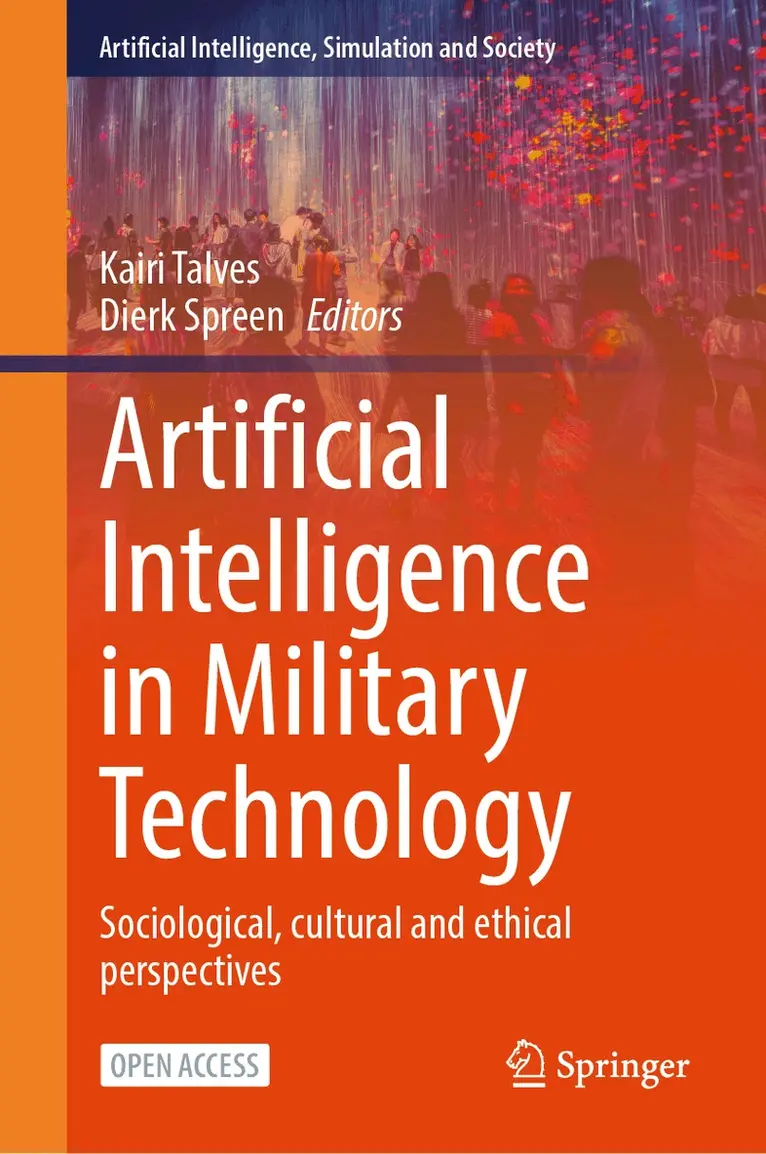
This is an open access book. This volume critically examines challenges in the field of current and future military technology from a transdisciplinary lens. It helps objectify the debate around the development of Lethal Autonomous Weapon Systems (LAWS). The volume offers a differentiated, informed and open approach to military artificial intelligence (AI) applications in the public realm, in politics and in the military itself. The contributions weigh the risks that artificially intelligent automation, like any new technology, brings, against technological innovation and progress. They address the issues of testing new technologies, implementing them socially and reflecting on their use, along with questions of unintended consequences of such technologies. The volume is divided into three parts. The first discusses perspectives on AI; how AI systems are understood by the public, by soldiers, and in cultural discourses. The focus is on (but not limited to) military applications. The second part focuses on the challenges and changes posed by the use of AI in military conflicts and addresses issues of how to deal with them. The third part examines the communication challenges posed by the implementation of AI in the military and the associated opportunities and risks.This highly topical and timely volume is for researchers and students across disciplines who have an interest in military technology and those interested in AI and new technology.
Inbunden, Engelska, 2026
440 kr
Skickas inom 10-15 vardagar
This open access volume showcases a series of models - particularly agent-based simulations - that explore pressing issues on national policy agendas, engaging with frontier questions around artificial intelligence (AI), welfare-related social assessment, and value diversity. These themes have profound implications for policy, cultural and societal life. The volume underscores the role of policy modelling in addressing how AI can be made context-specific, adaptive, and responsive within the public sector. Drawing on case studies from nine countries with differing value frameworks, the models examine welfare service provision choices and assess the demands, limitations, and effects of using AI to augment or replace traditional practices. The analyses reflect the pluralism of societal norms and values, while also considering the political, economic, and social pressures that shape them. The volume advocates for a participatory methodology and socio-technical infrastructure that can enable the development of more responsible, value-sensitive, and context-aware AI, and policies to implement it. By situating AI research, innovation and policy in close collaboration with society, it offers a fresh perspective for industry and innovation leaders. Ultimately, it presents a model for how participatory design and responsible technology production can better meet societal needs.