Southern Legal Studies – serie
Visar alla böcker i serien Southern Legal Studies. Handla med fri frakt och snabb leverans.
15 produkter
15 produkter
Inbunden, Engelska, 2017
909 kr
Skickas inom 3-6 vardagar
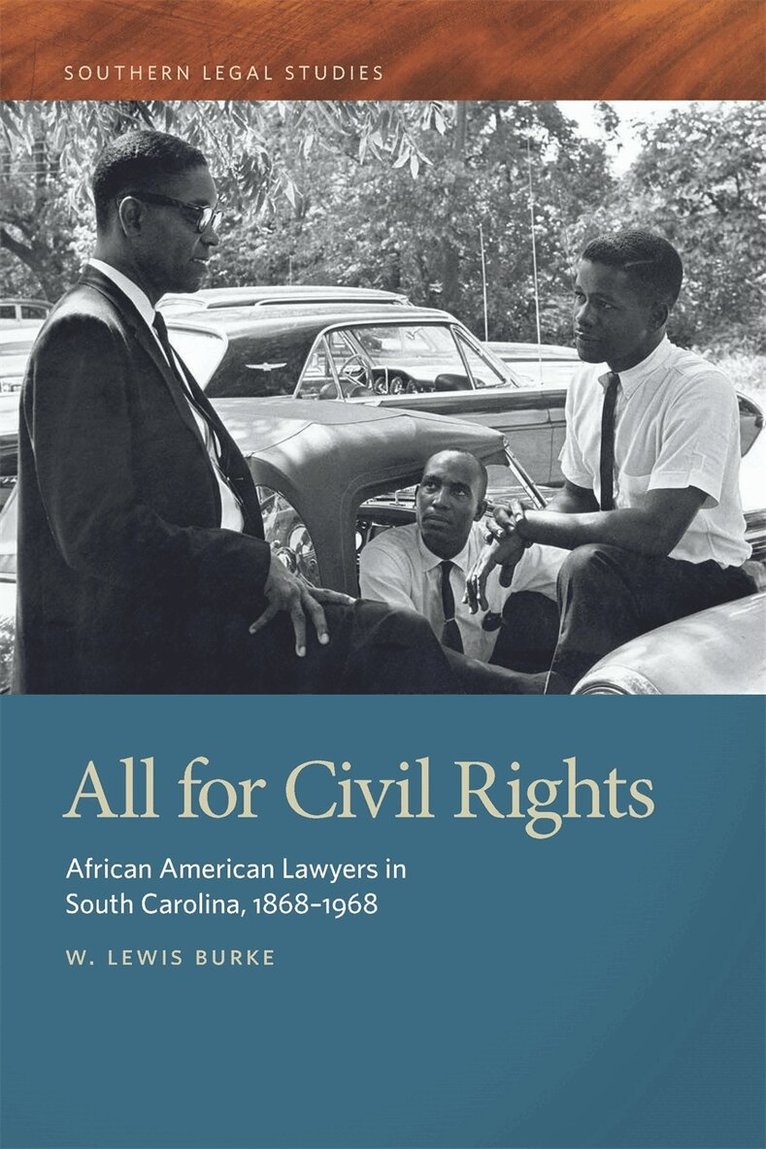
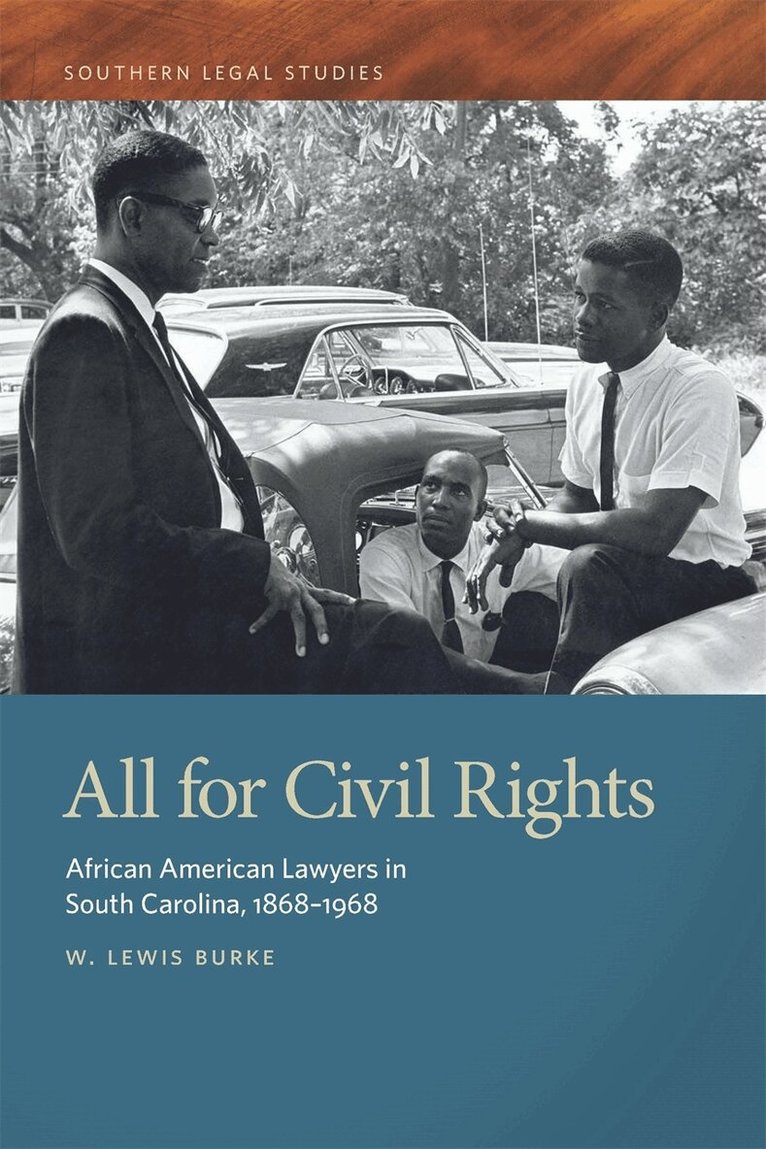
“The history of the black lawyer in South Carolina,” writes W. Lewis Burke, “is one of the most significant untold stories of the long and troubled struggle for equal rights in the state.” Beginning in Reconstruction and continuing to the modern civil rights era, 168 black lawyers were admitted to the South Carolina bar. All for Civil Rights is the first book-length study devoted to those lawyers’ struggles and achievements in the state that had the largest black population in the country, by percentage, until 1930—and that was a majority black state through 1920.Examining court processes, trials, and life stories of the lawyers, Burke offers a comprehensive analysis of black lawyers’ engagement with the legal system. Some of that study is set in the courts and legislative halls, for the South Carolina bar once had the highest percentage of black lawyers of any southern state, and South Carolina was one of only two states to ever have a black majority legislature. However, Burke also tells who these lawyers were (some were former slaves, while others had backgrounds in the church, the military, or journalism); where they came from (nonnatives came from as close as Georgia and as far away as Barbados); and how they were educated, largely through apprenticeship.Burke argues forcefully that from the earliest days after the Civil War to the heyday of the modern civil rights movement, the story of the black lawyer in South Carolina is the story of the civil rights lawyer in the Deep South. Although All for Civil Rights focuses specifically on South Carolinians, its argument about the legal shift in black personhood from the slave era to the 1960s resonates throughout the South.
Inbunden, Engelska, 2017
1 097 kr
Skickas inom 3-6 vardagar
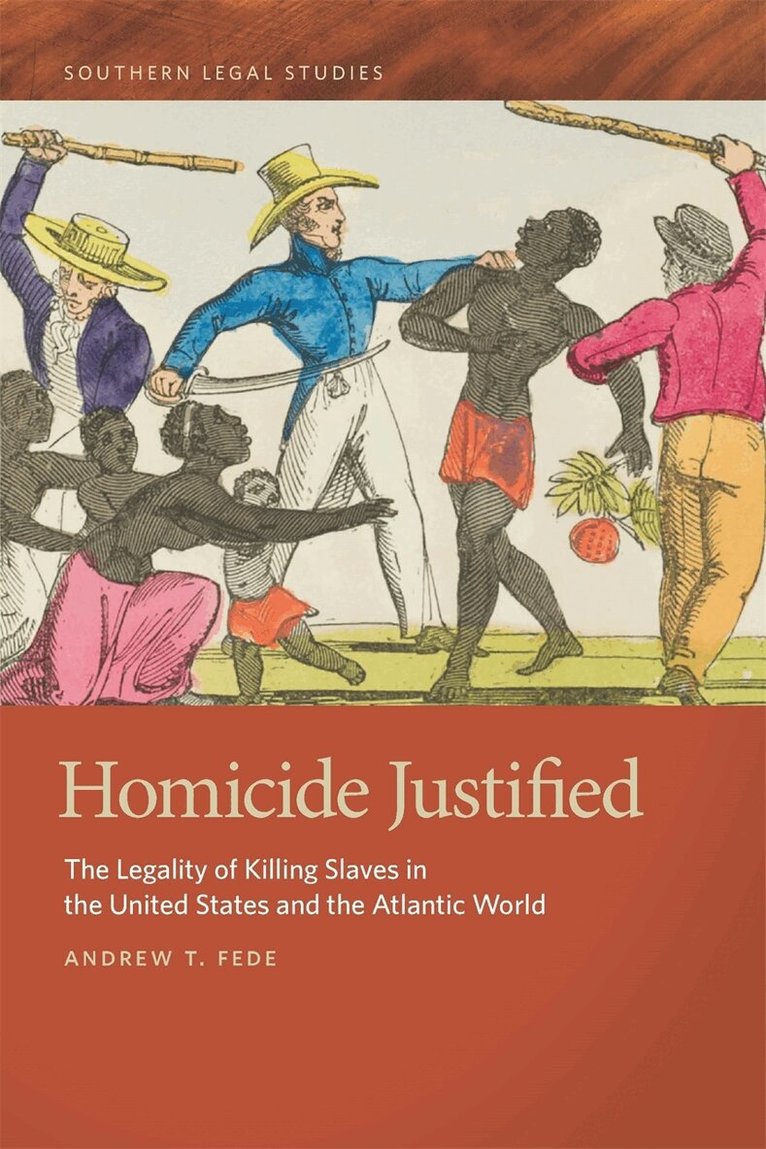
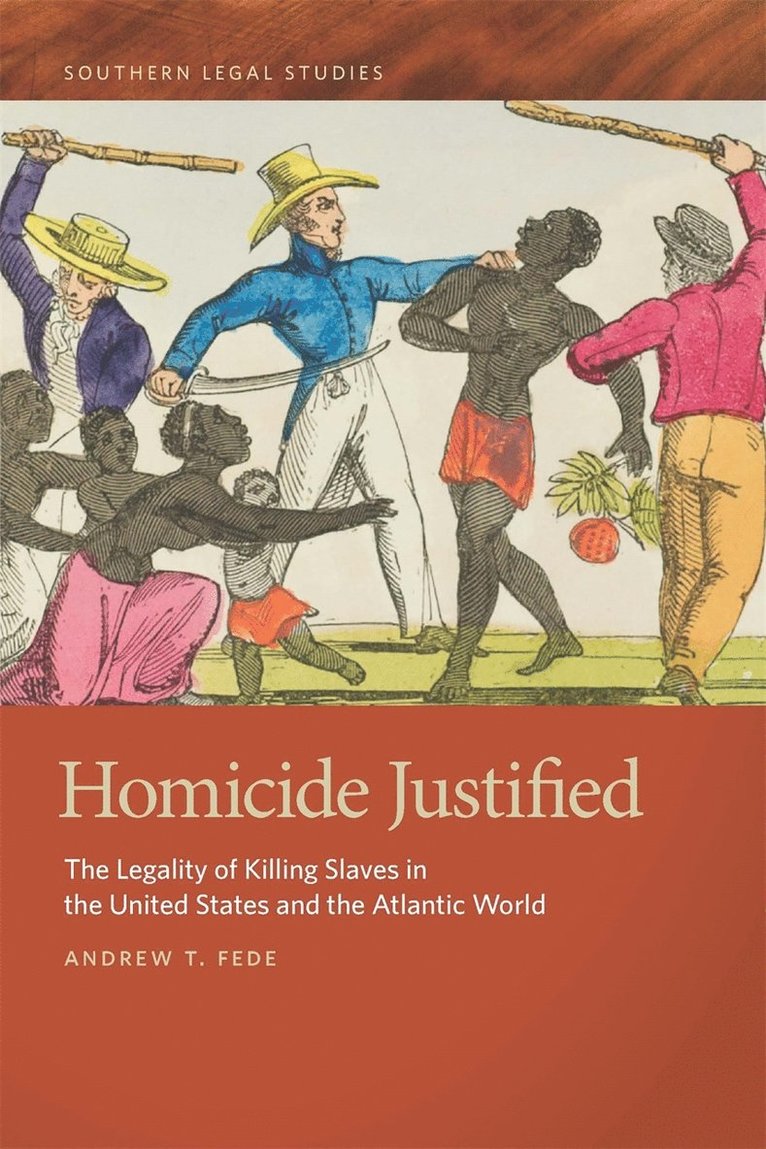
This comparative study looks at the laws concerning the murder of slaves by their masters and at how these laws were implemented. Andrew T. Fede cites a wide range of cases—across time, place, and circumstance—to illuminate legal, judicial, and other complexities surrounding this regrettably common occurrence. These laws had evolved to limit in different ways the masters’ rights to severely punish and even kill their slaves while protecting valuable enslaved people, understood as “property,” from wanton destruction by hirers, overseers, and poor whites who did not own slaves.To explore the conflicts of masters’ rights with state and colonial laws, Fede shows how slave homicide law evolved and was enforced not only in the United States but also in ancient Roman, Visigoth, Spanish, Portuguese, French, and British jurisdictions. His comparative approach reveals how legal reforms regarding slave homicide in antebellum times, like past reforms dictated by emperors and kings, were the products of changing perceptions of the interests of the public; of the individual slave owners; and of the slave owners’ families, heirs, and creditors.Although some slave murders came to be regarded as capital offenses, the laws consistently reinforced the second-class status of slaves. This influence, Fede concludes, flowed over into the application of law to free African Americans and would even make itself felt in the legal attitudes that underlay the Jim Crow era.
Inbunden, Engelska, 2017
1 375 kr
Skickas inom 5-8 vardagar
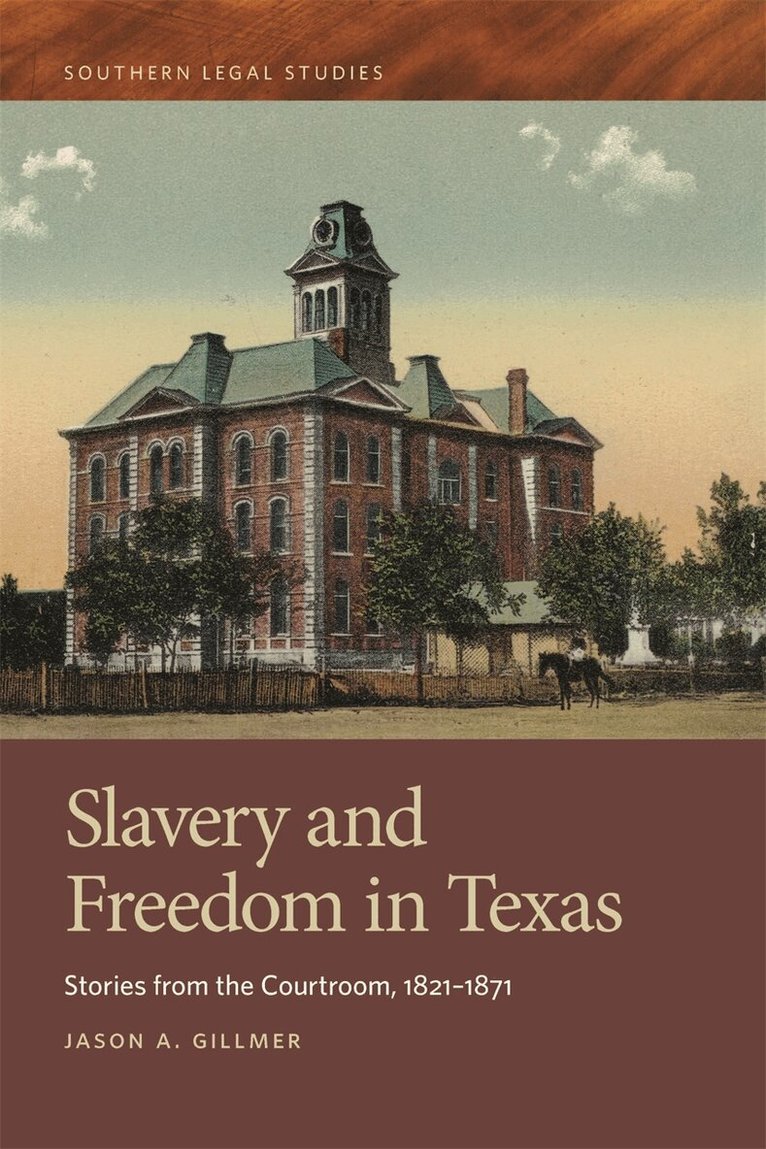
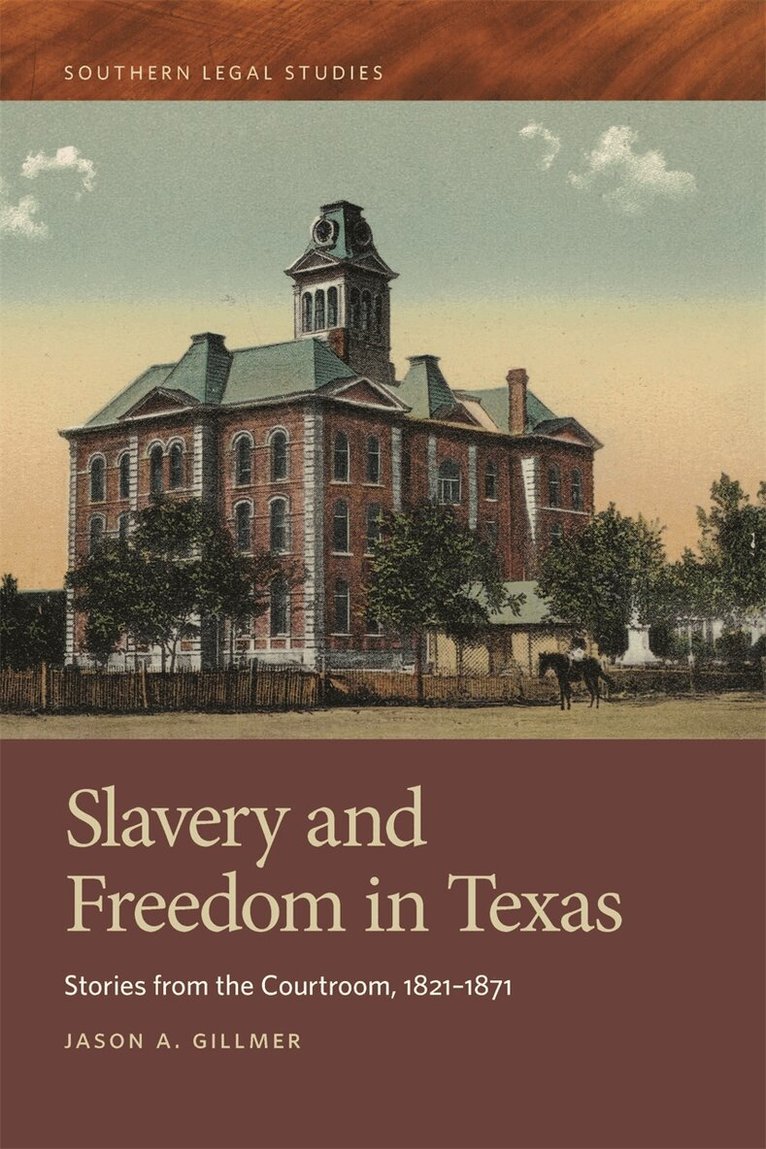
In these absorbing accounts of five court cases, Jason A. Gillmer offers intimate glimpses into Texas society in the time of slavery. Each story unfolds along boundaries—between men and women, slave and free, black and white, rich and poor, old and young—as rigid social orders are upset in ways that drive people into the courtroom.One case involves a settler in a rural county along the Colorado River, his thirty-year relationship with an enslaved woman, and the claims of their children as heirs. A case in East Texas arose after an owner refused to pay an overseer who had shot one of her slaves. Another case details how a free family of color carved out a life in the sparsely populated marshland of Southeast Texas, only to lose it all as waves of new settlers “civilized” the county. An enslaved woman in Galveston who was set free in her owner’s will—and who got an uncommon level of support from her attorneys—is the subject of another case. In a Central Texas community, as another case recounts, citizens forced a Choctaw native into court in an effort to gain freedom for his slave, a woman who easily “passed” as white.The cases considered here include Gaines v. Thomas, Clark v. Honey, Brady v. Price, and Webster v. Heard. All of them pitted communal attitudes and values against the exigencies of daily life in an often harsh place. Here are real people in their own words, as gathered from trial records, various legal documents, and many other sources. People of many colors, from diverse backgrounds, weave their way in and out of the narratives. We come to know what mattered most to them—and where those personal concerns stood before the law.
Häftad, Engelska, 2017
463 kr
Skickas inom 5-8 vardagar
In these absorbing accounts of five court cases, Jason A. Gillmer offers intimate glimpses into Texas society in the time of slavery. Each story unfolds along boundaries—between men and women, slave and free, black and white, rich and poor, old and young—as rigid social orders are upset in ways that drive people into the courtroom.One case involves a settler in a rural county along the Colorado River, his thirty-year relationship with an enslaved woman, and the claims of their children as heirs. A case in East Texas arose after an owner refused to pay an overseer who had shot one of her slaves. Another case details how a free family of color carved out a life in the sparsely populated marshland of Southeast Texas, only to lose it all as waves of new settlers “civilized” the county. An enslaved woman in Galveston who was set free in her owner’s will—and who got an uncommon level of support from her attorneys—is the subject of another case. In a Central Texas community, as another case recounts, citizens forced a Choctaw native into court in an effort to gain freedom for his slave, a woman who easily “passed” as white.The cases considered here include Gaines v. Thomas, Clark v. Honey, Brady v. Price, and Webster v. Heard. All of them pitted communal attitudes and values against the exigencies of daily life in an often harsh place. Here are real people in their own words, as gathered from trial records, various legal documents, and many other sources. People of many colors, from diverse backgrounds, weave their way in and out of the narratives. We come to know what mattered most to them—and where those personal concerns stood before the law.
Häftad, Engelska, 2019
462 kr
Skickas inom 3-6 vardagar
“The history of the black lawyer in South Carolina,” writes W. Lewis Burke, “is one of the most significant untold stories of the long and troubled struggle for equal rights in the state.” Beginning in Reconstruction and continuing to the modern civil rights era, 168 black lawyers were admitted to the South Carolina bar. All for Civil Rights is the first book-length study devoted to those lawyers’ struggles and achievements in the state that had the largest black population in the country, by percentage, until 1930—and that was a majority black state through 1920.Examining court processes, trials, and life stories of the lawyers, Burke offers a comprehensive analysis of black lawyers’ engagement with the legal system. Some of that study is set in the courts and legislative halls, for the South Carolina bar once had the highest percentage of black lawyers of any southern state, and South Carolina was one of only two states to ever have a black majority legislature. However, Burke also tells who these lawyers were (some were former slaves, while others had backgrounds in the church, the military, or journalism); where they came from (nonnatives came from as close as Georgia and as far away as Barbados); and how they were educated, largely through apprenticeship.Burke argues forcefully that from the earliest days after the Civil War to the heyday of the modern civil rights movement, the story of the black lawyer in South Carolina is the story of the civil rights lawyer in the Deep South. Although All for Civil Rights focuses specifically on South Carolinians, its argument about the legal shift in black personhood from the slave era to the 1960s resonates throughout the South.
Häftad, Engelska, 2019
517 kr
Skickas inom 3-6 vardagar
This comparative study looks at the laws concerning the murder of slaves by their masters and at how these laws were implemented. Andrew T. Fede cites a wide range of cases—across time, place, and circumstance—to illuminate legal, judicial, and other complexities surrounding this regrettably common occurrence. These laws had evolved to limit in different ways the masters’ rights to severely punish and even kill their slaves while protecting valuable enslaved people, understood as “property,” from wanton destruction by hirers, overseers, and poor whites who did not own slaves.To explore the conflicts of masters’ rights with state and colonial laws, Fede shows how slave homicide law evolved and was enforced not only in the United States but also in ancient Roman, Visigoth, Spanish, Portuguese, French, and British jurisdictions. His comparative approach reveals how legal reforms regarding slave homicide in antebellum times, like past reforms dictated by emperors and kings, were the products of changing perceptions of the interests of the public; of the individual slave owners; and of the slave owners’ families, heirs, and creditors.Although some slave murders came to be regarded as capital offenses, the laws consistently reinforced the second-class status of slaves. This influence, Fede concludes, flowed over into the application of law to free African Americans and would even make itself felt in the legal attitudes that underlay the Jim Crow era.
Inbunden, Engelska, 2021
886 kr
Skickas inom 3-6 vardagar
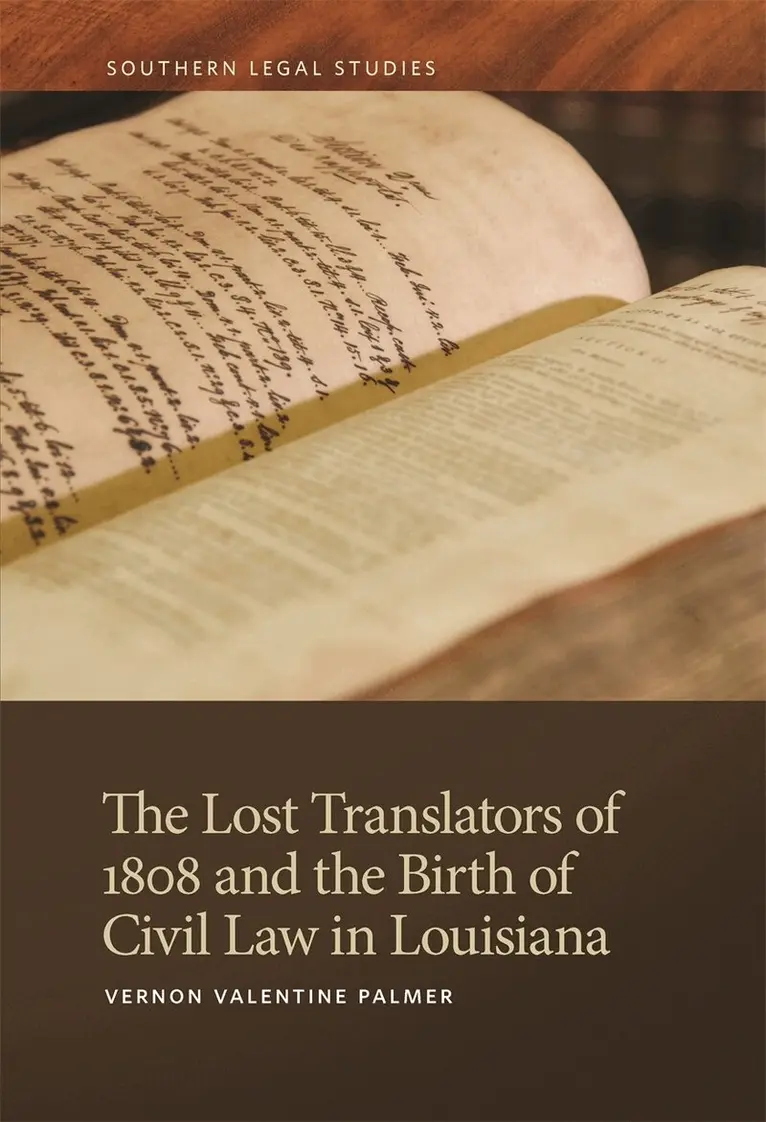
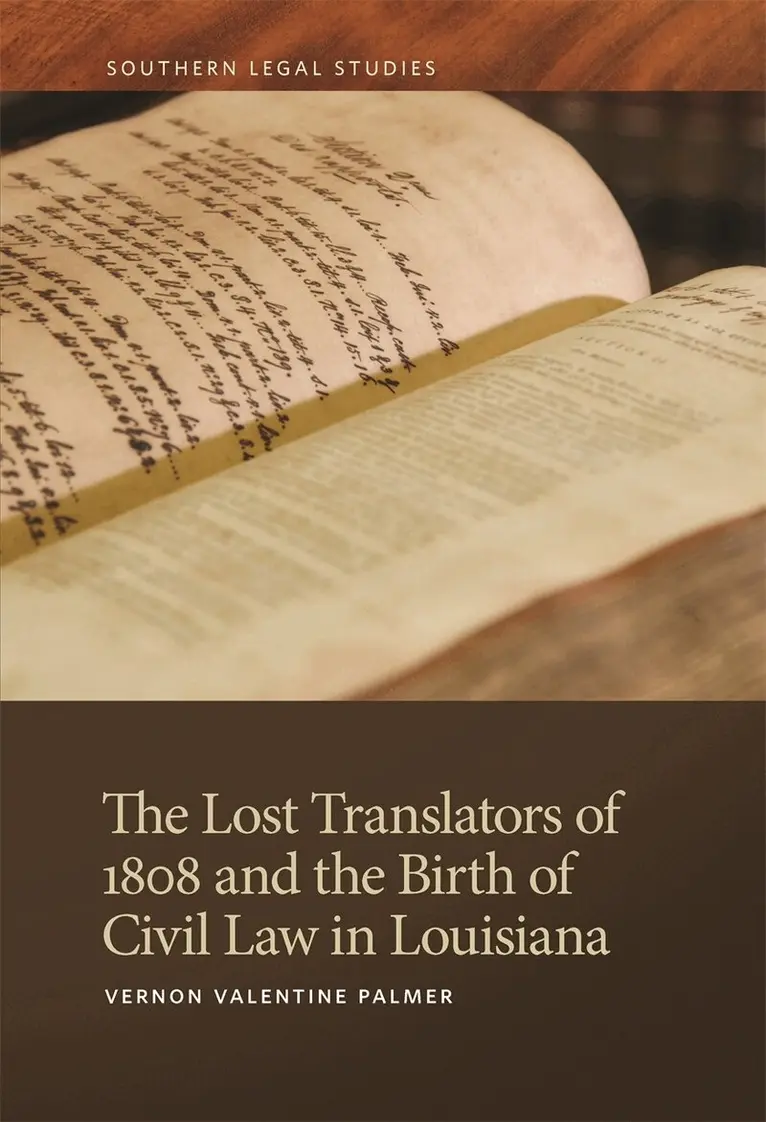
In 1808 the legislature of the Louisiana territory appointed two men to translate the Digest of the Laws in Force in the Territory of Orleans (or, as it was called at the time, simply the Code) from the original French into English. Those officials, however, did not reveal who received the commission, and the translators never identified themselves. Indeed, the “translators of 1808” guarded their secret so well that their identities have remained unknown for more than two hundred years. Their names, personalities, careers, and credentials, indeed everything about them, have been a missing chapter in Louisiana legal history.In this volume, Vernon Valentine Palmer, through painstaking research, uncovers the identity of the translators, presents their life stories, and evaluates their translation in the context of the birth of civil law in Louisiana. One consequence of the translators' previous anonymity has been that the translation itself has never been fully examined before this study. To be sure, the translation has been criticized and specific errors have been pointed out, but Palmer's study is the first general evaluation that considers the translation's goals, the Louisiana context, its merits and demerits, its innovations, failures, and successes. It thus allows us to understand how much and in what ways the translators affected the future course of Louisiana law. The Lost Translators, through painstaking research, uncovers the identity of the translators, presents their life stories, and evaluates their translation in the context of the birth of civil law in Louisiana.
Inbunden, Engelska, 2023
981 kr
Skickas inom 3-6 vardagar
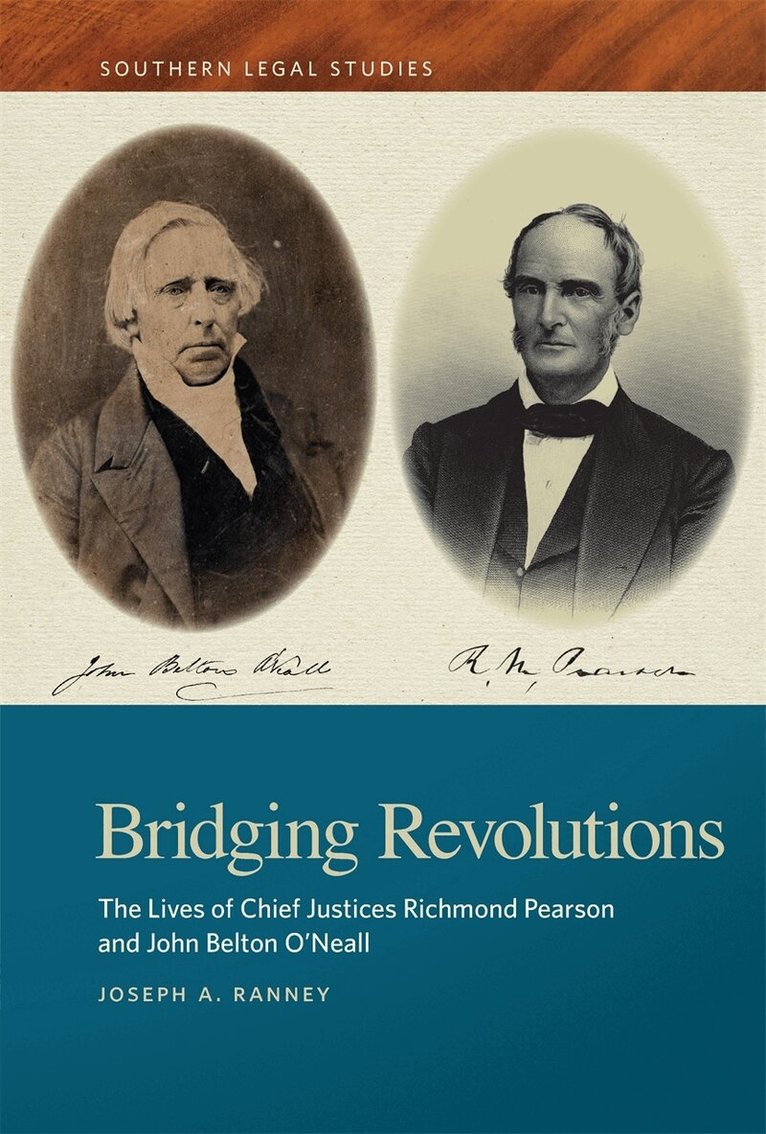
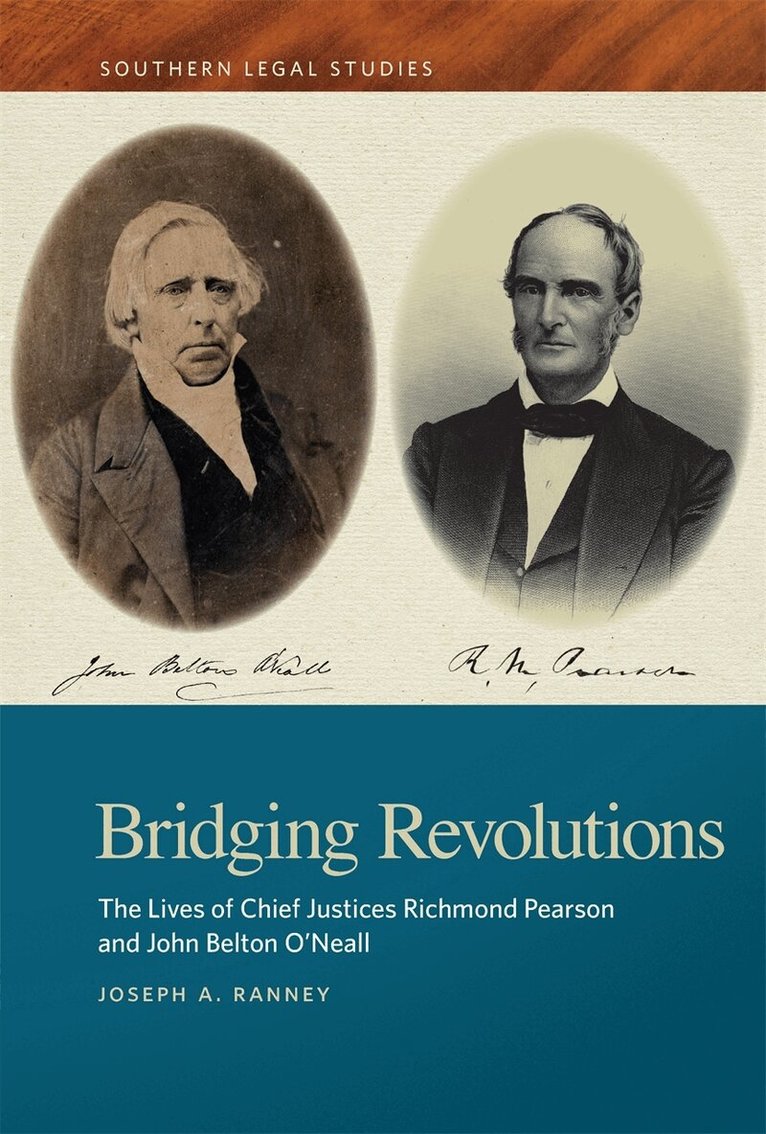
Bridging Revolutions examines the lives of North Carolina chief justice Richmond Pearson (1805–1878) and South Carolina chief justice John Belton O’Neall (1793–1863) and their impact on the South’s transition from a slave to a free society. Joseph A. Ranney documents how the two judges fought to preserve the Union and protect basic civil rights for both white and Black southerners before and after the Civil War.Pearson’s and O’Neall’s lives were marked by contrarianism and controversy. Prior to the Civil War, they took important steps to soften slave law during times marked by calls for more discipline and control of slaves. O’Neall, a committed Unionist, resisted his state’s nullification movement during the 1830s and put an endto that movement with a crucial 1834 decision. Pearson was the only southern supreme court justice whose service spanned the antebellum, Civil War, and Reconstruction eras. During the Civil War, he stoutly defended North Carolinians’ civil rights against incursions by the central Confederate government. After thewar, he urged the South to accept “the world as it is” rather than oppose civil rights for freed slaves, and he did more than any other southern judge to protect those rights and to reshape southern state law. Examined in conjunction, the two judges’ colorful public and private lives illuminate the complex relationship between southern law and culture during times of deep crisis and change.
Inbunden, Engelska, 2023
635 kr
Skickas inom 3-6 vardagar
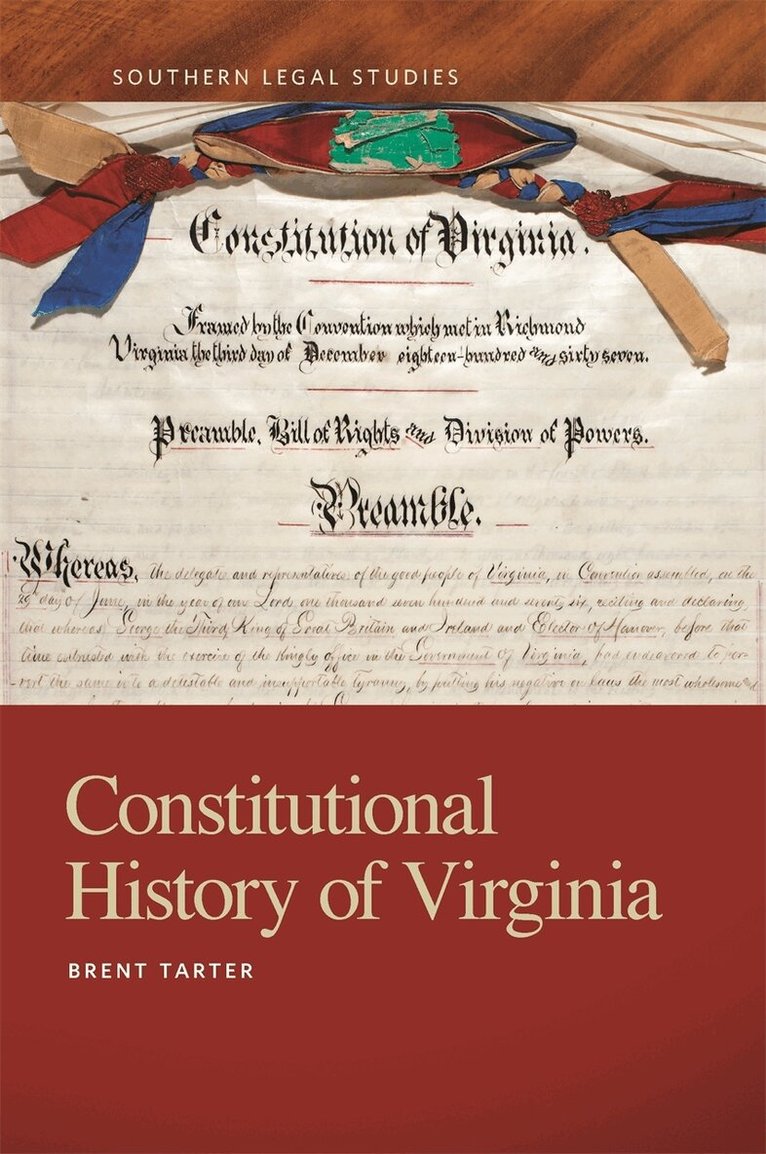
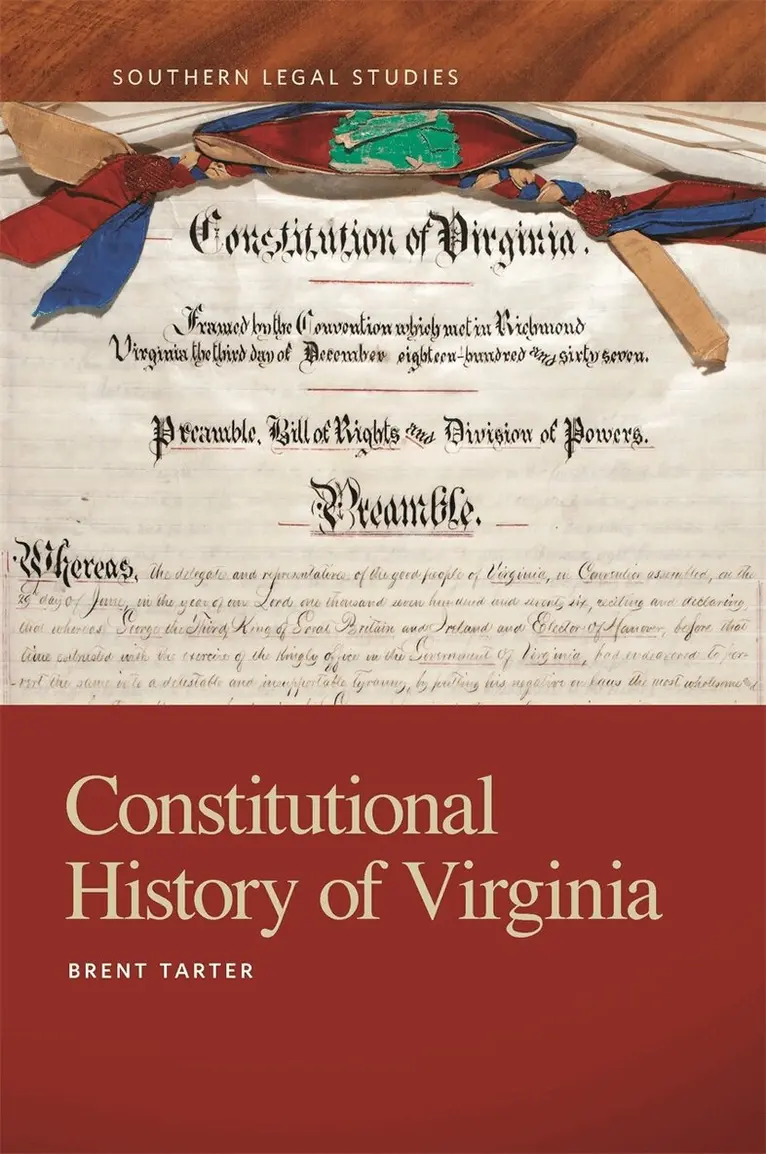
This is the only modern comprehensive constitutional history of any state, and as a history of Virgina, it is one of the oldest and most complex. Virginia’s state legislature is the Virginia General Assembly, which was established in July 1619, making it the oldest current lawmaking body in North America. Brent Tarter’s Constitutional History of Virginia covers over three hundred years of Virginia’s legislative policy, from colony to statehood, revealing its political and legal backstory.From the very beginning in 1606, when James I chartered the Virginia Company to establish a commercial outpost on the Atlantic coast of North America, through the first two decades of the twenty-first century, the fundamental constitutions of the colony and state of Virginia have evolved and changed as the demographic, economic, political, and cultural characteristics of Virginia changed. Elements of the colonial constitution influenced the character of the state’s first constitution in 1776, and changing relationships between the people and their government, as well as relationships between the state and federal governments, have influenced how the state’s constitution has evolved. Tarter explores that evolution and taps into its relevance to the people who have lived and still live in Virginia.
Inbunden, Engelska, 2024
554 kr
Skickas inom 5-8 vardagar
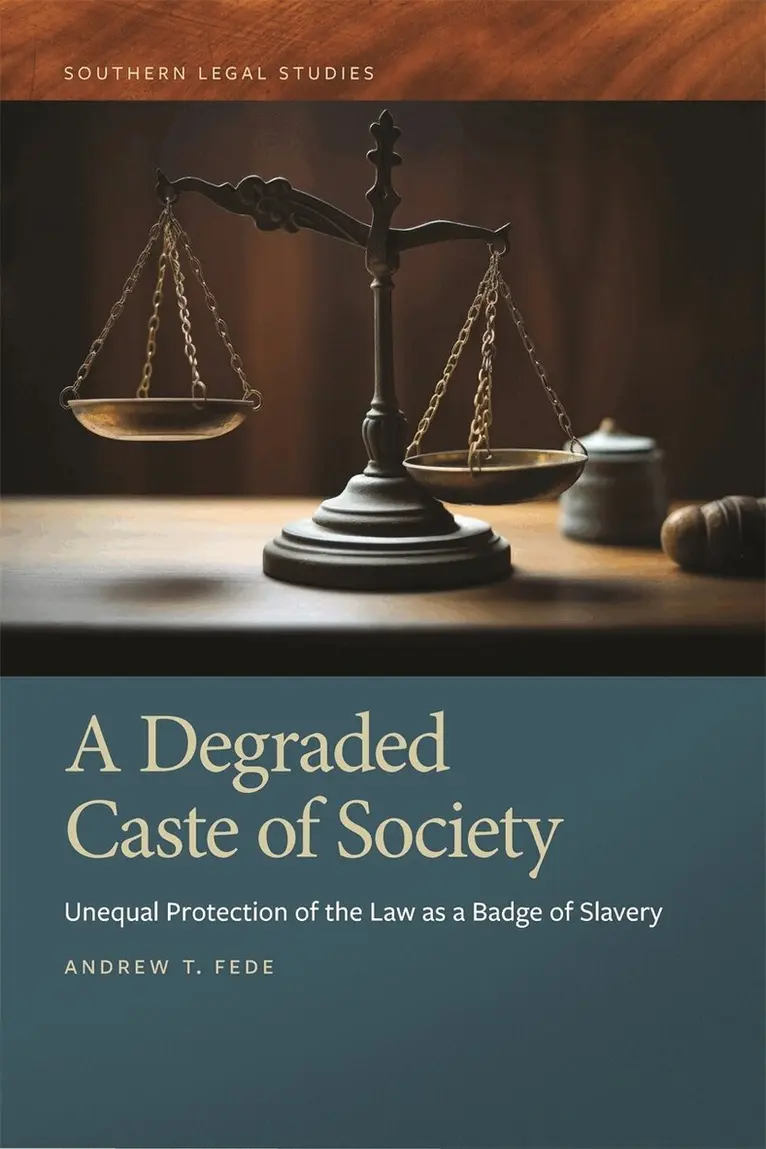
A Degraded Caste of Society traces the origins of twenty-first-century cases of interracial violence to the separate and unequal protection principles of the criminal law of enslavement in the southern United States. Andrew T. Fede explains how antebellum appellate court opinions and statutes, when read in a context that includes newspaper articles and trial court and census records, extended this doctrine to the South’s free Black people, consigning them to what South Carolina justice John Belton O’Neall called “a degraded caste of society,” in which they were “in no respect, on a perfect equality with the white man.”This written law either criminalized Black insolence or privileged private white interracial violence, which became a badge of slavery that continued to influence the law in action, contrary to the Constitution’s mandate of equal protection of the criminal law. The U.S. Supreme Court enabled this denial of equal justice, as did Congress, which did not make all private white racially motivated violence a crime until 2009, when it adopted the Matthew Shepard and James Byrd Jr. Hate Crimes Prevention Act. Fede’s analysis supports that law’s constitutionality under the Thirteenth Amendment, while suggesting why—during the Jim Crow era and beyond—equal protection of the criminal law was not always realized, and why the curse of interracial violence has been a lingering badge of slavery.
Häftad, Engelska, 2024
398 kr
Skickas inom 3-6 vardagar
In 1808 the legislature of the Louisiana territory appointed two men to translate the Digest of the Laws in Force in the Territory of Orleans (or, as it was called at the time, simply the Code) from the original French into English. Those officials, however, did not reveal who received the commission, and the translators never identified themselves. Indeed, the “translators of 1808” guarded their secret so well that their identities have remained unknown for more than two hundred years. Their names, personalities, careers, and credentials, indeed everything about them, have been a missing chapter in Louisiana legal history.In this volume, Vernon Valentine Palmer, through painstaking research, uncovers the identity of the translators, presents their life stories, and evaluates their translation in the context of the birth of civil law in Louisiana. One consequence of the translators' previous anonymity has been that the translation itself has never been fully examined before this study. To be sure, the translation has been criticized and specific errors have been pointed out, but Palmer's study is the first general evaluation that considers the translation's goals, the Louisiana context, its merits and demerits, its innovations, failures, and successes. It thus allows us to understand how much and in what ways the translators affected the future course of Louisiana law. The Lost Translators, through painstaking research, uncovers the identity of the translators, presents their life stories, and evaluates their translation in the context of the birth of civil law in Louisiana.
Häftad, Engelska, 2025
560 kr
Skickas inom 3-6 vardagar
Bridging Revolutions examines the lives of North Carolina chief justice Richmond Pearson (1805–1878) and South Carolina chief justice John Belton O’Neall (1793–1863) and their impact on the South’s transition from a slave to a free society. Joseph A. Ranney documents how the two judges fought to preserve the Union and protect basic civil rights for both white and Black southerners before and after the Civil War.Pearson’s and O’Neall’s lives were marked by contrarianism and controversy. Prior to the Civil War, they took important steps to soften slave law during times marked by calls for more discipline and control of slaves. O’Neall, a committed Unionist, resisted his state’s nullification movement during the 1830s and put an endto that movement with a crucial 1834 decision. Pearson was the only southern supreme court justice whose service spanned the antebellum, Civil War, and Reconstruction eras. During the Civil War, he stoutly defended North Carolinians’ civil rights against incursions by the central Confederate government. After thewar, he urged the South to accept “the world as it is” rather than oppose civil rights for freed slaves, and he did more than any other southern judge to protect those rights and to reshape southern state law. Examined in conjunction, the two judges’ colorful public and private lives illuminate the complex relationship between southern law and culture during times of deep crisis and change.
Häftad, Engelska, 2025
543 kr
Skickas inom 3-6 vardagar
This is the only modern comprehensive constitutional history of any state, and as a history of Virgina, it is one of the oldest and most complex. Virginia’s state legislature is the Virginia General Assembly, which was established in July 1619, making it the oldest current lawmaking body in North America. Brent Tarter’s Constitutional History of Virginia covers over three hundred years of Virginia’s legislative policy, from colony to statehood, revealing its political and legal backstory.From the very beginning in 1606, when James I chartered the Virginia Company to establish a commercial outpost on the Atlantic coast of North America, through the first two decades of the twenty-first century, the fundamental constitutions of the colony and state of Virginia have evolved and changed as the demographic, economic, political, and cultural characteristics of Virginia changed. Elements of the colonial constitution influenced the character of the state’s first constitution in 1776, and changing relationships between the people and their government, as well as relationships between the state and federal governments, have influenced how the state’s constitution has evolved. Tarter explores that evolution and taps into its relevance to the people who have lived and still live in Virginia.
Inbunden, Engelska, 2026
1 985 kr
Kommande
Ladies of Little Rock explores the agency and activism of middle-class Black women and girls who led the movement to desegregate Little Rock Central High School. Misti Nicole Harper argues that these ladies assumed this responsibility as part of a broader legacy of middle-class Black women who wielded respectability politics as social justice strategy. Black women such as Daisy Bates, president of the Arkansas state chapter of the NAACP, and the six Black girls of the “Little Rock Nine” proved their politically savvy and imminent respectability in Little Rock and on the international stage. Black ladies threatened the precarious social position of working-class white women and girls whose lone claim to social privilege was their whiteness and who spearheaded massive resistance as a direct reaction to the challenge that middle-class Black ladies posed.
Häftad, Engelska, 2026
477 kr
Kommande
Ladies of Little Rock explores the agency and activism of middle-class Black women and girls who led the movement to desegregate Little Rock Central High School. Misti Nicole Harper argues that these ladies assumed this responsibility as part of a broader legacy of middle-class Black women who wielded respectability politics as social justice strategy. Black women such as Daisy Bates, president of the Arkansas state chapter of the NAACP, and the six Black girls of the “Little Rock Nine” proved their politically savvy and imminent respectability in Little Rock and on the international stage. Black ladies threatened the precarious social position of working-class white women and girls whose lone claim to social privilege was their whiteness and who spearheaded massive resistance as a direct reaction to the challenge that middle-class Black ladies posed.