Springer Series in Applied Machine Learning – serie
Visar alla böcker i serien Springer Series in Applied Machine Learning. Handla med fri frakt och snabb leverans.
20 produkter
20 produkter
Inbunden, Engelska, 2023
494 kr
Skickas
Thinking Data Science will help practising data scientists, academicians, researchers, and students who want to build ML models using the appropriate algorithms and architectures, whether the data be small or big.
Häftad, Engelska, 2024
671 kr
Skickas inom 10-15 vardagar
Thinking Data Science will help practising data scientists, academicians, researchers, and students who want to build ML models using the appropriate algorithms and architectures, whether the data be small or big.
Inbunden, Engelska, 2023
1 335 kr
Skickas inom 10-15 vardagar
This textbook integrates important mathematical foundations, efficient computational algorithms, applied statistical inference techniques, and cutting-edge machine learning approaches to address a wide range of crucial biomedical informatics, health analytics applications, and decision science challenges.
Häftad, Engelska, 2024
948 kr
Skickas inom 10-15 vardagar
This textbook integrates important mathematical foundations, efficient computational algorithms, applied statistical inference techniques, and cutting-edge machine learning approaches to address a wide range of crucial biomedical informatics, health analytics applications, and decision science challenges.
Inbunden, Engelska, 2023
1 778 kr
Skickas inom 10-15 vardagar
Artificial Intelligence-based Healthcare Systems encourages scientists, engineers, and scholars across the multiple disciplines to design smart intelligent innovations on rural healthcare issues and motivate to collaborate multiple ideas to design best solutions.
Häftad, Engelska, 2024
1 778 kr
Skickas inom 10-15 vardagar
Artificial Intelligence-based Healthcare Systems encourages scientists, engineers, and scholars across the multiple disciplines to design smart intelligent innovations on rural healthcare issues and motivate to collaborate multiple ideas to design best solutions.
Inbunden, Engelska, 2024
2 305 kr
Skickas inom 10-15 vardagar
Affective Computing for Social Good: Enhancing Well-being, Empathy, and Equity offers an insightful journey into the intricate realm of affective computing. It covers a spectrum of topics ranging from foundational theories and technologies to ethical considerations and future possibilities.Beginning with "Deciphering the Emotional Spectrum: Advances in Emotion Science and Analysis," it sets the stage by tracing the evolution of understanding human emotions. Subsequent chapters explore practical applications, such as integrating clinical psychology with affective computing for therapeutic progress and leveraging affective computing in diagnosing and managing mood disorders more efficiently.As the narrative unfolds, the book emphasizes the crucial role of affective computing in fostering social justice and equity. It underscores the need for developing inclusive algorithms and databases while addressing ethical challenges like privacy, consent, and the risk of emotional manipulation. These discussions emphasize the significance of ethical deployment and regulation.The book also covers the technical aspects and applications of affective computing, including natural language processing for emotion recognition and analysis, voice emotion detection, and visual emotion recognition. It extends to applications, such as the use of affective computing in health management via recommender systems and personalized well-being interventions in mental health care.Addressing data challenges, "Enhancing Affective Computing with Data Augmentation: Strategies for Overcoming Limited Data Availability" presents solutions for imbalances affecting model performance. "Advancements in Multimodal Emotion Recognition" highlights the integration of facial expressions with physiological signals to improve emotion recognition accuracy and reliability.Concluding with "Ethical Considerations in Affective Computing" and "Cognitive Currents: A Path from Neuroscience to Consciousness," the book connects technical advancements in affective computing with broader ethical and philosophical inquiries surrounding consciousness and the human experience.Features:Helps readers understand the potential benefits of emotionally intelligent AI systems, such as improving mental health care, enhancing education, or promoting more ethical decision-making.Addresses ethical considerations related to the development and deployment of emotionally intelligent AI systems, helping readers to become more aware of the potential risks and trade-offs involved.Presents new approaches or frameworks for developing emotionally intelligent AI systems, providing readers with innovative ideas and perspectives.Provides examples of successful case studies where emotionally intelligent AI systems were used for social good, which may inspire readers to think about how they can contribute to society through AI development.Overall, this book will help readers gain a deeper understanding of the intersection between AI and human emotions, and how this technology can be used to create a more empathetic, compassionate, and socially responsible world.
Häftad, Engelska, 2025
2 305 kr
Skickas inom 10-15 vardagar
Affective Computing for Social Good: Enhancing Well-being, Empathy, and Equity offers an insightful journey into the intricate realm of affective computing. It covers a spectrum of topics ranging from foundational theories and technologies to ethical considerations and future possibilities.Beginning with "Deciphering the Emotional Spectrum: Advances in Emotion Science and Analysis," it sets the stage by tracing the evolution of understanding human emotions. Subsequent chapters explore practical applications, such as integrating clinical psychology with affective computing for therapeutic progress and leveraging affective computing in diagnosing and managing mood disorders more efficiently.As the narrative unfolds, the book emphasizes the crucial role of affective computing in fostering social justice and equity. It underscores the need for developing inclusive algorithms and databases while addressing ethical challenges like privacy, consent, and the risk of emotional manipulation. These discussions emphasize the significance of ethical deployment and regulation.The book also covers the technical aspects and applications of affective computing, including natural language processing for emotion recognition and analysis, voice emotion detection, and visual emotion recognition. It extends to applications, such as the use of affective computing in health management via recommender systems and personalized well-being interventions in mental health care.Addressing data challenges, "Enhancing Affective Computing with Data Augmentation: Strategies for Overcoming Limited Data Availability" presents solutions for imbalances affecting model performance. "Advancements in Multimodal Emotion Recognition" highlights the integration of facial expressions with physiological signals to improve emotion recognition accuracy and reliability.Concluding with "Ethical Considerations in Affective Computing" and "Cognitive Currents: A Path from Neuroscience to Consciousness," the book connects technical advancements in affective computing with broader ethical and philosophical inquiries surrounding consciousness and the human experience.Features:Helps readers understand the potential benefits of emotionally intelligent AI systems, such as improving mental health care, enhancing education, or promoting more ethical decision-making.Addresses ethical considerations related to the development and deployment of emotionally intelligent AI systems, helping readers to become more aware of the potential risks and trade-offs involved.Presents new approaches or frameworks for developing emotionally intelligent AI systems, providing readers with innovative ideas and perspectives.Provides examples of successful case studies where emotionally intelligent AI systems were used for social good, which may inspire readers to think about how they can contribute to society through AI development.Overall, this book will help readers gain a deeper understanding of the intersection between AI and human emotions, and how this technology can be used to create a more empathetic, compassionate, and socially responsible world.
Inbunden, Engelska, 2024
1 727 kr
Skickas inom 10-15 vardagar
Applications of Machine Learning in Hydroclimatology is a comprehensive exploration of the transformative potential of machine learning for addressing critical challenges in water resources management.
Häftad, Engelska, 2025
1 727 kr
Skickas inom 10-15 vardagar
Applications of Machine Learning in Hydroclimatology is a comprehensive exploration of the transformative potential of machine learning for addressing critical challenges in water resources management. The book explores how artificial intelligence can unravel the complexities of hydrological systems, providing researchers and practitioners with cutting-edge tools to model, predict, and manage these systems with greater precision and effectiveness. It thoroughly examines the modeling of hydrometeorological extremes, such as floods and droughts, which are becoming increasingly difficult to predict due to climate change. By leveraging AI-driven methods to forecast these extremes, the book offers innovative approaches that enhance predictive accuracy. It emphasizes the importance of analyzing non-stationarity and uncertainty in a rapidly evolving climate landscape, illustrating how statistical and frequency analyses can improve hydrological forecasts. Moreover, the book explores the impact of climate change on flood risks, drought occurrences, and reservoir operations, providing insights into how these phenomena affect water resource management.To provide practical solutions, the book includes case studies that showcase effective mitigation measures for water-related challenges. These examples highlight the use of machine learning techniques such as deep learning, reinforcement learning, and statistical downscaling in real-world scenarios. They demonstrate how artificial intelligence can optimize decision-making and resource management while improving our understanding of complex hydrological phenomena. By utilizing machine learning architectures tailored to hydrology, the book presents physics-guided models, data-driven techniques, and hybrid approaches that can be used to address water management issues. Ultimately, Applications of Machine Learning in Hydroclimatology empowers researchers, practitioners, and policymakers to harness machine learning for sustainable water management. It bridges the gap between advanced AI technologies and hydrological science, offering innovative solutions to tackle today's most pressing challenges in water resources.
Inbunden, Engelska, 2024
2 156 kr
Skickas inom 10-15 vardagar
Artificial Intelligence and Edge Computing for Sustainable Ocean Health explores the transformative role of AI and edge computing in preserving and enhancing ocean health. The growing influence of Artificial Intelligence (AI), along with the Internet of Things (IoT) in generating wide coverage of sensor networks, and Edge Computing (EC) has paved the way for investigation of underwater as well as massive marine data, thereby generating huge potential for credible research opportunities for these domains. This book’s journey begins with a broad overview of Artificial Intelligence for Sustainable Ocean Health, setting the foundation for understanding AI's potential in marine conservation. The subsequent chapter, Role of Artificial Intelligence and Technologies in Improving Ocean Health in Promoting Tourism, illustrates the synergy between technological advancements and sustainable tourism practices, demonstrating how AI can enhance the attractiveness and preservation of marine destinations. The identification, restoration, and monitoring of marine resources along with the utilization of technology continues in Utilization of Underwater Wireless Sensor Network through Supervising a Random Network Environment in the Ocean Environment has been extensively dealt with. The technical challenges of underwater imaging, essential for accurate data collection and analysis has been discussed.The importance of Explainable AI is discussed in chapters like Sustainable Development Goal 14: Explainable AI (XAI) for Ocean Health, Explainable AI (XAI) for Ocean Health: Exploring the Role of Explainable AI in Enhancing Ocean Health, and A Comprehensive Study of AI (XAI) for Ocean Health Monitoring, which emphasize transparency and trust in AI systems. Further, Revolutionizing Internet of Underwater Things with Federated Learning, Underwater Drone, Underwater Imagery with AI/ML and IoT in ROV Technology and Ocean Cleanup has been demonstrated using innovative approaches to addressing underwater challenges. The book also includes a Review on the Optics and Photonics in Environmental Sustainability, focusing on the role of optics in marine conservation. Security issues are tackled in Intelligent Hash Function Based Key-Exchange Scheme for Ocean Underwater Data Transmission, and the overarching potential of AI in marine resource management is discussed in Artificial Intelligence as Key-enabler for Safeguarding the Marine Resources.
Häftad, Engelska, 2025
2 156 kr
Skickas inom 10-15 vardagar
Artificial Intelligence and Edge Computing for Sustainable Ocean Health explores the transformative role of AI and edge computing in preserving and enhancing ocean health. The growing influence of Artificial Intelligence (AI), along with the Internet of Things (IoT) in generating wide coverage of sensor networks, and Edge Computing (EC) has paved the way for investigation of underwater as well as massive marine data, thereby generating huge potential for credible research opportunities for these domains. This book’s journey begins with a broad overview of Artificial Intelligence for Sustainable Ocean Health, setting the foundation for understanding AI's potential in marine conservation. The subsequent chapter, Role of Artificial Intelligence and Technologies in Improving Ocean Health in Promoting Tourism, illustrates the synergy between technological advancements and sustainable tourism practices, demonstrating how AI can enhance the attractiveness and preservation of marine destinations. The identification, restoration, and monitoring of marine resources along with the utilization of technology continues in Utilization of Underwater Wireless Sensor Network through Supervising a Random Network Environment in the Ocean Environment has been extensively dealt with. The technical challenges of underwater imaging, essential for accurate data collection and analysis has been discussed.The importance of Explainable AI is discussed in chapters like Sustainable Development Goal 14: Explainable AI (XAI) for Ocean Health, Explainable AI (XAI) for Ocean Health: Exploring the Role of Explainable AI in Enhancing Ocean Health, and A Comprehensive Study of AI (XAI) for Ocean Health Monitoring, which emphasize transparency and trust in AI systems. Further, Revolutionizing Internet of Underwater Things with Federated Learning, Underwater Drone, Underwater Imagery with AI/ML and IoT in ROV Technology and Ocean Cleanup has been demonstrated using innovative approaches to addressing underwater challenges. The book also includes a Review on the Optics and Photonics in Environmental Sustainability, focusing on the role of optics in marine conservation. Security issues are tackled in Intelligent Hash Function Based Key-Exchange Scheme for Ocean Underwater Data Transmission, and the overarching potential of AI in marine resource management is discussed in Artificial Intelligence as Key-enabler for Safeguarding the Marine Resources.
Inbunden, Engelska, 2024
1 667 kr
Skickas inom 10-15 vardagar
This book explores the ongoing debate between shallow and deep learning in the field of machine learning. It provides a comprehensive survey of machine learning methods, from shallow learning to deep learning, and examines their applications across various domains. Shallow Learning vs Deep Learning: A Practical Guide for Machine Learning Solutions emphasizes that the choice of a machine learning approach should be informed by the specific characteristics of the dataset, the operational environment, and the unique requirements of each application, rather than being influenced by prevailing trends.In each chapter, the book delves into different application areas, such as engineering, real-world scenarios, social applications, image processing, biomedical applications, anomaly detection, natural language processing, speech recognition, recommendation systems, autonomous systems, and smart grid applications. By comparing and contrasting the effectiveness of shallow and deep learning in these areas, the book provides a framework for thoughtful selection and application of machine learning strategies. This guide is designed for researchers, practitioners, and students who seek to deepen their understanding of when and how to apply different machine learning techniques effectively. Through comparative studies and detailed analyses, readers will gain valuable insights to make informed decisions in their respective fields.
Häftad, Engelska, 2025
1 667 kr
Skickas inom 10-15 vardagar
This book explores the ongoing debate between shallow and deep learning in the field of machine learning. It provides a comprehensive survey of machine learning methods, from shallow learning to deep learning, and examines their applications across various domains. Shallow Learning vs Deep Learning: A Practical Guide for Machine Learning Solutions emphasizes that the choice of a machine learning approach should be informed by the specific characteristics of the dataset, the operational environment, and the unique requirements of each application, rather than being influenced by prevailing trends.In each chapter, the book delves into different application areas, such as engineering, real-world scenarios, social applications, image processing, biomedical applications, anomaly detection, natural language processing, speech recognition, recommendation systems, autonomous systems, and smart grid applications. By comparing and contrasting the effectiveness of shallow and deep learning in these areas, the book provides a framework for thoughtful selection and application of machine learning strategies. This guide is designed for researchers, practitioners, and students who seek to deepen their understanding of when and how to apply different machine learning techniques effectively. Through comparative studies and detailed analyses, readers will gain valuable insights to make informed decisions in their respective fields.
Inbunden, Engelska, 2025
2 210 kr
Skickas inom 5-8 vardagar
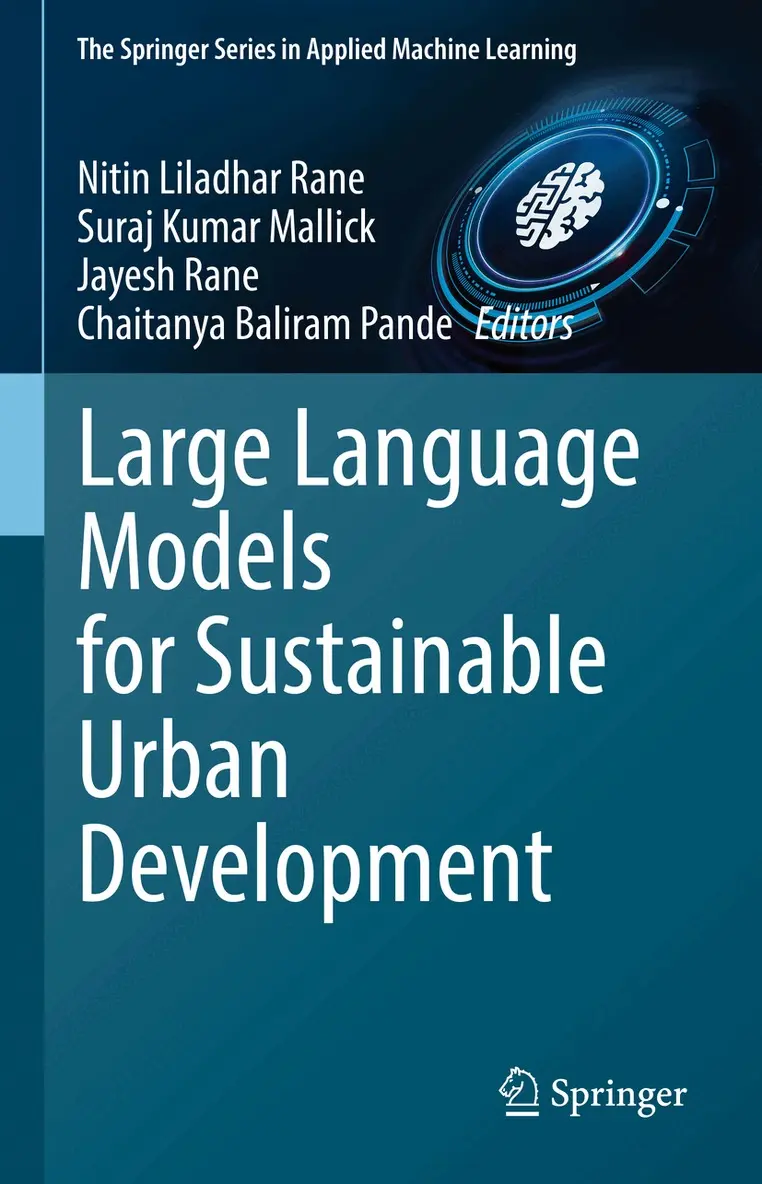
With rapid urbanization defining the 21st Century, cities face mounting challenges in achieving sustainability, equity, and functionality. This book explores how innovative technologies such as Artificial Intelligence (AI) and Large Language Models (LLMs) can transform urban development by offering intelligent, data-driven solutions. LLMs go beyond automation, acting as co-creators in addressing environmental sustainability, resource management, and equitable development. By analyzing regulations, best practices, and real-time data on phenomena such as air pollution and traffic, these models empower urban planners to design smarter, more sustainable cities while fostering collaboration across disciplines.Divided into five sections, the book explores the diverse applications of LLMs, from optimizing renewable energy systems and enhancing urban planning to revolutionizing construction practices and improving resource efficiency. It highlights case studies on integrating AI with smart infrastructure, ecological balance, and disaster resilience. While underscoring their transformative potential, the book also examines ethical considerations such as bias, privacy, and environmental impact. More than a collection of research, this work is a call to action for urban planners, data scientists, policymakers, and researchers to harness AI responsibly in building greener, more equitable urban futures.
Inbunden, Engelska, 2026
738 kr
Kommande
This book presents a practitioner-oriented treatment of LLMOps: the engineering discipline required to deploy, scale, and govern large language model systems in production. Advanced Large Language Model Operations explains why LLM deployments differ from classical MLOps — due to cost/latency economics, non-deterministic behavior, retrieval and tool-calling pipelines, and new security and compliance threat models — and translates these realities into concrete operational patterns, metrics, and decision frameworks for real-world systems.The text is organized into four parts spanning foundations, production delivery, optimization, and governance, culminating in a capstone implementation. It uses Ishtar AI, a high-stakes, evidence-grounded journalism assistant, as a running case study to connect theory to practice across infrastructure and environment design, CI/CD and continuous evaluation, observability, scaling, performance optimization, retrieval-augmented generation, multi-agent orchestration, robustness testing, and ethical/responsible deployment.Advanced Large Language Model Operations offers an essential and in-depth roadmap for the deployment, management, and optimization of large language model (LLM) systems in enterprise and research settings. Bridging the persistent gap between model development and real-world application, this authoritative volume walks readers through the entire lifecycle of operationalizing LLMs, from foundational infrastructure and environment design to advanced strategies for monitoring, scaling, and optimization. Each chapter includes actionable checklists, advanced optimization techniques, and case-based insights that demonstrate both the successes and pitfalls of real-world LLM deployments. Readers with a strong grounding in machine learning and programming will gain the expertise to integrate LLMOps into their workflows, reduce deployment times, maximize scalability, and sustain high-performing language model solutions in production environments.
Inbunden, Engelska, 2026
1 202 kr
Kommande
This definitive guide to machine learning projects answers the questions aspiring and experienced data scientists frequently face. Are you unsure which technology to use for your ML development? Should you choose GOFAI, ANN/DNN, or transfer learning? Can you rely on AutoML for model development? What if a client provides gigabytes or terabytes of data for building analytic models? How do you handle high-frequency, dynamic datasets? This book provides practitioners with a consolidated view of the entire data science process in a single “cheat sheet.”The core challenge for a data scientist is to extract meaningful information from huge datasets to create better strategies for businesses. Many machine learning algorithms and neural networks are designed to perform analytics on such datasets. For a data scientist, choosing the most suitable algorithm for a given dataset can be a daunting decision. Although there is no single answer, a systematic approach to problem solving is essential. This book describes a range of ML algorithms conceptually and discusses a structured process for selecting ML/DL models. The consolidation of available algorithms and techniques for designing efficient ML models is the key focus of this book. Thinking Data Science will help practising data scientists, academics, researchers, and students who want to build ML models using the appropriate algorithms and architectures, whether the data is small or big.
Inbunden, Engelska, 2026
2 717 kr
Kommande
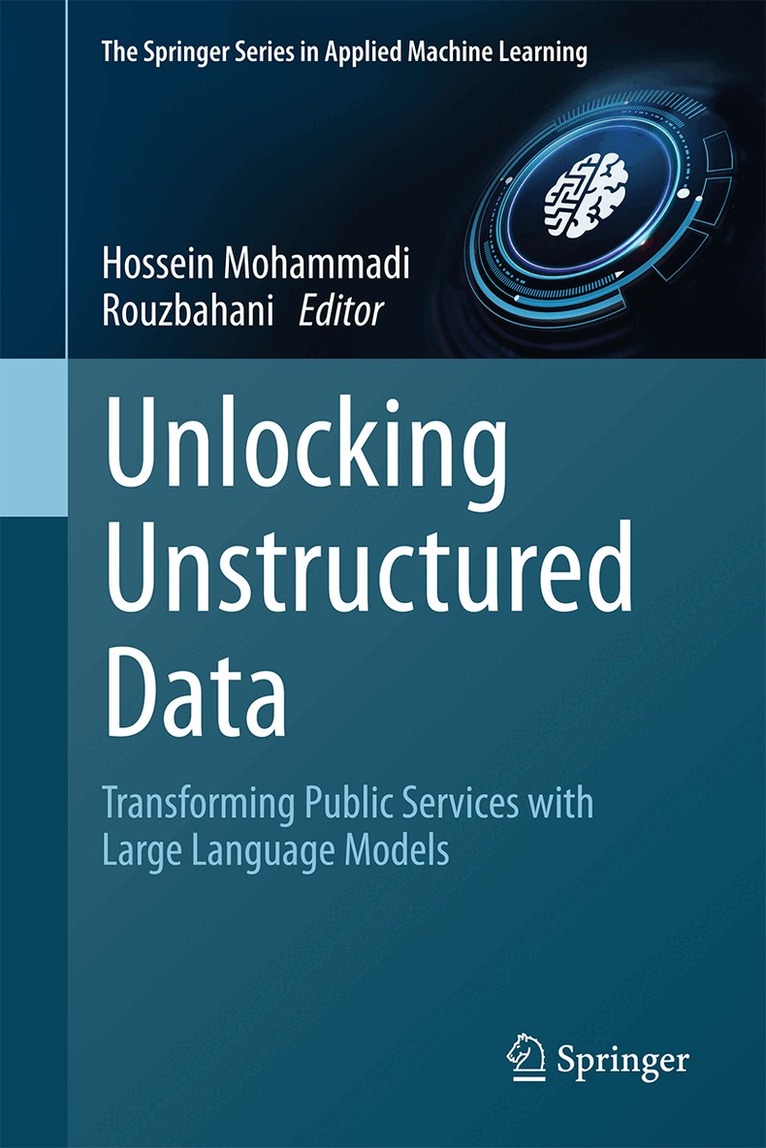
This book explores how Large Language Models can help public organizations turn previously unusable information into actionable insight. Government agencies collect enormous volumes of handwritten forms, PDFs, free-text responses, case notes, and other unstructured content, yet much of it remains difficult to analyze at scale. This book shows how LLMs, combined with OCR, computer vision, and related document-processing techniques, can extract structure and meaning from these data sources, helping public sector teams improve service delivery, operational efficiency, and evidence-based decision-making. It is written for data scientists, AI practitioners, public administrators, policymakers, researchers, and graduate students who want a practical and accessible guide to this fast-emerging field.Unlocking Unstructured Data: Transforming Public Services with Large Language Models offers a distinctive public-sector perspective on both the technical and organizational challenges of deploying LLMs responsibly. It examines foundational concepts, implementation architectures, and evaluation frameworks, then moves into real-world case studies across healthcare, social services, taxation, regulatory compliance, and citizen engagement. Readers will also find guidance on governance, privacy, explainability, bias mitigation, and change management, making this a useful resource for anyone seeking to modernize government data workflows while maintaining trust, transparency, and accountability.
Inbunden, Engelska, 2026
2 902 kr
Kommande
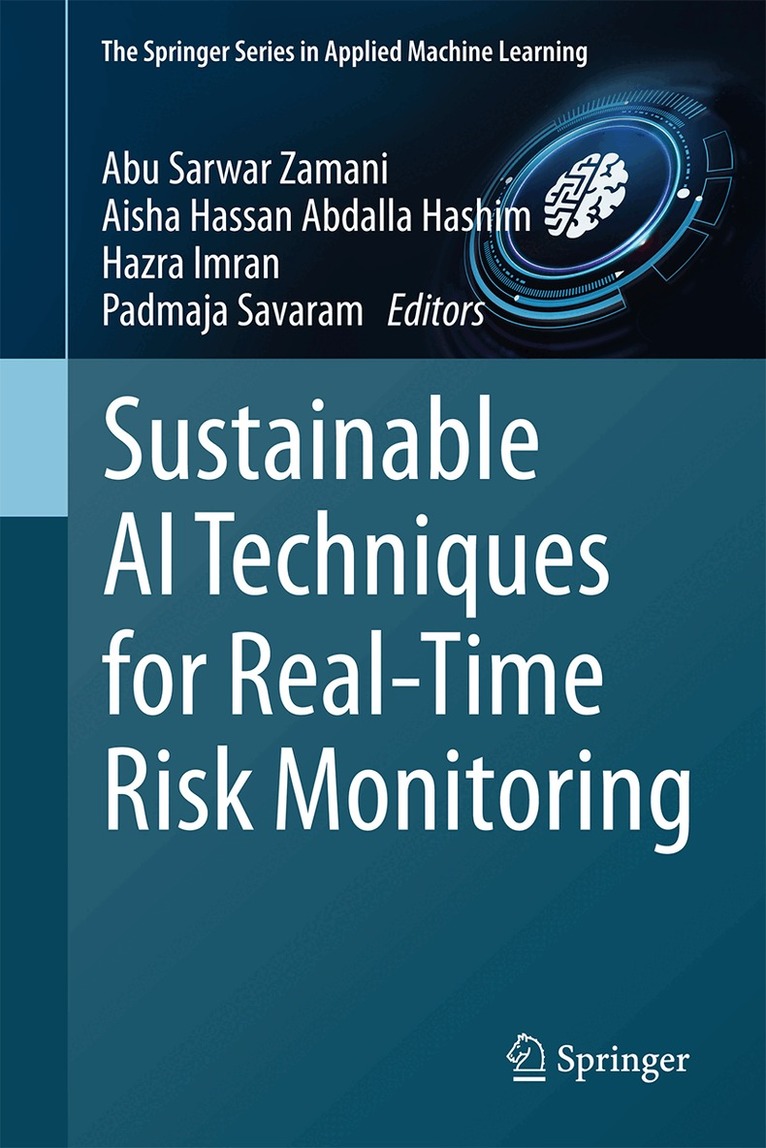
Sustainable AI Techniques for Real-Time Risk Monitoring offers a comprehensive examination of energy-efficient artificial intelligence approaches for hazard detection in smart environments. The book begins by identifying the limitations of traditional AI models —particularly their high computational and energy demands — and introduces the concept of Green AI as a sustainable alternative. It systematically presents key methodologies, including lightweight deep learning architectures, model optimization techniques, and the integration of edge and fog computing. In addition, it explores advanced paradigms such as federated learning and bio-inspired computing to enable scalable and resource-efficient real-time monitoring systems.The book further elaborates on practical applications across diverse domains, including fire hazard detection, industrial safety, environmental monitoring, and smart healthcare systems. It also examines how secure and decentralized technologies—such as blockchain—enhance the reliability of IoT-based hazard detection frameworks. The concluding section outlines future research directions, emphasizing renewable-powered IoT infrastructures and the ethical, legal, and societal implications of Green AI.Overall, this book serves as a valuable resource for academics, researchers, and practitioners striving to develop sustainable, reliable, and energy-conscious intelligent safety systems.
Inbunden, Engelska, 2026
2 255 kr
Kommande
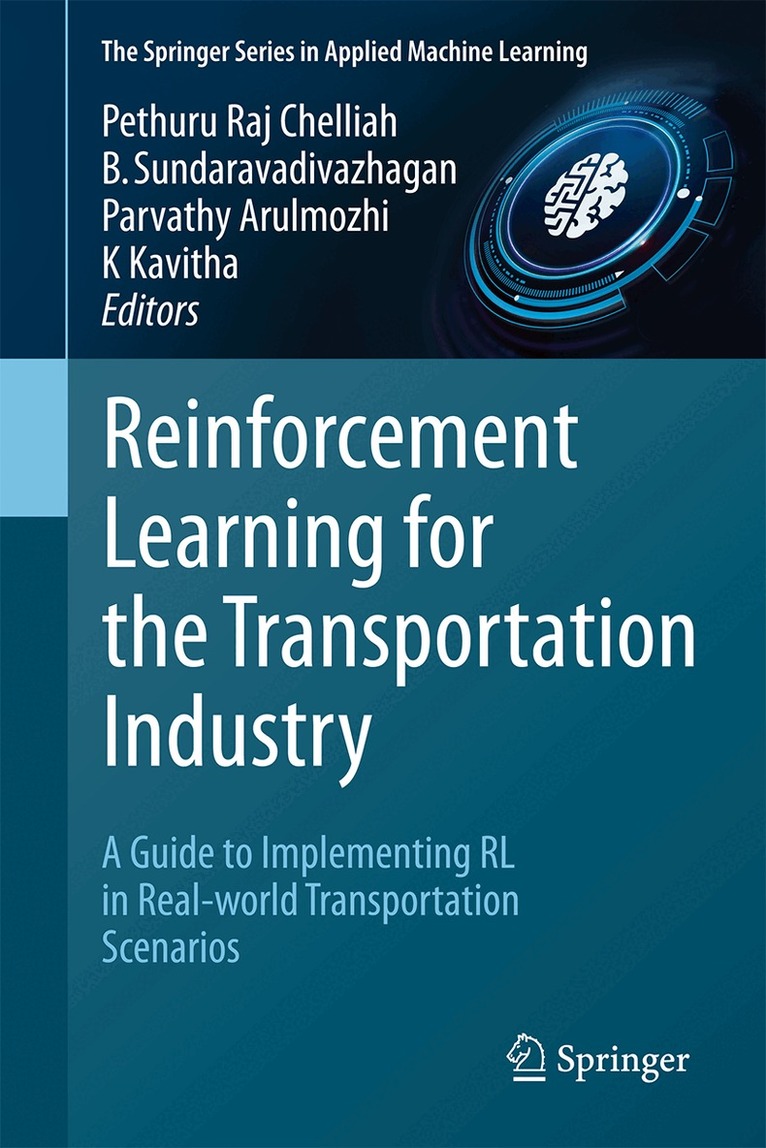
This book provides a comprehensive exploration of reinforcement learning and its transformative applications in transportation systems. Reinforcement Learning for the Transportation Industry begins with the technical foundations of RL, covering core architectures, formal frameworks, and major algorithms such as Q-learning, Policy Gradient, Actor-Critic, Deep Q-Networks (DQN), and Multi-Agent Reinforcement Learning (MARL). The book further examines Deep Reinforcement Learning (DRL), Reinforcement Learning from Human Feedback (RLHF), Reinforcement Learning from AI Feedback (RLAIF), and Reinforcement Fine-Tuning (RFT), highlighting their growing role in intelligent decision-making and large language models.The later chapters focus on real-world transportation applications, including autonomous vehicles, electric vehicle routing, traffic signal coordination, traffic congestion reduction, ridesharing, transport logistics, advanced air mobility, intelligent transportation systems, and Internet of Vehicles (IoVs). Special attention is given to AutoRL, Federated Reinforcement Learning, and LLM-guided DRL for autonomous driving. By combining theoretical foundations with practical case studies, this book serves as a valuable resource for researchers, academicians, and industry professionals seeking to implement advanced RL solutions for efficient, sustainable, and intelligent transportation systems.