State of the World - Böcker
Visar alla böcker i serien State of the World. Handla med fri frakt och snabb leverans.
9 produkter
9 produkter
146 kr
Tillfälligt slut
The book provides concerned citizens and national leaders with comprehensive analysis of the global environmental problems we face, together with detailed descriptions of practical, innovative solutions, like charting the most environmentally sound path to a hydrogen-fueled economy, or accelerating the rapidly growing conversion of farmers worldwide to organic farming and sustainable agriculture. Written in clear and concise language, with easy-to-read charts and tables, State of the World 2002 presents a view of our changing world that we, and our leaders, cannot afford to ignore.
158 kr
Tillfälligt slut
Written in clear and concise language, with easy-to-read charts and tables, State of the World presents a view of our changing world that we, and our leaders, cannot afford to ignore.
169 kr
Tillfälligt slut
In State of the World 2006, the Worldwatch Institute's award-winning research team provides concerned citizens and national leaders with comprehensive analysis of the global environmental problems we face, together with detailed descriptions of practical, innovative solutions, like the increased demand for meat.
269 kr
Skickas inom 7-10 vardagar
In State of the World 2007, the Worldwatch Institute's award-winning research team focuses on the urbanization of our planet to provide policymakers, strategic planners, researchers, students, and concerned citizens with comprehensive analysis of the global environmental problems we face, together with descriptions of practical, innovative solutions. This report will show what is needed to foster sustainable cities on a planet where urban areas are home to half the human population and a far larger share of natural resource use.Written in clear and concise language, with easy-to-read charts and tables, State of the World 2007 presents a view of our changing world that we, and our leaders, cannot afford to ignore.
469 kr
Skickas inom 5-8 vardagar
The evidence continues to mount: melting ice caps, rising temperatures, increasingly frequent natural disasters. As the devastating effects of global warming come into sharper focus, societies must work to both mitigate greenhouse gas emissions and adapt to ongoing and inevitable climate change. The actions taken in the coming century will be critically important in determining whether or not we can salvage our environment. We cannot shrink from the overwhelming magnitude of climate change or the radical solutions it demands. The Worldwatch Institute's State of the World 2009 investigates a wide range of potential paths to change, including new technology, policy changes, consumption, and finance, with the ultimate goal of mobilizing humanity around climate change and revealing global warming as one of the truly great challenges of our time.
464 kr
Skickas inom 3-6 vardagar
Known for tackling the most pressing issues that face our world, the Worldwatch Institute has dedicated the 2011 edition of its flagship report to a compelling look at the global food crisis, with particular emphasis on what innovators globally can do to help solve a worldwide problem. State of the World 2011 not only introduces us to the latest agro-ecological innovations and their global applicability but also gives broader insights into issues including poverty, international politics, and even gender equity.Written in clear, concise language, with easy-to-read charts and tables, State of the World 2011, produced with support from the Bill and Melinda Gates Foundation, provides a practical vision of the innovations that will allow billions of people to feed themselves, while restoring rural economies, creating livelihoods, and sustaining the natural resource base on which agriculture depends.
284 kr
Skickas inom 7-10 vardagar
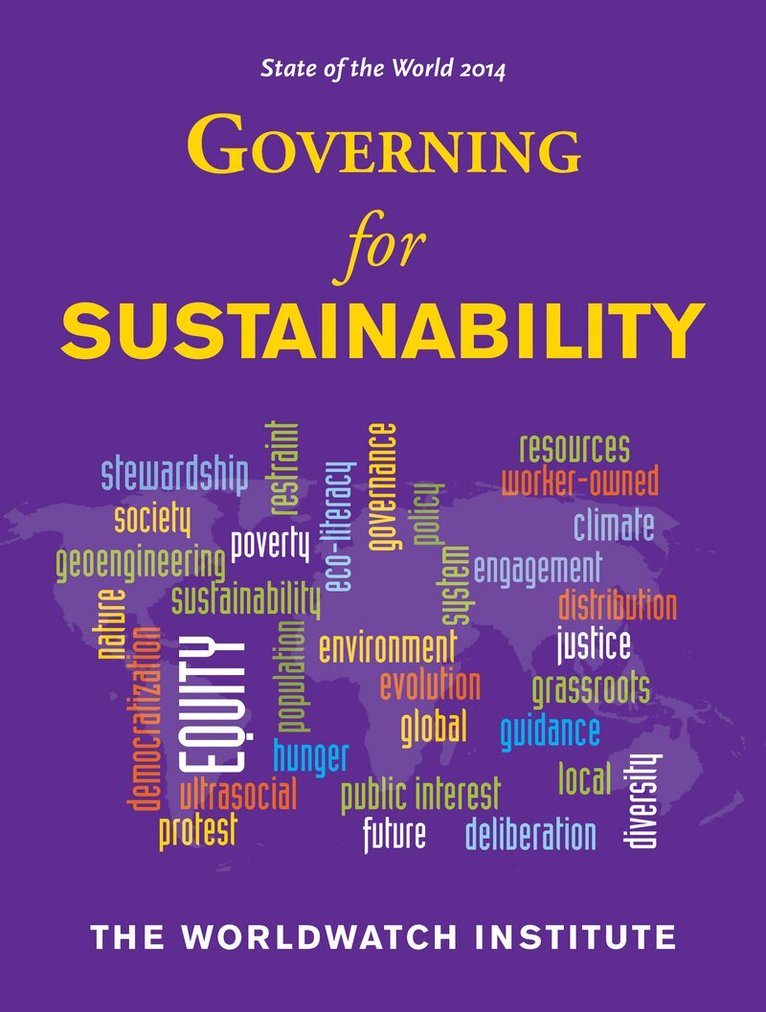
Citizens expect their governments to lead on sustainability. But from largely disappointing international conferences like Rio II to the U.S.’s failure to pass meaningful climate legislation, governments’ progress has been lackluster. That’s not to say leadership is absent; it just often comes from the bottom up rather than the top down. Action—on climate, species loss, inequity, and other sustainability crises—is being driven by local, people’s, women’s, and grassroots movements around the world, often in opposition to the agendas pursued by governments and big corporations.These diverse efforts are the subject of the latest volume in the Worldwatch Institute’s highly regarded State of the World series. The 2014 edition, marking the Institute’s 40th anniversary, examines both barriers to responsible political and economic governance as well as gridlock-shattering new ideas. The authors analyze a variety of trends and proposals, including regional and local climate initiatives, the rise of benefit corporations and worker-owned firms, the need for energy democracy, the Internet’s impact on sustainability, and the importance of eco-literacy. A consistent thread throughout the book is that informed and engaged citizens are key to better governance.The book is a clear-eyed yet ultimately optimistic assessment of citizens’ ability to govern for sustainability. By highlighting both obstacles and opportunities, State of the World 2014 shows how to effect change within and beyond the halls of government. This volume will be especially useful for policymakers, environmental nonprofits, students of environmental studies, sustainability, or economics—and citizens looking to jumpstart significant change around the world.
242 kr
Skickas inom 11-20 vardagar
This is the newest edition of The Worldwatch Institute's respected State of the World series that highlights the ignored threats to sustainability. We think we understand environmental damage: pollution, water scarcity, a warming world. But these problems are just the tip of the iceberg. Food insecurity, financial assets drained of value by environmental damage, and a rapid rise in diseases of animal origin are among the underreported consequences of an unsustainable global system. In State of the World 2015, the flagship publication of The Worldwatch Institute, experts explore hidden threats to sustainability and how to address them. Eight key issues are addressed in depth, along with the central question of how we can develop resilience to these and other shocks. With the latest edition of State of The World, the authorities at Worldwatch bring to light challenges we can no longer afford to ignore.
355 kr
Skickas inom 7-10 vardagar
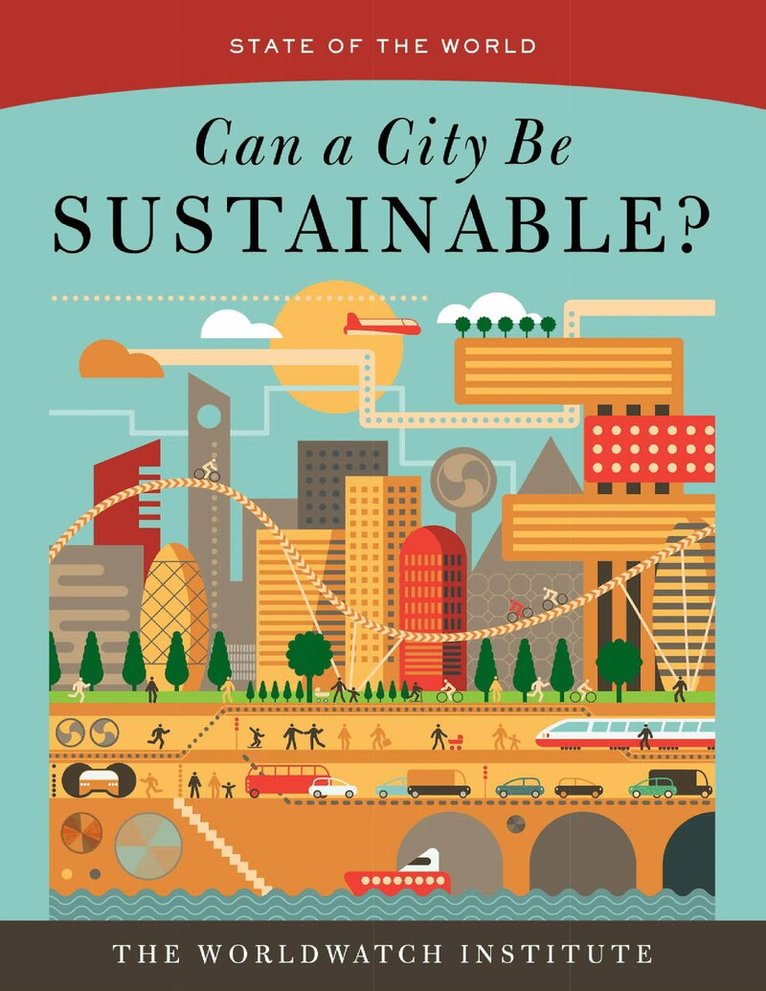
Cities are the world's future. Today, more than half of the global population, 3.7 billion people, are urban dwellers, and that number is expected to double by 2050. There is no question that cities are growing; the only debate is-over how they will grow. Will we invest in the physical and social infrastructure necessary for Iiveable, equitable, and-sustainable cities? In the latest edition of State of the World, the flagship publication of the Worldwatch Institute, experts from around the globe examine the core principles of sustainable urbanism and profile cities that are putting them into practice. State of the World first puts our current moment in context, tracing cities in the arc of human history. It also examines the basic structural elements of every city: materials and fuels; people and economics; and biodiversity. In part two, professionals working on some of the world's most inventive urban sustainability projects share their first-hand experience. Success stories come from places as diverse as Ahmedabad, India; Freiburg, Germany; and Shanghai, China. In many cases, local people are acting to improve their cities, even when national efforts are stalled.Parts three and four examine cross-cutting issues that affect the success of all cities. Topics range from the nitty-gritty of handling waste and developing public transportation to civic participation and navigating dysfunctional government. Throughout, readers discover the most pressing challenges facing communities and the most promising solutions currently being developed. The result is a snapshot of cities today and a vision for global urban sustainability tomorrow.