Strong Ideas - Böcker
Visar alla böcker i serien Strong Ideas. Handla med fri frakt och snabb leverans.
4 produkter
4 produkter
277 kr
Skickas
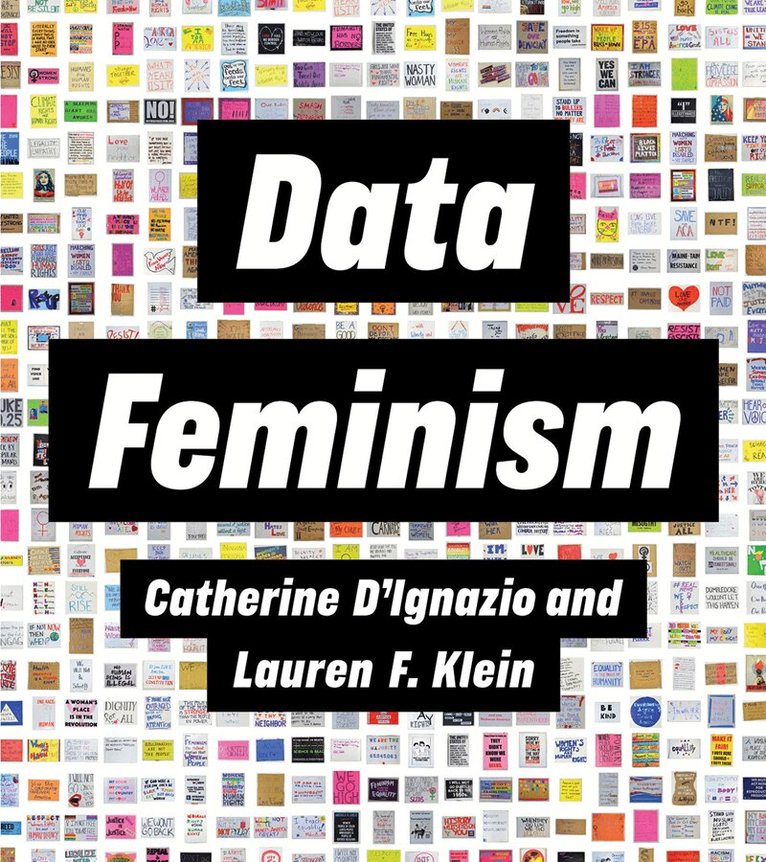
Cutting edge strategies for thinking about data science and data ethics through an intersectional feminist lens.“Without ever finger-wagging, Data Feminism reveals inequities and offers a way out of a broken system in which the numbers are allowed to lie.”—WIREDToday, data science is a form of power. It has been used to expose injustice, improve health outcomes, and topple governments. But it has also been used to discriminate, police, and surveil. This potential for good, on the one hand, and harm, on the other, makes it essential to ask: Data science by whom? Data science for whom? Data science with whose interests in mind? The narratives around big data and data science are overwhelmingly white, male, and techno-heroic. In Data Feminism, Catherine D'Ignazio and Lauren Klein present a new way of thinking about data science and data ethics—one that is informed by intersectional feminist thought. Illustrating data feminism in action, D'Ignazio and Klein show how challenges to the male/female binary can help challenge other hierarchical (and empirically wrong) classification systems. They explain how, for example, an understanding of emotion can expand our ideas about effective data visualization, and how the concept of invisible labor can expose the significant human efforts required by our automated systems. And they show why the data never, ever “speak for themselves.”Data Feminism offers strategies for data scientists seeking to learn how feminism can help them work toward justice, and for feminists who want to focus their efforts on the growing field of data science. But Data Feminism is about much more than gender. It is about power, about who has it and who doesn't, and about how those differentials of power can be challenged and changed.
287 kr
Skickas inom 3-6 vardagar
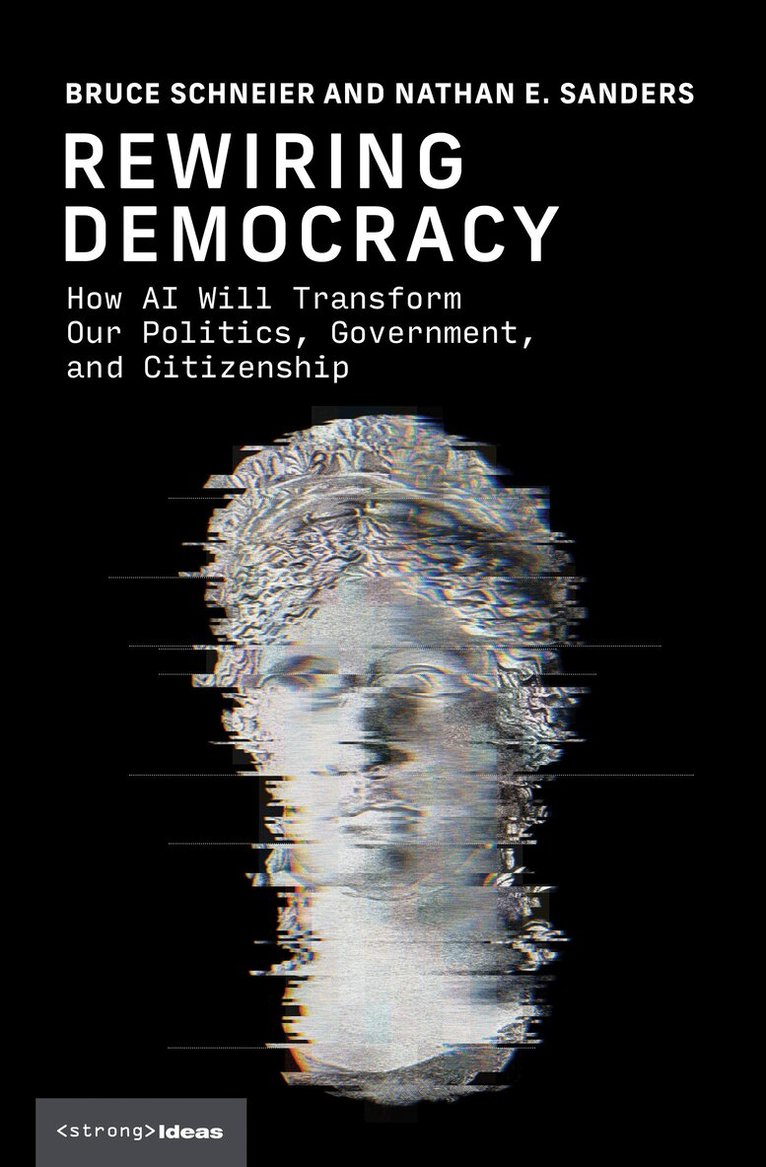
Rewiring Democracy
How AI Will Transform Our Politics, Government, and Citizenship
Inbunden, Engelska, 2025
253 kr
Skickas
From the New York Times bestselling author of The Hacker's Mind and Data & Goliath, an informative and wide-ranging exploration of how AI will alter every facet of democracy, and how to harness the technology to distribute rather than concentrate power. AI will change democracy. The only question is how. AI s impact on democracy will go far beyond headline-grabbing political deepfakes and automated misinformation. Everywhere it will be used, it will create risks and opportunities to shake up long-standing power structures. In this highly readable and advisedly optimistic book, Rewiring Democracy, security technologist Bruce Schneier and data scientist Nathan Sanders cut through the AI hype and examine the myriad ways that AI could dramatically change every aspect of democracy for both good and ill. The authors describe how the sophistication of AI will fulfill demands from lawmakers for more complex legislation, reducing deference to the executive and altering the balance of power between legislators and administrators. They show how the scalability of AI is enabling civil servants to enforce regulations on corporations used to skirting the rules, which will reshape private-sector behavior. They also explain how both lawyers and judges will leverage the speed of AI, upending how we think about law enforcement, litigation, and dispute resolution. Whether these outcomes enhance or degrade democracy depends on how we shape the development and use of AI technologies. Powerful players in private industry and public life are already using AI to increase their influence, and AIs built by corporations to drive shareholder value aren t designed to deliver the fairness and trust necessary to enhance democratic governance. But, steered in the right direction, the broad scope of an AI-augmented democracy would help citizens build consensus, express their voice, and organize against anti-democratic policies. Democracy is facing new challenges worldwide, and AI will be a part of that. It can inform, empower, and engage citizens. It can also disinform, disempower, and disengage them. The choice is up to us. Schneier and Sanders blaze the path forward, showing us how we can use it to make an AI-infused democracy stronger and more participatory.
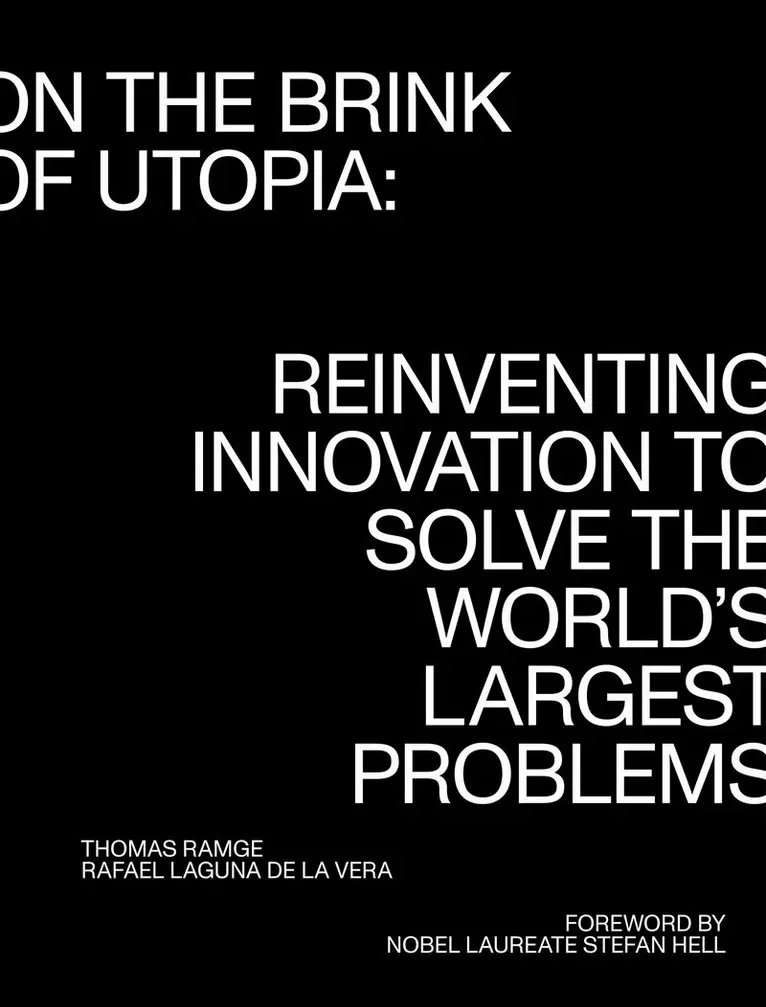
On the Brink of Utopia
Reinventing Innovation to Solve the World's Largest Problems
Häftad, Engelska, 2023
334 kr
Skickas inom 3-6 vardagar
A new and coherent framework for fostering the breakthrough innovations that we urgently need to confront our collective future.We live in less innovative times than we think. Despite having made major technological advancements in a few areas, we are still left with enormous unsolved challenges. A radical shift in the culture of innovation is needed. On the Brink of Utopia, by authors Thomas Ramge and Rafael Laguna de la Vera, and with a foreword written by Nobel Laureate Stefan Hell, offers just that—a new and coherent framework for fostering breakthrough innovations for human progress. In their “Innovation Leap Paradigm,” they present seven steps in seven chapters and answer three simple questions: What great challenges need to be tackled? Who makes tech leaps? And finally, what political, economic, and cultural environments foster radical innovation? The authors sketch out a future in which technology will solve real problems, anywhere from climate change and hunger to obesity and menstrual pain. They envision a future in which biotechnologists work from a platform that enables them to develop effective drugs within months for any emerging virus, where green energy will be too cheap to meter and aerial carbon can be transmuted into a valuable commodity at scale. Offering a new perspective on innovation that centers not just American readers but also readers from all over the world, On the Brink of Utopia is a hopeful and visionary book that reimagines the roles of innovators, citizens, governments, and financial markets to foster innovation leaps that maximize the well-being of the greatest number of people.