Studies in Historical Archaeoethnology - Böcker
Visar alla böcker i serien Studies in Historical Archaeoethnology. Handla med fri frakt och snabb leverans.
9 produkter
9 produkter
Del 1 - Studies in Historical Archaeoethnology
After Empire
Towards an Ethnology of Europe's Barbarians
Häftad, Engelska, 1995
322 kr
Skickas inom 10-15 vardagar
Studies of the customs and beliefs of barbarian peoples who migrated westwards and settled in Western Europe from the close of the Roman empire to the ninth century.The decline of the Roman Empire was compounded by the spread westwards of tribes from Eastern Europe, settling areas from which the indigenous populations had been cleared by the spread of the power of Rome; those populations themselves, notably the Celts, were pushed to the fringes of the former empire. These migrations of barbarian peoples between the fourth and ninth centuries left no historical record in the accepted sense, but it is the recovery of the customs and beliefs of these populations that forms the common purpose of the studies in this book, for during these centuries the traits and attitudes developed which are at the root of present-day Europe: feudalism, the statuslevel achieved by the merchant class, the beginnings of an ideology that led to the separation of church and state, the demise of slavery as an inefficient mode of production, the origin of national identities.The late GIORGIO AUSENDA taught at the Center for Interdisciplinary Research on Social Stress, San Marino.Contributors: GIORGIO AUSENDA, JULIAN D. RICHARDS, JOHN HINES, DAVID TURTON, ROSS BALZARETTI, DENNIS H. GREEN, SVEN SCHÜTTE, DAVID N. DUMVILLE, MORTEM AXBOE, IAN N. WOOD
Del 5 - Studies in Historical Archaeoethnology
Scandinavians from the Vendel Period to the Tenth Century
An Ethnographic Perspective
Inbunden, Engelska, 2001
1 457 kr
Skickas inom 10-15 vardagar
Ethnographic studies trace the background to and impact of urbanisation and Christianisation, and the development of royal power, which stimulated the transition from the Viking age to the medieval period.Using the evidence of archaeology, poetry, legal texts and annals, this volume investigates the social, economic and symbolic structures of early Scandinavia at the time of the Viking expansion. The contributors provide an outlineethnograpjy, covering dwellings and settlements, kinship and social relations, law, political structures and external relations, rural and urban economies, and the ideology of warfare. The topics are discussed through case-studies from the contributors' recent research, illustrating the changing scholarly interpretations of this formative period in Scandinavian history. By addressing these key research questions, the contributions trace the background toand the impact of urbanisation and Christianisation, and the development of royal power, which stimulated the transition from the Viking age to the medieval period in Scandinavia. This book brings together for the first time in English a wealth of current Scandinavian archaeological, historical and cultural research.JUDITH JESCH is Reader in Viking Studies at the University of Nottingham. Contributors: LENA HOLMQUIST OLAUSSON, BENTE MAGNUS, E. VESTERGAARD, BIRGIT ARRHENIUS, STEFAN BRINK, LISE BENDER JORGENSEN, SVEND NIELSEN, FRANDS HERSCHEND, NIELS LUND, DAVID N. DUMVILLE, JUDITH JESCH, DENNIS H. GREEN.
Del 10 - Studies in Historical Archaeoethnology
Frisians of the Early Middle Ages
Inbunden, Engelska, 2021
653 kr
Skickas inom 7-10 vardagar
Multi-disciplinary approaches shed fresh light on the Frisian people and their changing cultures.Frisian is a name that came to be identified with one of the territorially expansive, Germanic-speaking peoples of the Early Middle Ages, occupying coastal lands south and south-east of the North Sea. Highly varied manifestations of Frisian-ness can be traced in and around the north-western corner of the European continent in cultural, linguistic, ethnic and political forms across two thousand years to the present day.The thematic studies in this volume foreground how diverse "Frisians" in different places and contexts could be. They draw on a range of multi-disciplinary sources and methodologies to explore a comprehensive range of social, economic and ideological aspects of early Frisian culture, from the Dutch province of Zeeland in the south-west to the North Frisian region in the north-east. Chronologically, there is an emphasis on the crucial developments of the seventh and eighth centuries AD, alongside demonstrations of how later evidence can retrospectively clarify long-term processes of group formation.The essays here thus add substantial new evidence to our understanding of a crucial stage in the evolution of an identity which had to develop and adapt to changing influences and pressures.
Del 10 - Studies in Historical Archaeoethnology
Frisians of the Early Middle Ages
Häftad, Engelska, 2023
442 kr
Skickas inom 7-10 vardagar
Multi-disciplinary approaches shed fresh light on the Frisian people and their changing cultures.Frisian is a name that came to be identified with one of the territorially expansive, Germanic-speaking peoples of the Early Middle Ages, occupying coastal lands south and south-east of the North Sea. Highly varied manifestations of Frisian-ness can be traced in and around the north-western corner of the European continent in cultural, linguistic, ethnic and political forms across two thousand years to the present day.The thematic studies in this volume foreground how diverse "Frisians" in different places and contexts could be. They draw on a range of multi-disciplinary sources and methodologies to explore a comprehensive range of social, economic and ideological aspects of early Frisian culture, from the Dutch province of Zeeland in the south-west to the North Frisian region in the north-east. Chronologically, there is an emphasis on the crucial developments of the seventh and eighth centuries AD, alongside demonstrations of how later evidence can retrospectively clarify long-term processes of group formation.The essays here thus add substantial new evidence to our understanding of a crucial stage in the evolution of an identity which had to develop and adapt to changing influences and pressures.
Del 2 - Studies in Historical Archaeoethnology
Anglo-Saxons from the Migration Period to the Eighth Century
An Ethnographic Perspective
Häftad, Engelska, 2003
504 kr
Skickas inom 7-10 vardagar
The culture of early Anglo-Saxon England explored from an inter-disciplinary perspective.A stimulating contribution to the field of Anglo-Saxon studies. MEDIEVAL ARCHAEOLOGYA mind-stretching read. NOTES AND QUERIESThe papers contained in this volume, by leading researchers in the field, cover a wide range of social, economic and ideological aspects of the culture of early Anglo-Saxon England, from an inter-disciplinary perspective. The status of `Anglo-Saxondom' and `Englishness' as cultural and ethnic categories are a recurrent focus of debate, while other topics include the reconstruction of settlement patterns; social and political structures; farming in medieval England; and the spiritual world of the Anglo-Saxons. As a whole, the contributionsoffer fascinating insights into key contemporary research questions and projects, and into the character and problems of interdisciplinary approaches.Dr JOHN HINES is Reader in the School of History and Archaeology atthe University of Wales, Cardiff. Contributors: WALTER POHL, IAN WOOD, DELLA HOOKE, DOMINIC POWLESLAND, HEINRICH HÄRKE, THOMAS CHARLES-EDWARDS, PATRIZIA LENDINARA, PETER FOWLER, CHRISTOPHER SCULL, JANE HAWKES, D.N. DUMVILLE, JOHN HINES, GIORGIO AUSENDA
Del 7 - Studies in Historical Archaeoethnology
Ostrogoths from the Migration Period to the Sixth Century
An Ethnographic Perspective
Inbunden, Engelska, 2007
940 kr
Skickas inom 7-10 vardagar
Essays examining the Ostrogoths, the richest and most powerful Germanic tribe to emerge after the fall of the Roman Empire, and their role in the evolution of medieval Europe.Among the Germanic tribes who ruled the fragments of the western Roman empire, the Ostrogoths enjoyed the greatest wealth and splendour. Conquering Italy itself from the warlord Odoacer, they inherited the buildings, traditions, and administrative apparatus of imperial rule, and revived the empire in Spain, southern Gaul and the northwest Balkans. Aspects of their history and empire examined here include their ethnic identity in Italy and relations (as Asian heretics) with the Catholic Church; the vicissitudes of sixth century Rome, the monuments of the period in Ravenna; their influence on the economy, settlements, and social structures throughout Italy; the interweaving of society and administration with their internal and external politics; and the history of their Spanish empire. There are also studies of the Goths in eastern Europe before the emergence of the Ostrogoths, and under Hunnic rule. The whole significantly advances an understanding of how medieval Europe evolved from the combination of Roman civilisation with Germanic outsiders.Contributors: S. BARNISH, G.P. BROGLIO, T.S. BROWN, P.C. DIAZ, D.H. GREEN, W. HAUBRICHS, P. HEATHER, M. KAZANSKI, A. KOKOWSKI, F. MARAZZI, G. NOYE, I. WOOD
Del 8 - Studies in Historical Archaeoethnology
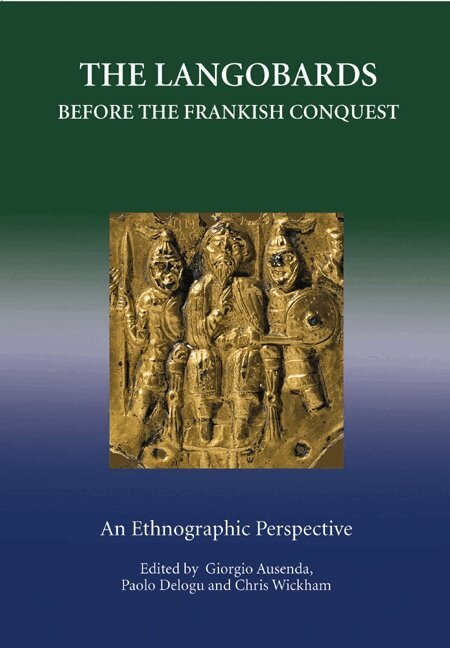
Langobards before the Frankish Conquest
An Ethnographic Perspective
Inbunden, Engelska, 2009
1 437 kr
Skickas inom 7-10 vardagar
Essays examining the Langobards, with important conclusions for early medieval Italy.The Langobards or Lombards were the last Germanic group to invade the Roman Mediterranean, crossing the Alps into Italy in 568-9. They were nonetheless one of the longest-lasting, for their state survived Charlemagne's conquest in774, and was the core of the medieval kingdom of Italy. The incompleteness of their conquest of Italy was also one of the root causes of Italian division for over 1300 years after their arrival. But they present a challenge to the historian, for most of the evidence for them dates to the last half-century of their independence, up to 774, a period in which Langobard Italy was a coherent and apparently tightly-governed state by early medieval standards. How they reached this from the incoherent and disorganised situation visible in late sixth-century Italy is still a matter of debate.The historians and archaeologists who contribute to this volume discuss Langobard archaeologyand material culture both before and after their invasion, Langobard language, political organisation, the church, social structures, family structures, and urban economy. It is thus an important and up to date starting point forfuture research on early medieval Italy.Contributors: G. AUSENDA, S. BARNISH, S. BRATHER, T.S. BROWN, N. CHRISTIE, M. COSTAMBEYS, P. DELOGU, D. GREEN, W. HAUBRICHS, J. HENNING, B. WARD-PERKINS, C. WICKHAM.
Del 5 - Studies in Historical Archaeoethnology
Scandinavians from the Vendel Period to the Tenth Century
An Ethnographic Perspective
Häftad, Engelska, 2012
376 kr
Skickas inom 7-10 vardagar
Ethnographic studies trace the background to and impact of urbanisation and Christianisation, and the development of royal power, which stimulated the transition from the Viking age to the medieval period.Using the evidence of archaeology, poetry, legal texts and annals, this volume investigates the social, economic and symbolic structures of early Scandinavia at the time of the Viking expansion. The contributors provide an outlineethnography, covering dwellings and settlements, kinship and social relations, law, political structures and external relations, rural and urban economies, and the ideology of warfare. The topics are discussed through case-studies, illustrating the changing scholarly interpretations of this formative period in Scandinavian history. By addressing these key research questions, the contributions trace the background to and the impact of urbanisation and Christianisation, and the development of royal power, which stimulated the transition from the Viking age to the medieval period in Scandinavia.JUDITH JESCH is Professor in Viking Studies at the University of Nottingham. Contributors: LENA HOLMQUIST OLAUSSON, BENTE MAGNUS, E. VESTERGAARD, BIRGIT ARRHENIUS, STEFAN BRINK, LISE BENDER JORGENSEN, SVEND NIELSEN, FRANDS HERSCHEND, NIELS LUND, DAVID N. DUMVILLE, JUDITH JESCH, DENNIS H. GREEN.
Del 9 - Studies in Historical Archaeoethnology
Baiuvarii and Thuringi
An Ethnographic Perspective
Inbunden, Engelska, 2014
1 437 kr
Skickas inom 7-10 vardagar
A study of two Germanic tribes, the Baiuvarii and Thuringi, looking at their origins, development, and customs between the fifth and the eighth centuries.The large neighbouring tribes of the Baiuvarii and Thuringi, who lived between the Alps and the River Elbe from the fifth to eighth centuries, are the focus of this book. Using a variety of different sources drawn from the fieldsof archaeology, history, linguistics and religion, the contributions discuss how an ethnos, a gens, or a tribe, such as the Baiuvarii or Thuringi, might appear in the written and archaeological evidence. For the Thuringi tribal traditions started around the year 400 or even earlier, while the Baiuvarii experienced a much later ethnogenesis from both immigrants and a local, partly Romance population in the mid-sixth century.The Baiuvarii and Thuringi are studied together because of the astonishing connections between their two settlement landscapes. In the context of the row-grave civilisation the Thuringi belonged primarily to the eastern, the Baiuvarii to thewestern sphere. The kingdom of the Thuringi was assimilated into the Merovingian Empire after their defeat by the Franks in the 530s, which also changed their burial customs to the style of the western row-grave zone. In contrast,the Baiuvarii were not "Frankicised" until more than a century later and their grave customs remained more typically "Bavarian". The chapters highlight typical features of each region and beyond: settlements, agricultural economy, law, religion, language, names, craftsmanship, grave goods, mobility and communication.Janine Fries-Knoblach is a freelance archaeologist with a special interest in the fields of settlements, agriculture and technology of protohistoric Central Europe, and has taught at a number of German universities; Heiko Steuer is Professor Emeritus of Prehistoric and Protohistoric Archaeology and Archaeology of the Middle Ages at Freiburg University, Germany, with a special interest in the social and economic history of Germanic tribes in Central Europe; John Hines is Professor of Archaeology at Cardiff University and is supervising the publication of the remaining volumes inthis series. Contributors: Giorgio Ausenda, Janine Fries-Knoblach, Heike Grahn-Hoek, Dennis H. Green, Wolfgang Haubrichs, Joachim Henning, Max Martin, Peter Neumeister, Heiko Steuer, Claudia Theune-Vogt, Ian Wood.