Studies in Rhetoric and Communications - Böcker
Visar alla böcker i serien Studies in Rhetoric and Communications. Handla med fri frakt och snabb leverans.
2 produkter
2 produkter
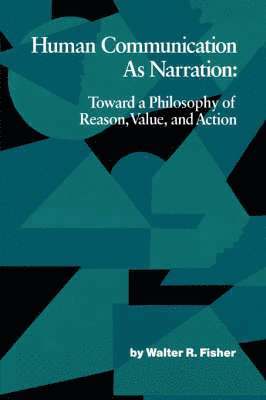
Human Communication As Narration
Toward a Philosophy of Reason, Value, and Action
Häftad, Engelska, 1989
312 kr
Skickas inom 10-15 vardagar
This book addresses questions that have concerned rhetoricians, literary theorists, and philosophers since the time of the pre-Socratics and the Sophists: How do people come to believe and to act on the basis of communicative experiences? What is the nature of reason and rationality in these experiences? What is the role of values in human decision making and action? How can reason and values be assessed? In answering these questions, Professor Fisher proposes a conceptualisation of humankind as homo narrans, that all forms of human communication need to be seen as stories—symbolic interpretations of aspects of the world occurring in time and shaped by history, culture, and character; that individuated forms of discourse should be considered "good reasons"—values or value-laden warrants for believing or acting in certain ways; and that a narrative logic that all humans have natural capacities to employ ought to be conceived of as the logic by which human communication is assessed.
739 kr
Skickas inom 10-15 vardagar
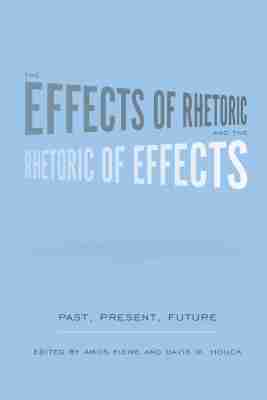
The Effects of Rhetoric and the Rhetoric of Effects tackles one of the thorniest and longest-standing issues in the discipline of rhetoric - the issue of effects. While the field’s founders valued the assessment of a speech’s effects, later scholars moved away from it, privileging textual analysis, symbols, and meaning. Though situated and strategic oral rhetoric is created for instrumental ends, its study has been limited in recent decades. Editors Amos Kiewe and Davis W. Houck seek to resurrect the study of effects and consider it as the cornerstone of the rhetorical critic’s enterprise - what rhetoric actually does.In 1925, when Herbert Wichelns essentially created the field of rhetorical criticism, he founded it on the cornerstone of effect: what did oral rhetoric do to an observable audience? Wichelns’s founding statement held sway for decades, even as rhetorical critics struggled doggedly to determine “causes” to rhetoric’s effects. As the speech discipline matured and cast off the ghost of Aristotelian criticism and its seeming obsession with effect, critics eventually adopted the study of symbol systems as a guiding thematic. That thematic, while enormously productive, never resolved larger questions of what these symbol systems might be doing - beyond their incipient meaning.In this volume scholars across several subfields of rhetorical criticism return to the study of effect in a world impossibly different from pre–World War II era scholarship. With the rhetorical revolution and the linguistic turn across the humanities and social sciences, effects can and should be reconceptualized to engage the myriad ways that rhetoric matters to audiences - whether in the form of listening to a speech or reading an online script for a documentary. Rhetoricians have always known that rhetoric matters; this volume asks how and how we might demonstrate that.