Studies in the History of Civil Engineering – serie
Visar alla böcker i serien Studies in the History of Civil Engineering. Handla med fri frakt och snabb leverans.
15 produkter
15 produkter
24 461 kr
Tillfälligt slut
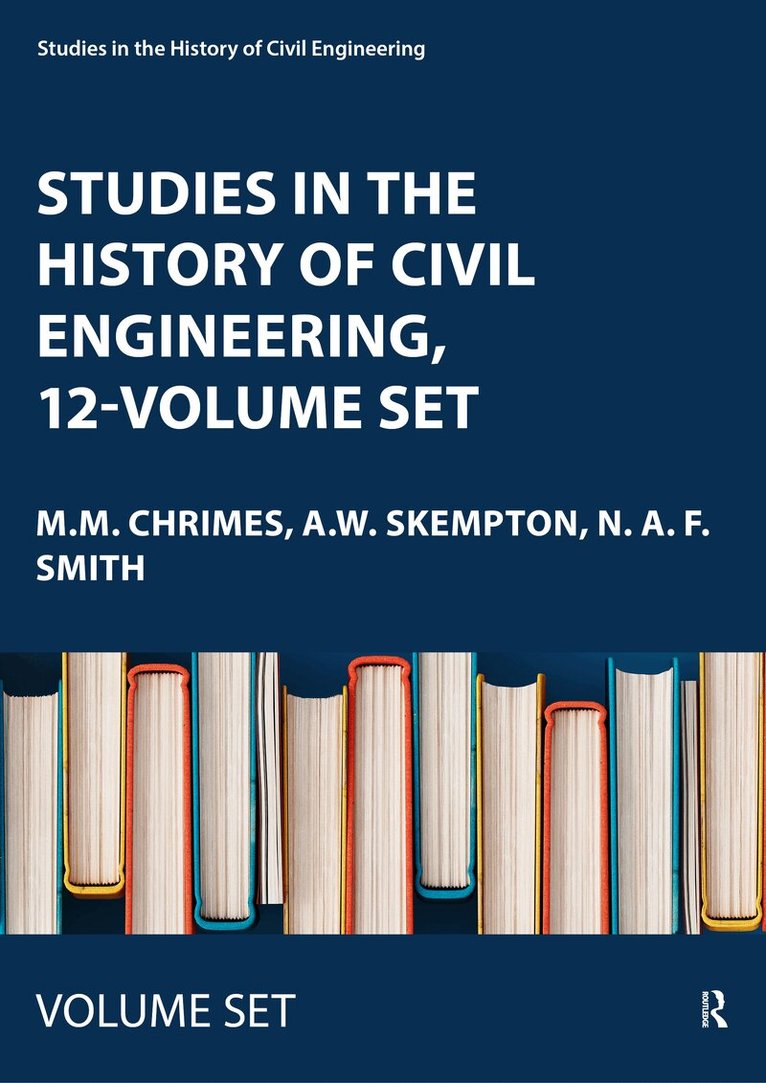
Studies in the History of Civil Engineering focuses on the following areas: · the analysis of early structures to discover how ancient or medieval builders used the materials available to them, and the principles upon which they worked; · the ideas and practices of design as employed by both engineers and architects; · the development of new materials and techniques, from wooden trusses to cast iron and concrete; · the investigation of the great engineering projects that began to burgeon with the 18th century, first in Britain, then elsewhere, underpinned by advances in science which provided a new theoretical framework upon which to base the engineering. These volumes reveal the implications for the history of architecture of choices of material, technique and structure. They aim also to reflect the political and economic constraints which so often shaped what could be achieved, and the inter-relationship between the history of civil engineering and economic history: the engineering was both stimulated by, and made possible the spread of industrialization. Not least, the series is concerned to examine the lives, attitudes and careers of the men who emerged to form the new profession of the engineer. Studies in the History of Civil Engineering comprises 12 volumes. Each focuses on a particular topic, edited by an expert in that field. They reprint a selection of papers which have proved of particular importance, and which exemplify the current state of knowledge and the historiography. Originally published in wide range of scholarly journals, conference proceedings and the like, many hard to consult, these papers are now reprinted together under hard covers, making them readily accessible, even for non-specialists. Each volume opens with a substantial new introduction by the editor, to assess the field and place the papers in their context, and is fully indexed. The series constitutes an authoritative reference library, not just for those interested in the history of civil engineering, but also those studying economic history and the history of science and, above all, of architecture.
2 806 kr
Skickas inom 10-15 vardagar
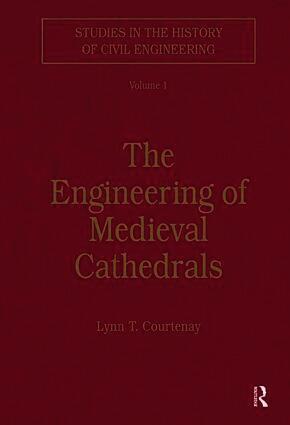
The great cathedrals and churches of the medieval West continue to awe. How were they built, and why do they remain standing? What did their builders know about what they were doing? These questions have given rise to considerable controversy, which is fully reflected in the papers selected here. The first section of the book is concerned with the medieval builders and their design methods; the second focuses on engineering issues in the context of the infamous collapse of the choir at Beauvais in 1284. The following papers extend the analysis into the 15th century, looking for example at Brunelleschi’s dome for Florence Cathedral, and deal with the often neglected structures of roofs, towers and spires.
819 kr
Skickas inom 10-15 vardagar
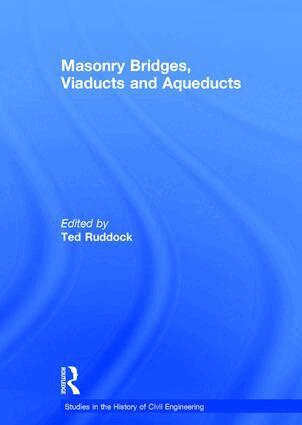
For 2,000 years the most durable spanning structures have been built of masonry, and the surviving bridges of the Roman Empire have challenged master masons, architects and engineers to emulate and surpass them. Down the centuries, bridge-builders have been commissioned by monarchs, bishops, councils of state, cities, private individuals and, more recently, waterway and railway companies. The studies collected in this volume focus chiefly on the bridges, viaducts and aqueducts themselves and the actions of the designers and builders, but also encompass the political, economic and social contexts and outcomes of their creation. Famous bridges in Britain, Italy, France, Iran and the USA are all featured. Narratives of conception, design and construction predominate, but there are also papers on construction techniques, on the analysis of documentary sources, and on the continuing search by modern engineers for satisfactory scientific description of the strength and stability of arch bridges.
3 200 kr
Skickas inom 10-15 vardagar
Man’s control over the elements of land and water for the purposes of agriculture was fundamental to the development of civilisations in the past, and remains so today. This volume deals with the processes of irrigation, and land drainage and reclamation, and illustrates the variety of technological and engineering solutions in a wide chronological and geographical perspective. The sophistication of many pre-modern systems is clear, as is the impact of modern technologies. Important points that emerge are that there was no steady or linear progression in techniques across time - instances of the transfer of ideas are balanced by cases of independent development - and that the correlations between irrigation systems and social structures demand more complex explanations than often proposed.
2 724 kr
Skickas inom 10-15 vardagar
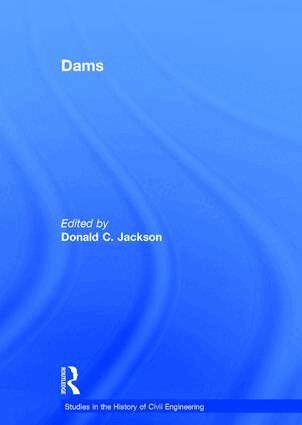
Dams have been used to control water for thousands of years, with the oldest known dam being a small earthen structure in present-day Jordan dating to c.4000 BCE. Since then, cultures throughout the world have practised the art of dam-building and the technology has evolved in myriad ways. The papers selected here examine the key technical issues influencing dam construction from ancient times to the early 20th century. In addition they illustrate why various human societies have built dams and how ’social’ (or seemingly ’non-technical’) factors have influenced the process of dam design. Though hydraulic engineering is the primary focus of the book, it also reveals a keen interest in questions of water resources and environmental history.
3 280 kr
Skickas inom 7-10 vardagar
This volume traces the evolution of the concept of Public Health and reveals the importance of political will and public spending in this field of civil engineering. Design, construction, operation and maintenance of water-supply and main drainage works are discussed. The period covered extends from Roman engineering through to the early 20th century, with examples from Europe, America and Japan.
3 336 kr
Skickas inom 10-15 vardagar
During the 19th century, the engineering of ports and harbours became a large and specialised branch of the profession. This development began in ports in physically difficult locations and may be particularly identified with the growth of the Port of Liverpool. Stimulated by the arrival of ever-larger steamships and the heavy investment in port facilities that they demanded, it spread around much of the world. The opening papers give examples of what could be achieved in antiquity; the following ones set out the advances in design and technology from 1700 to the start of this century - and note some of the failures and recurrent problems. They also illustrate the critical importance of political and economic factors in determining what the engineers achieved.
819 kr
Skickas inom 10-15 vardagar
Between 1750 and 1850 the British landscape was transformed by a transport revolution which involved engineering works on a scale not seen in Europe since Roman times. While the economic background of the canal and railway ages are relatively well known and many histories have been written about the locomotives which ran on the railways, relatively little has been published on how the engineering works themselves were made possible. This book brings together a series of papers which seek to answer the questions of how canals and railways were built, how the engineers responsible organised the works, how they were designed and what the role of the contractors was in the process.
2 351 kr
Tillfälligt slut
Woodworking has been one of the most important technologies from the earliest times. Carpentry was important for buildings and bridges and as an integral part of most construction processes. The history of this subject has been explored by a variety of scholars, from archaeologists who have studied medieval timber techniques to engineers who have been interested in the development of bridges. The different studies have explored the methods of carpentry, the behaviour of the structures that were built and even the economic and social histories behind the development of carpentry techniques. This book collects together a number of papers representing this full range of scholarship as well as providing a general review of work in the field.
3 295 kr
Skickas inom 10-15 vardagar
This book deals with the period when iron became the dominant ’high-technology’ material, increasingly taking over from timber and masonry. It was necessary for the engines and machines of the new industries, but equally vital for the vast civil engineering works which supported this industrialisation. It was these works - mills, warehouses, dockyards, and above all bridges - which so impressed the public in the early 19th century. The papers selected here trace the evolving structural uses of cast and wrought iron in frames and roofs for buildings, and look in particular at the development of bridge design and construction, in America, France, and Russia, as well as in Britain. They cover the processes of design and testing, and at the same time throw much light on the attitudes and careers of the engineers themselves.
2 806 kr
Skickas inom 10-15 vardagar
This volume covers the second great period of developments in iron construction from 1850, following its establishment as a structural material described in volume 9 of this series. Using the Crystal Palace of 1851 as a starting-point, the papers trace the history of iron-frame construction in Britain, France and America, and show its importance in fireproof construction, and in lattice truss and arch bridge design. A final group of papers illustrates the emergence of steel in framed buildings in both Britain and America. The selection brings out the important and daring contribution of individual engineers in their use of this material.
2 806 kr
Skickas inom 10-15 vardagar
This volume traces the process by which reinforced concrete emerged during the 19th century as the successful building material of today. Early work on testing the strength of cements led into a period of experimental work by a number of engineers, notably in Britain, France and America, to devise successful systems of embedding iron in concrete in such a way that the two materials would act together to carry imposed loads. The papers take the story to the early years of the 20th century and provide a thorough review of the gradual evolution of ideas and the contributions of individuals to this technology.
2 806 kr
Skickas inom 10-15 vardagar
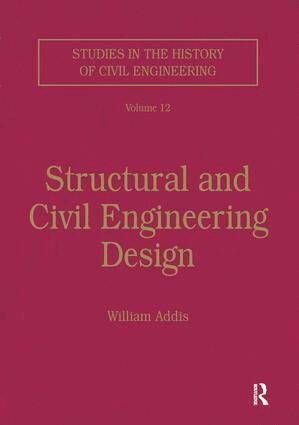
The importance of design has often been neglected in studies considering the history of structural and civil engineering. Yet design is a key aspect of all building and engineering work. This volume brings together a range of articles which focus on the role of design in engineering. It opens by considering the principles of design, then deals with the application of these to particular subjects including bridges, canals, dams and buildings (from Gothic cathedrals to Victorian mills) constructed using masonry, timber, cast and wrought iron.
791 kr
Skickas inom 10-15 vardagar
The great cathedrals and churches of the medieval West continue to awe. How were they built, and why do they remain standing? What did their builders know about what they were doing? These questions have given rise to considerable controversy, which is fully reflected in the papers selected here. The first section of the book is concerned with the medieval builders and their design methods; the second focuses on engineering issues in the context of the infamous collapse of the choir at Beauvais in 1284. The following papers extend the analysis into the 15th century, looking for example at Brunelleschi’s dome for Florence Cathedral, and deal with the often neglected structures of roofs, towers and spires.
791 kr
Skickas inom 10-15 vardagar
The importance of design has often been neglected in studies considering the history of structural and civil engineering. Yet design is a key aspect of all building and engineering work. This volume brings together a range of articles which focus on the role of design in engineering. It opens by considering the principles of design, then deals with the application of these to particular subjects including bridges, canals, dams and buildings (from Gothic cathedrals to Victorian mills) constructed using masonry, timber, cast and wrought iron.