Studies in the Modern Presidency - Böcker
Visar alla böcker i serien Studies in the Modern Presidency. Handla med fri frakt och snabb leverans.
7 produkter
7 produkter
1 280 kr
Skickas inom 10-15 vardagar
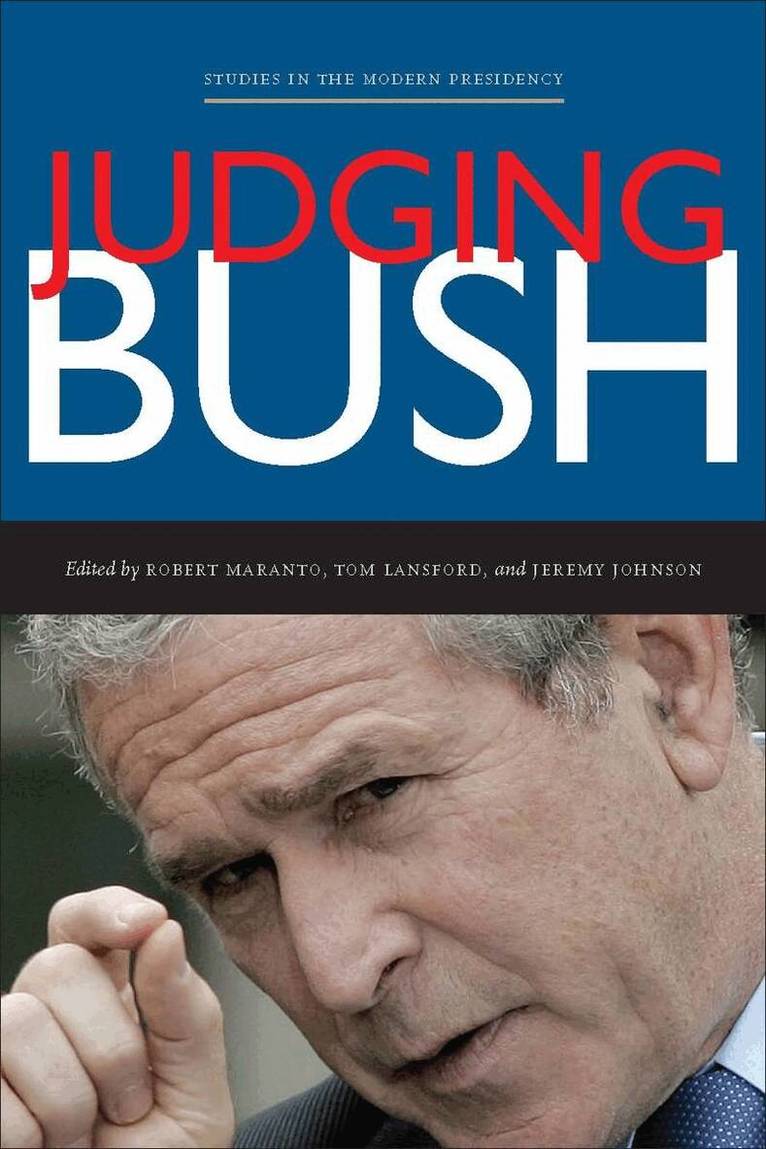
There is no shortage of opinions on the legacy that George W. Bush will leave as 43rd President of the United States. Recognizing that Bush the Younger has been variously described as dimwitted, opportunistic, innovative, and bold, it would be presumptuous to draw any hard and fast conclusions about how history will view him. Nevertheless, it is well within academia's ability to begin to make preliminary judgments by weighing the evidence we do have and testing assumptions. In the wake of the September 11 terrorist attacks and the initially successful military campaign in Afghanistan, Bush and his administration enjoyed nearly unprecedented popularity. But after failures in Iraq and in the federal government's response to Hurricane Katrina, Bush's approval ratings plummeted. Guided by a new framework, Judging Bush boldly takes steps to evaluate the highs and lows of the Bush legacy according to four types of competence: strategic, political, tactical, and moral. It offers a first look at the man, his domestic and foreign policies, and the executive office's relationship to the legislative and judicial branches from a distinguished and ideologically diverse set of award-winning political scientists and White House veterans. Topics include Bush's decision-making style, the management of the executive branch, the role and influence of Dick Cheney, elections and party realignment, the Bush economy, Hurricane Katrina, No Child Left Behind, and competing treatments of the wars in Iraq and Afghanistan. Contributors include Lara M. Brown, David B. Cohen, Jeffrey E. Cohen, Laura Conley, Jack Covarrubias, John J. DiIulio, Jr., William A. Galston, Frederick M. Hess, Karen M. Hult, Lori A. Johnson, Robert G. Kaufman, Anne M. Khademian, Lawrence J. Korb, Patrick McGuinn, Michael Moreland, Costas Panagopoulos, James P. Pfiffner, Richard E. Redding, Neil Reedy, Andrew Rudalevige, Charles E. Walcott, and Shirley Anne Warshaw.
308 kr
Skickas inom 7-10 vardagar
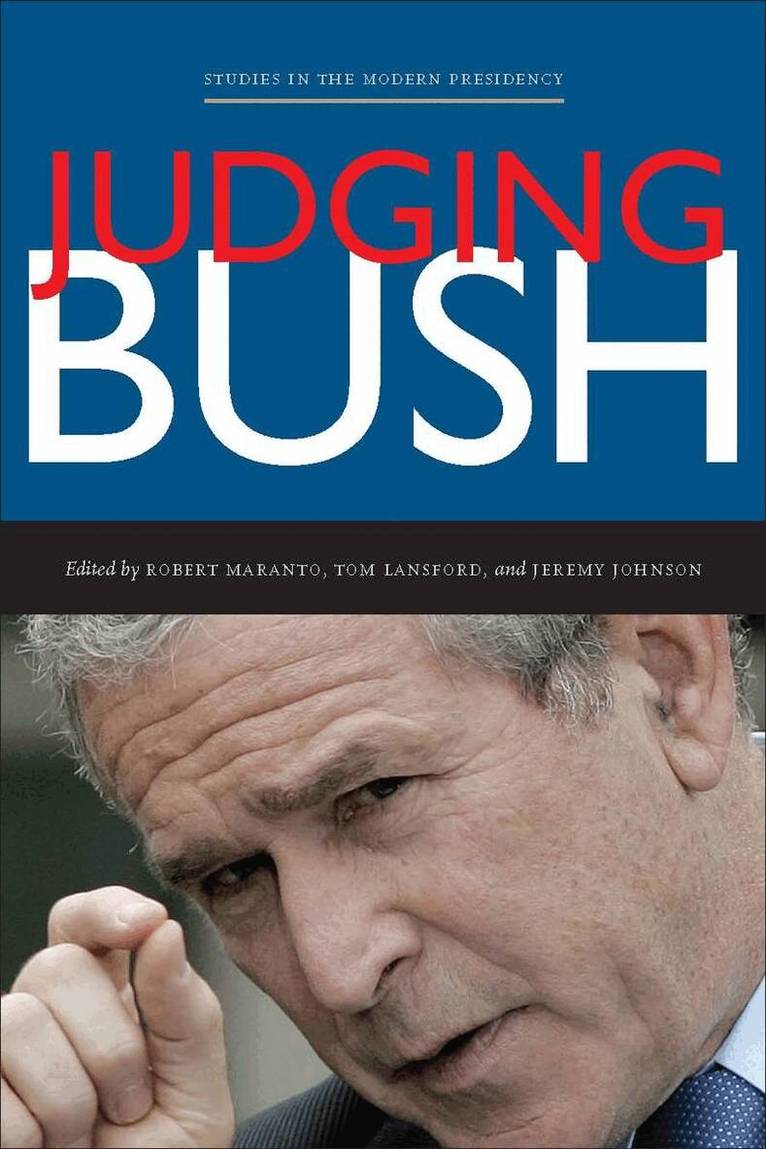
There is no shortage of opinions on the legacy that George W. Bush will leave as 43rd President of the United States. Recognizing that Bush the Younger has been variously described as dimwitted, opportunistic, innovative, and bold, it would be presumptuous to draw any hard and fast conclusions about how history will view him. Nevertheless, it is well within academia's ability to begin to make preliminary judgments by weighing the evidence we do have and testing assumptions. In the wake of the September 11 terrorist attacks and the initially successful military campaign in Afghanistan, Bush and his administration enjoyed nearly unprecedented popularity. But after failures in Iraq and in the federal government's response to Hurricane Katrina, Bush's approval ratings plummeted. Guided by a new framework, Judging Bush boldly takes steps to evaluate the highs and lows of the Bush legacy according to four types of competence: strategic, political, tactical, and moral. It offers a first look at the man, his domestic and foreign policies, and the executive office's relationship to the legislative and judicial branches from a distinguished and ideologically diverse set of award-winning political scientists and White House veterans. Topics include Bush's decision-making style, the management of the executive branch, the role and influence of Dick Cheney, elections and party realignment, the Bush economy, Hurricane Katrina, No Child Left Behind, and competing treatments of the wars in Iraq and Afghanistan. Contributors include Lara M. Brown, David B. Cohen, Jeffrey E. Cohen, Laura Conley, Jack Covarrubias, John J. DiIulio, Jr., William A. Galston, Frederick M. Hess, Karen M. Hult, Lori A. Johnson, Robert G. Kaufman, Anne M. Khademian, Lawrence J. Korb, Patrick McGuinn, Michael Moreland, Costas Panagopoulos, James P. Pfiffner, Richard E. Redding, Neil Reedy, Andrew Rudalevige, Charles E. Walcott, and Shirley Anne Warshaw.
Breaking Through the Noise
Presidential Leadership, Public Opinion, and the News Media
Inbunden, Engelska, 2011
1 158 kr
Skickas inom 7-10 vardagar
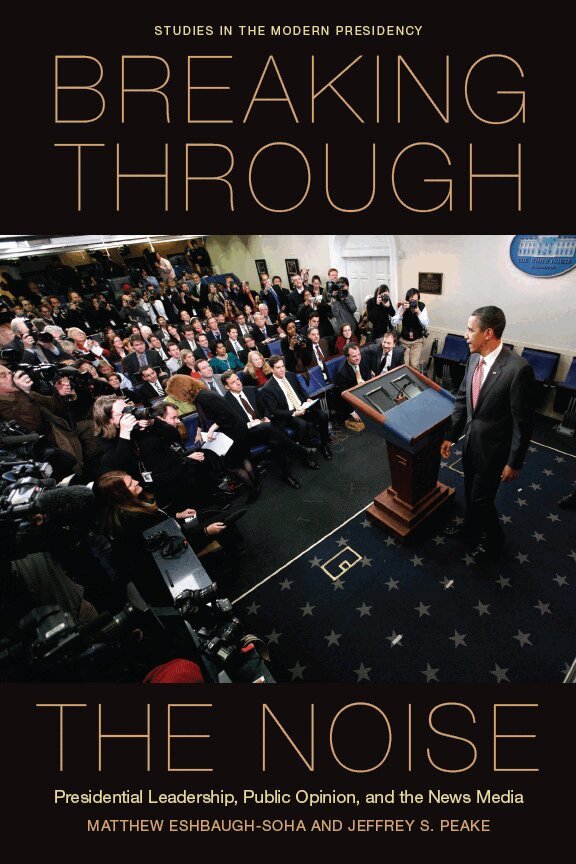
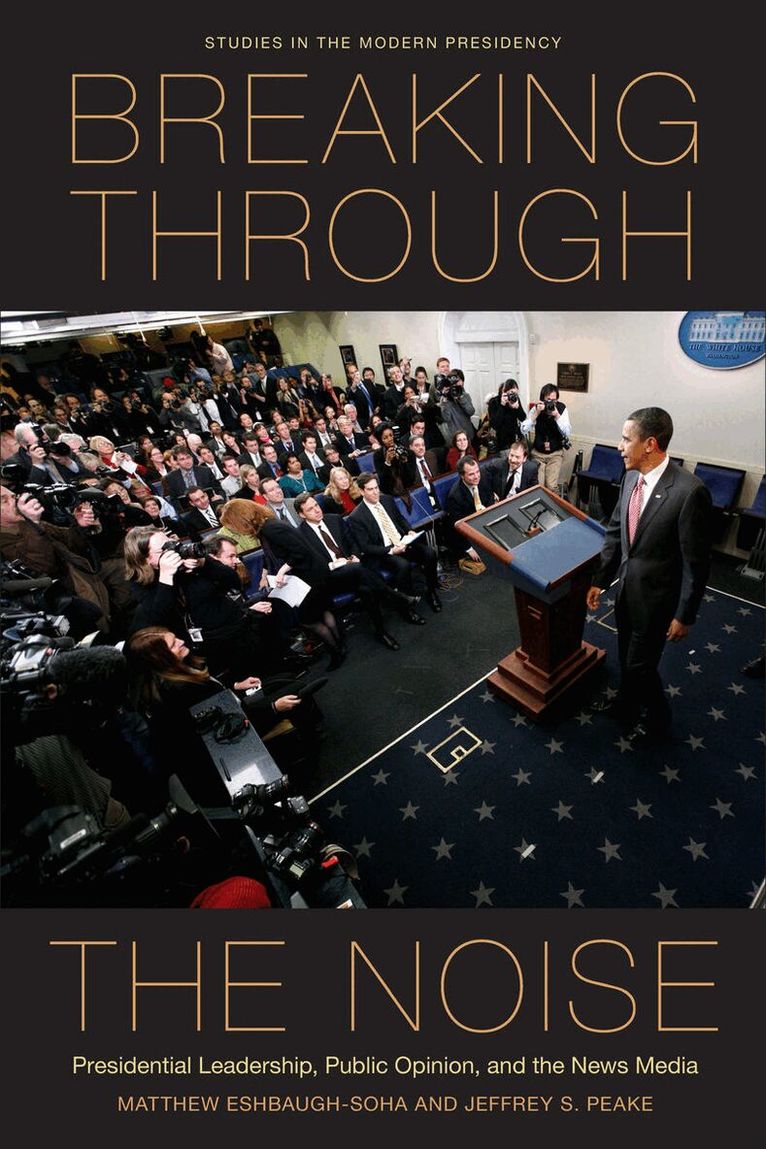
Modern presidents engage in public leadership through national television addresses, routine speechmaking, and by speaking to local audiences. With these strategies, presidents tend to influence the media's agenda. In fact, presidential leadership of the news media provides an important avenue for indirect presidential leadership of the public, the president's ultimate target audience. Although frequently left out of sophisticated treatments of the public presidency, the media are directly incorporated into this book's theoretical approach and analysis. The authors find that when the public expresses real concern about an issue, such as high unemployment, the president tends to be responsive. But when the president gives attention to an issue in which the public does not have a preexisting interest, he can expect, through the news media, to directly influence public opinion. Eshbaugh-Soha and Peake offer key insights on when presidents are likely to have their greatest leadership successes and demonstrate that presidents can indeed "break through the noise" of news coverage to lead the public agenda.
Breaking Through the Noise
Presidential Leadership, Public Opinion, and the News Media
Häftad, Engelska, 2011
282 kr
Skickas inom 7-10 vardagar
Modern presidents engage in public leadership through national television addresses, routine speechmaking, and by speaking to local audiences. With these strategies, presidents tend to influence the media's agenda. In fact, presidential leadership of the news media provides an important avenue for indirect presidential leadership of the public, the president's ultimate target audience. Although frequently left out of sophisticated treatments of the public presidency, the media are directly incorporated into this book's theoretical approach and analysis. The authors find that when the public expresses real concern about an issue, such as high unemployment, the president tends to be responsive. But when the president gives attention to an issue in which the public does not have a preexisting interest, he can expect, through the news media, to directly influence public opinion. Eshbaugh-Soha and Peake offer key insights on when presidents are likely to have their greatest leadership successes and demonstrate that presidents can indeed "break through the noise" of news coverage to lead the public agenda.
792 kr
Skickas inom 7-10 vardagar
Popular perception holds that presidents act "first and alone," resorting to unilateral orders to promote an agenda and head off unfavorable legislation. Little research, however, has considered the diverse circumstances in which such orders are issued. The Dual Executive reinterprets how and when presidents use unilateral power by illuminating the dual roles of the president. Drawing from an original data set of over 5,000 executive orders and proclamations (the two most frequently used unilateral orders) from the Franklin D. Roosevelt to the George W. Bush administrations (1933–2009), this book situates unilateral orders within the broad scope of executive–legislative relations. Michelle Belco and Brandon Rottinghaus shed light on the shared nature of unilateral power by recasting the executive as both an aggressive "commander" and a cooperative "administrator" who uses unilateral power not only to circumvent Congress, but also to support and facilitate its operations.
1 367 kr
Skickas inom 7-10 vardagar
For scholars, pundits, the public, and presidents themselves, presidential approval is an evergreen subject. Its actual impact, however, is often unclear: all too frequently approval is reported in a vacuum, dissociated from the American state writ large. Presidential Leverage reaffirms the importance of this contested metric. By situating approval within the context of public trust in government, Daniel E. Ponder reveals how approval shapes presidential strategies for governing, providing a useful measure of the president's place in the political system.The leverage that presidents derive from public opinion exercises considerable influence on their incentives and opportunities for action. Though it is more tenuous and fragile than the authority they derive from the Constitution or the law, it makes certain kinds of executive action more attractive at a given time. Using a quantitative index of presidential leverage, Ponder examines this contextualized approval from John F. Kennedy's administration through Barack Obama's, showing how it has shaped presidential capacity and autonomy, agenda setting, landmark legislation, and unilateral action. His analysis sheds light not only on the complexities of presidential power, but also on a broad swath of national politics and the American state.
321 kr
Skickas inom 7-10 vardagar
For scholars, pundits, the public, and presidents themselves, presidential approval is an evergreen subject. Its actual impact, however, is often unclear: all too frequently approval is reported in a vacuum, dissociated from the American state writ large. Presidential Leverage reaffirms the importance of this contested metric. By situating approval within the context of public trust in government, Daniel E. Ponder reveals how approval shapes presidential strategies for governing, providing a useful measure of the president's place in the political system.The leverage that presidents derive from public opinion exercises considerable influence on their incentives and opportunities for action. Though it is more tenuous and fragile than the authority they derive from the Constitution or the law, it makes certain kinds of executive action more attractive at a given time. Using a quantitative index of presidential leverage, Ponder examines this contextualized approval from John F. Kennedy's administration through Barack Obama's, showing how it has shaped presidential capacity and autonomy, agenda setting, landmark legislation, and unilateral action. His analysis sheds light not only on the complexities of presidential power, but also on a broad swath of national politics and the American state.