Studies in the Social History of the Global South – serie
Visar alla böcker i serien Studies in the Social History of the Global South. Handla med fri frakt och snabb leverans.
4 produkter
4 produkter
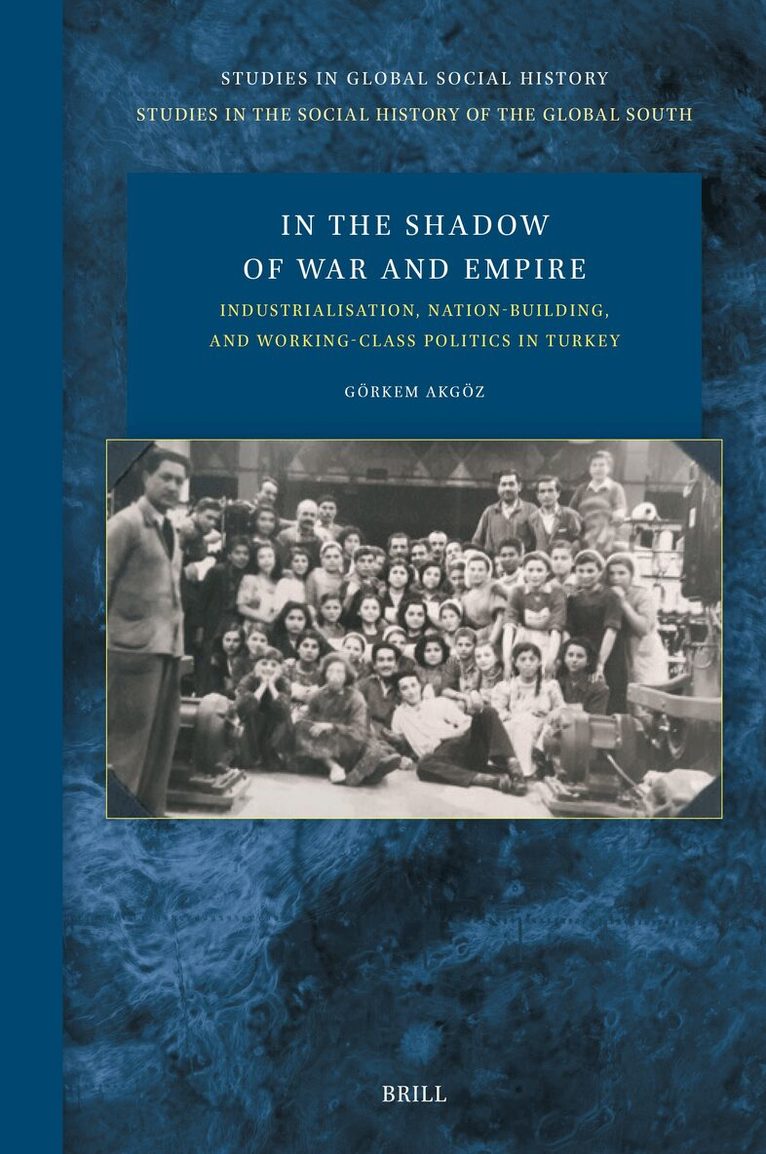
In the Shadow of War and Empire
Industrialisation, Nation-Building, and Working-Class Politics in Turkey
Inbunden, Engelska, 2023
2 095 kr
Skickas inom 5-8 vardagar
This book has been awarded the 2025 Hagley Prize in Business History.In the Shadow of War and Empire offers a site-specific history of Ottoman and Turkish industrialisation through the lens of a mid-nineteenth-century cotton factory in the “Turkish Manchester,” the name chosen by the Ottomans for the industrial complex they built in the 1840s in Istanbul, which, in the contemporary words of one of the country’s most prominent contemporary Marxist theorists, became “the secret to and the basis of Turkish capitalism" in the 1930s.
Global Power and Local Struggles in Developing Countries
Contemporary Perspectives On: Europe and the People without History, by Eric R. Wolf at 40
Inbunden, Engelska, 2022
1 789 kr
Skickas inom 5-8 vardagar
The volume challenges dominant narratives of progress with a rich range of investigations of local struggles from the Global south which are based on original ethnographic research. The chapters take a point of departure in ideas and concepts developed by the pioneering anthropologist Eric R. Wolf in ‘Europe and the People Without History’, and emphasize the relevance and usefulness of applying Wolf to contemporary contexts. As such, the collection contributes to knowledge of dynamic relationships between local agency in the Global south, and broader political and economic processes that make ‘people without history.’ This shows global power as both excluding local groups at the same time as conditioning local struggles and the forms that social organization takes. Contributors are: Paul Stacey, Joshua Steckley, Nixon Boumba, Marylynn Steckley, Ismael García Colón, Inge-Merete Hougaard, Gustavo S. Azenha, Ioannis Kyriakakis, Raquel Rodrigues Machaqueiro, Tirza van Bruggen, and Masami Tsujita.
2 797 kr
Skickas inom 5-8 vardagar
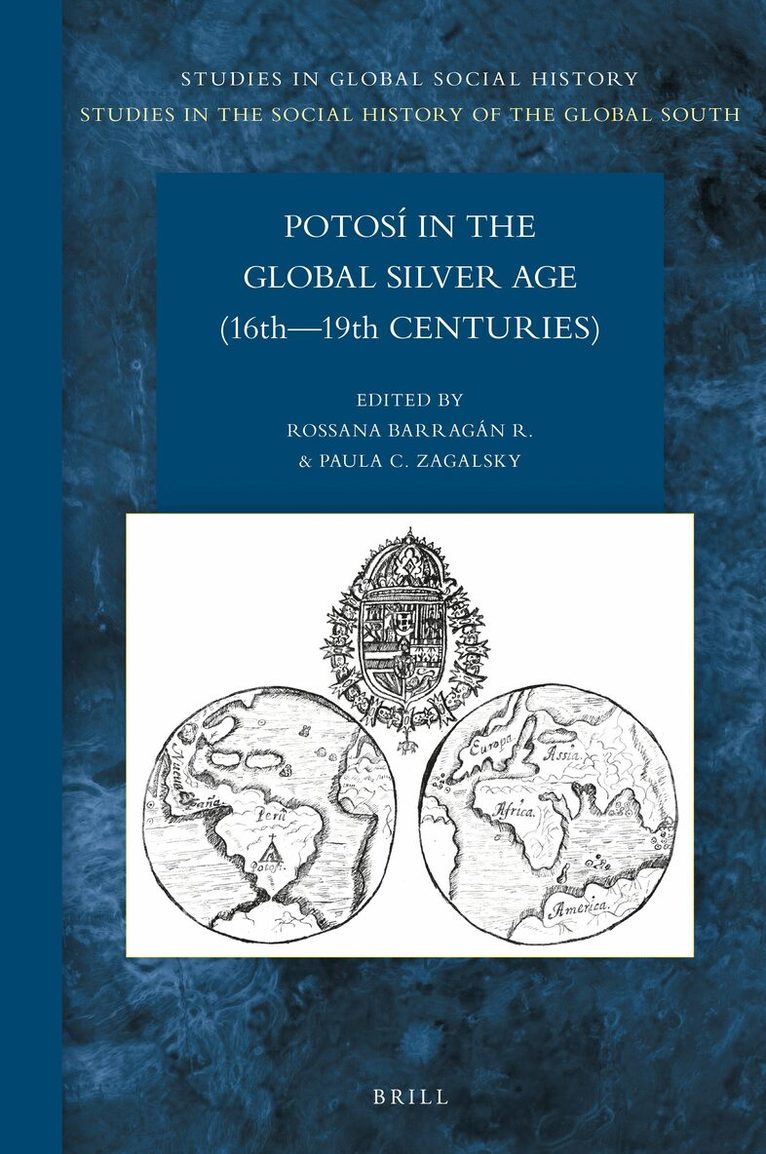
The open access publication of this book has been made possible thanks to the International Institute of Social History – Amsterdam.Potosí (today Bolivia) was the major supplier for the Spanish Empire and for the world and still today boasts the world's single-richest silver deposit. This book explores the political economy of silver production and circulation illuminating a vital chapter in the history of global capitalism. It travels through geology, sacred spaces, and technical knowledge in the first section; environmental history and labor in the second section; silver flows, the heterogeneous world of mining producers, and their agency in the third; and some of the local, regional, and global impacts of Potosí mining in the fourth section. The main focus is on the establishment of a complex infrastructure at the site, its major changes over time, and the new human and environmental landscape that emerged for the production of one of the world´s major commodities: silver. Eleven authors from different countries present their most recent research based on years of archival research, providing the readers with cutting-edge scholarship. Contributors are: Julio Aguilar, James Almeida, Rossana Barragán Romano, Mariano A. Bonialian, Thérèse Bouysse-Cassagne, Kris Lane, Tristan Platt, Renée Raphael, Masaki Sato, Heidi V. Scott, and Paula C. Zagalsky.
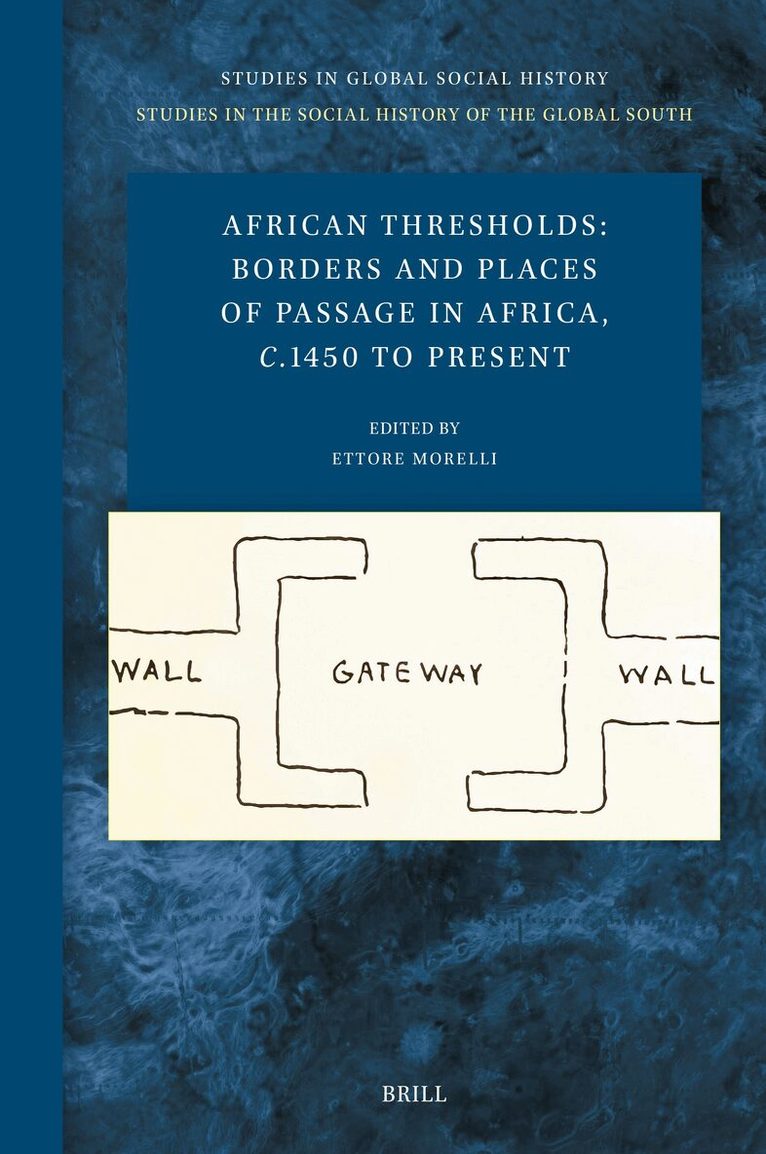
African Thresholds: Borders and Places of Passage in Africa, c.1450 to Present
Inbunden, Engelska, 2025
1 828 kr
Skickas inom 3-6 vardagar
The Open Access publication of this book has been made possible by the Swiss National Science Foundation.What is a border, and why does it exist? Reappraising a key idea from Arnold van Gennep’s Les rites de passage, this book argues that a border is a threshold, a limen, made to be crossed. African Thresholds studies places of passage spanning from the riverine networks of Senegambia to border-making in colonial Gold Coast and Côte d’Ivoire; from the desert roads of central southern Africa to river heartlands in colonial Togo; from flows of cowrie shells across the Volta River to insurgent borderities in the Lake Chad. In a time when state borders are increasingly shut, this book aims to show us that a border is made by those who cross it as much as by those who stand by it.Contributors are: Ettore Morelli, Fernando Mouta, Pierluigi Valsecchi, María José Pont Cháfer, Giulia Casentini, and Aimé Raoul Sumo Tayo.