Tauris World Cinema Series - Böcker
Visar alla böcker i serien Tauris World Cinema Series. Handla med fri frakt och snabb leverans.
2 produkter
2 produkter
376 kr
Skickas inom 10-15 vardagar
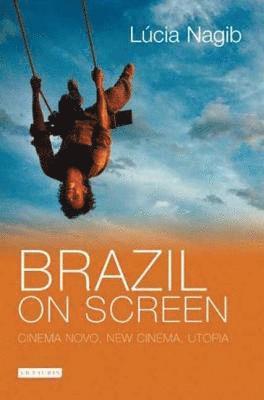
Two periods of Brazilian film history are particularly notable for their artistic momentum: the Cinema Novo movement of the 1960s and early '70s, and the film revival from the mid 1990s onwards. What makes them especially strong, this book argues, is their utopian impulse. By adopting Utopia as a theme, as well as a method of film analysis, Lucia Nagib unveils, organises and interprets a fascinating wealth of recurrent images, which are a bridge between a cinema strongly concerned with the national project and another informed by global culture. Outstanding recent films, such as "Central Station", "Perfumed Ball", "Hans Staden", "Orfeu", "City of God" and "The Trespasser", are illuminated by Nagib's sharp analysis, which detects utopian, anti-utopian and even dystopian impulses in them. They are at once representatives of a political arena in constant struggle against underdevelopment and legitimate (as well as critical) heirs of past cinematic traditions.Throwing new light on a large selection of Cinema Novo and contemporary films, this book thus presents a national cinema that rejects the end of history and of film history, while benefiting from, and contributing to, a new transnational aesthetics.
1 669 kr
Skickas inom 10-15 vardagar
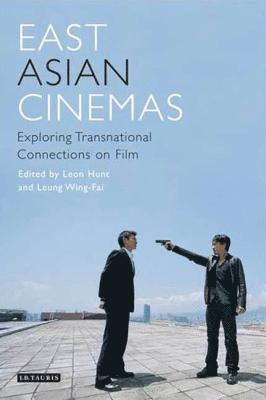
Cinemas from East Asia are among the most exciting and influential in the world. They are attracting popular and critical attention on a global scale, with films from the region circulating as art house, cult, blockbuster and 'extreme' cinema, or as Hollywood remakes. This book explores developments in the global popularity of East Asian cinema, from Chinese martial arts, through Japanese horror, to the burgeoning new Korean cinema, with particular emphasis on crossovers, remakes, hybrids and co-productions. It examines changing cinematic traditions in Asia alongside the 'Asianisation' of western cinema. It explores the dialogue not only between 'East' and 'West', but between different cinemas in the Asia Pacific. What do these trends mean for global cinema? How are co-productions and crossover films changing the nature of Hollywood and East Asian cinemas? The book includes in-depth studies of Park Chan-wook, 'Infernal Affairs', 'Seven Samurai', and 'Princess Mononoke'.