Technology and Education Series – serie
Visar alla böcker i serien Technology and Education Series. Handla med fri frakt och snabb leverans.
13 produkter
13 produkter
Inbunden, Engelska, 1988
2 077 kr
Skickas inom 10-15 vardagar
Some of today's educational experts were asked to envision the year 2020, when technology has assumed a major role in elementary and secondary education. The informed conjecture that followed is contained in this volume; contributors offer visions of the future as well as specific steps that could turn those visions into realities. Innovative ideas for research, development, hardware, software, teacher training, technical assistance, organizational and cultural change are offered as a means to illuminate the potential role of technology in the educational systems of tomorrow. Technology in Education is a thought-provoking statement of what can and should be done to advance the application of technology to education over the next few decades. As such, it should be read by all researchers and professionals in educational technology.
Inbunden, Engelska, 1992
2 201 kr
Skickas inom 10-15 vardagar
The fields of computer-assisted instruction and intelligent tutoring systems have had few vehicles for sharing ideas or programs. Different backgrounds and settings meant reading different journals and attending different conferences. The purpose of this book is to foster a mutual understanding of shared issues and contemporary approaches so as to further powerful educational applications of computing. It is unique in drawing on both the intelligent tutoring systems and computer assisted instruction communities. Each chapter provides an in-depth discussion by leaders in these fields of current work, focusing on instructional programs -- their design, use, and evaluation. The editors and authors have made extensive efforts to ensure each chapter's clarity and readability for both communities.
Häftad, Engelska, 1992
686 kr
Skickas inom 10-15 vardagar
The fields of computer-assisted instruction and intelligent tutoring systems have had few vehicles for sharing ideas or programs. Different backgrounds and settings meant reading different journals and attending different conferences. The purpose of this book is to foster a mutual understanding of shared issues and contemporary approaches so as to further powerful educational applications of computing. It is unique in drawing on both the intelligent tutoring systems and computer assisted instruction communities. Each chapter provides an in-depth discussion by leaders in these fields of current work, focusing on instructional programs -- their design, use, and evaluation. The editors and authors have made extensive efforts to ensure each chapter's clarity and readability for both communities.
Häftad, Engelska, 1988
995 kr
Skickas inom 10-15 vardagar
Some of today's educational experts were asked to envision the year 2020, when technology has assumed a major role in elementary and secondary education. The informed conjecture that followed is contained in this volume; contributors offer visions of the future as well as specific steps that could turn those visions into realities. Innovative ideas for research, development, hardware, software, teacher training, technical assistance, organizational and cultural change are offered as a means to illuminate the potential role of technology in the educational systems of tomorrow. Technology in Education is a thought-provoking statement of what can and should be done to advance the application of technology to education over the next few decades. As such, it should be read by all researchers and professionals in educational technology.
Häftad, Engelska, 1994
514 kr
Skickas inom 10-15 vardagar
Since the early 1980s, U.S. colleges and universities have become extremely important not only as computational research and development centers, but also as field sites for examining the relationship between technological innovation and sociocultural change. In spite of this, neither academic analysts of technological change nor the broader audience of computer professionals have a full understanding of higher education's catalytic role in shaping the so-called microcomputer revolution. This volume makes a major contribution to that understanding.In contrast to previous publications about computers in higher education -- most of which focus narrowly on technology deployment, use, and management strategies -- this volume takes a comprehensive look at academic computing as a sociocultural phenomenon. Conceptually and methodologically unique, it is the only collection of in-depth, mainly ethnographic studies of the "academic computing revolution" -- its consequences, meanings, and significance. Most of the contributors are university-based social scientists who have been at the forefront of studying computing in higher education, beginning over a decade ago.The volume consists of a series of case studies, developed during years of careful fieldwork and analysis, that document the open-ended, socially constructed, interpretively flexible character of computer-mediated academic work. Drawing on core ideas of cultural anthropology, interpretive sociology, and the social construction of technology, this book also makes a contribution to the growing, multidisciplinary study of technology and society. Work and Technology in Higher Education will inform not only educators and social scientists interested in computing and technology studies, but also academic administrators who want to understand the sociocultural context of technological change as a basis for better decision making.
Inbunden, Engelska, 1993
2 077 kr
Skickas inom 10-15 vardagar
This volume is a case study of education reform and innovation using technology that examines the issue from a wide variety of perspectives. It brings together the views and experiences of software designers, curriculum writers, teachers and students, researchers and administrators. Thus, it stands in contrast to other analyses of innovation that tend to look through the particular prisms of research, classroom practice, or software design. The Geometric Supposer encourages a belief in a better tomorrow for schools. On its surface, the Geometric Supposer provides the means for radically altering the way in which geometry is taught and the quality of learning that can be achieved. At a deeper level, however, it suggests a powerful metaphor for improving education that can be played out in many different instructional contexts.
Inbunden, Engelska, 1992
1 302 kr
Skickas inom 10-15 vardagar
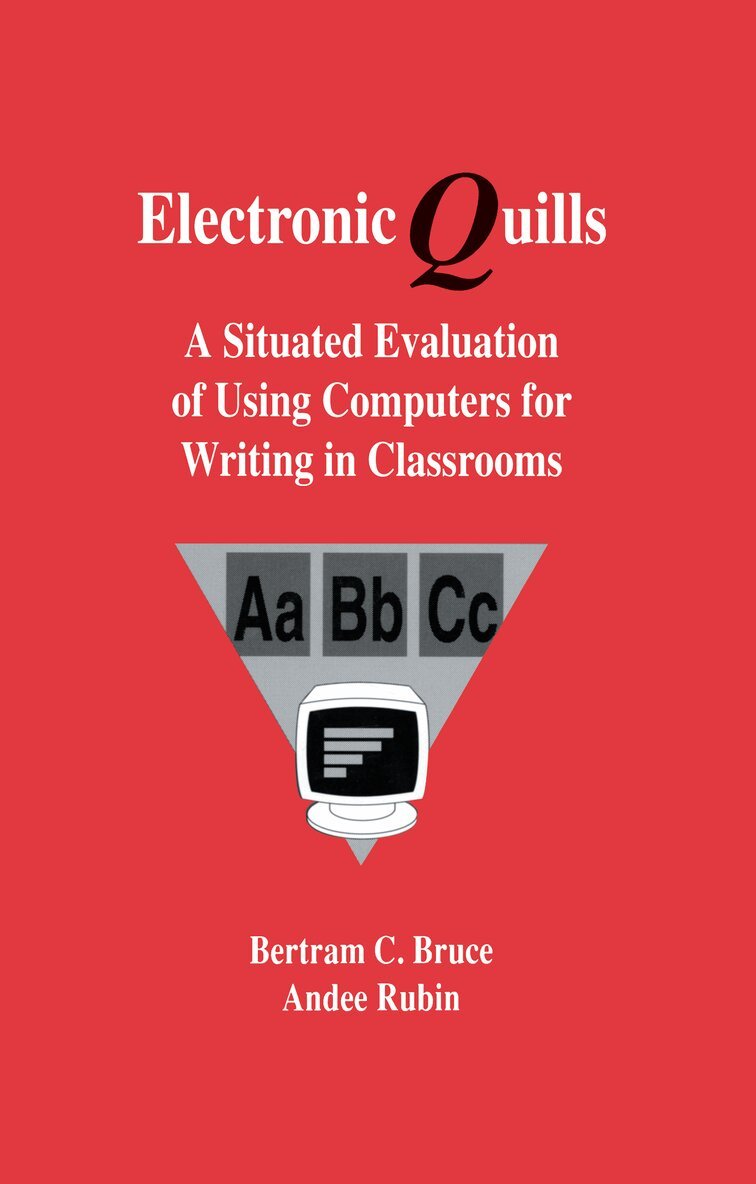
This volume centers on the words and experiences of teachers and students who used QUILL -- a software package developed by the authors to aid in writing instruction. It looks in detail at the stories of these early users and considers questions relevant for other teachers, students, researchers, and developers of educational innovations. Questions posed include: * What does it mean to develop an environment for literacy in an actual classroom? * How can a teacher create an environment in which students work together toward meaningful goals? * How can a teacher promote the rich communication so necessary for developing language? * What is the role of technology in the practice and development of literacy? The examination of the QUILL experiences provides a fuller and more revealing account of what it meant to use QUILL than would have been possible through standard evaluation techniques. At the same time, the focus on the particulars also finds analogues in analyses of similar pieces of open-ended software or educational innovations in general.
Inbunden, Engelska, 1993
2 077 kr
Skickas inom 10-15 vardagar
Highlighting and illustrating several important and interesting theoretical trends that have emerged in the continuing development of instructional technology, this book's organizational framework is based on the notion of two opposing camps. One evolves out of the intelligent tutoring movement, which employs artificial-intelligence technologies in the service of student modeling and precision diagnosis, and the other emerges from a constructivist/developmental perspective that promotes exploration and social interaction, but tends to reject the methods and goals of the student modelers. While the notion of opposing camps tends to create an artificial rift between groups of researchers, it represents a conceptual distinction that is inherently more interesting and informative than the relatively meaningless divide often drawn between "intelligent" and "unintelligent" instructional systems. An evident trend is that researchers in both "camps" view their computer learning environments as "cognitive tools" that can enhance learning, performance, and understanding. Cognitive tools are objects provided by the instructional environment that allow students to incorporate new auxiliary methods or symbols into their social problem solving which otherwise would be unavailable. A final section of the book represents researchers who are assimilating and accommodating the wisdom and creativity of their neighbors from both camps, perhaps forming the look of technology for the future. When the idea of model tracing in a computer-based environment is combined with appreciation for creative mind-extension cognitive tools and for how a community of learners can facilitate learning, a camp is created where AI technologists and social constructivist learning theorists can feel equally at home.
Häftad, Engelska, 1993
835 kr
Skickas inom 10-15 vardagar
Highlighting and illustrating several important and interesting theoretical trends that have emerged in the continuing development of instructional technology, this book's organizational framework is based on the notion of two opposing camps. One evolves out of the intelligent tutoring movement, which employs artificial-intelligence technologies in the service of student modeling and precision diagnosis, and the other emerges from a constructivist/developmental perspective that promotes exploration and social interaction, but tends to reject the methods and goals of the student modelers. While the notion of opposing camps tends to create an artificial rift between groups of researchers, it represents a conceptual distinction that is inherently more interesting and informative than the relatively meaningless divide often drawn between "intelligent" and "unintelligent" instructional systems. An evident trend is that researchers in both "camps" view their computer learning environments as "cognitive tools" that can enhance learning, performance, and understanding. Cognitive tools are objects provided by the instructional environment that allow students to incorporate new auxiliary methods or symbols into their social problem solving which otherwise would be unavailable. A final section of the book represents researchers who are assimilating and accommodating the wisdom and creativity of their neighbors from both camps, perhaps forming the look of technology for the future. When the idea of model tracing in a computer-based environment is combined with appreciation for creative mind-extension cognitive tools and for how a community of learners can facilitate learning, a camp is created where AI technologists and social constructivist learning theorists can feel equally at home.
Häftad, Engelska, 1992
407 kr
Skickas inom 10-15 vardagar
This volume centers on the words and experiences of teachers and students who used QUILL -- a software package developed by the authors to aid in writing instruction. It looks in detail at the stories of these early users and considers questions relevant for other teachers, students, researchers, and developers of educational innovations. Questions posed include: * What does it mean to develop an environment for literacy in an actual classroom? * How can a teacher create an environment in which students work together toward meaningful goals? * How can a teacher promote the rich communication so necessary for developing language? * What is the role of technology in the practice and development of literacy? The examination of the QUILL experiences provides a fuller and more revealing account of what it meant to use QUILL than would have been possible through standard evaluation techniques. At the same time, the focus on the particulars also finds analogues in analyses of similar pieces of open-ended software or educational innovations in general.
Inbunden, Engelska, 1992
1 313 kr
Skickas inom 10-15 vardagar
Connected by a computer telecommunications network, ninth-graders from eight high schools scattered thousands of miles across Alaska work together, building a robot submarine to gather samples from the floor of Prince William Sound.This is high school science as some teachers and educational reformers today envision it -- centered on student projects that encourage learning by doing...supported by modern technology...enriched by collaboration among students and teachers, both face to face and far apart.This example is drawn from LabNet, a three-year effort funded by the National Science Foundation. The project was conducted by Technical Education Research Centers (TERC), a nonprofit educational organization dedicated to improving mathematics and science education. Eventually reaching 562 teachers in 37 states, Puerto Rico, and American Samoa, LabNet had a direct impact on their classroom practice. In a follow-up evaluation, the majority said they had assigned their students more projects and had used LabNet's telecommunications network to exchange project ideas with other teachers. This book is the story of LabNet as told by its editors, with 14 additional essays on science projects -- both theoretical and practical -- by LabNet teachers and TERC staff.
Häftad, Engelska, 1992
625 kr
Skickas inom 10-15 vardagar
Connected by a computer telecommunications network, ninth-graders from eight high schools scattered thousands of miles across Alaska work together, building a robot submarine to gather samples from the floor of Prince William Sound.This is high school science as some teachers and educational reformers today envision it -- centered on student projects that encourage learning by doing...supported by modern technology...enriched by collaboration among students and teachers, both face to face and far apart.This example is drawn from LabNet, a three-year effort funded by the National Science Foundation. The project was conducted by Technical Education Research Centers (TERC), a nonprofit educational organization dedicated to improving mathematics and science education. Eventually reaching 562 teachers in 37 states, Puerto Rico, and American Samoa, LabNet had a direct impact on their classroom practice. In a follow-up evaluation, the majority said they had assigned their students more projects and had used LabNet's telecommunications network to exchange project ideas with other teachers. This book is the story of LabNet as told by its editors, with 14 additional essays on science projects -- both theoretical and practical -- by LabNet teachers and TERC staff.
Häftad, Engelska, 2016
719 kr
Skickas inom 10-15 vardagar
This volume is a case study of education reform and innovation using technology that examines the issue from a wide variety of perspectives. It brings together the views and experiences of software designers, curriculum writers, teachers and students, researchers and administrators. Thus, it stands in contrast to other analyses of innovation that tend to look through the particular prisms of research, classroom practice, or software design. The Geometric Supposer encourages a belief in a better tomorrow for schools. On its surface, the Geometric Supposer provides the means for radically altering the way in which geometry is taught and the quality of learning that can be achieved. At a deeper level, however, it suggests a powerful metaphor for improving education that can be played out in many different instructional contexts.