299 kr
Skickas inom 3-6 vardagar
299 kr
Skickas inom 3-6 vardagar
375 kr
Skickas inom 3-6 vardagar
In autumn 1525, Luther wrote The Bondage of the Will as a response to humanist and theologian Erasmus of Rotterdams On Free Will.
Luthers treatise is important on four accounts: First, Luther wanted to show his own humanist education. Second, against Erasmus, who had maintained that the question of free will could not be decided just on the basis of the Bible, Luther stressed the clarity imbedded in Scripture. Third, Luther stressed that his denial of the free will pertained to the issue of salvation, while in other areas of life not relevant for this fundamental existential matter, free will could be acknowledged. Finally, he introduces the distinction of the revealed and the hidden God to make clear that a Christian must focus on God as shown in Jesus Christ rather than speculating about Gods potency in general. Luthers argument on the matter of the bound and free will poses a challenge and an invitation for constructive contemporary theology.
This volume is excerpted from The Annotated Luther series, Volume 2. Each volume in the series contains annotations, illustrations, and notes to help shed light on Luthers context and to interpret his writings for today.
222 kr
Skickas
846 kr
273 kr
Volume 2 of The Annotated Luther series contains a number of the writings categorized under the theme Word and Faith. Luther was particularly focused on what the word does in order to create and sustain faith. Writings in the volume range from the large core documents Bondage of the Will, Against the Heavenly Prophets, The Smalcald Articles, and Large Catechism to Luthers own Confession of Faith and treatments of Moses, the Gospels, and Two Kinds of Righteousness.
In the treatises in this volume, we hear Luthers understanding of Scripture and theology as he continues his growth as teaching theologian, pastor, biblical exegete, and apologist for the faith.
412 kr
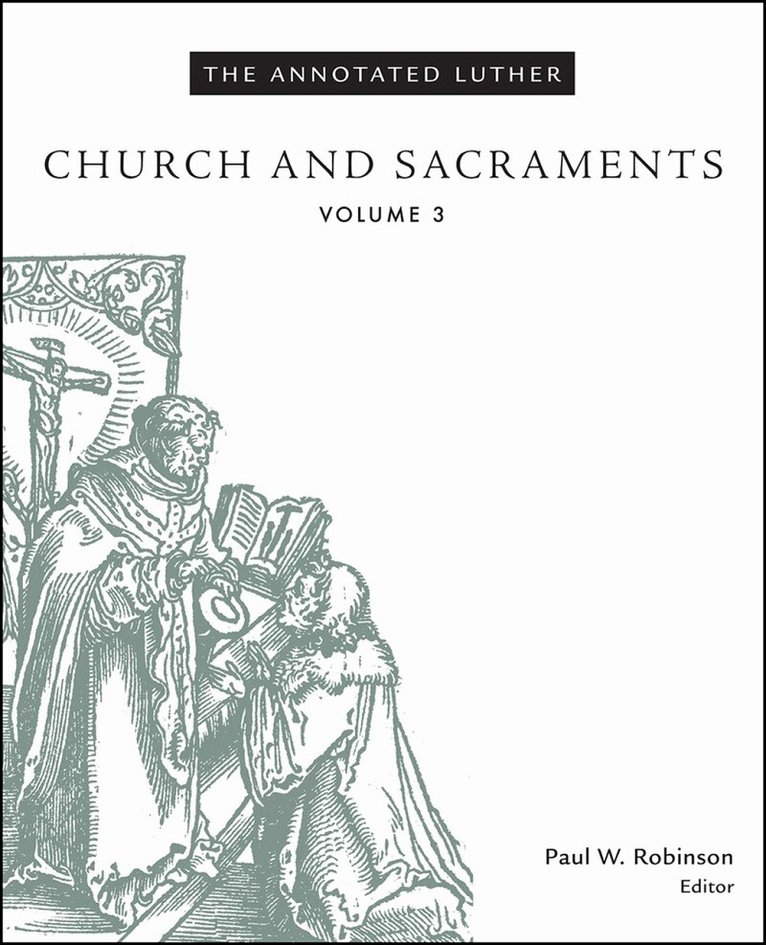
Volume 3 of The Annotated Luther series presents five key writings that focus on Martin Luther's understanding of the gospel as it relates to church, sacraments, and worship. Included in the volume are: The Babylonian Captivity of the Church (1520); The German Mass and Order of the Liturgy (1526); That These Words of Christ, "This is my Body," etc., Still Stand Firm Against the Fanatics (1527); Concerning Rebaptism (1528), and On the Councils and the Church (1539).
Luther refused to tolerate a church built on human works, whether it was the pope's authority or the faith or decision of individual believers. This is the thread that runs through all the texts in this volume: the church and sacraments belong to Christ, who founded and instituted them.
Each volume in The Annotated Luther series contains new introductions, as well as annotations, illustrations, and notes to help shed light on Luther's context and interpret his writings for today. The translations of Luther's writings include updates of Luther's Works American Edition, or entirely new translations of Luthers German or Latin writings.
457 kr
Volume 5 of The Annotated Luther series features Luther's writings that intersect church and state, faith, and life lived as a follower of Christ. His insights regarding marriage, trade, public education, and war are articulated. His theological and biblical insights also colored the way he spoke of the Jews and Turks, as well his admonition to the German peasants in their uprisings against the established powers.
Each volume in The Annotated Luther series contains new introductions, as well as annotations, illustrations, and notes to help shed light on Luther's context and interpret his writings for today. The translations of Luther's writings include updates of Luther's Works American Edition, or entirely new translations of Luther's German or Latin writings.