

Häftad, Engelska, 2013
285 kr
Skickas inom 3-6 vardagar
285 kr
Skickas inom 3-6 vardagar
338 kr
Skickas inom 3-6 vardagar
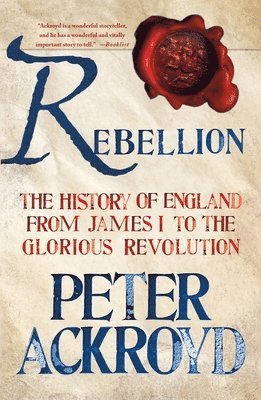
Peter Ackroyd has been praised as one of the greatest living chroniclers of Britain and its people. In Rebellion, he continues his dazzling account of the history of England, beginning with the progress south of the Scottish king, James VI, who on the death of Elizabeth I became the first Stuart king of England, and ending with the deposition and flight into exile of his grandson, James II.The Stuart monarchy brought together the two nations of England and Scotland into one realm, albeit a realm still marked by political divisions that echo to this day. More importantly, perhaps, the Stuart era was marked by the cruel depredations of civil war, and the killing of a king. Shrewd and opinionated, James I was eloquent on matters as diverse as theology, witchcraft, and the abuses of tobacco, but his attitude to the English parliament sowed the seeds of the division that would split the country during the reign of his hapless heir, Charles I. Ackroyd offers a brilliant, warts-and-all portrayal of Charles's nemesis, Oliver Cromwell, Parliament's great military leader and England's only dictator, who began his career as a political liberator but ended it as much of a despot as "that man of blood," the king he executed.England's turbulent seventeenth century is vividly laid out before us, but so too is the cultural and social life of the period, notable for its extraordinarily rich literature, including Shakespeare's late masterpieces, Jacobean tragedy, the poetry of John Donne and Milton and Thomas Hobbes's great philosophical treatise, Leviathan. In addition to its account of England's royalty, Rebellion also gives us a very real sense of the lives of ordinary English men and women, lived out against a backdrop of constant disruption and uncertainty.
268 kr
Skickas inom 3-6 vardagar
259 kr
Tillfälligt slut
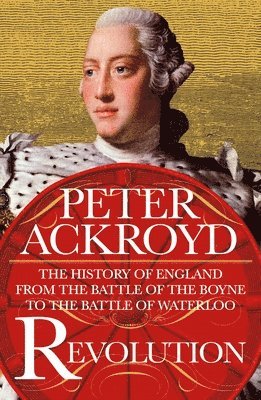
The fourth volume of Peter Ackroyd's enthralling History of England, beginning in 1688 with a revolution and ending in 1815 with a famous victory.In Revolution, Peter Ackroyd takes readers from William of Orange's accession following the Glorious Revolution to the Regency, when the flamboyant Prince of Wales ruled in the stead of his mad father, George III, and England wasagainat war with France, a war that would end with the defeat of Napoleon at Waterloo.Late Stuart and Georgian England marked the creation of the great pillars of the English state. The Bank of England was founded, as was the stock exchange; the Church of England was fully established as the guardian of the spiritual life of the nation, and parliament became the sovereign body of the nation with responsibilities and duties far beyond those of the monarch. It was a revolutionary era in English letters, too, a time in which newspapers first flourished and the English novel was born. It was an era in which coffee houses and playhouses boomed, gin flowed freely, and in which shops, as we know them today, began to proliferate in towns and villages. But it was also a time of extraordinary and unprecedented technological innovation, which saw England utterly and irrevocably transformed from a country of blue skies and farmland to one of soot and steel and coal.Ackroyd is the author of the first, second, and third volumes of his History of England, Foundation, Tudors, and Rebellion.
285 kr
Skickas inom 3-6 vardagar
338 kr
Skickas inom 3-6 vardagar
Peter Ackroyd has been praised as one of the greatest living chroniclers of Britain and its people. In Rebellion, he continues his dazzling account of the history of England, beginning with the progress south of the Scottish king, James VI, who on the death of Elizabeth I became the first Stuart king of England, and ending with the deposition and flight into exile of his grandson, James II.The Stuart monarchy brought together the two nations of England and Scotland into one realm, albeit a realm still marked by political divisions that echo to this day. More importantly, perhaps, the Stuart era was marked by the cruel depredations of civil war, and the killing of a king. Shrewd and opinionated, James I was eloquent on matters as diverse as theology, witchcraft, and the abuses of tobacco, but his attitude to the English parliament sowed the seeds of the division that would split the country during the reign of his hapless heir, Charles I. Ackroyd offers a brilliant, warts-and-all portrayal of Charles's nemesis, Oliver Cromwell, Parliament's great military leader and England's only dictator, who began his career as a political liberator but ended it as much of a despot as "that man of blood," the king he executed.England's turbulent seventeenth century is vividly laid out before us, but so too is the cultural and social life of the period, notable for its extraordinarily rich literature, including Shakespeare's late masterpieces, Jacobean tragedy, the poetry of John Donne and Milton and Thomas Hobbes's great philosophical treatise, Leviathan. In addition to its account of England's royalty, Rebellion also gives us a very real sense of the lives of ordinary English men and women, lived out against a backdrop of constant disruption and uncertainty.
268 kr
Skickas inom 3-6 vardagar
259 kr
Tillfälligt slut
The fourth volume of Peter Ackroyd's enthralling History of England, beginning in 1688 with a revolution and ending in 1815 with a famous victory.In Revolution, Peter Ackroyd takes readers from William of Orange's accession following the Glorious Revolution to the Regency, when the flamboyant Prince of Wales ruled in the stead of his mad father, George III, and England wasagainat war with France, a war that would end with the defeat of Napoleon at Waterloo.Late Stuart and Georgian England marked the creation of the great pillars of the English state. The Bank of England was founded, as was the stock exchange; the Church of England was fully established as the guardian of the spiritual life of the nation, and parliament became the sovereign body of the nation with responsibilities and duties far beyond those of the monarch. It was a revolutionary era in English letters, too, a time in which newspapers first flourished and the English novel was born. It was an era in which coffee houses and playhouses boomed, gin flowed freely, and in which shops, as we know them today, began to proliferate in towns and villages. But it was also a time of extraordinary and unprecedented technological innovation, which saw England utterly and irrevocably transformed from a country of blue skies and farmland to one of soot and steel and coal.Ackroyd is the author of the first, second, and third volumes of his History of England, Foundation, Tudors, and Rebellion.