The IBSTPI Book Series - Böcker
Visar alla böcker i serien The IBSTPI Book Series. Handla med fri frakt och snabb leverans.
8 produkter
8 produkter
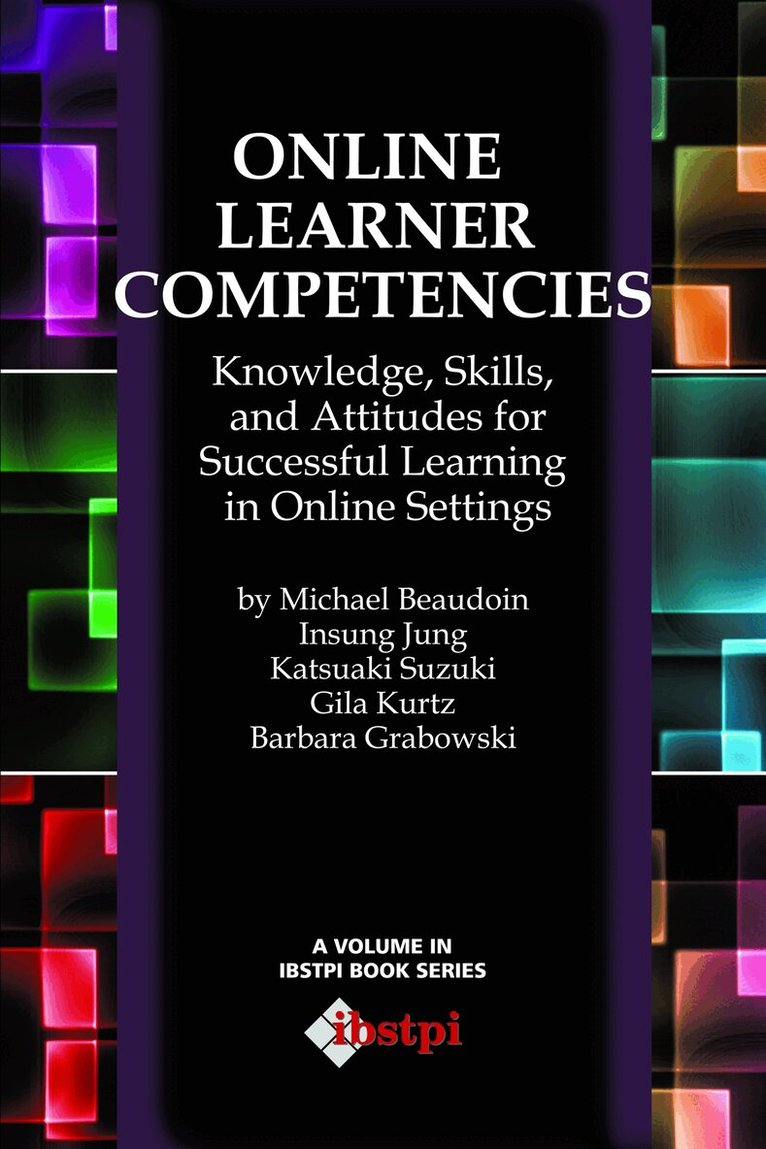
Online Learner Competencies
Knowledge, Skills, and Attitudes for Successful Learning in Online and Blended Settings
Häftad, Engelska, 2013
516 kr
Skickas inom 7-10 vardagar
The book identifies a set of validated competencies and performance statements, withsupporting explanation and data to inform and equip online learners with the critical attitudes, knowledge and skills for successful learning in online and/or blended learning settings. The work also enables online education providers (e.g., instructors, course designers, program administrators, scholars) to better understand learner needs in order to design and deliver online education products and services best suited to learners. Supplementing a large number of anecdotally-based “how to” books published for those engaged in online education, this volume offers a definitive set of 14 competencies and 75 performance statements (that demonstrate those competencies). Validated by systematic research and input from over 1,000 online users and providers worldwide, this work should impact the quality of learning and teaching at both the individual and organizational levels, involved in online education.
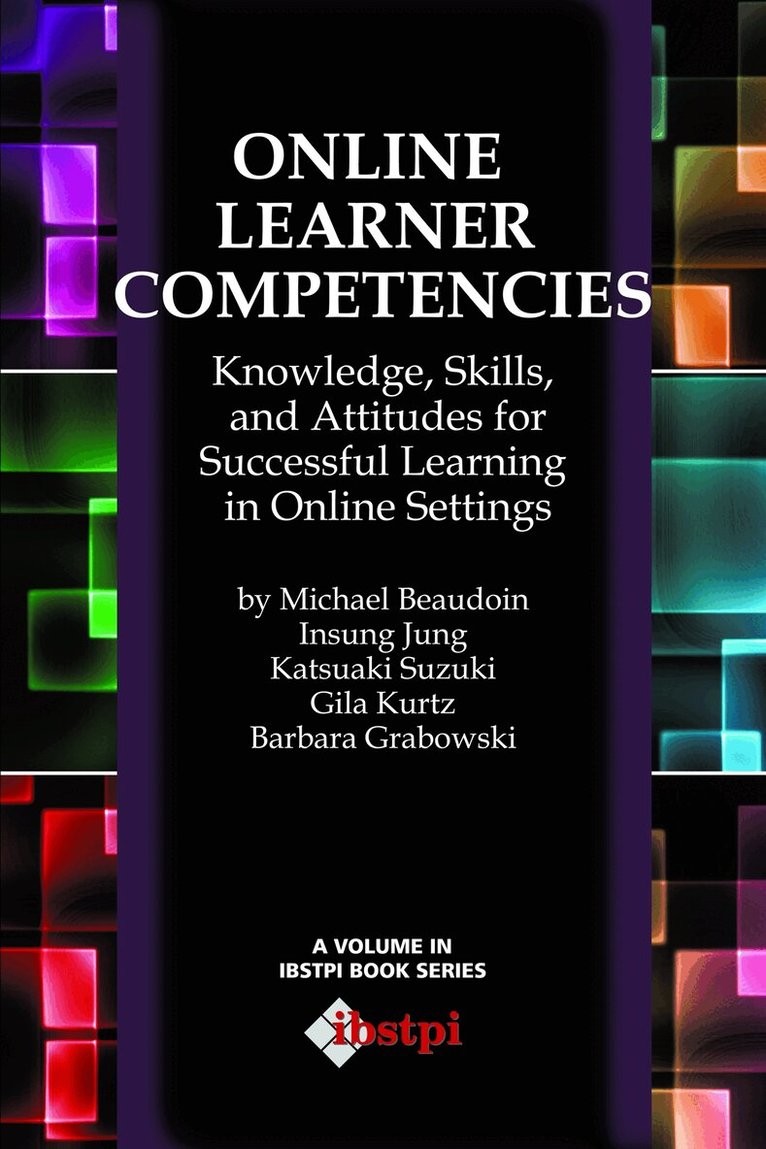
Online Learner Competencies
Knowledge, Skills, and Attitudes for Successful Learning in Online and Blended Settings
Inbunden, Engelska, 2013
952 kr
Skickas inom 7-10 vardagar
The book identifies a set of validated competencies and performance statements, withsupporting explanation and data to inform and equip online learners with the critical attitudes, knowledge and skills for successful learning in online and/or blended learning settings. The work also enables online education providers (e.g., instructors, course designers, program administrators, scholars) to better understand learner needs in order to design and deliver online education products and services best suited to learners. Supplementing a large number of anecdotally-based “how to” books published for those engaged in online education, this volume offers a definitive set of 14 competencies and 75 performance statements (that demonstrate those competencies). Validated by systematic research and input from over 1,000 online users and providers worldwide, this work should impact the quality of learning and teaching at both the individual and organizational levels, involved in online education.
516 kr
Skickas inom 7-10 vardagar
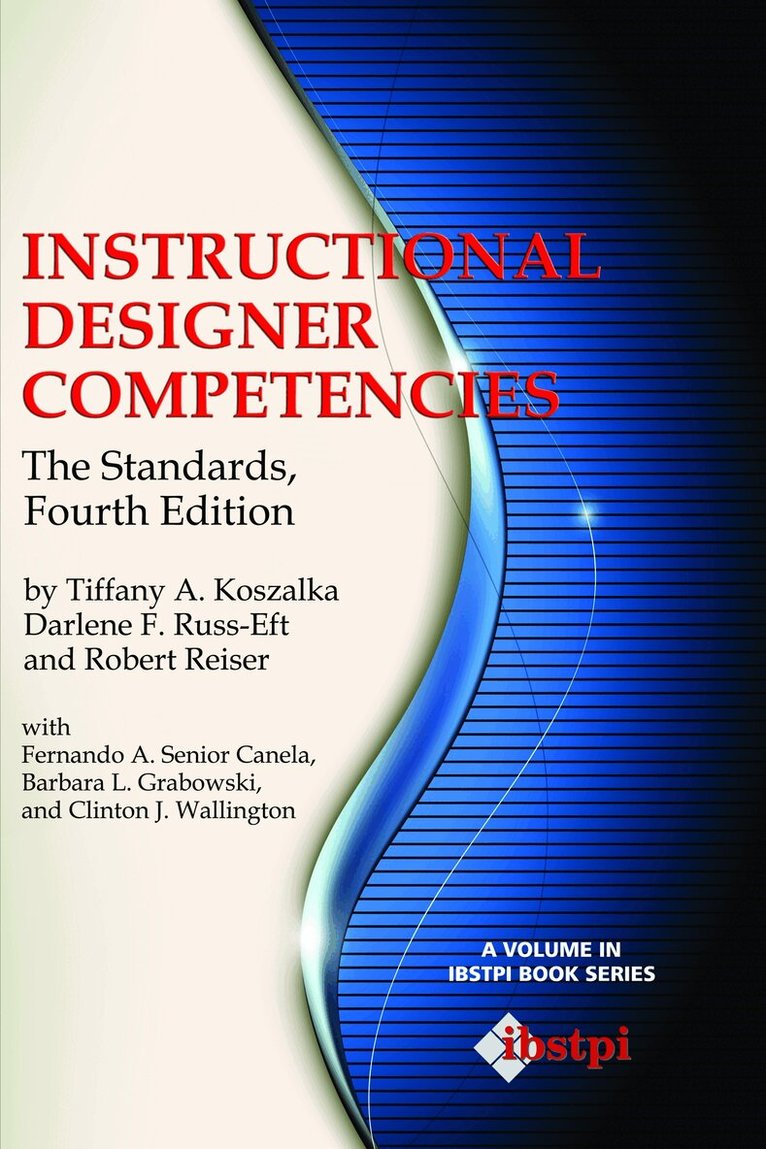
This book provides the most current and complete version of statements defining a competent instructional designer, for those who are or aspire to practice in virtually any context, anywhere in the world. The research conducted to update and validate these standards included obtaining feedback from over 1000 senior to novice practitioners and scholars working in the North, South, and Central Americas, Europe, Asia, Australia and New Zealand, and African nations.This book is intended for those who hire, train, and prepare instructional designers and those who work (or plan to work) as instructional designers. It provides an updated description of the profession. It lays out the most critical competencies (e.g., knowledge, skills, and attitudes) of the successful instructional designer, regardless of the context in which they work (e.g., K-12, higher education, business and industry, government and military, private consultancy, informal or formal), the location in which they practice (e.g., the Americas, Europe, Asia, Africa, Australia), and the type of delivery for which they design (e.g., face-to-face, paper-based, digital, blended).There have always been questions about what instructional designers do… such questions led to the creation of ibstpi more than 30 years ago. Yet, this questioning is especially true today with the growing call for developers of e-learning and other technology-supported instruction. The term ‘instructional designer’ seems to have become a generic phrase that now lends itself to a broad range of meanings, and yet, it is a definitive profession with a specific scope and focus. The more widely the label ‘instructional designer’ is used, the more room there is for misunderstanding about what is called for in skills, behaviors, competencies, and outputs. What is called for in the midst of this learning boom is clarity, direction and uniform expectations. With a common understanding, we can help avert poor design, especially in e-learning and technology-supported instruction, which often fails learners or has high attrition rates.Grounded on rigorous research, consulting hundreds of practitioners around the world, this book articulates and explains what is required to be a competent instructional designer. It includes the set of standards that clarifies the profession and provides a set of competencies for creating hiring schemes, professional development guidelines, performance assessments, work plans, and curriculum to prepare instructional designers.The instructional designer profession continues to grow in wake of emerging technologies, new pedagogies, and virtual learning environments.However, many educators, instructors, and even training specialists often lack the competencies to design, develop, implement, and evaluate these newer types of instructional solutions. This book articulates and explains the competencies that are required to be a competent instructional designer.
952 kr
Skickas inom 7-10 vardagar
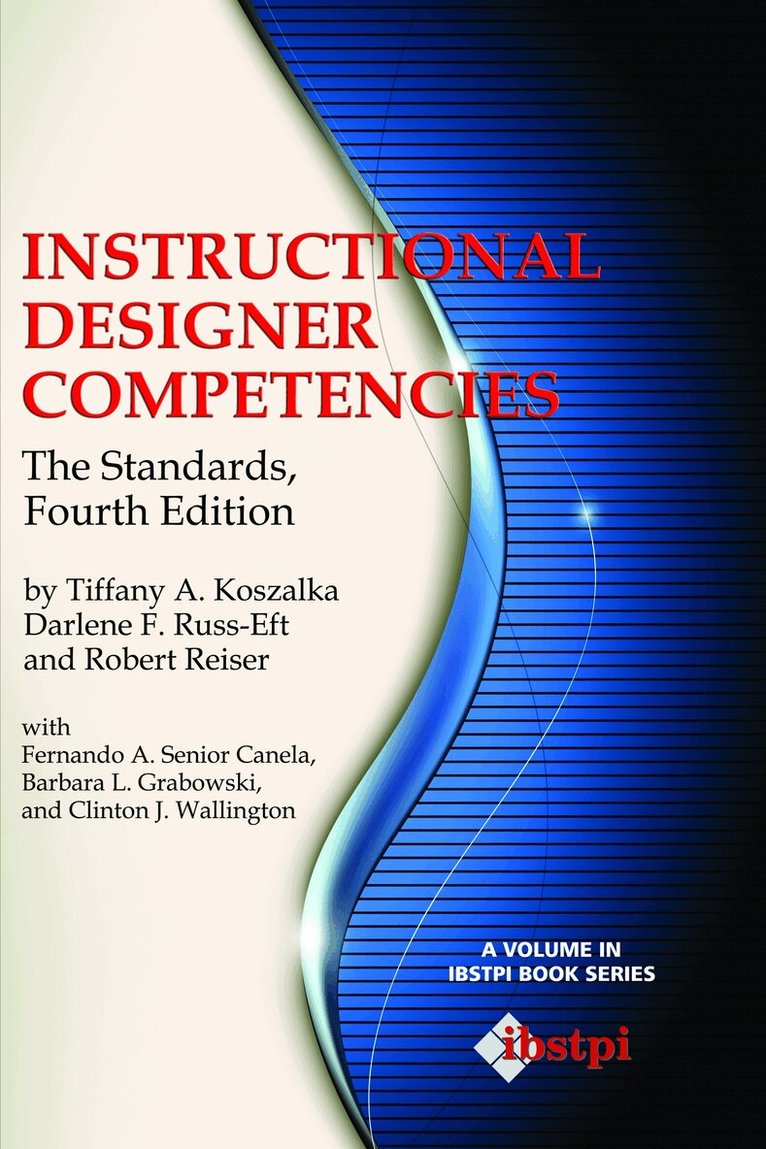
This book provides the most current and complete version of statements defining a competent instructional designer, for those who are or aspire to practice in virtually any context, anywhere in the world. The research conducted to update and validate these standards included obtaining feedback from over 1000 senior to novice practitioners and scholars working in the North, South, and Central Americas, Europe, Asia, Australia and New Zealand, and African nations.This book is intended for those who hire, train, and prepare instructional designers and those who work (or plan to work) as instructional designers. It provides an updated description of the profession. It lays out the most critical competencies (e.g., knowledge, skills, and attitudes) of the successful instructional designer, regardless of the context in which they work (e.g., K-12, higher education, business and industry, government and military, private consultancy, informal or formal), the location in which they practice (e.g., the Americas, Europe, Asia, Africa, Australia), and the type of delivery for which they design (e.g., face-to-face, paper-based, digital, blended).There have always been questions about what instructional designers do… such questions led to the creation of ibstpi more than 30 years ago. Yet, this questioning is especially true today with the growing call for developers of e-learning and other technology-supported instruction. The term ‘instructional designer’ seems to have become a generic phrase that now lends itself to a broad range of meanings, and yet, it is a definitive profession with a specific scope and focus. The more widely the label ‘instructional designer’ is used, the more room there is for misunderstanding about what is called for in skills, behaviors, competencies, and outputs. What is called for in the midst of this learning boom is clarity, direction and uniform expectations. With a common understanding, we can help avert poor design, especially in e-learning and technology-supported instruction, which often fails learners or has high attrition rates.Grounded on rigorous research, consulting hundreds of practitioners around the world, this book articulates and explains what is required to be a competent instructional designer. It includes the set of standards that clarifies the profession and provides a set of competencies for creating hiring schemes, professional development guidelines, performance assessments, work plans, and curriculum to prepare instructional designers.The instructional designer profession continues to grow in wake of emerging technologies, new pedagogies, and virtual learning environments.However, many educators, instructors, and even training specialists often lack the competencies to design, develop, implement, and evaluate these newer types of instructional solutions. This book articulates and explains the competencies that are required to be a competent instructional designer.
452 kr
Skickas inom 7-10 vardagar
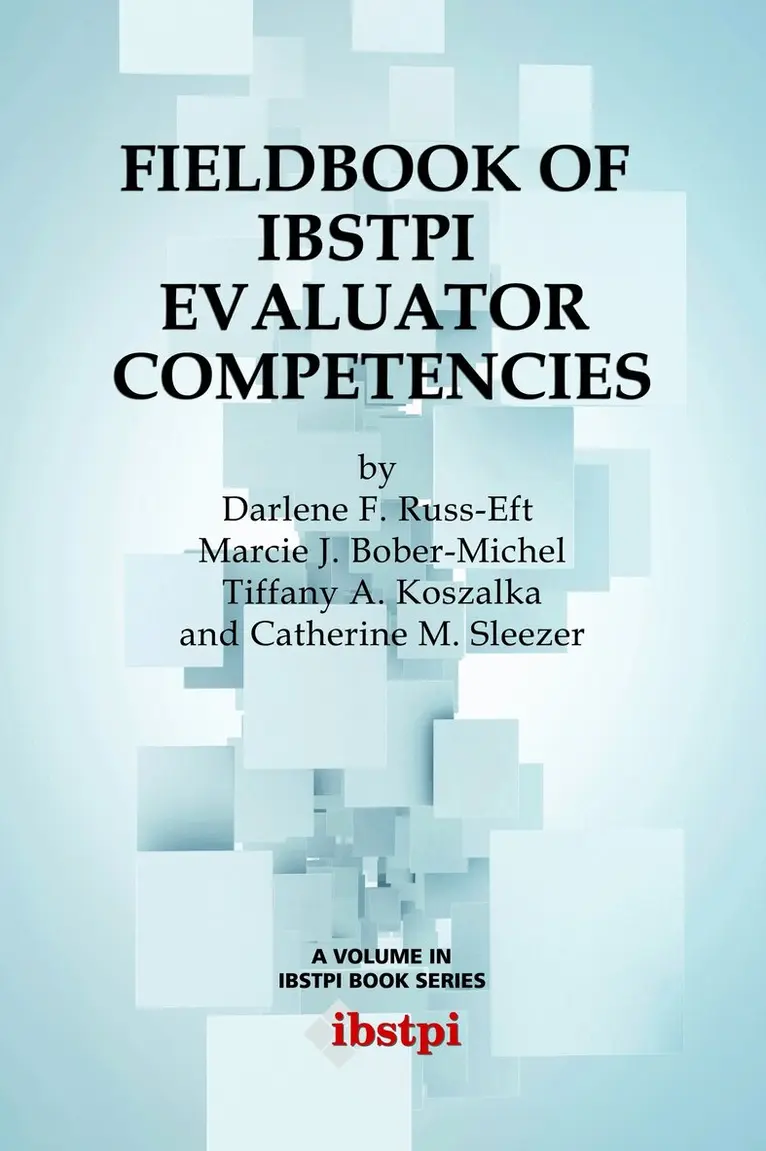
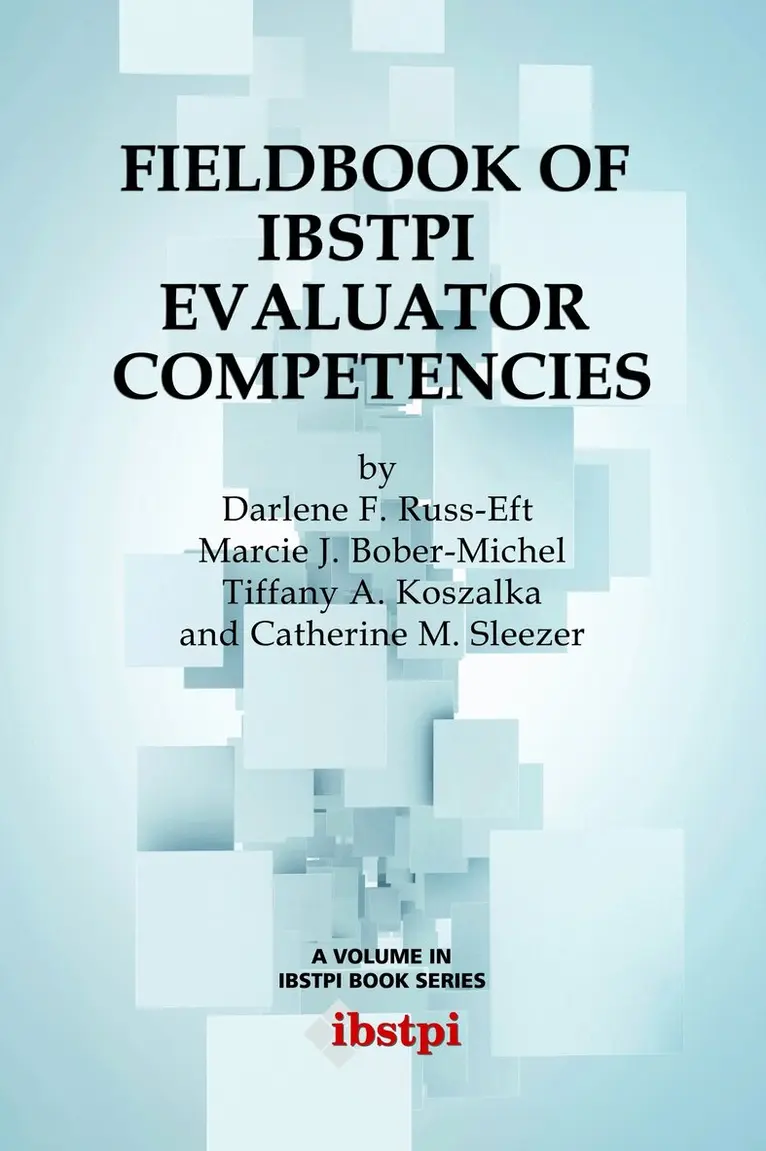
The book, Evaluator Competencies: Standards for the Practice of Evaluation, details the development and validation of evaluator competencies by the International Board of Standards for Training, Performance, and Instruction (ibstpi). Developing an understanding of the ibstpi Evaluator Competencies may not be sufficient for individuals to determine how to improve their, or their colleagues', competencies. This Fieldbook provides additional information, resources, and tools to assist those who want to improve their own competencies or those who want to help other individuals improve. Thus, the goals for the present companion volume are:• To provide additional practical information in each of the four evaluator domains (i.e., professional foundations, planning and designing the evaluation, implementing the evaluation plan, and managing the evaluation).• To present practical tools and resources that support specific evaluator competencies, whether as an internal or an external evaluator.• To offer practical insights on the evaluator competencies from experienced evaluators.• To provide practical evaluation exercises and resources that can be used with undergraduate and graduate courses.
834 kr
Skickas inom 7-10 vardagar
The book, Evaluator Competencies: Standards for the Practice of Evaluation, details the development and validation of evaluator competencies by the International Board of Standards for Training, Performance, and Instruction (ibstpi). Developing an understanding of the ibstpi Evaluator Competencies may not be sufficient for individuals to determine how to improve their, or their colleagues', competencies. This Fieldbook provides additional information, resources, and tools to assist those who want to improve their own competencies or those who want to help other individuals improve. Thus, the goals for the present companion volume are:• To provide additional practical information in each of the four evaluator domains (i.e., professional foundations, planning and designing the evaluation, implementing the evaluation plan, and managing the evaluation).• To present practical tools and resources that support specific evaluator competencies, whether as an internal or an external evaluator.• To offer practical insights on the evaluator competencies from experienced evaluators.• To provide practical evaluation exercises and resources that can be used with undergraduate and graduate courses.
516 kr
Skickas inom 7-10 vardagar
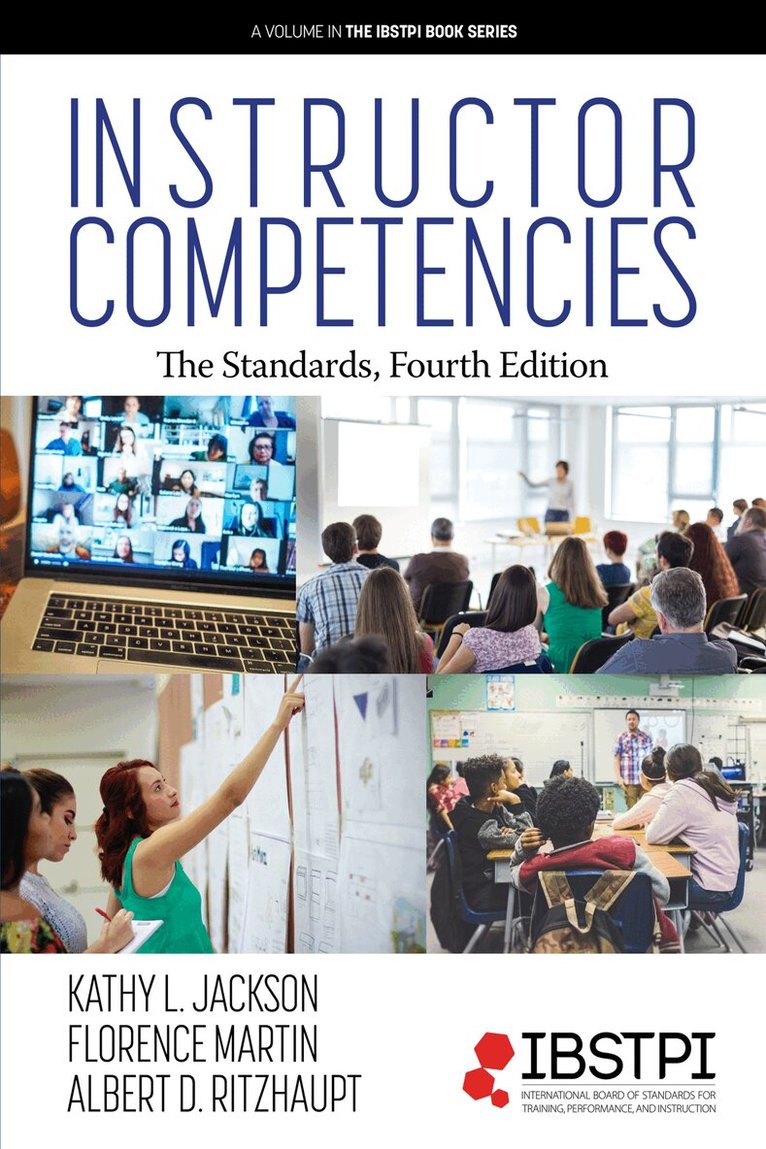
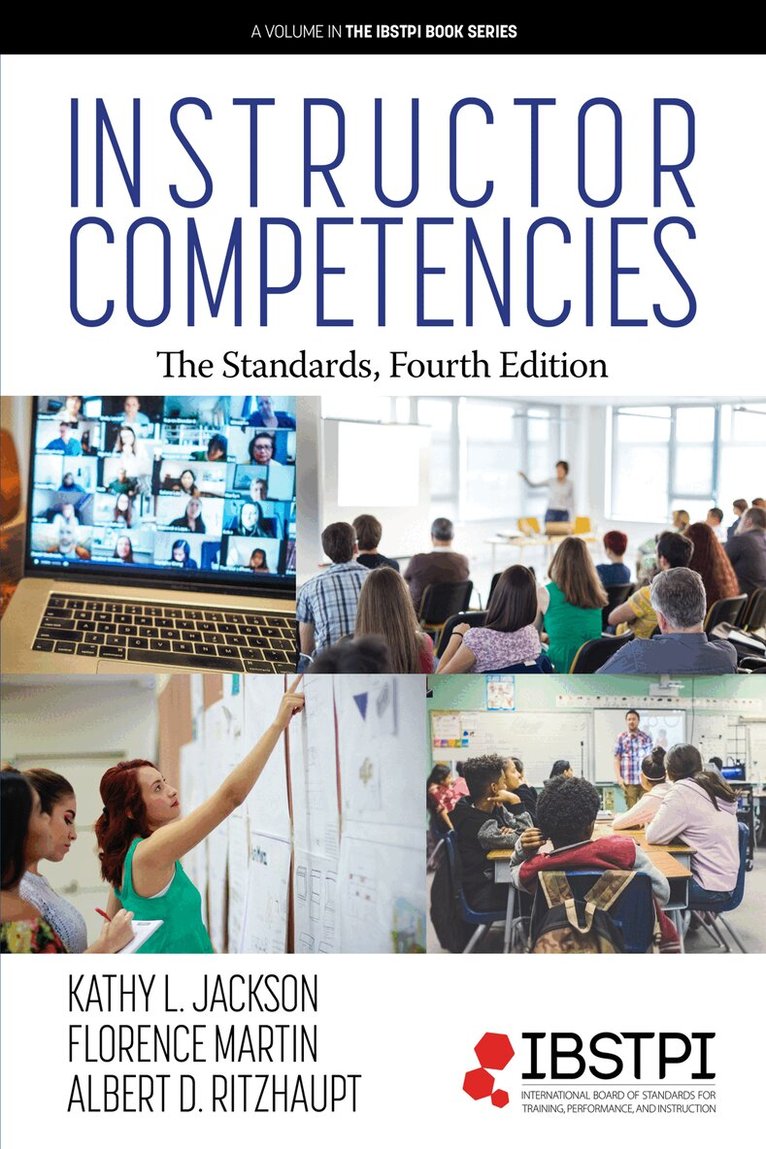
Instructor competencies, offered as professional development frameworks, identify the knowledge, skills, and attitudes that enable effective instruction. A 2021 version of Instructor Competencies is now available from The International Board for Standards, Training, Performance and Instruction (IBSTPI). These 2021 standards, appropriate for instructors and trainers in all settings, are based on well-established instructional principles that are flexible enough to allow for adjustments to new understandings in the science of teaching and learning, the integration of best practices, and adaptability to emerging tools and technology. With this update of IBSTPI’s 2004 Instructor Competencies, the framework now includes four domains of performance, 19 competencies, 150 performance statements and these three conditions defining instructors’ work: core, blended, and online.
952 kr
Skickas inom 7-10 vardagar
Instructor competencies, offered as professional development frameworks, identify the knowledge, skills, and attitudes that enable effective instruction. A 2021 version of Instructor Competencies is now available from The International Board for Standards, Training, Performance and Instruction (IBSTPI). These 2021 standards, appropriate for instructors and trainers in all settings, are based on well-established instructional principles that are flexible enough to allow for adjustments to new understandings in the science of teaching and learning, the integration of best practices, and adaptability to emerging tools and technology. With this update of IBSTPI’s 2004 Instructor Competencies, the framework now includes four domains of performance, 19 competencies, 150 performance statements and these three conditions defining instructors’ work: core, blended, and online.