The Lilliput Press – serie
Visar alla böcker i serien The Lilliput Press. Handla med fri frakt och snabb leverans.
9 produkter
9 produkter
Häftad, Engelska, 2025
240 kr
Skickas
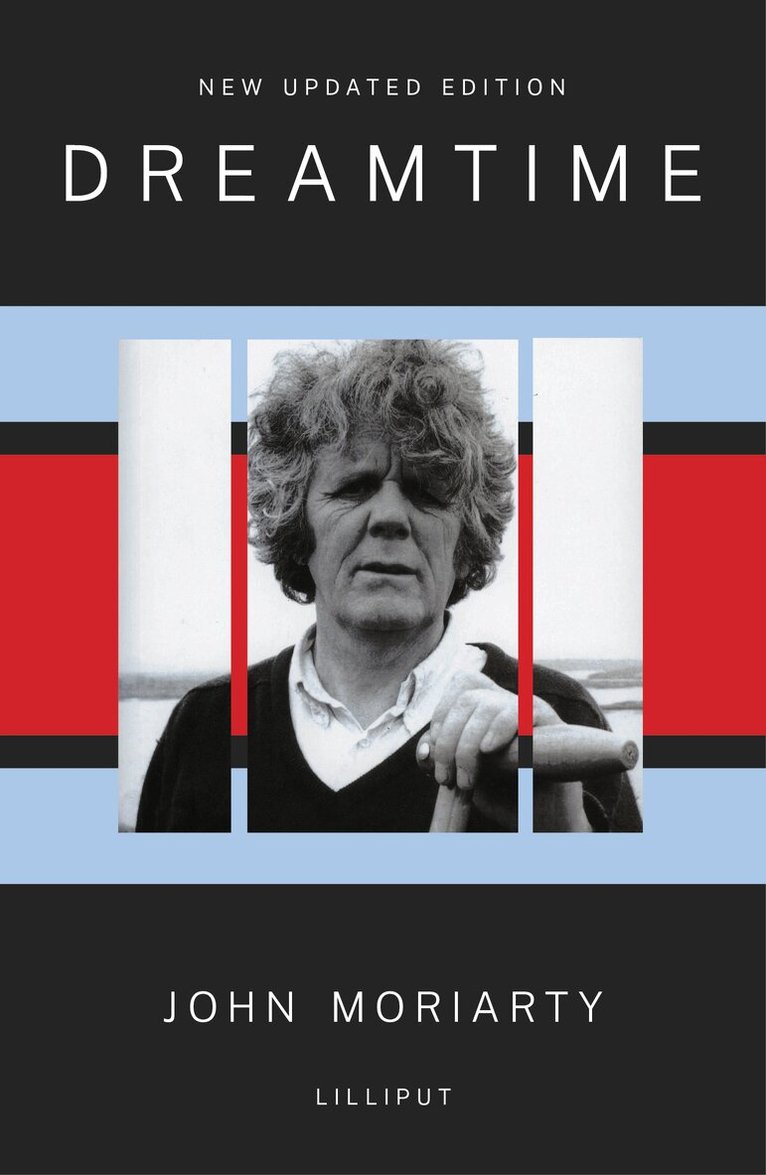
Dreamtime is a visionary work of myth, memory, and spiritual excavation by one of Ireland’s most original thinkers. In this profound journey of the soul, John Moriarty draws from global mythologies, literature, and personal experience to uncover the shared stories that shape human consciousness and the natural world. Woven through with richly poetic language and startling philosophical insight, Moriarty reconnects Western culture with the sacred imagination it has long forsaken. From Aboriginal Dreamtime to Homer, from Celtic folklore to Christian mysticism, Moriarty travels widely and fearlessly through the symbolic landscapes that have animated human life for millennia. The task of the poet-philosopher, Moriarty suggests, is to enlarge our capacity for symbolic understanding, while keeping the path to Connla’s Well open and inviting us to inhabit a shared Dreamtime Dreamtime is not just a book—it is a re-enchantment, a call to awaken the mythic soul and to live in harmony with the Earth and its ancient wisdoms. A Book of Revelations grounded in sense as in spirit, Dreamtime refuses known categories, invites fresh modes of understanding and contains multitudes, introducing the reader to ‘the splendour and terror and danger and wonder of a world everywhere and in everything eruptively Divine’. This is a powerful work of literature by a masterspirit of modern times.
Häftad, Engelska, 2005
191 kr
Skickas
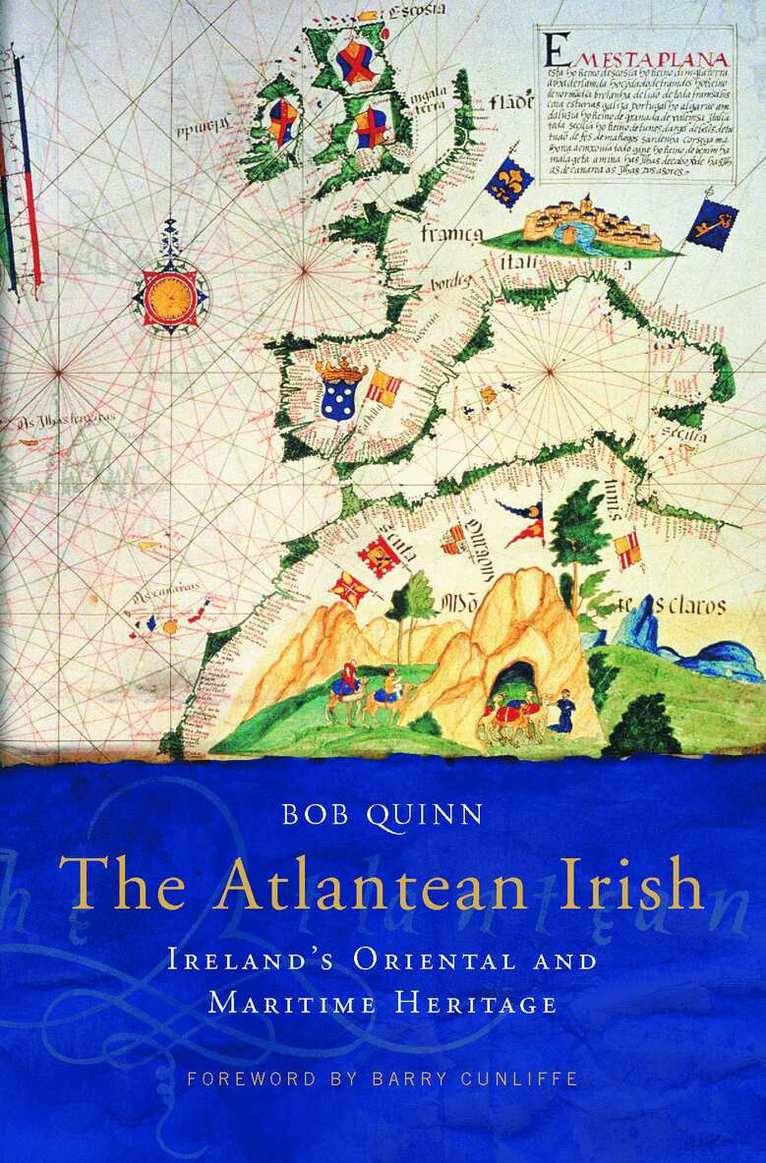
Irish identity is best understood from a maritime perspective. For eight millennia the island has been a haven for explorers, settlers, colonists, navigators, pirates and traders, absorbing goods and peoples from all points of the compass. The reduction of the islanders to the exclusive category ‘Celtic’ has persisted for three hundred years, and is here rejected as impossibly narrow. No classical author ever described Ireland’s inhabitants as ‘Celts’, and neither did the Irish so describe themselves until recent times. The islanders’ sea-girt culture has been crucially shaped by Middle Eastern as well as by European civilizations, by an Islamic heritage as well as a Christian one. The Irish language itself has antique roots extended over thousands of years’ trading up and down the Atlantic seaways. Over the past twenty years Bob Quinn has traced archaeological, linguistic, religious and economic connections from Egypt to Arann, from Morocco to Newgrange, from Cairo and Compostela to Carraroe. Taking Conamara sean-nos singing and its Arabic equivalents, and a North African linguistic stratum under the Irish tongue, Quinn marshalls evidence from field archaeology, boat-types, manuscript illuminations, weaving patterns, mythology, literature, art and artefacts to support a challenging thesis that cites, among other recent studies of the Irish genome, new mitochondrial DNA analysis in the Atlantic zone from north Iberia to west Scandinavia. The Atlantean Irish is a sumptuously illustrated, exciting, intervention in Irish cultural history. Forcefully debated, and wholly persuasive, it opens up a past beyond Europe, linking Orient to Occident. What began as a personal quest-narrative becomes a category-dissolving intellectual adventure of universal significance. It is a book whose time has arrived.
Inbunden, Engelska, 2014
512 kr
Skickas inom 5-8 vardagar
This autobiography, a sequel to Nostos, concludes the story of John Moriarty’s life in Connemara during the 1980s and subsequent return to his native Kerry. He writes with compelling detail about his time at Roundstone and environs, restoring gardens at Leitirdyfe House and Lisnabrucka, and building his own house at Toombeola. He reflects on his Kerry childhood and the death of his father; he describes his adopted family, a sortie to Dublin for Christmas, the writer Tim Robinson, and his neighbourhood and community; he celebrates the returned pine martens and the fauna and flora of a historic landscape; he undertakes a lecture tour in Canada organized by his former students; and throughout he engages with the immensities of the natural and spiritual worlds that form his habitat. In this posthumously published work, completed just weeks before his death, John Moriarty calls to account the literatures and legacies of European thought made manifest in the western extremities of Ireland. They bore witness to his own inner and outer journey, now documented in this compelling, writerly masterwork.
Inbunden, Engelska, 2008
603 kr
Skickas inom 3-6 vardagar
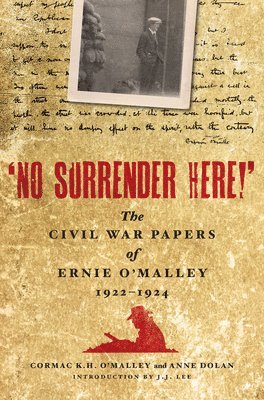
This collection documents one man’s attitude to war and his difficult acceptance of peace, his experience of capture, imprisonment, hunger strike and finally release. In these letters, however, ‘No Surrender Here!’ also captures the voices of both the leadership and the rank and file: the detached and often inappropriate orders from above, and the confusion of men who, in some cases without boots on their feet, know that theirs is a hopeless cause. Letters to friends and family also reveal the more personal costs of war. Just over a month after the 1921 truce that ended Ireland’s fight with England, Ernie O’Malley longed for a return to war. Ten months later he was waging civil war against many of the men he had once fought with, against those who accepted the new Irish Free State. ‘No Surrender Here!’ The Civil War Papers of Ernie O’Malley 1922-1924 is the first comprehensive collection of letters, memoranda and orders detailing this period of chaos and confusion, intransigence and idealism, which gripped the country from June 1922 to May 1923. These documents detail the war as it was fought with none of the benefit of hindsight and occasional artistry that marks the memoirs of many of the men involved, not least O’Malley’s own carefully crafted narratives, ‘On Another Man’s Wound’ and ‘The Singing Flame’, published decades later. These fully annotated documents, given historical perspective with a general introduction by Professor Joe Lee, provide extraordinary insights into the republican mentality during the Irish Civil War, into what remains a contested and controversial period of modern Irish history.
Häftad, Engelska, 2013
313 kr
Skickas inom 5-8 vardagar
The French call it entre chien et loup . . . Darkly moving, often shocking, this interwoven story follows three college students, desperately searching for a place between the familiar and the strange as they careen towards self- knowledge. Cassandra, volatile and scarred by loss, has been sculpted by the bohemian high life and then discarded. Oisín, a country boy pulsing with sexual aggression, is prone to equal flights of rage and compassion. And you, Helen. Helen, who takes these two fractured lives and dashes them against herself, creating ripples that twist and distort their images of what should be. In this stunning debut novel, each character forces the boundaries of normality, negotiating the chasms of their own violent sexuality and decay.
Häftad, Engelska, 2018
213 kr
Skickas
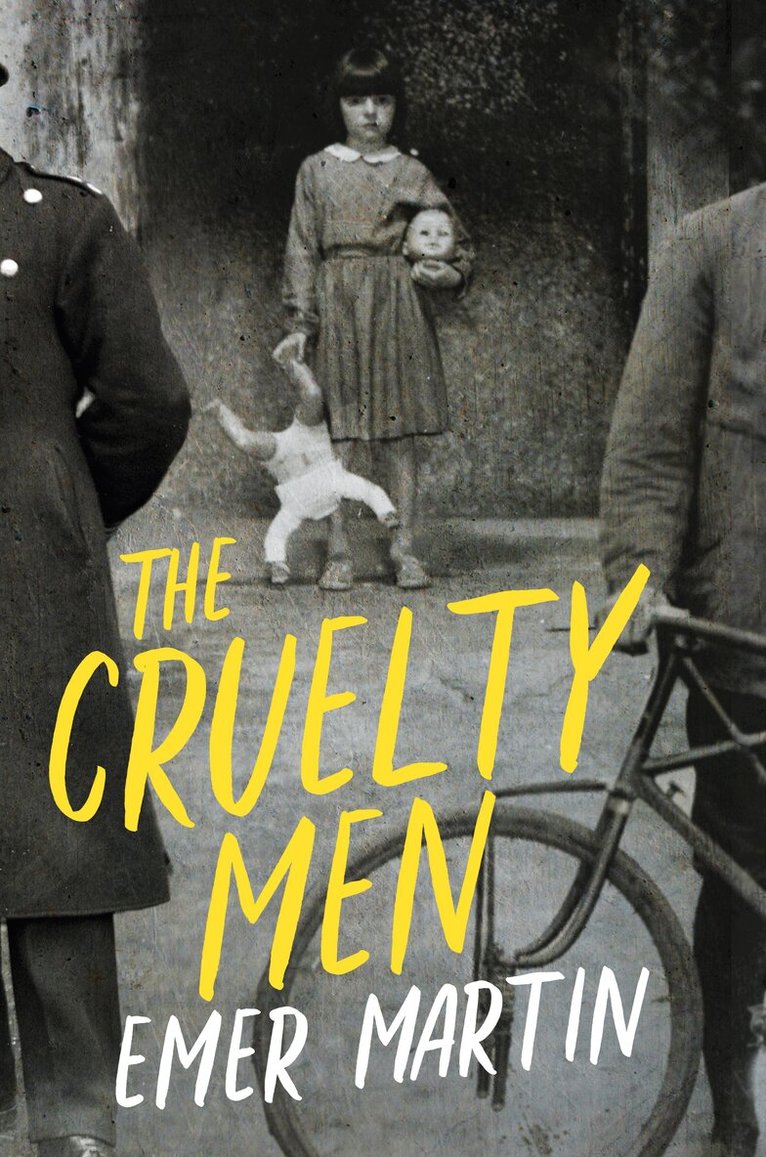
Abandoned by her parents when they resettle in Meath, Mary O Conaill faces the task of raising her younger siblings alone. Padraig is disappeared, Seán joins the Christian Brothers, Bridget escapes and her brother Seamus inherits the farm. Maeve is sent to serve a family of shopkeepers in the local town. Later, pregnant and unwed, she is placed in a Magdalene Laundry where her twins are forcibly removed. Spanning the 1930s to the 70s, this sweeping multi-generational family saga follows the psychic and physical displacement of a society in freefall after independence. Wit, poetic nuance, vitality and authenticity inhabit this remarkable novel. The Cruelty Men tells an unsentimental tale of survival in a country proclaimed as independent but subjugated by silence
Häftad, Engelska, 2021
234 kr
Skickas
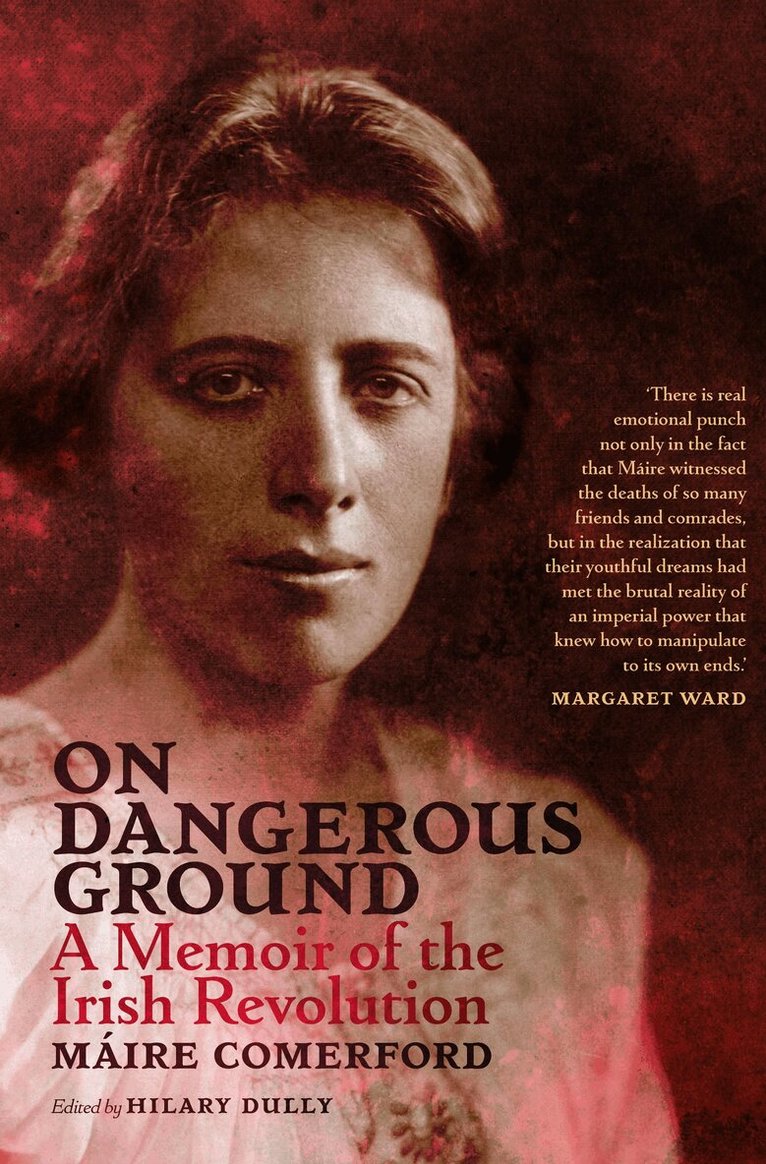
On Dangerous Ground is the revolutionary period memoir of Republican Máire Comerford (1893–1982). This striking memoir, one of the last of its era, includes Comerford’s original text, written mainly in the 1940s and ’50s, and new material unearthed from her extensive archive that also contains a wealth of photographs and memorabilia from the period.The memoir begins with Comerford’s recollection of Sunday strolls to Avondale, former home of Charles Stewart Parnell, who was a neighbour of her father, the mill owner James Comerford. As a young woman, she experiences a ‘political awakening’ at the hands of a fierce Unionist woman in a secretarial college in London. Máire Comerford (the only Catholic in the class) begins to engage with Irish history books to counterbalance this brush with religious sectarianism. On her return to County Wexford to live with her mother’s people – a move necessitated by the family’s change of fortune – she re-enters the genteel world of fox hunting and luncheon parties. The memoir paints an intriguing picture of rural life of the time heralding the arrival of the motorcar, social and economic conditions, the rise of the Gaelic League, debates about Home Rule, and the First World War.While the description of her surroundings as a young adult is intriguing and often charming, change is in the air in Ireland and a sharp and wide-ranging political analysis is ever present throughout her writing. Following Comerford’s witness account of Dublin during the 1916 Rising, she begins a life of political engagement, joining Cumann na mBan, Sinn Féin and the Gaelic League. In 1919, she moves permanently to Dublin to live with and work for renowned historian and nationalist, Alice Stopford Green. There, she becomes immersed in Republican politics and the War of Independence.Comerford’s memoir gives voice to the experience of Republican women during revolutionary times, highlighting the immense contribution of women in the struggle for an Irish Republic. She works all over the country, moving arms, carrying dispatches, finding safe houses, researching atrocities and working assiduously for Ireland. She experiences raids, prison vigils, funerals of her comrades and dangers of all kinds, but nothing cuts as deep as the sense of utter betrayal following the signing of the Treaty in 1922. Comerford takes the anti-Treaty side, is imprisoned a number of times and endures a 27-day hunger strike. Following her release, she leaves Ireland on a tour of east coast American cities to raise funds for the Republican cause at the behest of de Valera. She returns to a harsh, poverty-stricken and lonely existence, eking out a living on a hilltop poultry farm in Wexford. But while her memoir ends in bleak times, her overarching vision suggests an unquenchable optimism – and that the fight will go on. An epilogue by the editor chronicles the years between 1927 and her death.
Inbunden, Engelska, 2026
417 kr
Skickas inom 5-8 vardagar
Häftad, Engelska, 2001
327 kr
Skickas inom 5-8 vardagar
Dublin Made Me, the first of C.S. (‘Todd’) Andrews’ two celebrated volumes of autobiography, describes in loving detail the pre-independence Dublin in which the author grew up and provides a vivid participant’s account of the War of Independence and the Civil War. Born in 1901, Andrews lived with his family in Summerhill until 1910, when they moved to the distant suburb of Terenure. Andrews’ account of the two Dublins of his youth – the bustle, intimacy and poverty of the north side, and the bucolic pleasures of Terenure- is an unsentimental urban pastoral, sensuous and immediate. He describes his schooling with the nuns in Dominick Street, with Patrick Pearse for an unhappy year in St Enda’s, and then with the Christian Brothers in Synge Street. And he gives a rich, detailed account of his apprenticeship in Irish republicanism, from his pre-1916 experiences as a youthful ‘camp-follower of the Volunteers’ to his active service in Dublin in the War of Independence and his dangerous days as adjutant to Liam Lynch, chief of the anti-Treaty forces during the Civil War. Andrews writes dispassionately of internment and hunger-strikes, and of the bitter divide between the pro-and anti-Treaty sides, once comrades-in-arms. Dublin Made Me is a unique account of an ordinary childhood transformed by war and revolution. Together with its sequel, Man of No Property, it provides an unmatched first-person chronicle of the making of twentieth-century Ireland.