The New Cultural History of Music Series – serie
Visar alla böcker i serien The New Cultural History of Music Series. Handla med fri frakt och snabb leverans.
15 produkter
15 produkter
Häftad, Engelska, 2020
377 kr
Skickas inom 5-8 vardagar
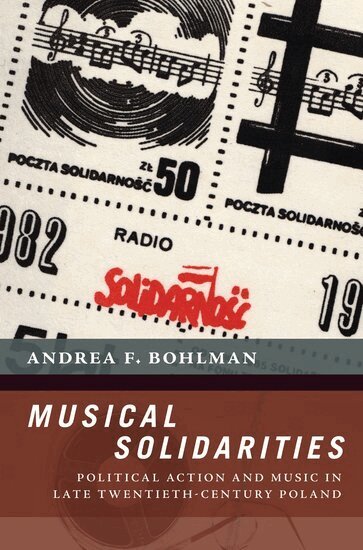
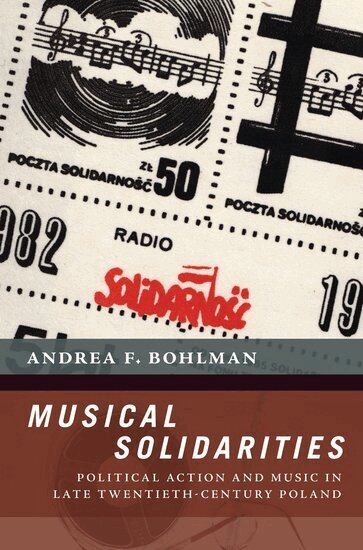
Musical Solidarities: Political Action and Music in Late Twentieth-Century Poland is a music history of Solidarity, the social movement opposing state socialism in 1980s Poland. The story unfolds along crucial sites of political action under state socialism: underground radio networks, the sanctuaries of the Polish Roman Catholic Church, labor strikes and student demonstrations, and commemorative performances. Through innovative close listenings of archival recordings, author Andrea F. Bohlman uncovers creative sonic practices in bootleg cassettes, televised state propaganda, and the unofficial, uncensored print culture of the opposition. She argues that sound both unified and splintered the Polish opposition, keeping the contingent formations of political dissent in dynamic tension. By revealing the diverse repertories-singer-songwriter verses, religious hymns, large-scale symphonies, experimental music, and popular song-that played a role across the decade, she challenges paradigmatic visions of a late twentieth-century global protest culture that place song and communitas at the helm of social and political change. Musical Solidarities brings together perspectives from historical musicology, ethnomusicology, and sound studies to demonstrate the value of sound for thinking politics. Unfurling the rich soundscapes of political action at demonstrations, church services, meetings, and in detention, it offers a nuanced portrait of this pivotal decade of European and global history.
Inbunden, Engelska, 2017
933 kr
Skickas inom 5-8 vardagar
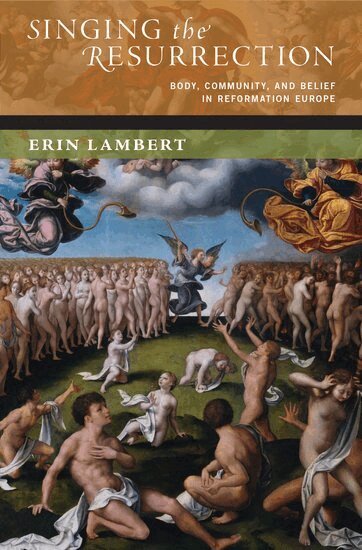
Singing the Resurrection brings music to the foreground of Reformation studies, as author Erin Lambert explores song as a primary mode for the expression of belief among ordinary Europeans in the sixteenth century, for the embodiment of individual piety, and the creation of new communities of belief. Together, resurrection and song reveal how sixteenth-century Christians--from learned theologians to ordinary artisans, and Anabaptist martyrs to Reformed Christians facing exile--defined belief not merely as an assertion or affirmation but as a continuous, living practice. Thus these voices, raised in song, tell a story of the Reformation that reaches far beyond the transformation from one community of faith to many. With case studies drawn from each of the major confessions of the Reformation--Lutheran, Anabaptist, Reformed, and Catholic--Singing the Resurrection reveals sixteenth-century belief in its full complexity.
Inbunden, Engelska, 2019
1 271 kr
Skickas inom 5-8 vardagar
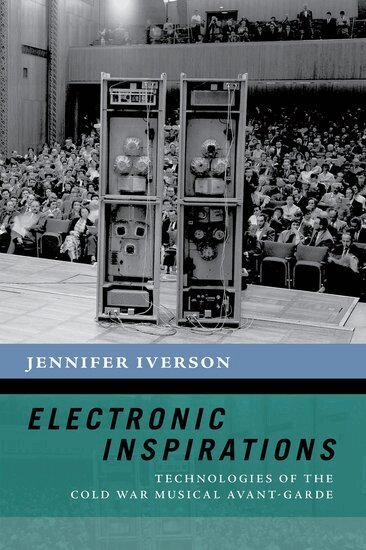
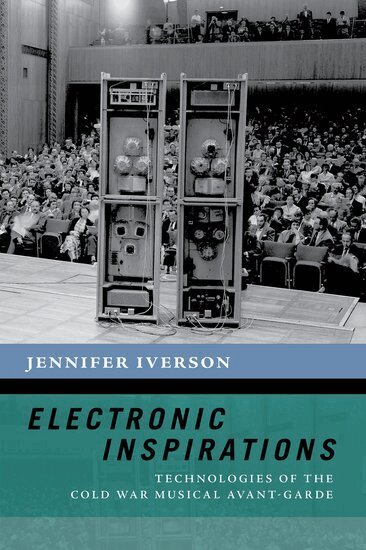
For a decimated post-war West Germany, the electronic music studio at the WDR radio in Cologne was a beacon of hope. Jennifer Iverson's Electronic Inspirations: Technologies of the Cold War Musical Avant-Garde traces the reclamation and repurposing of wartime machines, spaces, and discourses into the new sounds of the mid-century studio. In the 1950s, when technologies were plentiful and the need for reconstruction was great, West Germany began to rebuild its cultural prestige via aesthetic and technical advances. The studio's composers, collaborating with scientists and technicians, coaxed music from sine-tone oscillators, noise generators, band-pass filters, and magnetic tape. Together, they applied core tenets from information theory and phonetics, reclaiming military communication technologies as well as fascist propaganda broadcasting spaces. The electronic studio nurtured a revolutionary synthesis of science, technology, politics, and aesthetics. Its esoteric sounds transformed mid-century music and continue to reverberate today. Electronic music-echoing both cultural anxiety and promise-is a quintessential Cold War innovation.
Häftad, Engelska, 2019
282 kr
Skickas inom 5-8 vardagar
For a decimated post-war West Germany, the electronic music studio at the WDR radio in Cologne was a beacon of hope. Jennifer Iverson's Electronic Inspirations: Technologies of the Cold War Musical Avant-Garde traces the reclamation and repurposing of wartime machines, spaces, and discourses into the new sounds of the mid-century studio. In the 1950s, when technologies were plentiful and the need for reconstruction was great, West Germany began to rebuild its cultural prestige via aesthetic and technical advances. The studio's composers, collaborating with scientists and technicians, coaxed music from sine-tone oscillators, noise generators, band-pass filters, and magnetic tape. Together, they applied core tenets from information theory and phonetics, reclaiming military communication technologies as well as fascist propaganda broadcasting spaces. The electronic studio nurtured a revolutionary synthesis of science, technology, politics, and aesthetics. Its esoteric sounds transformed mid-century music and continue to reverberate today. Electronic music-echoing both cultural anxiety and promise-is a quintessential Cold War innovation.
Inbunden, Engelska, 2020
633 kr
Skickas inom 5-8 vardagar
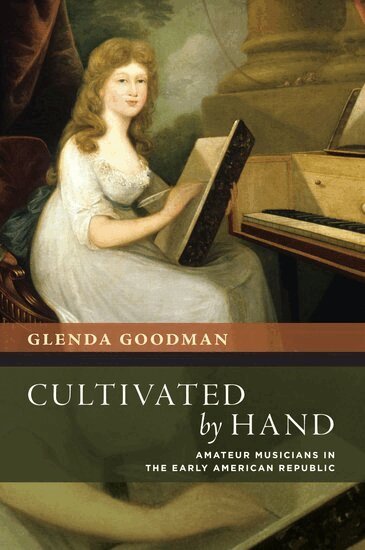
Scattered in archives and historical societies across the United States are hundreds of volumes of manuscript music, copied by hand by eighteenth-century amateurs. Often overlooked, amateur music making played a key role in the construction of gender, class, race, and nation in the post-revolution years of the United States. These early Americans, seeking ways to present themselves as genteel, erudite, and pious, saw copying music by hand and performing it in intimate social groups as a way to make themselves--and their new nation-appear culturally sophisticated. Following a select group of amateur musicians, Cultivated by Hand makes the case that amateur music making was both consequential to American culture of the eighteenth century and aligned with other forms of self-fashioning. This interdisciplinary study explores the social and material practices of amateur music making, analyzing the materiality of manuscripts, tracing the lives of individual musicians, and uncovering their musical tastes and sensibilities. Author Glenda Goodman explores highly personal yet often denigrated experiences of musically "accomplished" female amateurs in particular, who grappled with finding a meaningful place in their lives for music. Revealing the presence of these unacknowledged subjects in music history, Cultivated by Hand reclaims the importance of such work and presents a class of musicians whose labors should be taken into account.
Inbunden, Engelska, 2020
1 271 kr
Skickas inom 5-8 vardagar
Musical Solidarities: Political Action and Music in Late Twentieth-Century Poland is a music history of Solidarity, the social movement opposing state socialism in 1980s Poland. The story unfolds along crucial sites of political action under state socialism: underground radio networks, the sanctuaries of the Polish Roman Catholic Church, labor strikes and student demonstrations, and commemorative performances. Through innovative close listenings of archival recordings, author Andrea F. Bohlman uncovers creative sonic practices in bootleg cassettes, televised state propaganda, and the unofficial, uncensored print culture of the opposition. She argues that sound both unified and splintered the Polish opposition, keeping the contingent formations of political dissent in dynamic tension. By revealing the diverse repertories-singer-songwriter verses, religious hymns, large-scale symphonies, experimental music, and popular song-that played a role across the decade, she challenges paradigmatic visions of a late twentieth-century global protest culture that place song and communitas at the helm of social and political change. Musical Solidarities brings together perspectives from historical musicology, ethnomusicology, and sound studies to demonstrate the value of sound for thinking politics. Unfurling the rich soundscapes of political action at demonstrations, church services, meetings, and in detention, it offers a nuanced portrait of this pivotal decade of European and global history.
Inbunden, Engelska, 2011
935 kr
Skickas inom 5-8 vardagar
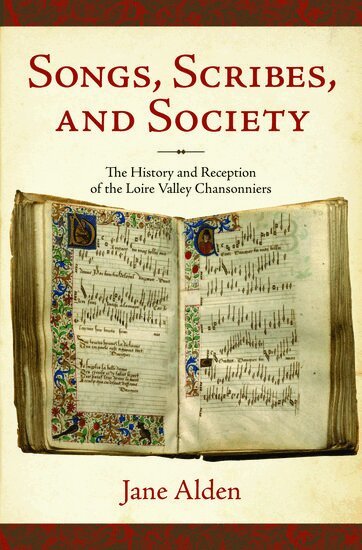
A new kind of songbook emerged in the later fifteenth century: personalized, portable, and lavishly decorated. Five closely related chansonniers, copied in the Loire Valley region of central France c. 1465-c. 1475, are the earliest surviving examples of this new genre.The Loire Valley Chansonniers preserve the music of such renowned composers as Guillaume Du Fay, Johannes Ockeghem, and Antoine Busnoys. But their importance as musical sources has overshadowed the significance of these manuscripts as artifacts in their own right. This book places the physical objects at center, investigating the means by which they were produced and the broader culture in which they circulated. Jane Alden performs a codicological autopsy upon the manuscripts and reveals the hitherto unrecognized role of scribes in shaping the transmission and reception of the chanson repertory. Alden also challenges the long-held belief that the Loire Valley Chansonniers were intended for royal or noble patrons. Instead, she argues that a rising class of bureaucrats--notaries, secretaries, and other court officials--commissioned these exquisite objects. Active as writers and participants in poetry competitions, these individuals may even have written some of the chansons' texts. The unique integration of image, text, and music found in chansonniers extends their appeal to a broad readership. But for the nineteenth-century scholars who rediscovered these manuscripts, the larger literary and visual resonances were not of primary interest. Alden documents the tangle of motivations--national identity, populist politics, and the rise of the musical masterwork--that informed the earliest writings on these books. Only now is their multifaceted structure the inspiration for a new generation of readers.
Inbunden, Engelska, 2015
925 kr
Skickas inom 5-8 vardagar
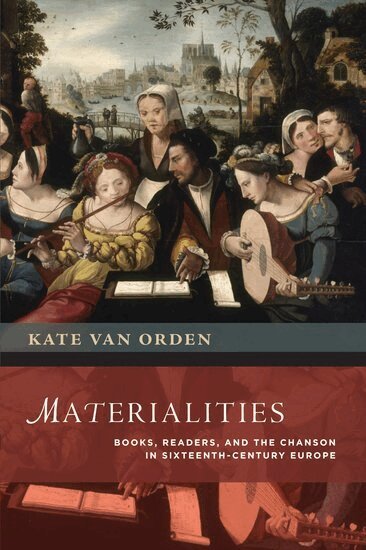
Ephemeral, fragile, often left unbound, sixteenth-century songbooks led fleeting lives in the pockets of singers and on the music desks of instrumentalists. Constantly in action, they were forever being used up, replaced, or abandoned as ways of reading changed. As such they document the acts of early musicians and the practices of everyday life at the unseen margins of elite society. Materialities is a cultural history of song on the page. It addresses a series of central questions concerning the audiences for written music by concentrating on the first genre to be commercialized by music printers: the French chanson. Scholars have long stressed that chansons represent the most broadly disseminated polyphony of the sixteenth century, but Materialities is the first book to account for the cultural reach of the chanson across a considerable cross-section of European society. Musicologist Kate van Orden brings extensive primary research and new analytical models to bear in this remarkable history of songbooks, music literacy, and social transformation during the first century of music printing. By tracking chansons into private libraries and schoolrooms and putting chansonniers into dialogue with catechisms, civility manuals, and chapbooks, Materialities charts the social distribution of songbooks, the gradual moralization of song, and the ways children learned their letters and notes. Its fresh conclusions revise several common assumptions about the value early moderns attributed to printed music, the levels of literacy required to perform polyphony, and the way musicians did or did not "read" their songbooks. With musical perspectives that can invigorate studies of print culture and the history of reading, Materialities is an essential guide for musicologists working with original sources and historians of the book interested in the vocal performances that operated alongside print.
Inbunden, Engelska, 2014
723 kr
Skickas inom 5-8 vardagar
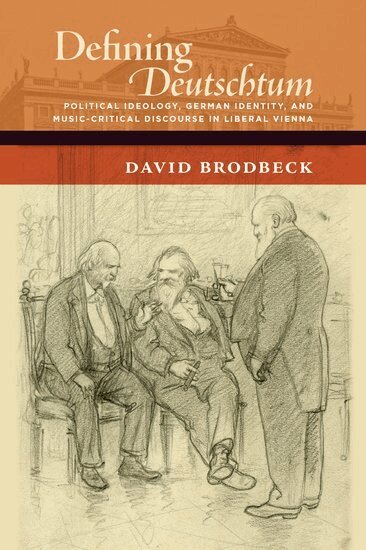
This is an open access title. It is available to read and download as a free PDF version on Oxford Academic and is made available under a Creative Commons Attribution 4.0 International licence. Defining Deutschtum: Political Ideology, German Identity, and Music-Critical Discourse in Liberal Vienna offers a nuanced look at the intersection of music, cultural identity, and political ideology in late-nineteenth-century Vienna. Drawing on an extensive selection of writings in the city's political press, correspondence, archival documents, and a large body of recent scholarship in late Habsburg cultural and political history, author David Brodbeck argues that Vienna's music critics were important agents in the public sphere whose writings gave voice to distinct, sometimes competing ideological positions. These conflicting positions are exemplified especially well in their critical writings about the music of three notable composers of the day who were Austrian citizens but not ethnic Germans: Carl G
Inbunden, Engelska, 2012
1 094 kr
Skickas inom 5-8 vardagar
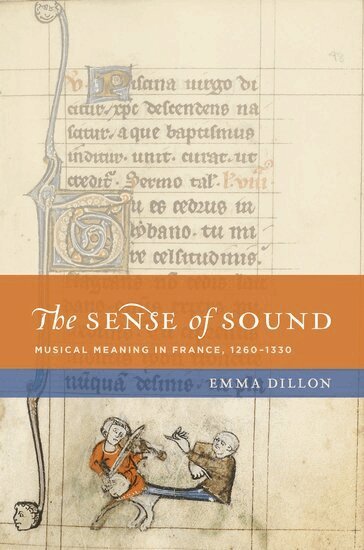
Among the most memorable innovations of music and poetry in thirteenth-century France was a genre that seemed to privilege sound over sense. The polytextual motet is especially well-known to scholars of the Middle Ages for its tendency to conceal complex allegorical meaning in a texture that, in performance, made words less, rather than more, audible. It is with such musical sound that this book is concerned. What did it mean to create a musical effect so potentially independent from the meaning of words? Is it possible such supermusical effects themselves had significance? The Sense of Sound offers a radical recontextualization of French song in the heyday of the motet c.1260-1330, and makes the case for listening to musical sound against a range of other potently meaningful sonorities, often premised on non-verbal meaning. In identifying new audible interlocutors to music, it opens our ears to a broad spectrum of sounds often left out of historical inquiry, from the hubbub of the medieval city; to the eloquent babble of madmen; to the violent clamor of charivari; to the charismatic chatter of prayer. Drawing on a rich array of artistic evidence (music, manuscripts, poetry, and images) and contemporary cultural theory, it locates musical production in this period within a larger cultural environment concerned with representing sound and its emotional, ethical, and social effects. In so doing, The Sense of Sound offers an experiment in how we might place central the most elusive aspect of music's history: sound's vibrating, living effect.
Inbunden, Engelska, 2011
802 kr
Skickas inom 5-8 vardagar
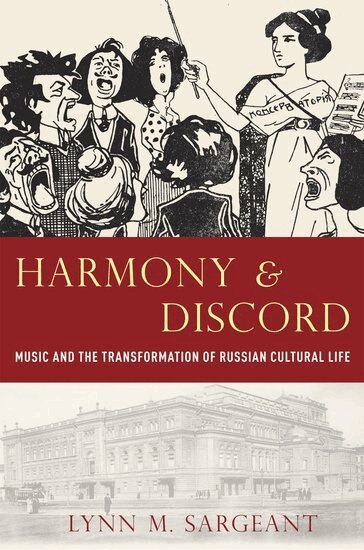
Harmony and Discord: Music and the Transformation of Russian Cultural Life explores the complex development of Russian musical life during the nineteenth and early twentieth centuries. At the heart of this cultural history lies the Russian Musical Society, as both a unique driving force behind the institutionalization of music and a representative of the growing importance of voluntary associations in public life. Sustained simultaneously by private initiative and cooperative relationships with the state, the Russian Musical Society played a key role in the creation of Russia's infrastructure for music and music education. Author Lynn M. Sargeant explores the fluid nature of Russian social identity through the broad scope of musical life, including not only the "leading lights" of the era but also rank-and-file musicians, teachers, and students. Although Russian musicians longed for a secure place within the new hierarchy of professions, their social status remained ambiguous throughout the nineteenth century. Traditional reliance on serf musicians and foreigners left lasting scars that motivated musicians' efforts to obtain legal rights and social respectability. And women's increasing visibility in the musical world provoked acrimonious debates that were, at heart, efforts by male musicians to strengthen their claims to professional status by denying the legitimacy of female participation. Sargeant demonstrates that the successful development of a Russian musical infrastructure salved persistent anxieties about Russia's place vis-à-vis its European cultural competitors. Remarkably, the institutions developed by the Russian Musical Society survived the upheavals of war and revolution to become the foundation for the Soviet musical system.A wealth of historical documentation makes Harmony and Discord required reading for musicologists, sociologists and historians interested in this period, and the abundance of amusing anecdotes and the author's lucid and lively literary style make it an enjoyable history for all readers.
Inbunden, Engelska, 2014
675 kr
Skickas inom 5-8 vardagar
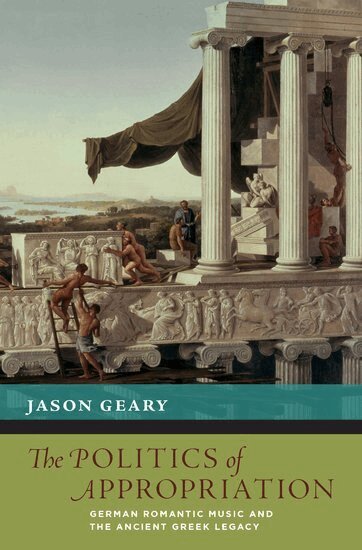
The Politics of Appropriation uncovers a largely forgotten chapter in music history by considering the intersection of music and Hellenism in nineteenth-century Germany. While the influence of Greece on the literature, art, architecture, and philosophy of this period has been much discussed, its significance for music has received considerably less attention. Beginning in 1841 with Felix Mendelssohn's wildly popular score for the groundbreaking Prussian court production of Sophocles' Antigone, author Jason Geary draws on research from the fields of musicology, history, classical studies, and theater studies, to explore the trend of combining music and Greek tragedy that also included productions of Euripides' Medea, Sophocles' Oedipus at Colonus, and Sophocles' celebrated Oedipus the King with music by Wilhelm Taubert, Mendelssohn, and Franz Lachner, respectively. Staged at royal courts in Berlin and Munich, these productions reflect an effort by the rulers who commissioned them to appropriate the legacy of Greece for the creation of a German cultural and national identity, while the music involved seemed to its contemporaries to mark the advent of an entirely new Romantic genre. By drawing a line between these compositions and Wagner's very different approach to recovering classical tragedy, Geary offers a reassessment of the composer's reception of the Greeks, highlighting the degree to which he was reacting against works such as Mendelssohn's Antigone when he called for the creation of a music drama rooted in the spirit of Attic tragedy. Geary further argues that Wagner's Ring cycle can be understood as the composer's attempt to reclaim the mythic significance of the Oedipus myth in the service of his own aesthetic aims. Placing these developments within the context of Germany's longstanding obsession with Greece, The Politics of Appropriation demonstrates the enduring significance of antiquity as a trope that helped to shape the European cultural and artistic landscape of the nineteenth century.
Inbunden, Engelska, 2011
1 006 kr
Skickas inom 5-8 vardagar
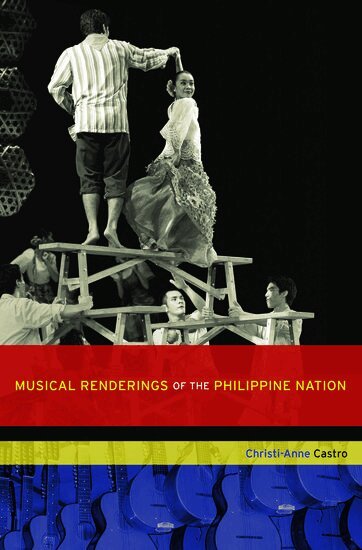
The first cultural history of the Philippines during the twentieth century, Musical Renderings of the Philippine Nation focuses on the relationships between music, performance, and ideologies of nation. Spanning the hundred years from the Filipino-American War to the 1998 Centennial celebration of the nation's independence from Spain, the book has added emphasis on the period after World War II. Author Christi-Anne Castro describes the narratives of nation embedded in several major musical genres, such as classical music and folkloric song and dance, and enacted by the most well-known performers of the country, including Bayanihan, The Philippine National Dance Company and the Philippine Madrigal Singers. Castro delves into the ideas and works of prominent native composers, from the popular art music of Francisco Santiago and Lucio San Pedro to the People Power anthem of 1986 by Jim Paredes of the group Apo Hiking Society. Through both archival research and ethnographic fieldwork, Castro reveals how individuals and groups negotiate with and contest the power of the state to define the nation as a modern and hybrid entity within a global community.
Inbunden, Engelska, 2014
829 kr
Skickas inom 5-8 vardagar
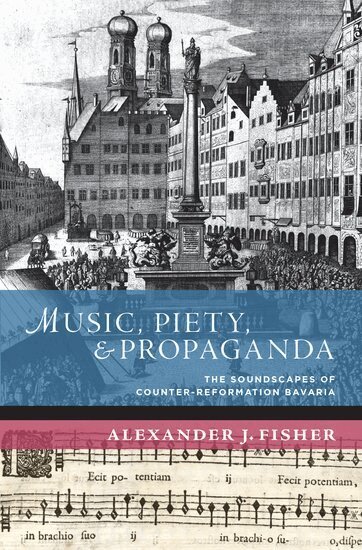
Music, Piety, and Propaganda: The Soundscapes of Counter-Reformation Bavaria explores the nature of sound as a powerful yet ambivalent force in the religious struggles that permeated Germany during the Counter-Reformation. Author Alexander J. Fisher goes beyond a musicological treatment of composers, styles, and genres to examine how music, and more broadly sound itself, shaped the aural landscape of Bavaria as the duchy emerged as a militant Catholic bulwark. Fisher focuses particularly on the ways in which sound--including bell-ringing, gunfire, and popular song, as well as cultivated polyphony--not only was deployed by Catholic secular and clerical elites to shape the religious identities of Bavarian subjects, but also carried the potential to challenge and undermine confessional boundaries. Surviving literature, archival documents, and music illustrate the ways in which Bavarian authorities and their allies in the Catholic clergy and orders deployed sound to underline crucial theological differences with their Protestant antagonists, notably the cults of the Virgin Mary, the Eucharist, and the saints. Official and popular rituals like divine worship, processions, and pilgrimages all featured distinctive sounds and music that shaped and reflected an emerging Catholic identity. Although officials imposed a severe regime of religious surveillance, the Catholic state's dominance of the soundscape was hardly assured. Fisher traces archival sources that show the resilience of Protestant vernacular song in Bavaria, the dissemination and performance of forbidden, anti-Catholic songs, the presence of Lutheran chorales in nominally Catholic church services into the late 16th century, and the persistence of popular "noise" more generally. Music, Piety, and Propaganda thus reveals historical, theological, and cultural issues of the period through the piercing dimension of its sounds, bringing into focus the import of sound as a strategic cultural tool with significant impact on the flow of history.
Inbunden, Engelska, 2012
1 218 kr
Skickas inom 5-8 vardagar
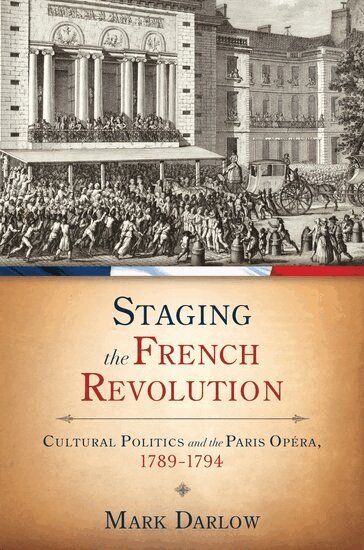
Over the last decade, the theatre and opera of the French Revolution have been the subject of intense scholarly reassessment, both in terms of the relationship between theatrical works and politics or ideology in this period and on the question of longer-scale structures of continuity or rupture in aesthetics. Staging the French Revolution: Cultural Politics and the Paris Opera, 1789-1794 moves these discussions boldly forward, focusing on the Paris Opéra (Académie Royale de Musique) in the cultural and political context of the early French Revolution. Both institutional history and cultural study, this is the first ever full-scale study of the Revolution and lyric theatre. The book concentrates on three aspects of how a royally-protected theatre negotiates the transition to national theatre: the external dimension, such as questions of ownership and governance and the institution's relationship with State institutions and popular assemblies; the internal management, finances, selection and preparation of works; and the cultural and aesthetic study of the works themselves and of their reception. In Staging the French Revolution, author Mark Darlow offers an unprecedented view of the material context of opera production, combining in-depth archival research with a study of the works themselves. He argues that a mixture of popular and State interventions created a repressive system in which cultural institutions retained agency, compelling individuals to follow and contribute to a shifting culture. Theatre thereby emerged as a locus for competing discourses on patriotism, society, the role of the arts in the Republic, and the articulation of the Revolution's relation with the 'Old Regime', and is thus an essential key to the understanding of public opinion and publicity at this crucial historical moment. Combining recent approaches to institutions, sociability, and authors' rights with cultural studies of opera, Staging the French Revolution takes a historically grounded and methodologically innovative cross-disciplinary approach to opera and persuasively re-evaluates the long-standing, but rather sterile, concept of propaganda.