The Short Oxford History of Europe – serie
Visar alla böcker i serien The Short Oxford History of Europe. Handla med fri frakt och snabb leverans.
10 produkter
10 produkter
1 756 kr
Skickas inom 5-8 vardagar
This book is intended for students or the general reader with an interest in modern European history.
491 kr
Skickas inom 5-8 vardagar
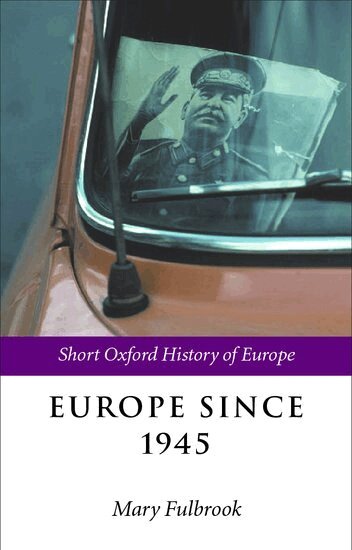
Bringing home the extraordinary waves of transformation that washed across Europe in the second half of the twentieth century, this book interprets the trends, developments, and issues which were of major importance in East and West Europe in the latter half of the twentieth century. Mary Fulbrook's Introduction to this volume begins with a vivid contrast setting the struggle for survival in a devastated rubble-strewn street of East Berlin in 1945 against the same location in the reunited city at the end of the century, unrecognisable in its gleaming, confident, cosmopolitan affluence. The book then provides a clear overview of the broad patterns of change: from nationalism to integration; from imperialism to decolonization; from division between capitalism and communism to striking convergence of systems; from regional differences to an increasingly homogeneous, urbanised cosmopolitan society. Each chapter is enlivened by a wealth of illustrative detail as local themes and variations in different parts of Europe are explored. Chapters trace the character, causes, and consequences of general trends and specific developments in politics, society, the economy, and culture, before turning to relations within Europe and with the non-European world. The result is an illuminating and engrossing account of European history since 1945.
1 756 kr
Skickas inom 5-8 vardagar
Mary Fulbrook's Introduction to this splendid concluding volume in The Short Oxford History of Europe begins with a vivid contrast, setting the struggle for survival in a devastated rubble-strewn street of East Berlin in 1945 against the same location in the reunited city at the end of the century, unrecognizable in its gleaming, confident, cosmopolitan affluence. The book brings home the extraordinary waves of transformation that have washed across Europe in the second half of the twentieth century, sketching out the major general patterns of this change, and exploring some of the local themes and variations in different parts of Europe. The result is both illuminating and engrossing: a must for students of contemporary history, politics, and European studies, it also offers immense rewards to any reader interested in the roots, and fruits, of the post-war European renaissance.
1 705 kr
Skickas inom 5-8 vardagar
Six leading experts have contributed their insights into the 16th century in this volume. The economy, politics, society, and secular and religious thought all receive careful thematic treatment and analysis. Many history textbook cliches emerge transformed from their accounts."
494 kr
Skickas inom 5-8 vardagar
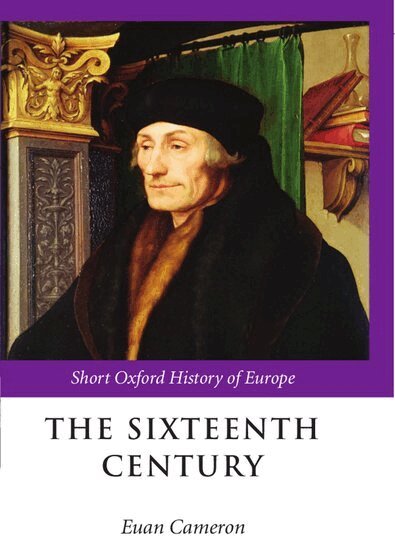
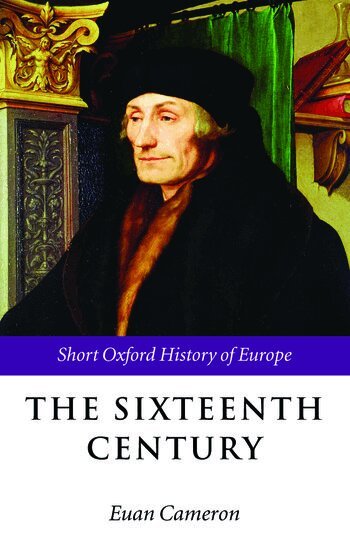
The sixteenth century witnessed some of the most abrupt and traumatic transformations ever seen in European society and culture. Population growth strained the old fabric of community and economic relations. New supplies of precious metals from east and west re-wrote the rules of finance and commerce. Politics was dominated first by the gladiatorial struggle of two great Renaissance monarchs, then by the bitter and bloody entanglement of religion and politics. Society became more disciplined but also more fragmented. Yet this was also the age when the Renaissance became a European rather than just an Italian phenomenon, an age of art, architecture, and literature, of unprecedented reflection on the thinking person's role in government and civic life. It was the era of the Reformation and Catholic reform, when the ideals and priorities of the life of faith were examined and reshaped in the light of new readings of Scripture. For the first time Europeans not only learned more about the world beyond their continent; they reached out and grasped huge new overseas empires.Six leading scholars in their respective fields have here contributed their insights into the challenging and tumultuous sixteenth century. The economy, politics, society, and secular and religious thought all receive careful thematic treatment and analysis. A detailed picture also emerges of how Europeans made and managed their overseas empires. The volume challenges, tests, and revises the received wisdom of past accounts in the light of the most modern scholarship. The diverse experiences of regions of Europe often ignored, including the East and the Mediterranean, receive particular attention where their destinies were different from the more better-known experiences of France and Germany. Many clichés of textbook history, from the multiple 'revolutions' to the rise of the nation-states, emerge transformed from this account.
438 kr
Skickas inom 5-8 vardagar
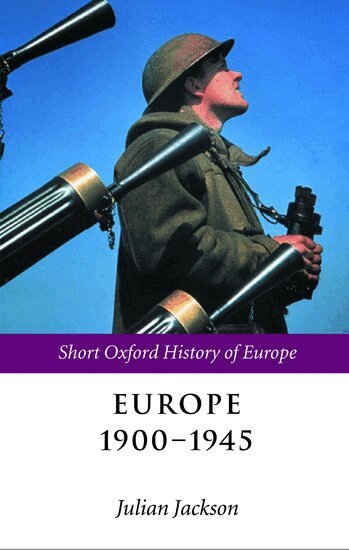
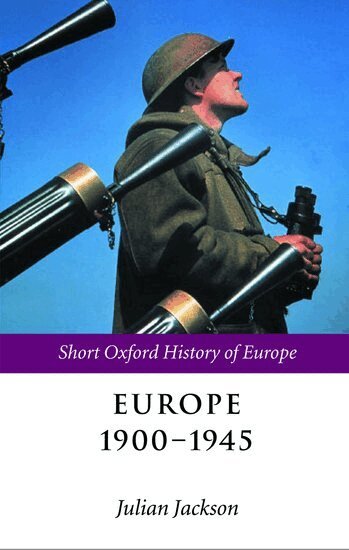
By 1945, the European continent, which in 1900 appeared increasingly prosperous, reasonably ordered, and increasingly civilised, had torn itself apart. On the way, its societies had suffered inflations and depressions, vicious dictatorships, and the most destructive wars in modern history. This book provides a thought-provoking and wide-ranging history of the whole of Europe in this period. Six lively and stimulating chapters have been written especially for this volume. They focus in turn on political, economic, social, and cultural aspects of the period, as well as international relations within Europe and with the wider world. Particular care is taken to integrate developments in southern and eastern Europe (including the USSR) into the more familiar story of what happened in western and central Europe.
1 944 kr
Skickas inom 5-8 vardagar
The period from the late tenth to the early fourteenth centuries was one of the most dynamic in European history. Latin Christendom found a new confidence which has left its mark upon the landscape in the form of the great cathedrals and castles, while thousands of new towns and villages were founded. The continent was carved up into dynastic kingdoms and principalities from which the European state system would evolve. An age of great religious enthusiasm, it developed a darker side in the form of the Crusades and the persecution of heretics and Jews.In this book seven experts in the field examine how Europe was transformed in the Central Middle Ages. Thematic chapters analyse the political, social, economic, religious and intellectual history of Latin Christendom, and trace its expansion to the north, south and east. As well as many familiar topics the authors discuss less well known aspects of the period such as the popular experience of religion or the new kingdoms of east-central Europe. The book includes a chronology of developments, a glossary, maps, illustrations and guidance for further reading.
509 kr
Skickas inom 5-8 vardagar
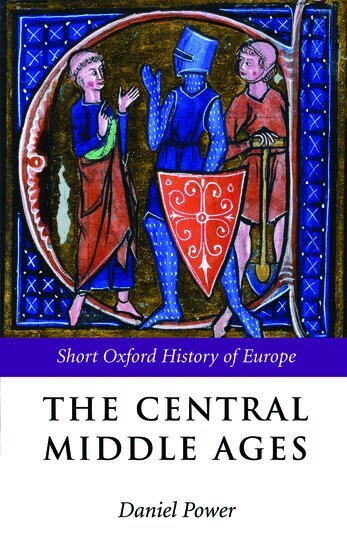
The period from the late tenth to the early fourteenth centuries was one of the most dynamic in European history. Latin Christendom found a new confidence which has left its mark upon the landscape in the form of the great cathedrals and castles, while thousands of new towns and villages were founded. The continent was carved up into dynastic kingdoms and principalities from which the European state system would evolve. An age of great religious enthusiasm, it developed a darker side in the form of the Crusades and the persecution of heretics and Jews.In this book seven experts in the field examine how Europe was transformed in the Central Middle Ages. Thematic chapters analyse the political, social, economic, religious and intellectual history of Latin Christendom, and trace its expansion to the north, south and east. As well as many familiar topics the authors discuss less well known aspects of the period such as the popular experience of religion or the new kingdoms of east-central Europe. The book includes a chronology of developments, a glossary, maps, illustrations and guidance for further reading.
2 034 kr
Skickas inom 5-8 vardagar
This volume traces the rise of Rome and the extension of Roman power across Europe, from the viewpoints of both conquerors and conquered, and also Rome's barbarian heirs, covering the period from 1000 BC through to AD 400. The book reconstructs as far as possible the indigenous experience of contact with Rome, showing how Roman domination impacted upon the already complex world of Iron Age Europe, before leaving a new 'barbarian' world in its wake. Using both literary and archaeological evidence, the eight expert contributors analyse the transformation of Europe, and the laying of the foundations of the Middle Ages, including chapters on Iron Age Europe, Roman society, warfare and the army, economy and trade, religions, and the cultural implications of Roman conquest, as well as narrative chapters on war and politics.
472 kr
Skickas inom 7-10 vardagar
This volume traces the rise of Rome and the extension of Roman power across Europe, from the viewpoints of both conquerors and conquered, and also Rome's barbarian heirs, covering the period from 1000 BC through to AD 400. The book reconstructs as far as possible the indigenous experience of contact with Rome, showing how Roman domination impacted upon the already complex world of Iron Age Europe, before leaving a new 'barbarian' world in its wake. Using both literary and archaeological evidence, the eight expert contributors analyse the transformation of Europe, and the laying of the foundations of the Middle Ages, including chapters on Iron Age Europe, Roman society, warfare and the army, economy and trade, religions, and the cultural implications of Roman conquest, as well as narrative chapters on war and politics.