Toposophia: Thinking Place/Making Space – serie
Visar alla böcker i serien Toposophia: Thinking Place/Making Space. Handla med fri frakt och snabb leverans.
15 produkter
15 produkter
Inbunden, Engelska, 2011
1 186 kr
Skickas inom 10-15 vardagar
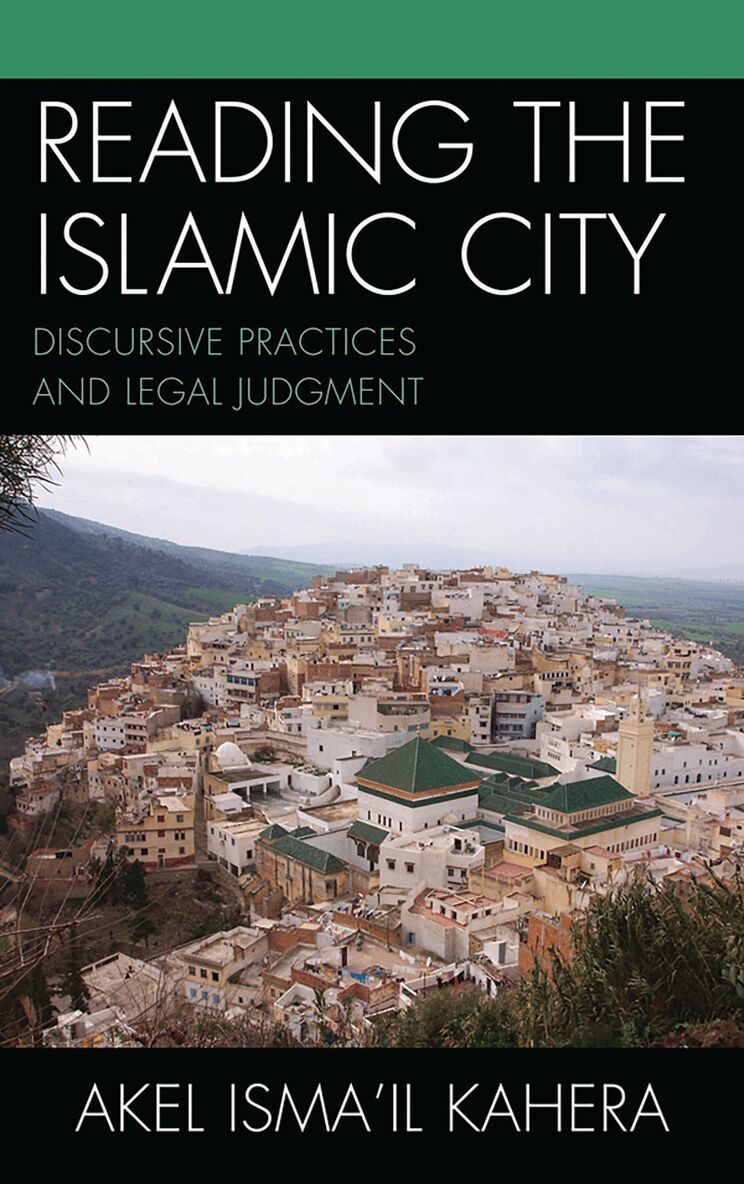
Reading the Islamic City offers insights into the implications the practices of the Maliki school of Islamic law have for the inhabitants of the Islamic city, the madinah. The problematic term madinah fundamentally indicates a phenomenon of building, dwelling, and urban settlement patterns that evolved after the 7th century CE in the Maghrib (North Africa) and al-Andalusia (Spain). Madinah involves multiple contexts that have socio-religious functions and symbolic connotations related to the faith and practice of Islam, and can be viewed in terms of a number of critiques such as everyday lives, boundaries, utopias, and dystopias. The book considers Foucault’s power/knowledge matrix as it applies to an erudite cadre of scholars and legal judgments in the realm of architecture and urbanism. It acknowledges the specificity of power/knowledge insofar as it provides a dominant framework to tackle property rights, custom, noise, privacy, and a host of other subjects. Scholars of urban studies, religion, history, and geography will greatly benefit from this vivid analysis of the relevance of the juridico-discursive practice of Maliki Law in a set of productive or formative discourses in the Islamic city.
Häftad, Engelska, 2007
702 kr
Skickas inom 10-15 vardagar
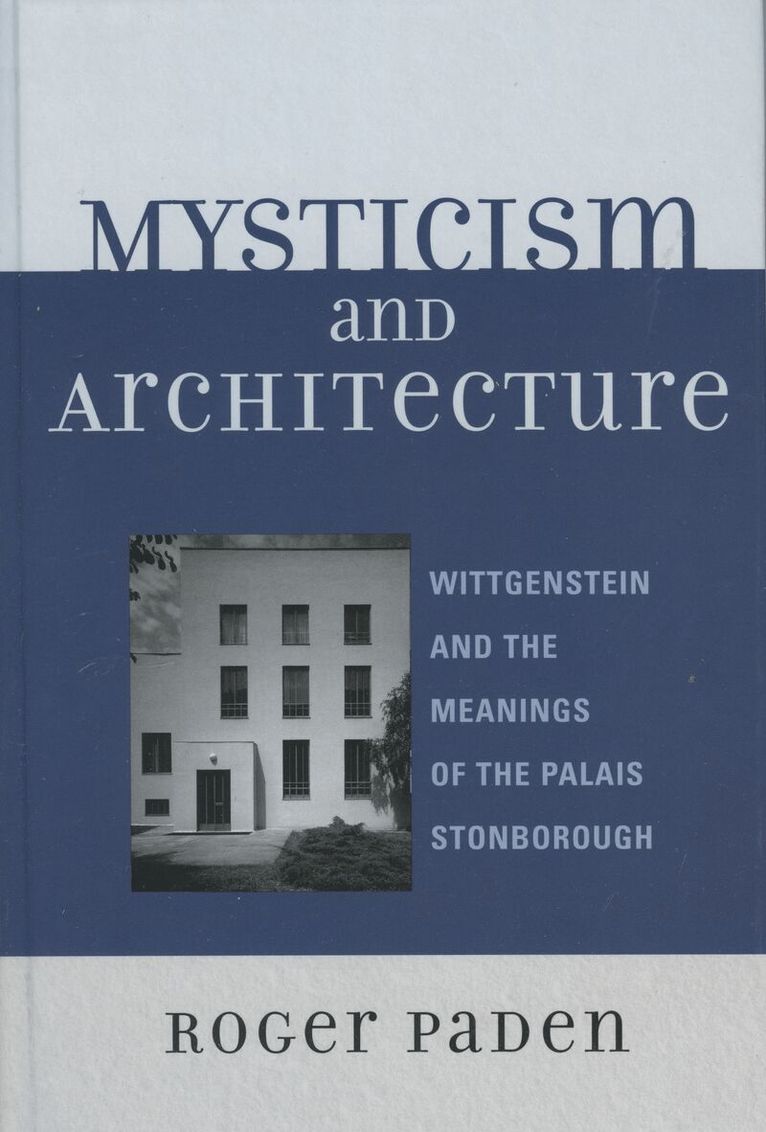
Mysticism and Architecture: Wittgenstein and the Palais Stonborough is a multi-disciplinary study of the Viennese palais that the philosopher Ludwig Wittgenstein helped design and build for his sister shortly after he abandoned philosophy for more practical activities and during the period that supposedly separates his "early" from his "late" philosophy. Weaving together discussions of a number of social, political, and cultural developments that helped to give fin-de-siècle Vienna its character — including the late modernization of Austrian society, industry, and economy; the construction of Vienna's Ringstrasse; the slow decay of the Hapsburg monarchy; and the failure of Austrian liberalism; as well as Tolstoy's religiously-based ethical views; Adolf Loos's critique of architectural ornament; Karl Kraus's analysis of Vienna's decadence; Kierkegaard's and Nestroy's views on the importance of indirect communication; Otto Weininger's theory of the nature and duty of genius; Camillo Sitte and Otto Wagner's dispute over good urban form; Schopenhauer's aesthetic theories and his 'Eastern' philosophy of life; and Russell and Frege's philosophical and logical theories — the book presents a philosophical biography of Wittgenstein reminiscent of, but substantially different from, Janik and Toulmin's Wittgenstein's Vienna. This philosophical biography underpins a new interpretation of the house which argues that the house belongs to neither architectural Modernism, nor Postmodernism, but is instead caught between those two movements. This analysis of the house, in turn, grounds a new interpretation of Wittgenstein's philosophical works that emphasizes their mystical nature and practical purpose. Finally, this interpretation shows the unity of these works while simultaneously suggesting an underlying flaw; namely, that they arise from two fundamentally-opposed worldviews present in Vienna during Wittgenstein's youth, "aesthetic modernism" and "critical modernism."
Häftad, Engelska, 2007
702 kr
Skickas inom 10-15 vardagar
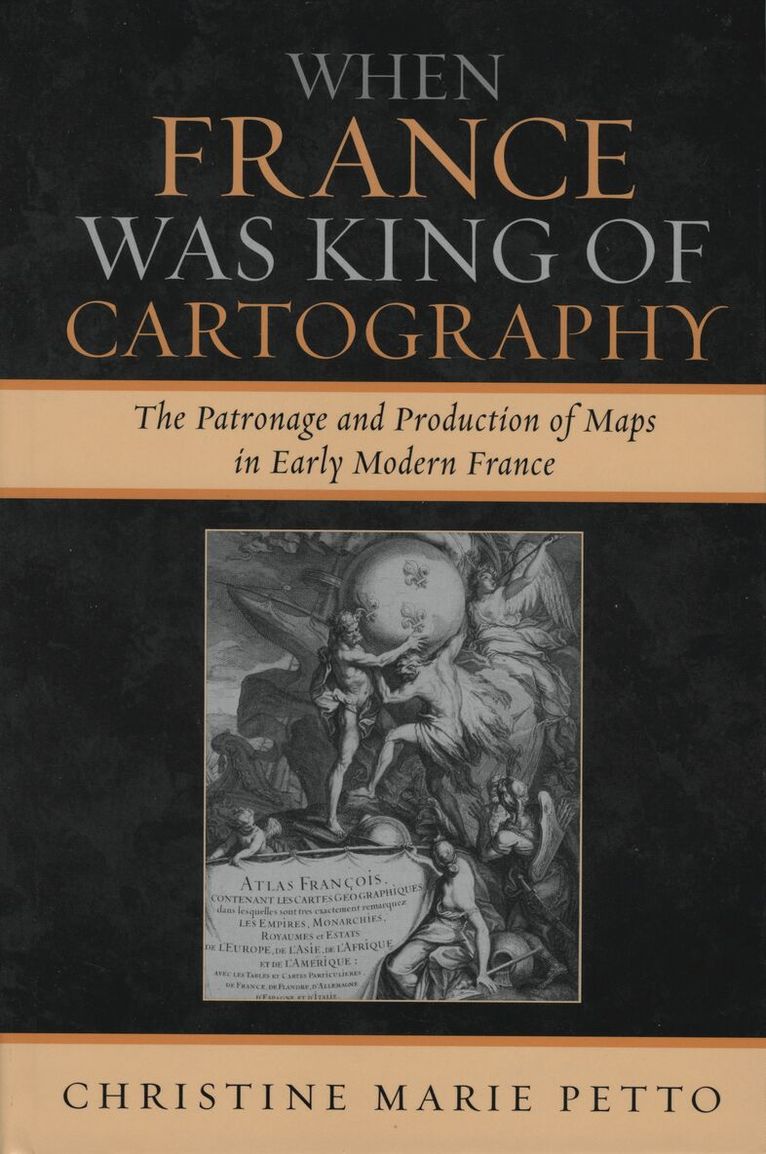
Geographical works, as socially constructed texts, provide a rich source for historians and historians of science investigating patronage, the governmental initiatives and support for science, and the governmental involvement in early modern commerce. Over the course of nearly two centuries (1594-1789), in adopting and adapting maps as tools of statecraft, the Bourbon Dynasty both developed patron-client relations with mapmakers and corporations and created scientific institutions with fundamental geographical goals. Concurrently, France—particularly, Paris—emerged as the dominant center of map production. Individual producers tapped the traditional avenues of patronage, touted the authority of science in their works, and sought both protection and legitimation for their commercial endeavors within the printing industry. Under the reign of the Sun King, these producers of geographical works enjoyed preeminence in the sphere of cartography and employed the familiar rhetoric of image to glorify the reign of Louis XIV. Later, as scientists and scholars embraced Enlightenment empiricism, geographical works adopted the rhetoric of scientific authority and championed the concept that rational thought would lead to progress.When France Was King of Cartography investigates over a thousand maps and nearly two dozen map producers, analyzes the map as a cultural artifact, map producers as a group, and the array of map viewers over the course of two centuries in France. The book focuses on situated knowledge or "localized" interests reflected in these geographical productions. Through the lens of mapmaking, When France Was King of Cartography examines the relationship between power and the practice of patronage, geography, and commerce in early modern France.
Häftad, Engelska, 2008
817 kr
Skickas inom 10-15 vardagar
Because many people and ecosystems share—or constitute—any given place, they all have a stake in the outcome of what any of us do in regard to environmental problems. It is not surprising that issues are hotly contested given the many divergent interests, needs, and preferences of a community's members, much less those of people "downstream" who are affected by the consequences of our actions or of "outside" parties who play a part, including those who would speak on behalf of the ecosystems. Thus, we not only must make careful individual decisions concerning the environment, but need to improve the way we operate socially, especially given the roles and responsibilities we have as environmental professionals, private-sector developers, public policy-makers and staff, or engaged citizens. To aid in resolving our environmental dilemmas, Mugerauer and Manzo focus on the decision making process. Their goal is to help readers become more aware of the worldviews, beliefs, and values that enter into the decisions they make and to better resolve differences with others. To guide readers in thinking about their own positions and how to approach ethical decisions, Mugerauer and Manzo employ a number of exercises and cases to investigate the choices and issues that different stakeholders face (for example, concerning sustainability). Additionally, the book presents alternatives in terms of formalized ethical principles, the major ethical theories, and professional codes of ethics.
Timespace of Human Activity
On Performance, Society, and History as Indeterminate Teleological Events
Inbunden, Engelska, 2010
1 492 kr
Skickas inom 10-15 vardagar
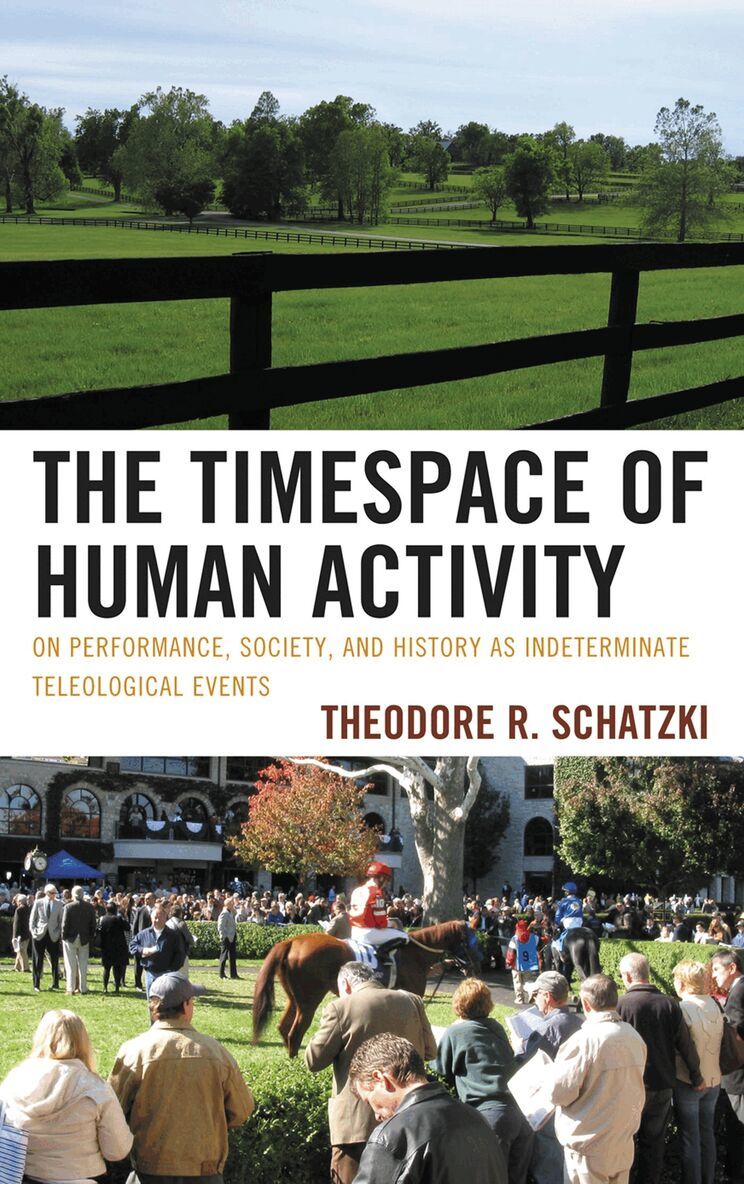
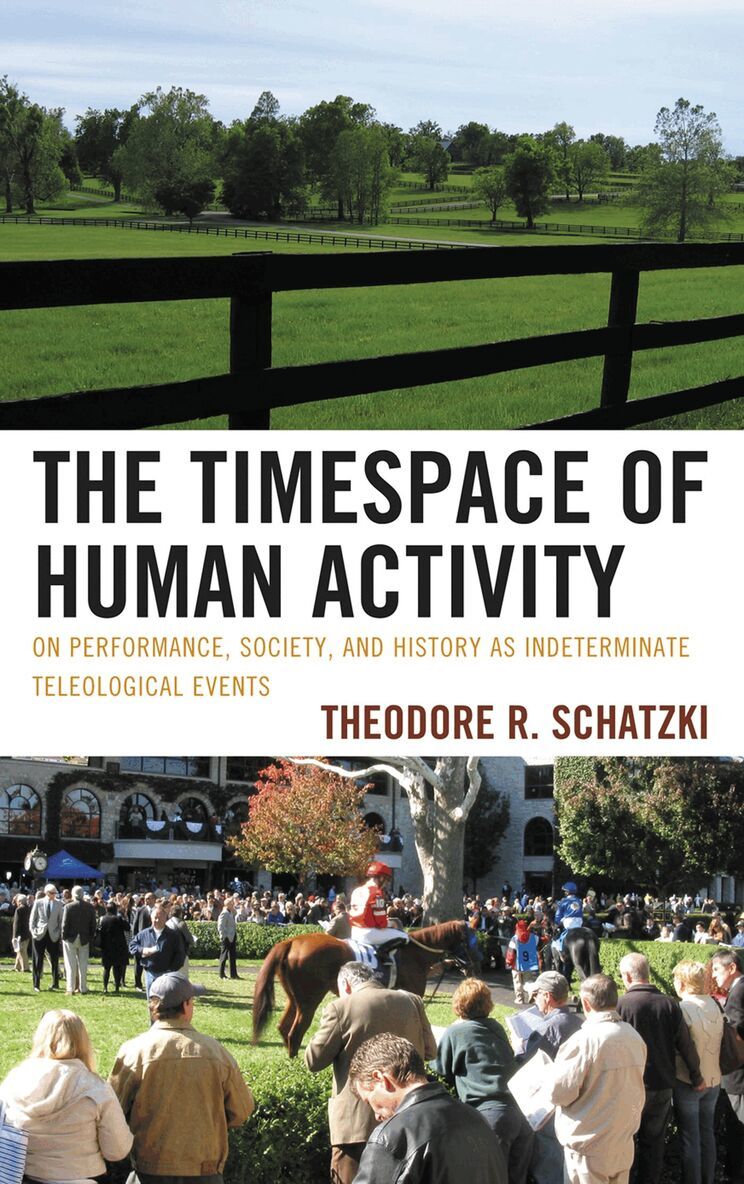
This book shows that a concept of activity timespace drawn from the work of Martin Heidegger provides new insights into the nature of activity, society, and history. Although the book is a work of theory, it has significant implications for the determination and course, not just of activity, but of sociohistorical change as well.Drawing on empirical examples, the book argues (1) that timespace is a key component of the overall space and time of social life, (2) that interwoven timespaces form an essential infrastructure of important social phenomena such as power, coordinated actions, social organizations, and social systems, and (3) that history encompasses constellations of indeterminate temporalspatial events. The latter conception of history in turn yields a propitious account of how the past exists in the present. In addition, because the concept of activity timespace highlights the teleological character of human action, the book contains an extensive defense of the teleological character of such allegedly ateleological forms of activity as emotional and ceremonial actions. Since, finally, the book's ideas about timespace and activity as an indeterminate event derive from an interpretation of Heidegger, the work furthers understanding of the relevance of his thought for social and historical theory.The book combines textual interpretation, theoretical argumentation, and empirical substantiation. Many of its empirical examples are taken from the Blue Grass Horse Country around Lexington, Kentucky, where the author resides.
Inbunden, Engelska, 2013
1 627 kr
Skickas inom 10-15 vardagar
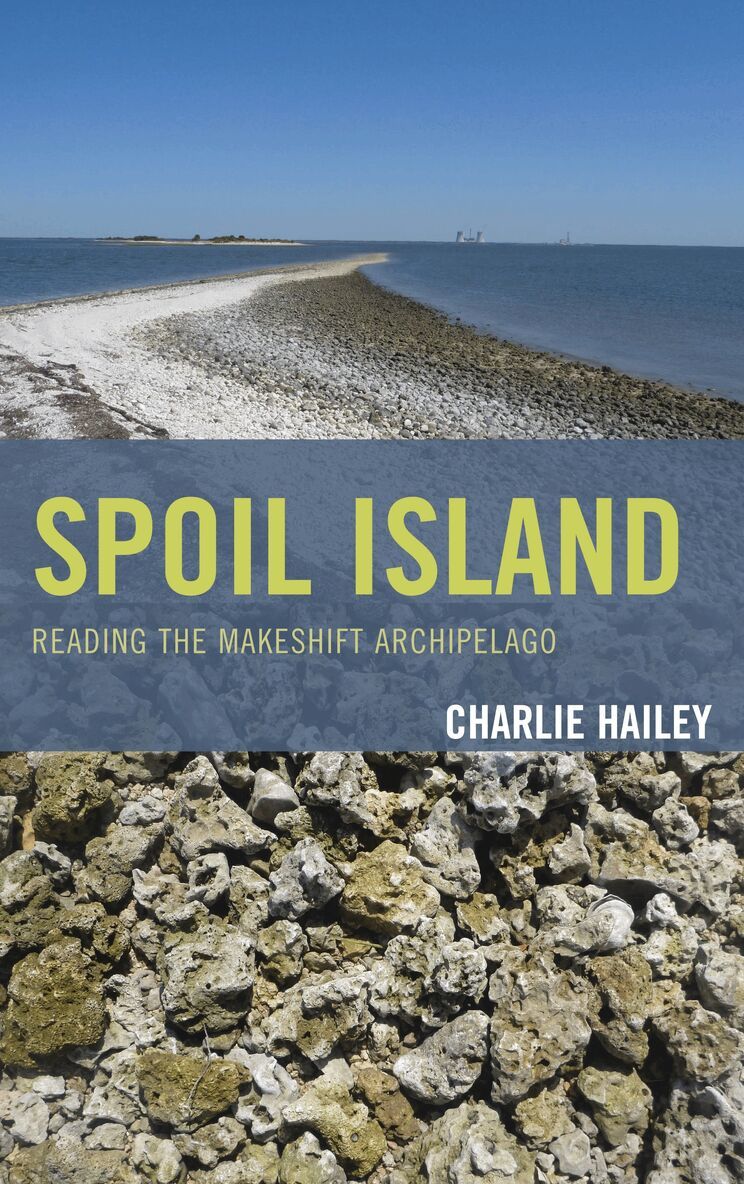
Is there an allure of spoiled places? Spoil islands are overlooked places that combine dirt with paradise, waste-land with “brave new world,” and wildness with human intervention. Although they are mundane products of dredging, these islands form an uninvestigated archipelago that demonstrates the potential value and contested re-valuation of landscapes of waste. To explore these islands, Spoil Island: Reading the Makeshift Archipelago navigates a course along the U.S. east coast, moving from New York City to Florida. Along the way, a general populace squats, picnics, and reflects on the islands, while other forces are also at work. New York City parks commissioner Robert Moses first deplores then adopts Hoffman and Swinburne Islands, UN Secretary General U Thant meditates on the East River’s Belmont Island, businessman John D. MacArthur rejects the purchase of Peanut Island, artist Christo surrounds Miami’s spoil islands, Key Westers debate the futures of two spoil islands that mark their sunset view, and artist Robert Smithson augments this archipelago materially and conceptually. Historical and contemporary stories highlight each island’s often contradictory ecologies that pair nature with infrastructure, public concerns with private development, rationalized urbanism with artistic impulse, and order with disorder. Spoil islands put you in places you normally wouldn’t—and perhaps shouldn’t—be. To examine these marginalized topographies is to understand emergent concerns of twenty-first-century place-making, public space, and natural and artificial infrastructure. Today, spoil islands constitute an unprecedented public commons, where human agency and nature are inextricably linked.Spoil Island will be of interest to anyone working in the areas of architecture, cultural history, cultural geography, environmental studies, or environmental philosophy. Linking the islands with their environmental aesthetics, Charlie Hailey provides a lively and critical topography of places that play a part in current events and local situations with global implications.
Timespace of Human Activity
On Performance, Society, and History as Indeterminate Teleological Events
Häftad, Engelska, 2012
614 kr
Skickas inom 10-15 vardagar
This book shows that a concept of activity timespace drawn from the work of Martin Heidegger provides new insights into the nature of activity, society, and history. Although the book is a work of theory, it has significant implications for the determination and course, not just of activity, but of sociohistorical change as well.Drawing on empirical examples, the book argues (1) that timespace is a key component of the overall space and time of social life, (2) that interwoven timespaces form an essential infrastructure of important social phenomena such as power, coordinated actions, social organizations, and social systems, and (3) that history encompasses constellations of indeterminate temporalspatial events. The latter conception of history in turn yields a propitious account of how the past exists in the present. In addition, because the concept of activity timespace highlights the teleological character of human action, the book contains an extensive defense of the teleological character of such allegedly ateleological forms of activity as emotional and ceremonial actions. Since, finally, the book's ideas about timespace and activity as an indeterminate event derive from an interpretation of Heidegger, the work furthers understanding of the relevance of his thought for social and historical theory.The book combines textual interpretation, theoretical argumentation, and empirical substantiation. Many of its empirical examples are taken from the Blue Grass Horse Country around Lexington, Kentucky, where the author resides.
Inbunden, Engelska, 2014
1 289 kr
Skickas inom 10-15 vardagar
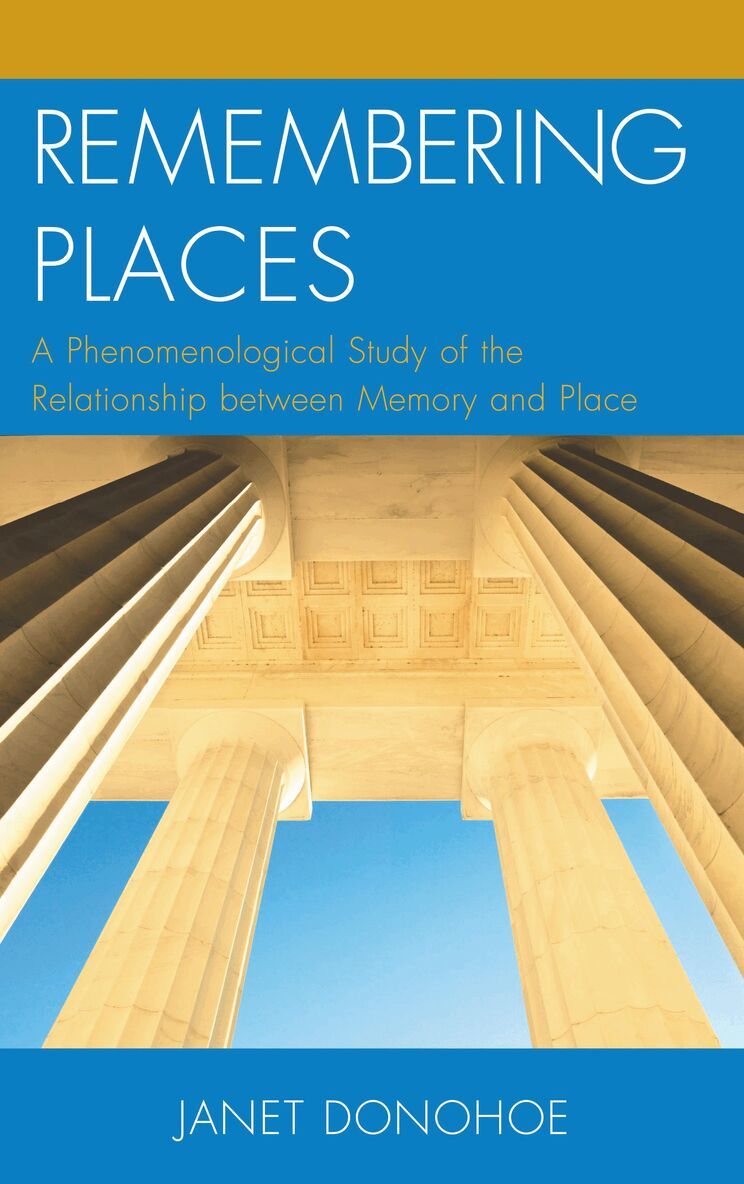
This book is a phenomenological investigation of the interrelations of tradition, memory, place and the body. Drawing upon philosophers such as Husserl, Heidegger, Merleau-Ponty, Gadamer, and Ricoeur, Janet Donohoe uses the idea of a palimpsest to argue that layers of the past are carried along as traditions, through places and bodies, such that we can speak of memory as being written upon place and place as being written upon memory. In dialogue with theorists such as Jeff Malpas and Ed Casey, Donohoe focuses on analysis of monuments and memorials to investigate how such deliberate places of collective memory can be ideological, or can open us to the past and different traditions. The insights in this book will be of particular value to place theorists and phenomenologists in disciplines such as philosophy, geography, memory studies, public history, and environmental studies.
Häftad, Engelska, 2016
587 kr
Skickas inom 10-15 vardagar
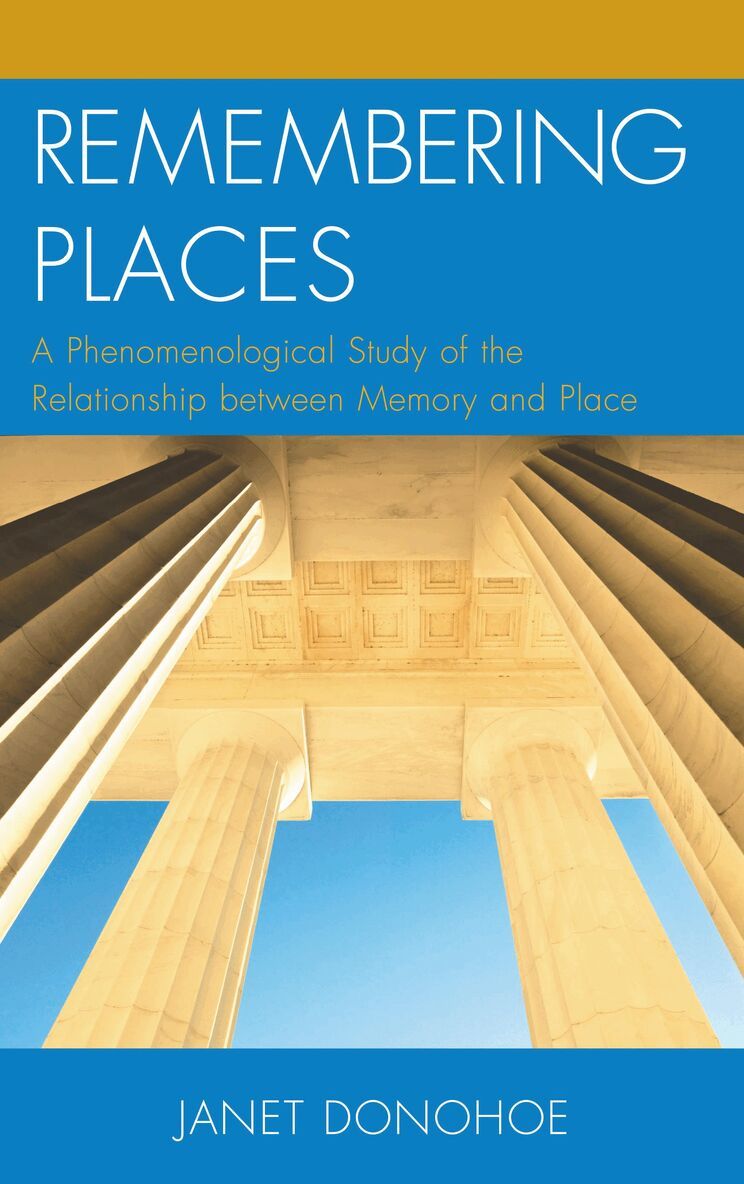
This book is a phenomenological investigation of the interrelations of tradition, memory, place and the body. Drawing upon philosophers such as Husserl, Heidegger, Merleau-Ponty, Gadamer, and Ricoeur, Janet Donohoe uses the idea of a palimpsest to argue that layers of the past are carried along as traditions, through places and bodies, such that we can speak of memory as being written upon place and place as being written upon memory. In dialogue with theorists such as Jeff Malpas and Ed Casey, Donohoe focuses on analysis of monuments and memorials to investigate how such deliberate places of collective memory can be ideological, or can open us to the past and different traditions. The insights in this book will be of particular value to place theorists and phenomenologists in disciplines such as philosophy, geography, memory studies, public history, and environmental studies.
Häftad, Engelska, 2019
547 kr
Skickas inom 10-15 vardagar
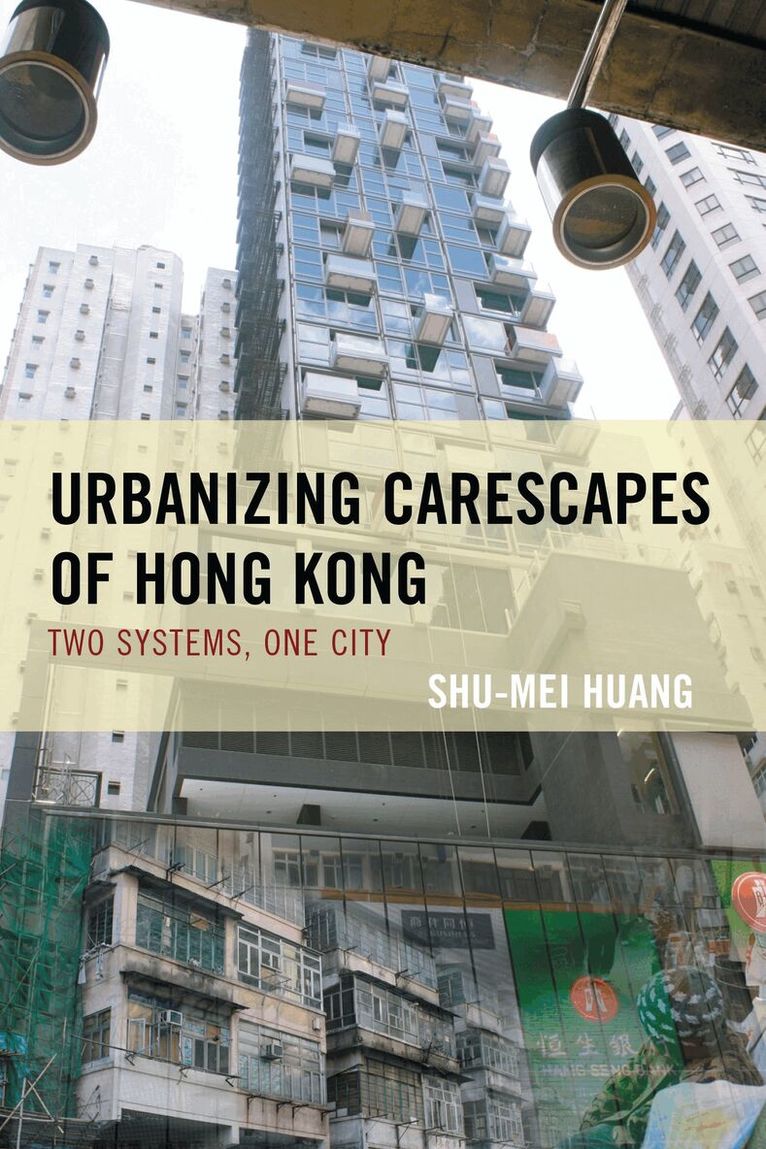
Drawing upon the massive redevelopment catalyzed by the government-led urban renewal in Hong Kong in the past two decades, Shu-Mei Huang recharges the story of post-colonial Hong Kong through care, displacement, and how care is displaced in urban governance. Theorizing “carescapes” as a heuristic device, Huang tracks how care is displaced, undervalued and even exploited in transforming urban landscape.In a rather counter-intuitive way, Urbanizing Carescapes of Hong Kong: Two Systems, One City considers the post-colonial picturing of “One Country, Two Systems” as insufficient if not misleading in understanding the city of Hong Kong and its changing ties with the world. Huang illustrates the way in which each urban citizen is propelled to be a self-enterprising subject and local urban initiatives are becoming cross-border investments upon global mobility. In an era when putatively both the talents and capital are moving toward Asia, the book illuminates how dynamism of colonialism is sustained rather than disappears within the two systems in one city.
Häftad, Engelska, 2022
493 kr
Skickas inom 10-15 vardagar
In Toward a Directionalist Theory of Space: On Going Nowhere, H. Scott Hestevold formulates a new relationalist theory of space by appealing to the view that the universe is directioned in the sense that there exist directional relations—a class of spatial relations that Leibniz overlooked. Extending the directionalist/relationalist theory of space to the problem of when it is that discrete objects compose a whole, Hestevold revisits his answer to the Special Composition Question. He also uses the directionalist/relationalist theory to formulate reductivist theories of boundaries and holes—theories that may allow one to resist the view that boundaries and holes are ontologically parasitic entities. Finally, he explores directionalism/relationalism vis-à-vis spacetime. After noting findings of modern physics that favor substantivalist spacetime and then developing metaphysical concerns that favor instead directionalist/relationalist spacetime, Hestevold notes the ontological benefit of endorsing spatiotemporal directional relations even if spacetime substantivalism is the winning theory.
Inbunden, Engelska, 2023
1 289 kr
Skickas inom 10-15 vardagar
Hikers have been walking the Appalachian Trail since 1948, when Earl Shaffer completed the first hike. Some hike just to enjoy the scenery, while others experience the trek as a spiritual journey. In American Camino: Walking as Spiritual Practice on the Appalachian Trail, Kip Redick engages in a phenomenological exploration of the relationship between long-distance hiking—in this case, hiking the Appalachian Trail—and spiritual pilgrimage. This book shows the way the Appalachian Trail concretizes existential connections between the hikers’ spiritual experiences and intersubjective relationships with various constituents on and around the trail: mountainous wilderness; its variation of flora, fauna, geology, and watershed; and social interactions with fellow hikers and with communities near the trail. Redick contrasts “spiritual rambling” with other approaches to hiking, such as scenic hikes where an experience of landscape is the focus, or a series of other aesthetic encounters that involve hikers’ connection with nature. This book interprets the Appalachian Trail as a site of spiritual journey and those who hike the wilderness trail as contemporary pilgrims.
Inbunden, Engelska, 2023
1 250 kr
Skickas inom 10-15 vardagar
On Dwelling: Poetry, Place, and Politics unfolds the meaning of dwelling as both being in the world, and being on the earth with others. Dennis E. Skocz traces a path from the places we call home, through the global market place (said to foster a “world without borders”), to the planet we co-inhabit. The book addresses themes of displacement, contested space, and estrangement along with specific issues like migration, ethnic division, and resource use. Embracing the discourses of poetry, philosophy, and politics the book uses a cross-disciplinary approach to tackle the diversity and complexity of the topic. The investigation is grounded in phenomenology, with economics, jurisprudence, political theory, geo-physics, cultural anthropology, and other sciences coming into play. It builds on first-person “lived experience” and the “lifeworld” as a concrete basis for understanding. Challenged by real-world issues of co-existence, the book culminates in sketching a “political space” where stakeholders in the future of the planet can collaborate across the globe for the earth and its dwellers.
Inbunden, Engelska, 2022
1 222 kr
Skickas inom 10-15 vardagar
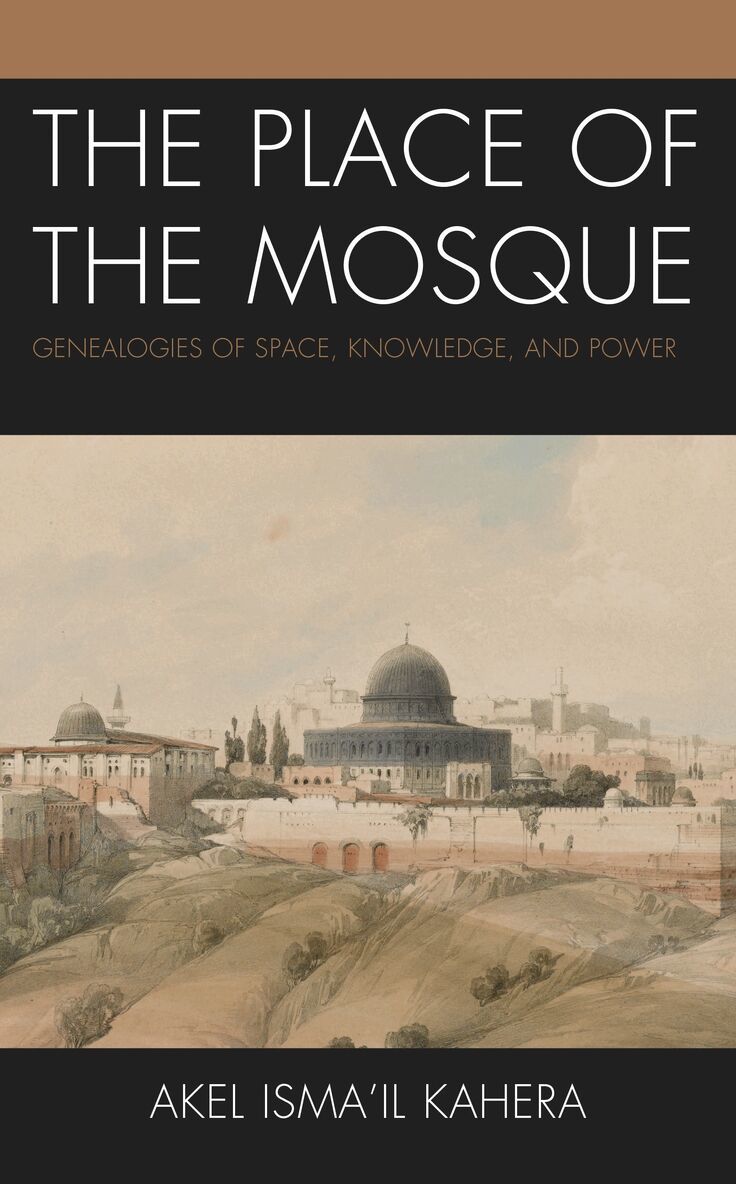
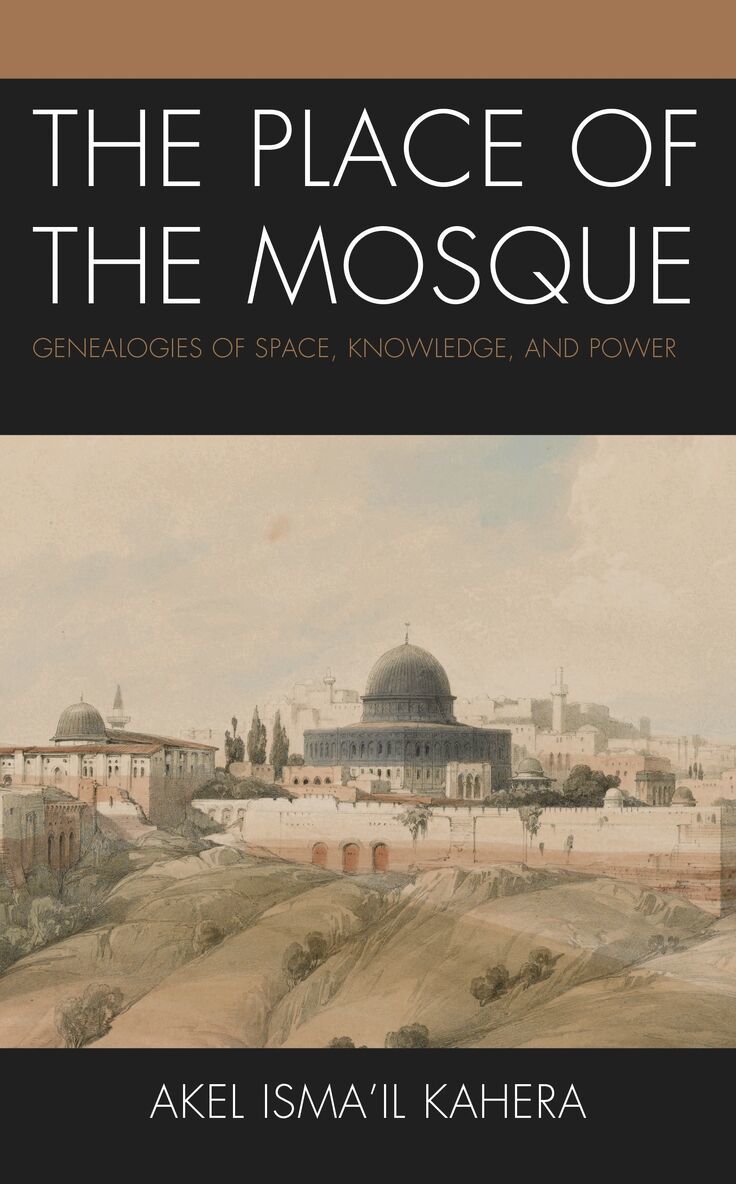
The Place of the Mosque: Genealogies of Space, Knowledge, and Power extends Foucault’s analysis, Of Other Spaces, and the “ideological conflicts which underlie the controversies of our day [and] take place between pious descendants of time and tenacious inhabitants of space.” This book uses Foucault’s framework to illuminate how mosques have been threatened in the past, from the Cordóba Mosque in the eighth century, to the development of Moorish aesthetics in the United States in the nineteenth century, to the clashes surrounding the building of mosques in the West in the twentieth and twenty-first centuries. Akel Kahera uses Foucault’s genealogy to elaborate on and study the subjects that are caught in the emergence of a battle—the social and political will to power, the networks of power, and the rituals of power—within the interstitial space. In going beyond individual buildings to broader geographical and genealogical dimensions of the power struggles, The Place of the Mosque reconciles the public space experience, governmentality, and micro powers, paving the way for a new philosophical language. Expanding architectural and urban regional approaches, Kahera shows the biopolitical significance of the problem of space.
Häftad, Engelska, 2024
440 kr
Skickas inom 10-15 vardagar
The Place of the Mosque: Genealogies of Space, Knowledge, and Power extends Foucault’s analysis, Of Other Spaces, and the “ideological conflicts which underlie the controversies of our day [and] take place between pious descendants of time and tenacious inhabitants of space.” This book uses Foucault’s framework to illuminate how mosques have been threatened in the past, from the Cordóba Mosque in the eighth century, to the development of Moorish aesthetics in the United States in the nineteenth century, to the clashes surrounding the building of mosques in the West in the twentieth and twenty-first centuries. Akel Kahera uses Foucault’s genealogy to elaborate on and study the subjects that are caught in the emergence of a battle—the social and political will to power, the networks of power, and the rituals of power—within the interstitial space. In going beyond individual buildings to broader geographical and genealogical dimensions of the power struggles, The Place of the Mosque reconciles the public space experience, governmentality, and micro powers, paving the way for a new philosophical language. Expanding architectural and urban regional approaches, Kahera shows the biopolitical significance of the problem of space.