Trust – serie
Visar alla böcker i serien Trust. Handla med fri frakt och snabb leverans.
17 produkter
17 produkter
Del 3 - Trust
It All Falls Down
Häftad, Engelska, 2023
187 kr
Skickas inom 5-8 vardagar
Del 1 - Trust
Can You Trust An Alien?
Book One of the Trust Series
Häftad, Engelska, 2025
206 kr
Skickas inom 5-8 vardagar
Häftad, Engelska, 2025
197 kr
Skickas inom 5-8 vardagar
Del 1 - Trust
Can You Trust An Alien?
Book One of the Trust Series
Häftad, Engelska, 2025
230 kr
Skickas inom 5-8 vardagar
Del 1 - Trust
Can You Trust An Alien?
Book One of the Trust Series
Inbunden, Engelska, 2025
317 kr
Skickas inom 5-8 vardagar
Inbunden, Engelska, 2017
1 092 kr
Skickas inom 10-15 vardagar
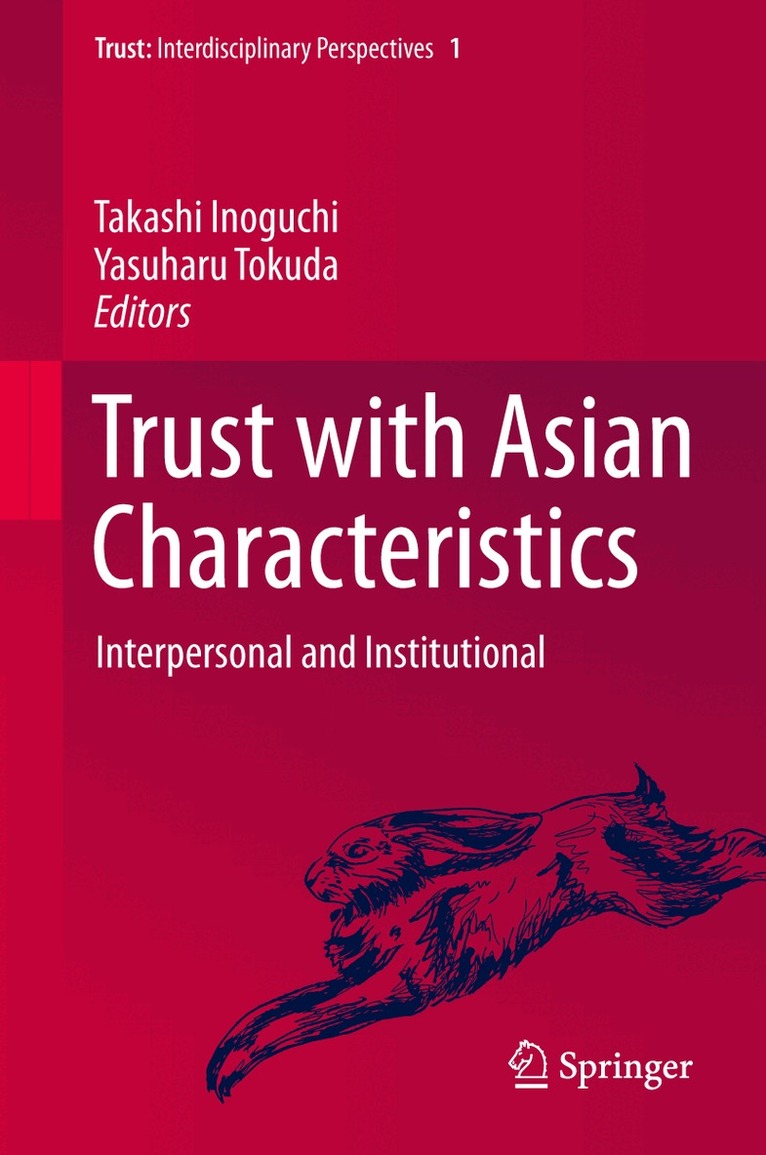
This volume, edited by a political scientist and a practicing medical doctor, is organized into two parts: interpersonal and institutional trust. To gauge trust both interpersonal and institutional in 29 Asian societies, the AsiaBarometer survey, the best—and only—available such data source in the world was used. The survey, focusing on the quality of life in Asia, was carried out in the 2000s in 29 Asian societies (in East, Southeast, South, and Central Asia), and in the United States, Australia, and Russia for comparative analysis.Trust is a key intermediate variable linking an individual and a broader society. Yet systematically and scientifically assembled data have tended to be narrowly focused on Western societies. In the 2000s non-Western data on the quality of life have steadily increased. The AsiaBarometer survey, however, is the instrument that best examines the quality of life in a large number of Asian societies with nationwide random sampling and face-to-faceinterviewing, with the number of samples ranging from 1,000 to 3,000.In gauging interpersonal trust, the question, "Generally, do you think people can be trusted, or do you think that you can't be too careful in dealing with people (i.e., that it pays to be wary of people)?" is asked along with additional questions. In measuring institutional trust, the question is asked: "How much confidence do you place in the following institutions?" (Listed are the central government, the courts, the military, the police, political parties, the parliament, mass media, business companies, medical hospitals, and other institutions.) In examining interpersonal and institutional trust Asia-wide, special attention is paid to historical and geo-cultural backgrounds of the societies being surveyed. Examination of the link between trust of mass media and individual health and between trust in medical care and individual health focuses on Japan.Among the 12 chapters, 9 are reprints of journal articles published in the 2000s, and the introduction and 2 other chapters were written especially for this book to reflect the latest progress in the field. This work provides a rich source to be consulted by a wide range of readers interested in comparative politics, quality of life, and Asia in general.
Häftad, Engelska, 2018
1 125 kr
Skickas inom 10-15 vardagar
This volume, edited by a political scientist and a practicing medical doctor, is organized into two parts: interpersonal and institutional trust. To gauge trust both interpersonal and institutional in 29 Asian societies, the AsiaBarometer survey, the best—and only—available such data source in the world was used. The survey, focusing on the quality of life in Asia, was carried out in the 2000s in 29 Asian societies (in East, Southeast, South, and Central Asia), and in the United States, Australia, and Russia for comparative analysis.Trust is a key intermediate variable linking an individual and a broader society. Yet systematically and scientifically assembled data have tended to be narrowly focused on Western societies. In the 2000s non-Western data on the quality of life have steadily increased. The AsiaBarometer survey, however, is the instrument that best examines the quality of life in a large number of Asian societies with nationwide random sampling and face-to-faceinterviewing, with the number of samples ranging from 1,000 to 3,000.In gauging interpersonal trust, the question, "Generally, do you think people can be trusted, or do you think that you can't be too careful in dealing with people (i.e., that it pays to be wary of people)?" is asked along with additional questions. In measuring institutional trust, the question is asked: "How much confidence do you place in the following institutions?" (Listed are the central government, the courts, the military, the police, political parties, the parliament, mass media, business companies, medical hospitals, and other institutions.) In examining interpersonal and institutional trust Asia-wide, special attention is paid to historical and geo-cultural backgrounds of the societies being surveyed. Examination of the link between trust of mass media and individual health and between trust in medical care and individual health focuses on Japan.Among the 12 chapters, 9 are reprints of journal articles published in the 2000s, and the introduction and 2 other chapters were written especially for this book to reflect the latest progress in the field. This work provides a rich source to be consulted by a wide range of readers interested in comparative politics, quality of life, and Asia in general.
Inbunden, Engelska, 2018
550 kr
Skickas inom 10-15 vardagar
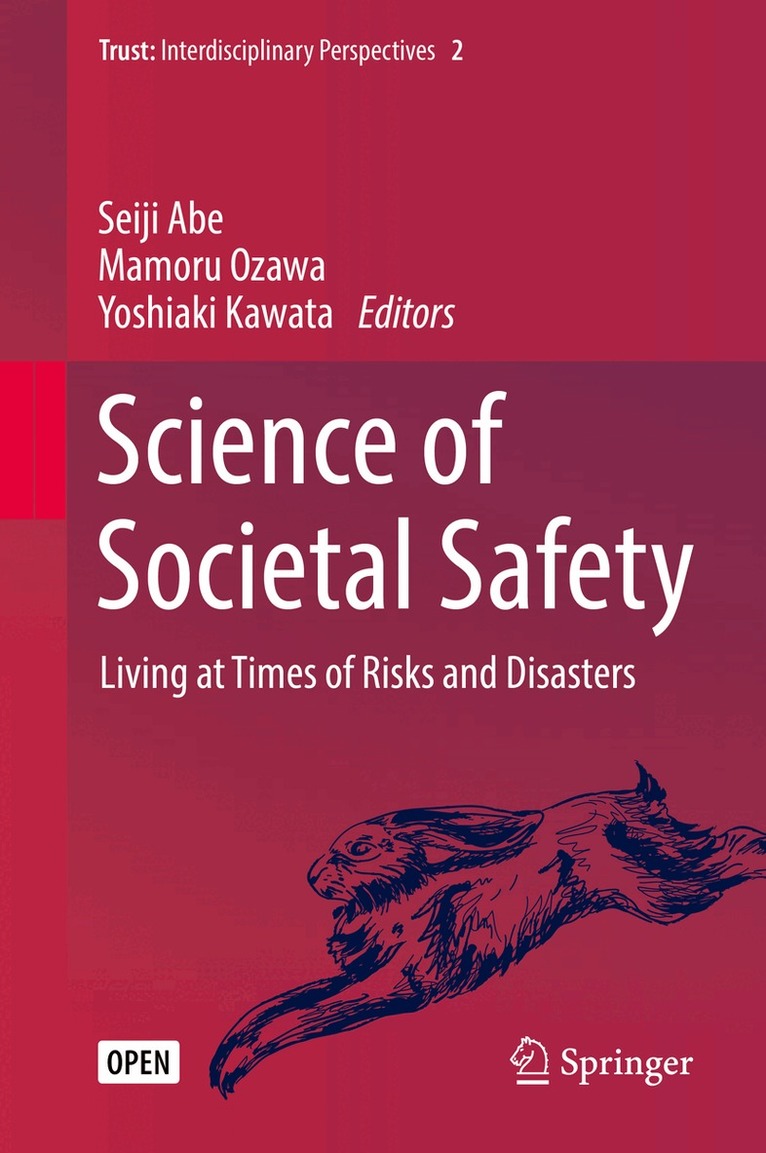
This open access book covers comprehensive but fundamental principles and concepts of disaster and accident prevention and mitigation, countermeasures, and recovery from disasters or accidents including treatment and care of the victims. Safety and security problems in our society involve not only engineering but also social, legal, economic, cultural, and psychological issues. The enhancement needed for societal safety includes comprehensive activities of all aspects from precaution to recovery, not only of people but also of governments. In this context, the authors, members of the Faculty of Societal Safety Science, Kansai University, conducted many discussions and concluded that the major strategy is consistent independently of the type and magnitude of disaster or accident, being also the principle of the foundation of our faculty.The topics treated in this book are rather widely distributed but are well organized sequentially to provide a clear understanding of the principles of societal safety. In the first part the fundamental concepts of safety are discussed. The second part deals with risks in the societal and natural environment. Then follows, in the third part, a description of the quantitative estimation of risk and its assessment and management. The fourth part is devoted to disaster prevention, mitigation, and recovery systems. The final, fifth part presents a future perspective of societal safety science.Thorough reading of this introductory volume of societal safety science provides a clear image of the issues. This is largely because the Japanese have suffered often from natural disasters and not only have gained much valuable information about disasters but also have accumulated a store of experience. We are still in the process of reconstruction from the Great East Japan earthquake and the Fukushima nuclear power plant accident. This book is especially valuable therefore in studying the safety and security of people and their societies.
Del 5 - Trust
Poor Quality Pharmaceuticals in Global Public Health
Inbunden, Engelska, 2020
1 349 kr
Skickas inom 10-15 vardagar
This book aims to clarify the global aspects of poor quality pharmaceuticals, generic products in particular, becoming complicated through the process of IMPACT (International Medical Products Anti-Counterfeiting Taskforce) organized by the initiative of the World Health Organization (WHO) in 2006. The findings from this book provide a long-term perspective to policymakers. This book discusses from the following points: industrial standardization, healthcare market accessibility, motivation on supply side, WHO medicines policy and intellectual property rights. Standardization regulates the quality and enabled the generic medicines spreading to developing/emerging countries through technology transfer. However, quality is a part of cost and reflected to price. When a healthcare service market is divided according to wealth gap, compliance to standardization for quality on supply side is divided accordingly. Thus, poor quality pharmaceuticals are prevalent worldwide. Generic pharmaceuticals are essential resources in public health. The WHO has been involved in the dispute around the intellectual property rights under its intention to promote the new drug development for neglected diseases. Global pandemic of AIDs is a critical factor to accelerate the confusion. This created feelings of distrust among developing/emerging countries against developed countries if the WHO was in favour of developed countries. In addition to that, an easy and optimistic start of IMPACT stirred up conflicts of interests in the international community. The problem of poor quality pharmaceuticals became more complicated through the conflicts on intellectual property rights; patented drugs to generic drugs. A key for quality generic products is the formation of a single healthcare service market where good motivation on supply side together with fair competitiveness with patented pharmaceuticals and equitable access to services (both for the rich and the poor) are ensured. Political commitment to investment and regulatory infrastructure for the market is crucial.
Del 5 - Trust
Poor Quality Pharmaceuticals in Global Public Health
Häftad, Engelska, 2021
1 349 kr
Skickas inom 10-15 vardagar
This book aims to clarify the global aspects of poor quality pharmaceuticals, generic products in particular, becoming complicated through the process of IMPACT (International Medical Products Anti-Counterfeiting Taskforce) organized by the initiative of the World Health Organization (WHO) in 2006. The findings from this book provide a long-term perspective to policymakers. This book discusses from the following points: industrial standardization, healthcare market accessibility, motivation on supply side, WHO medicines policy and intellectual property rights. Standardization regulates the quality and enabled the generic medicines spreading to developing/emerging countries through technology transfer. However, quality is a part of cost and reflected to price. When a healthcare service market is divided according to wealth gap, compliance to standardization for quality on supply side is divided accordingly. Thus, poor quality pharmaceuticals are prevalent worldwide. Generic pharmaceuticals are essential resources in public health. The WHO has been involved in the dispute around the intellectual property rights under its intention to promote the new drug development for neglected diseases. Global pandemic of AIDs is a critical factor to accelerate the confusion. This created feelings of distrust among developing/emerging countries against developed countries if the WHO was in favour of developed countries. In addition to that, an easy and optimistic start of IMPACT stirred up conflicts of interests in the international community. The problem of poor quality pharmaceuticals became more complicated through the conflicts on intellectual property rights; patented drugs to generic drugs. A key for quality generic products is the formation of a single healthcare service market where good motivation on supply side together with fair competitiveness with patented pharmaceuticals and equitable access to services (both for the rich and the poor) are ensured. Political commitment to investment and regulatory infrastructure for the market is crucial.
Inbunden, Engelska, 2021
1 201 kr
Skickas inom 10-15 vardagar
This book explores why human beings share food with others using a humanistic anthropological approach. This book provides a comparative examination of distinct features and historical changes in food-sharing practices in various hunting-gathering societies, especially in the Inuit. The author considers human nature through various human food-sharing practices. Food sharing is a characteristic of human behavior and has been one of the central topics in anthropological studies of hunter-gatherers for a long time. While anthropologists have attempted to understand it in functional, historical, adaptational, social, cultural, psychological, or phenomenological perspective, they have failed to convincingly explain its origin, variation, existence or/and change. Recently, evolutionary ecology or behavioral ecology has dominated research of the topic. However, neither of them adequately considers social, cultural and historical factors in the analysis of human food-sharing practices. Thisbook is an essential and fundamental study for every researcher interested in the relationship between human nature, society and culture.
Häftad, Engelska, 2022
686 kr
Skickas inom 5-8 vardagar
This book explores why human beings share food with others using a humanistic anthropological approach. This book provides a comparative examination of distinct features and historical changes in food-sharing practices in various hunting-gathering societies, especially in the Inuit. The author considers human nature through various human food-sharing practices. Food sharing is a characteristic of human behavior and has been one of the central topics in anthropological studies of hunter-gatherers for a long time. While anthropologists have attempted to understand it in functional, historical, adaptational, social, cultural, psychological, or phenomenological perspective, they have failed to convincingly explain its origin, variation, existence or/and change. Recently, evolutionary ecology or behavioral ecology has dominated research of the topic. However, neither of them adequately considers social, cultural and historical factors in the analysis of human food-sharing practices. Thisbook is an essential and fundamental study for every researcher interested in the relationship between human nature, society and culture.
Inbunden, Engelska, 2019
1 092 kr
Skickas inom 10-15 vardagar
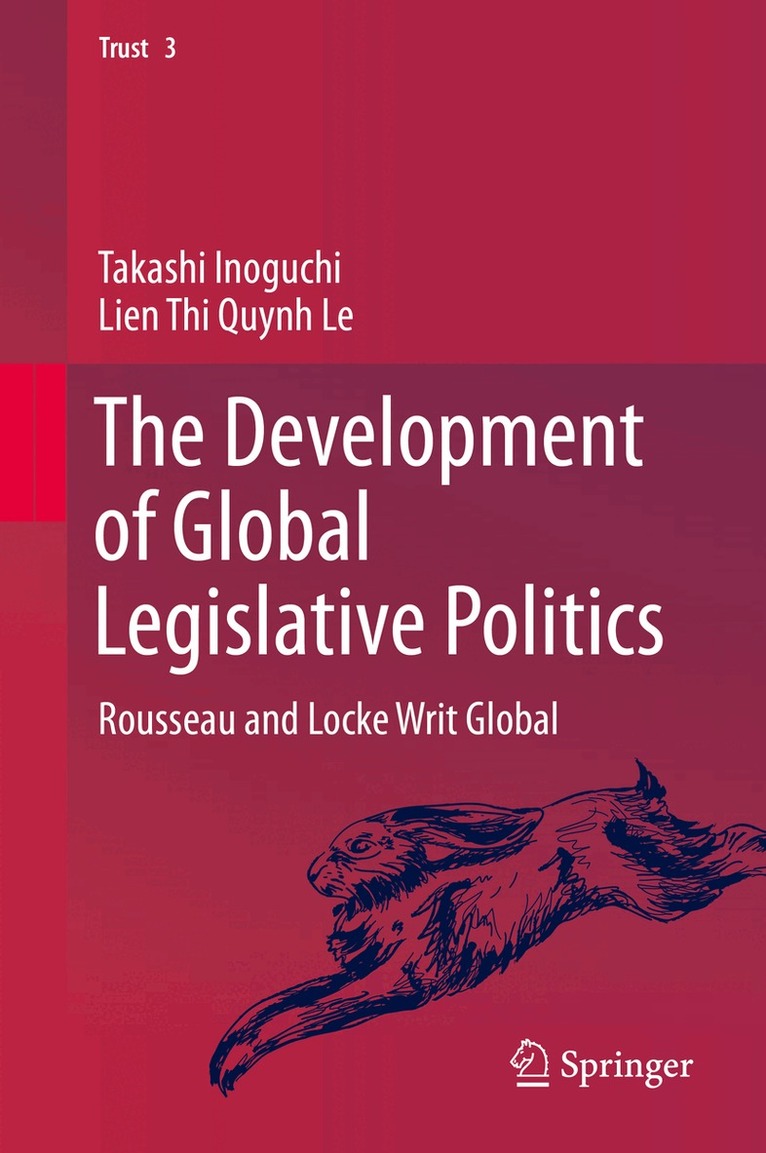
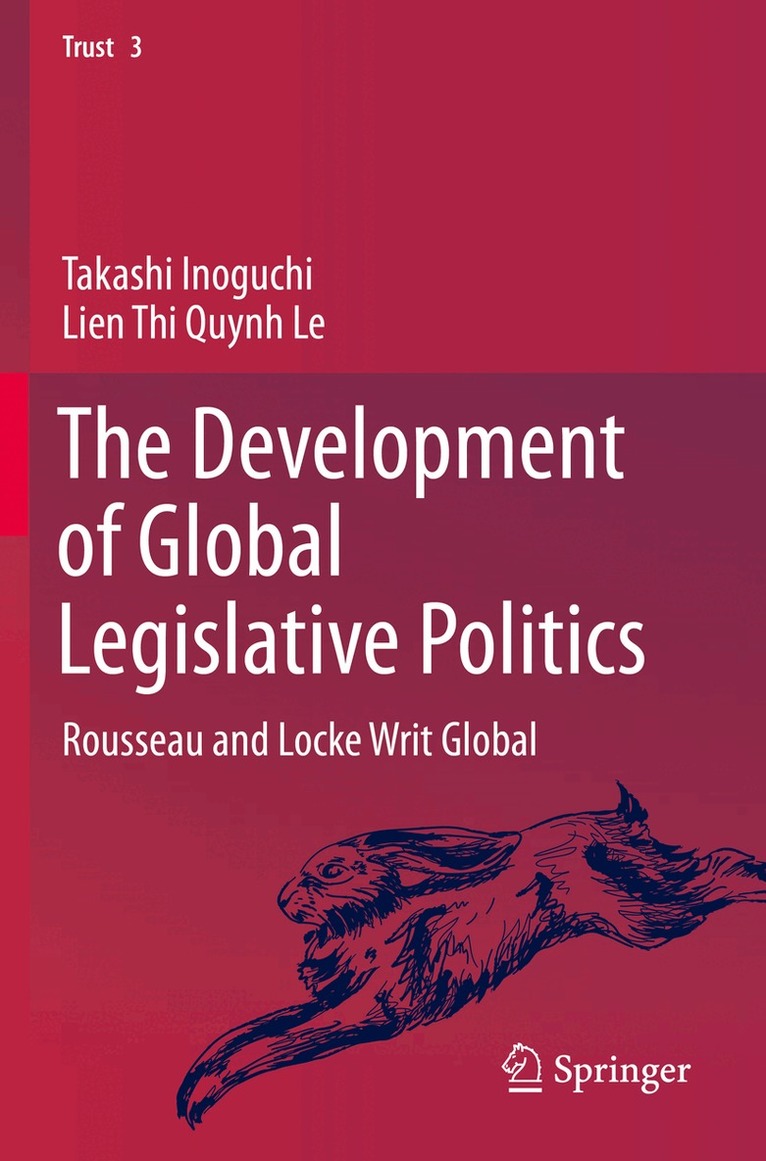
This book is the first systematic scientific study of global quasi-legislation. Taking public opinion and multilateral agreements as the international equivalent to national election and passing laws on the national scale, and extending nation-state concepts to a global society, it analyzes citizens' preferences and the state's willingness to enter into 120 multilateral treaties. After identifying the links as a first step toward conceptualizing quasi-legislative global politics, the book examines how each of the 193 states manifests quasi-legislative behavior by factor-analyzing six instrumental variables such as treaty participation index and six policy domains of multilateral treaties, including peace and trade. It then discusses global change between 1989 and 2008, and conceptually and empirically examines the three theories of global politics that originated during that period: the theory of power transition, theory of civilizational clash and theory of global legislative politics. Lastly, it proposes a theory of global legislative politics. Shedding fresh light on the transformative nature of multilateral treaties, this book attracts researchers and students in political philosophy, international law and international relations as well as practitioners and journalists.Inoguchi and Le have developed a genuinely original perspective on world politics, one that opens up a new research agenda for thinking about state and global actors simultaneously.-- Anne-Marie Slaughter, Bert G. Kerstetter '66 University Professor Emerita of Politics and International Affairs, Princeton UniversityThis is one of those books that warrant a global readership given its emphasis on the implied trust that we invest in public institutions as viewed from an interdisciplinary perspective. -- Richard J. Estes, Professor of Social Policy & Practice, University of Pennsylvania, Philadelphia,PennsylvaniaThis book is innovative and distinctive in carving out a new way to look at “global legislative politics.” I do not know of anything that compares in this interesting and novel niche of international relations analysis.-- William R. Thompson, Distinguished Professor and Rogers Chair of Political Science Emeritus, Indiana University
Häftad, Engelska, 2020
885 kr
Skickas inom 5-8 vardagar
This book is the first systematic scientific study of global quasi-legislation. Taking public opinion and multilateral agreements as the international equivalent to national election and passing laws on the national scale, and extending nation-state concepts to a global society, it analyzes citizens' preferences and the state's willingness to enter into 120 multilateral treaties. After identifying the links as a first step toward conceptualizing quasi-legislative global politics, the book examines how each of the 193 states manifests quasi-legislative behavior by factor-analyzing six instrumental variables such as treaty participation index and six policy domains of multilateral treaties, including peace and trade. It then discusses global change between 1989 and 2008, and conceptually and empirically examines the three theories of global politics that originated during that period: the theory of power transition, theory of civilizational clash and theory of global legislative politics. Lastly, it proposes a theory of global legislative politics. Shedding fresh light on the transformative nature of multilateral treaties, this book attracts researchers and students in political philosophy, international law and international relations as well as practitioners and journalists.Inoguchi and Le have developed a genuinely original perspective on world politics, one that opens up a new research agenda for thinking about state and global actors simultaneously.-- Anne-Marie Slaughter, Bert G. Kerstetter '66 University Professor Emerita of Politics and International Affairs, Princeton UniversityThis is one of those books that warrant a global readership given its emphasis on the implied trust that we invest in public institutions as viewed from an interdisciplinary perspective. -- Richard J. Estes, Professor of Social Policy & Practice, University of Pennsylvania, Philadelphia,PennsylvaniaThis book is innovative and distinctive in carving out a new way to look at “global legislative politics.” I do not know of anything that compares in this interesting and novel niche of international relations analysis.-- William R. Thompson, Distinguished Professor and Rogers Chair of Political Science Emeritus, Indiana University
Del 1 - Trust
Learning to Trust
Häftad, Engelska, 2025
258 kr
Skickas inom 5-8 vardagar
Häftad, Engelska, 2025
226 kr
Skickas inom 5-8 vardagar
Inbunden, Engelska, 2025
290 kr
Skickas inom 5-8 vardagar