UnCivil Wars Ser. – serie
363 kr
Läs direkt efter köp
545 kr
Läs direkt efter köp
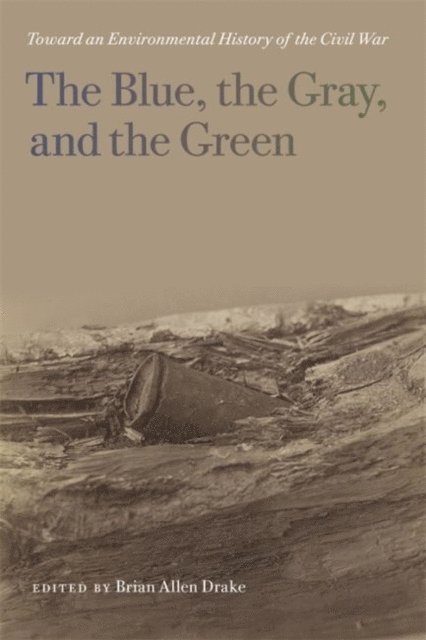
The Blue, the Gray, and the Green is one of only a handful of books to apply an environmental history approach to the Civil War. This book explores how nature—disease, climate, flora and fauna, and other factors—affected the war and also how the war shaped Americans’ perceptions, understanding, and use of nature. The contributors use a wide range of approaches that serve as a valuable template for future environmental histories of the conflict.In his introduction, Brian Allen Drake describes the sparse body of environmental history literature related to the Civil War and lays out a blueprint for the theoretical basis of each essay. Kenneth W. Noe emphasizes climate and its effects on agricultural output and the battlefield; Timothy Silver explores the role of disease among troops and animals; Megan Kate Nelson examines aridity and Union defeat in 1861 New Mexico; Kathryn Shively Meier investigates soldiers’ responses to disease in the Peninsula Campaign; Aaron Sachs, John C. Inscoe, and Lisa M. Brady examine philosophical and ideological perspectives on nature before, during, and after the war; Drew Swanson discusses the war’s role in production and landscape change in piedmont tobacco country; Mart A. Stewart muses on the importance of environmental knowledge and experience for soldiers, civilians, and slaves; Timothy Johnson elucidates the ecological underpinnings of debt peonage during Reconstruction; finally, Paul S. Sutter speculates on the future of Civil War environmental studies.The Blue, the Gray, and the Green provides a provocative environmental commentary that enriches our understanding of the Civil War.
1 872 kr
Läs direkt efter köp
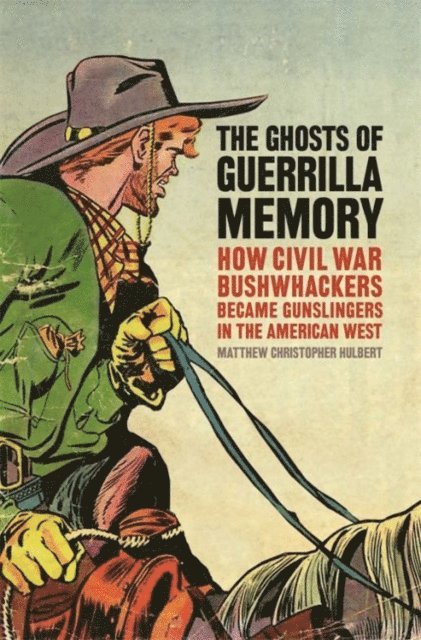
The Civil War tends to be remembered as a vast sequence of battles, with a turning point at Gettysburg and a culmination at Appomattox. But in the guerrilla theater, the conflict was a vast sequence of home invasions, local traumas, and social degeneration that did not necessarily end in 1865. This book chronicles the history of “guerrilla memory,” the collision of the Civil War memory “industry” with the somber realities of irregular warfare in the borderlands of Missouri and Kansas.In the first accounting of its kind, Matthew Christopher Hulbert’s book analyzes the cultural politics behind how Americans have remembered, misremembered, and re-remembered guerrilla warfare in political rhetoric, historical scholarship, literature, and film and at reunions and on the stage. By probing how memories of the guerrilla war were intentionally designed, created, silenced, updated, and even destroyed, Hulbert ultimately reveals a continent-wide story in which Confederate bushwhackers—pariahs of the eastern struggle over slavery—were transformed into the vanguards of American imperialism in the West.
1 621 kr
Läs direkt efter köp
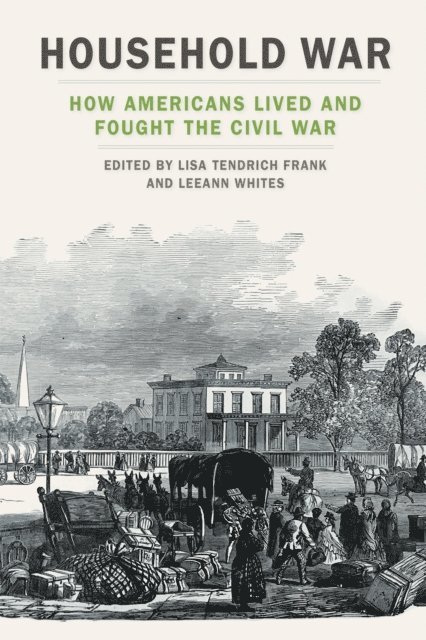
Household War restores the centrality of households to the American Civil War. The essays in the volume complicate the standard distinctions between battlefront and homefront, soldier and civilian, and men and women. From this vantage point, they look at the interplay of family and politics, studying the ways in which the Civil War shaped and was shaped by the American household. They explore how households influenced Confederate and Union military strategy, the motivations of soldiers and civilians, and the occupation of captured cities, as well as the experiences of Native Americans, women, children, freedpeople, injured veterans, and others. The result is a unique and much needed approach to the study of the Civil War.Household War demonstrates that the Civil War can be understood as a revolutionary moment in the transformation of the household order. The original essays by distinguished historians provide an inclusive examination of how the war flowed from, required, and resulted in the restructuring of the nineteenth-century household. Contributors explore notions of the household before, during, and after the war, unpacking subjects such as home, family, quarrels, domestic service and slavery, manhood, the Klan, prisoners and escaped prisoners, Native Americans, grief, and manhood. The essays further show how households redefined and reordered themselves as a result of the changes stemming from the Civil War.