UnCivil Wars Series – serie
440 kr
Läs direkt efter köp
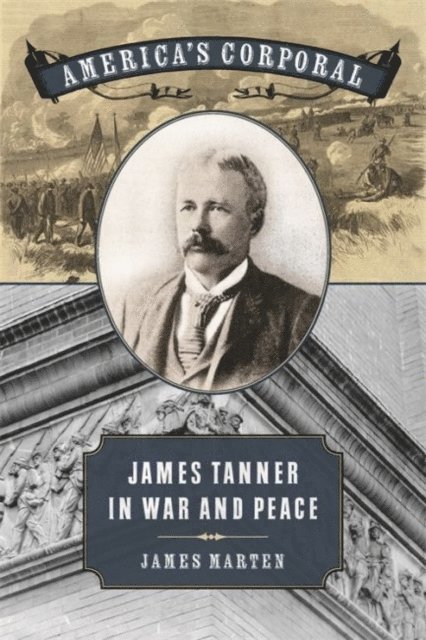
James Tanner may be the most famous person in nineteenth-century America that no one has heard of. During his service in the Union army, he lost the lower third of both his legs and afterward had to reinvent himself. After a brush with fame as the stenographer taking down testimony a few feet away from the dying President Abraham Lincoln in April 1865, Tanner eventually became one of the best-known men in Gilded Age America. He was a highly placed Republican operative, a popular Grand Army of the Republic speaker, an entrepreneur, and a celebrity. He earned fame and at least temporary fortune as “Corporal Tanner,” but most Americans would simply have known him as “The Corporal.” Yet virtually no one—not even historians of the Civil War and Gilded Age— knows him today.America’s Corporal rectifies this startling gap in our understanding of the decades that followed the Civil War. Drawing on a variety of primary sources including memoirs, lectures, newspapers, pension files, veterans’ organization records, poetry, and political cartoons, James Marten brings Tanner’s life and character into focus and shows what it meant to be a veteran— especially a disabled veteran—in an era that at first worshipped the saviors of the Union but then found ambiguity in their political power and insistence on collecting ever-larger pensions. This biography serves as an examination of the dynamics of disability, the culture and politics of the Gilded Age, and the aftereffects of the Civil War, including the philosophical and psychological changes that it prompted.The book explores the sometimes corrupt, often gridlocked, but always entertaining politics of the era, from Tanner’s days as tax collector in Brooklyn through his short-lived appointment as commissioner of pensions (one of the biggest jobs in the federal government of the 1880s). Marten provides a vivid case study of a classic Gilded Age entrepreneur who could never make enough money. America’s Corporal is a reflection on the creation of celebrity—and of its ultimate failure to preserve the memory of a man who represented so many of the experiences and assumptions of the Gilded Age.
486 kr
Läs direkt efter köp
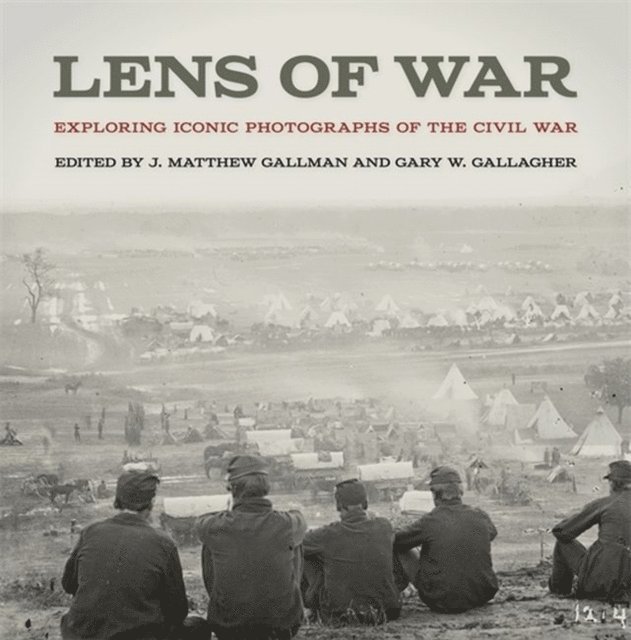
Lens of War grew out of an invitation to leading historians of the Civil War to select and reflect upon a single photograph. Each could choose any image and interpret it in personal and scholarly terms. The result is a remarkable set of essays by twenty-seven scholars whose numerous volumes on the Civil War have explored military, cultural, political, African American, women’s, and environmental history.The essays describe a wide array of photographs and present an eclectic approach to the assignment, organized by topic: Leaders, Soldiers, Civilians, Victims, and Places. Readers will rediscover familiar photographs and figures examined in unfamiliar ways, as well as discover little-known photographs that afford intriguing perspectives. All the images are reproduced with exquisite care. Readers fascinated by the Civil War will want this unique book on their shelves, and lovers of photography will value the images and the creative, evocative reflections offered in these essays.
796 kr
Läs direkt efter köp
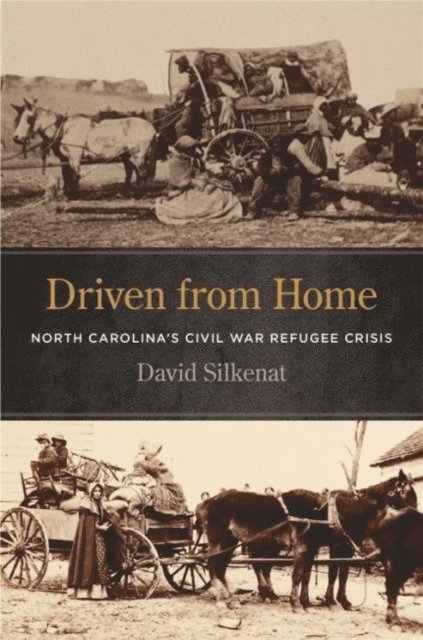
Examining refugees of Civil War–era North Carolina, Driven from Home reveals the complexity and diversity of the war’s displaced populations and the inadequate responses of governmental and charitable organizations as refugees scrambled to secure the necessities of daily life. In North Carolina, writes David Silkenat, the relative security of the Piedmont and mountains drew pro-Confederate elements from across the region. Early in the war, Union invaders established strongholds on the coast, to which their sympathizers fled in droves. Silkenat looks at five groups caught up in this floodtide of emigration: enslaved African Americans who fled to freedom; white Unionists; pro-Confederate whites—both slave owners (who often forced their slaves to migrate with them) and non–slave owners; and young women, often from more besieged areas of the South, who attended the state’s many boarding schools. From their varied experiences, a picture emerges of a humanitarian crisis driven by mobility, shaped by unprecedented economic pressures and disease vectors, and exacerbated by governments unwilling or unable to provide meaningful relief.For anyone seeking context to current refugee crises, Driven from Home has much to say about the crushing administrative and logistical challenges of aid work, the illusory nature of such concepts as home fronts and battle lines, and the ongoing debate over links between relief and dependence.
1 297 kr
Läs direkt efter köp
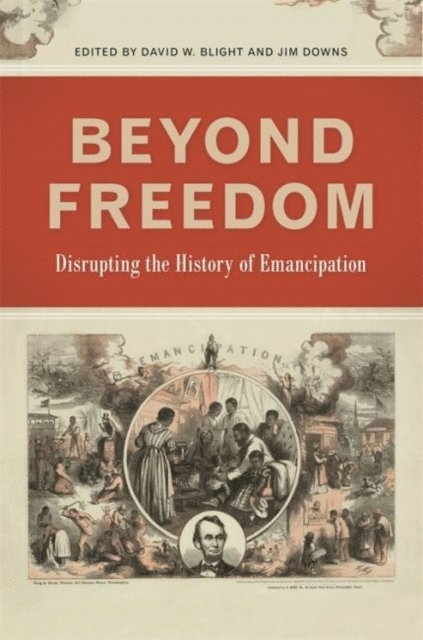
This collection of eleven original essays interrogates the concept of freedom and recenters our understanding of the process of emancipation. Who defined freedom, and what did freedom mean to nineteenth-century African Americans, both during and after slavery? Did freedom just mean the absence of constraint and a widening of personal choice, or did it extend to the ballot box, to education, to equality of opportunity? In examining such questions, rather than defining every aspect of postemancipation life as a new form of freedom, these essays develop the work of scholars who are looking at how belonging to an empowered government or community defines the outcome of emancipation.Some essays in this collection disrupt the traditional story and time-frame of emancipation. Others offer trenchant renderings of emancipation, with new interpretations of the language and politics of democracy. Still others sidestep academic conventions to speak personally about the politics of emancipation historiography, reconsidering how historians have used source material for understanding subjects such as violence and the suffering of refugee women and children. Together the essays show that the question of freedom—its contested meanings, its social relations, and its beneficiaries—remains central to understanding the complex historical process known as emancipation.Contributors: Justin Behrend, Gregory P. Downs, Jim Downs, Carole Emberton, Eric Foner, Thavolia Glymph, Chandra Manning, Kate Masur, Richard Newman, James Oakes, Susan O’Donovan, Hannah Rosen, Brenda E. Stevenson.
926 kr
Läs direkt efter köp
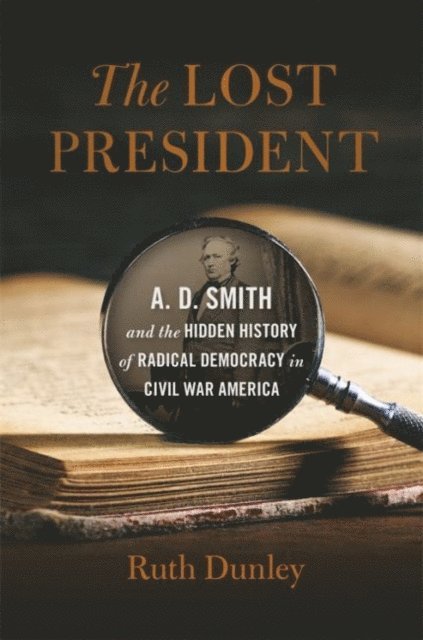
Though few people have heard of A.D. Smith (1811–65), this nineteenth-century knight-errant left his mark on some of the key events of his times in several states, personifying the nineteenth-century impulse to move across the American landscape. Smith’s Quixotic trail began in upstate New York, wound westward to the Ohio and Wisconsin frontier, southward to the federally occupied Sea Islands of South Carolina, and finally ended aboard a northbound steamer.In Ohio, Smith became involved with a paramilitary group, the Hunters’ Lodge, which elected him the "President of the Republic of Canada." In Wisconsin he achieved notoriety as the judge who dared to declare the Fugitive Slave Act of 1850 unconstitutional, lighting one of many fuses that sparked the Civil War. In South Carolina he fought passionately for the property rights of freedmen. Smith believed in civic movements based on Jeffersonian democracy and republican ideals. Civic participation, he believed, was a fundamental part of being a good American. This civic impulse resulted in his enthusiastic embrace of the reform movements of the day and his absolute dedication to radicalism.A detective story set against the backdrop of the volatile antebellum era, this gripping biography lays bare, in funny, accessible prose, just what it is that historians really do all day and how obsessive they can be—assembling a jigsaw puzzle of secret documents, probate records, court testimony, speeches, correspondence, newspaper coverage, and genealogical research to tell the story of a man like Smith, of his vision for the United States, and, more generally, of the value of remembering secondary historical characters.
457 kr
Läs direkt efter köp