Understanding Primary Education Series - Böcker
Visar alla böcker i serien Understanding Primary Education Series. Handla med fri frakt och snabb leverans.
6 produkter
6 produkter
2 029 kr
Skickas inom 10-15 vardagar
Why is primary education so high on the political agenda, and so contentious?Why is the performance of primary schools so often in the media spotlight?Why should primary teachers trouble themselves with the politics of their work? Politics and the Primary Teacher is an accessible introduction to some of the thorniest aspects of a primary teacher’s role. It aims to support your understanding of the constant changes in education policy, give you confidence to engage critically with current political debates, and consider how you might shape your response accordingly.Including questions for reflection, and selected further reading and resources, it examines the complex interface between the work of a teacher and the world beyond the classroom walls. Key issues explored include: assessment, testing, league tables and national accountability measures the media’s impact in shaping both local and national views about education political implications of new policies such as academies and free schools conditions of work in the classroom and ‘workforce remodelling’ the curriculum, its purposes and structure pedagogy and teaching methods education for citizenship, health and well-being.Politics and the Primary Teacher is essential reading for all education professionals who want to think more deeply about primary education, what it offers, and how children, families and communities are served by the primary school.
520 kr
Skickas inom 10-15 vardagar
Why is primary education so high on the political agenda, and so contentious?Why is the performance of primary schools so often in the media spotlight?Why should primary teachers trouble themselves with the politics of their work? Politics and the Primary Teacher is an accessible introduction to some of the thorniest aspects of a primary teacher’s role. It aims to support your understanding of the constant changes in education policy, give you confidence to engage critically with current political debates, and consider how you might shape your response accordingly.Including questions for reflection, and selected further reading and resources, it examines the complex interface between the work of a teacher and the world beyond the classroom walls. Key issues explored include: assessment, testing, league tables and national accountability measures the media’s impact in shaping both local and national views about education political implications of new policies such as academies and free schools conditions of work in the classroom and ‘workforce remodelling’ the curriculum, its purposes and structure pedagogy and teaching methods education for citizenship, health and well-being.Politics and the Primary Teacher is essential reading for all education professionals who want to think more deeply about primary education, what it offers, and how children, families and communities are served by the primary school.
2 029 kr
Skickas inom 10-15 vardagar
Why is assessment so important in the teaching-learning process?How should we assess pupils in the primary classroom? Assessing Learning in the Primary Classroom is an accessible introduction to the concepts critical to a professional understanding of this vital aspect of a teacher’s role. It comprehensively considers the principles underpinning effective assessment, the different forms it can take and the different purposes it serves, both within and beyond the classroom.Linking the latest research and theory with examples of assessment in the classroom, it considers key issues such as: Whywe assess Howwe assess How we ensure quality in assessment: validity and reliability Assessment internal and external to the school Statutory assessment throughout the primary school Local, national and international assessment Using assessment results in pupil, teacher, school and system evaluationAssessing Learning in the Primary Classroom is for all students undertaking their PGCE, those working at masters level, and experienced teachers who wish to broaden their understanding of both the value and pitfalls of educational assessment.
468 kr
Skickas inom 10-15 vardagar
Why is assessment so important in the teaching-learning process?How should we assess pupils in the primary classroom? Assessing Learning in the Primary Classroom is an accessible introduction to the concepts critical to a professional understanding of this vital aspect of a teacher’s role. It comprehensively considers the principles underpinning effective assessment, the different forms it can take and the different purposes it serves, both within and beyond the classroom.Linking the latest research and theory with examples of assessment in the classroom, it considers key issues such as: Whywe assess Howwe assess How we ensure quality in assessment: validity and reliability Assessment internal and external to the school Statutory assessment throughout the primary school Local, national and international assessment Using assessment results in pupil, teacher, school and system evaluationAssessing Learning in the Primary Classroom is for all students undertaking their PGCE, those working at masters level, and experienced teachers who wish to broaden their understanding of both the value and pitfalls of educational assessment.
2 029 kr
Skickas inom 10-15 vardagar
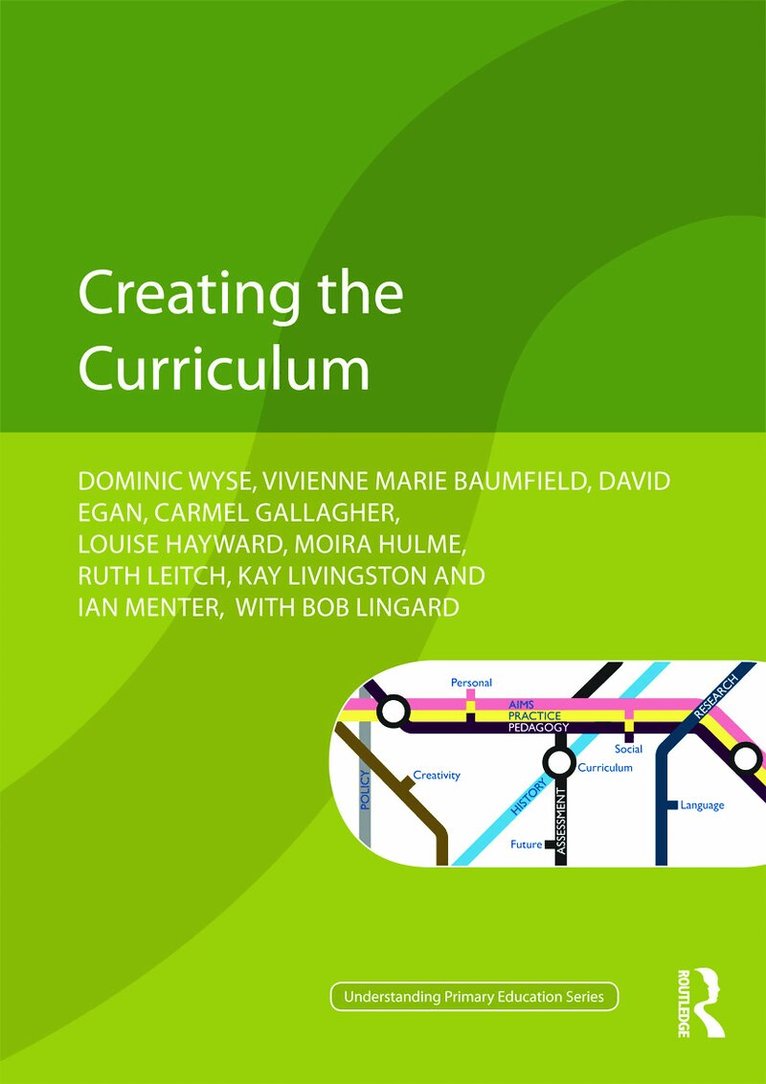
Is there an ‘ideal’ primary school curriculum?Who should decide what the curriculum is?Should teachers have autonomy over how they teach?The curriculum is the heart of what teachers teach and learners learn: effective teaching is only possible with an effective curriculum. Yet in spite of its importance, there has been a crisis in curriculum that has been caused in large part by governments assuming direct control over the curriculum, assessment, and increasingly, pedagogy. Creating the Curriculum tackles this thorny issue head on, challenging student and practising primary school teachers to think critically about past and present issues and to engage with a new wave of curriculum thinking and development. Considering curriculum construction and its impact on teaching and learning in the four countries of the UK, key issues considered include: who should decide the curriculum, its aims and its values the extent to which issues in primary education swing back and forth Subjects versus thematic organisation, stages and phases, progression, breadth and balance prescription versus teacher autonomy the key features of effective classroom practice strategies for assessing the whole curriculum how language in the classroom influences curriculum design understanding curricula in the context of children’s social and personal circumstances creativity, curriculum and the classroom.Illustrated throughout with strategies and case studies from the classroom, Creating the Curriculum accessibly links the latest research and evidence with concrete examples of good practice. It is a timely exploration of what makes an effective and meanginful curriculum and how teachers can bring new relevance, motivation and powerful values to what they teach.
520 kr
Skickas inom 10-15 vardagar
Is there an ‘ideal’ primary school curriculum?Who should decide what the curriculum is?Should teachers have autonomy over how they teach?The curriculum is the heart of what teachers teach and learners learn: effective teaching is only possible with an effective curriculum. Yet in spite of its importance, there has been a crisis in curriculum that has been caused in large part by governments assuming direct control over the curriculum, assessment, and increasingly, pedagogy. Creating the Curriculum tackles this thorny issue head on, challenging student and practising primary school teachers to think critically about past and present issues and to engage with a new wave of curriculum thinking and development. Considering curriculum construction and its impact on teaching and learning in the four countries of the UK, key issues considered include: who should decide the curriculum, its aims and its values the extent to which issues in primary education swing back and forth Subjects versus thematic organisation, stages and phases, progression, breadth and balance prescription versus teacher autonomy the key features of effective classroom practice strategies for assessing the whole curriculum how language in the classroom influences curriculum design understanding curricula in the context of children’s social and personal circumstances creativity, curriculum and the classroom.Illustrated throughout with strategies and case studies from the classroom, Creating the Curriculum accessibly links the latest research and evidence with concrete examples of good practice. It is a timely exploration of what makes an effective and meanginful curriculum and how teachers can bring new relevance, motivation and powerful values to what they teach.