Uppsala Studies in History of Ideas – serie
Visar alla böcker i serien Uppsala Studies in History of Ideas. Handla med fri frakt och snabb leverans.
2 produkter
2 produkter
Del 52 - Uppsala Studies in History of Ideas
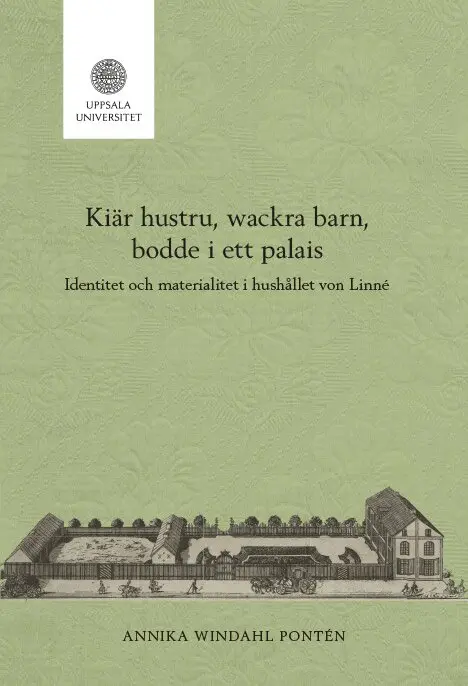
Kiär hustru, wackra barn, bodde i ett palais: Identitet och materialitet i hushållet von Linné
Häftad, Svenska, 2020
326 kr
Skickas inom 5-8 vardagar
Denna avhandling studerar identitet och materialitet i hushållet von Linné. I studien analyseras bl a föremål, bilder, mantalslängder, bouppteckningar och texter för att situera hushållet von Linné i en rumslig och materiell kontext. Genom performativa praktiker i hushållet, självpresentation och användning av exempla i föreläsningar formerar medlemmarna i hushållet von Linné en särskild typ av persona. Med hjälp av delvis tidigare opublicerat material kastas här nytt ljus över en av Sveriges mest kände vetenskapsmän. Syftet är att studera hur Carl von Linné gör karriär och förutsättningarna för att bedriva vetenskap i 1700-talets akademiska Uppsala. Hushållet med hustru, barn och tjänstefolk var centralt för att den vetenskapliga vardagen skulle fungera. Tidigare forskning har i hög grad förbisett den materiella och rumsliga kontexten, men Carl von Linné fäster själv vikt vid dem när han framhåller att han har en kär hustru, vackra barn och att han bor i ett ”palais”. Annika Windahl Pontén är besökskoordinator vid Uppsala universitet och har bedrivit forskarstudier vid Institutionen för idé- och lärdomshistoria. Detta är hennes doktorsavhandling.
Del 53 - Uppsala Studies in History of Ideas
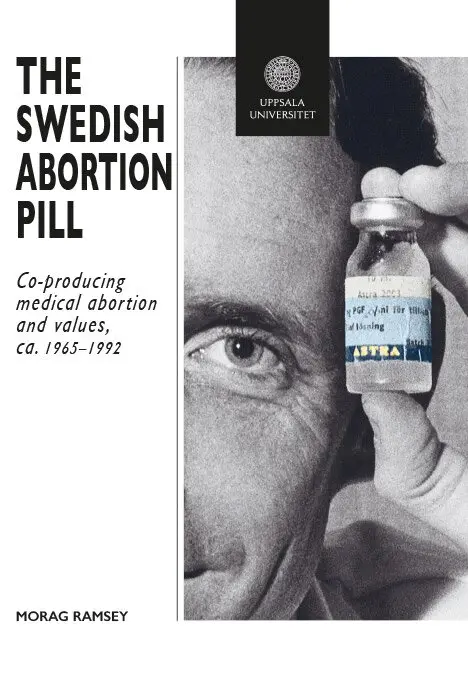
The Swedish Abortion Pill: Co-Producing Medical Abortion and Values, ca. 1965–1992
Häftad, Engelska, 2021
326 kr
Skickas inom 5-8 vardagar
Abortion pills have had a large impact. Since their introduction to national markets in the 1990s, scholars have examined how abortion pills have changed medical practices, illegal abortion, and reproductive activism. What has gone unstudied, however, has been the development and the history of abortion pills. This dissertation addresses this gap by examining how abortion pills were developed in Sweden. What political, legal, and moral processes were included in their development? What specific conditions in Sweden helped to support this research and what was its impact? Answering these questions further develops scholarship on medical abortion as well as the history of the Swedish welfare state’s reproduction management. The dissertation argues that the development of abortion pills co-produced new ways of understanding and valuing abortion Beginning in 1965, Swedish researchers clinically tested compounds on pregnant women, hoping to induce abortion. This dissertation follows abortion pill research in Sweden by concentrating on clinical trial practices in the period between 1965 and 1992. An intricate web of actors is highlighted, showing collaboration between state institutes, pharmaceutical companies, non-profit organizations, media, researchers, and trial participants. Using perspectives from science and technology studies and by introducing the concept of abortion scripts, the book traces how abortion was made in these expanding research networks. Whereas earlier scholarship has focused on contraceptive pills, intrauterine devices, and emergency contraceptives, this dissertation shows how abortion pills also contested reproductive concepts during the mid-20th century. Abortion pill research challenged reproductive boundaries, moved medical procedures from the hospital to the home, and expanded family planning initiatives. As abortion access impacts people’s reproductive choices, it is important to understand how concepts of abortion are made. The Swedish Abortion Pill maps a multitude of abortion scripts, detailing both change and continuity over time and makes visible the extent of the practical work that went into the development of medical abortion. While the technology is often attributed to research done by French researchers, this study reveals that decades of work in Sweden also contributed to the success of abortion pills.